







CBSE Class 8 Science Notes Chapter 10 Sound
 Ananya Gupta22 Aug, 2024
CBSE Class 8 Science Notes Chapter 10: Here are the notes on CBSE Class 8 Science Chapter 10 Sound which are important for Class 10 students. These notes provide a detailed understanding of the fundamental concepts of sound, including its production, propagation and properties.
They cover important topics such as the nature of sound waves, how sound travels through different mediums, and the factors affecting the speed of sound. The notes explain concepts like frequency, amplitude, pitch, and the human ear's role in perceiving sound. These foundational principles are crucial for a deeper grasp of sound-related topics in higher classes.CBSE Class 8 Science Notes Chapter 10 Sound Overview
These notes on CBSE Class 8 Science Chapter 10 Sound have been prepared by subject experts of Physics Wallah. They provide a clear and concise overview of the key concepts related to sound, including how it is produced, how it travels through different mediums, and the various properties of sound waves. With detailed explanations and easy-to-understand examples, these notes are designed to help students build a strong foundation in the topic, ensuring they are well-prepared for their exams.CBSE Class 8 Science Notes Chapter 10 Sound PDF
The PDF link for CBSE Class 8 Science Notes Chapter 10 Sound is available below. These notes provide a detailed understanding of the chapter, covering all essential concepts in a structured manner. They are an excellent resource for students to revise and grasp the key points effectively.CBSE Class 8 Science Notes Chapter 10 Sound PDF
CBSE Class 8 Science Notes Chapter 10 Sound
Below we have provided CBSE Class 8 Science Notes Chapter 10 Sound for students to help them understand the chapter better and to score good marks in their examination.Introduction to Waves
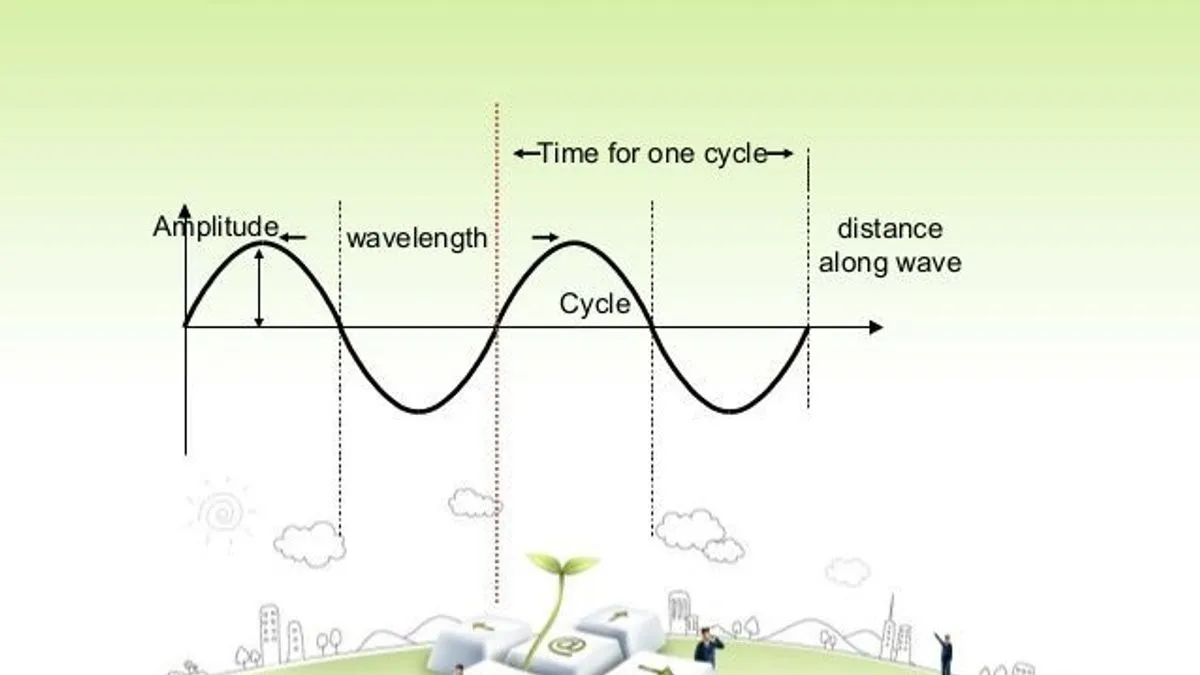 Sound is produced when an object vibrates, causing the particles in the surrounding medium (such as air, water, or solids) to vibrate as well. These vibrations create a disturbance that travels through the medium in the form of waves, known as sound waves.
Sound waves are mechanical waves, meaning they require a medium to travel. As the vibrating object moves back and forth, it compresses and rarefies the particles in the medium, creating regions of higher and lower pressure. These regions of compression and rarefaction move outward from the source of the sound, transferring energy from one particle to another.
The speed and behavior of sound waves can vary depending on the medium through which they travel. For example, sound travels faster in solids than in liquids, and faster in liquids than in gases, due to the differences in the density and elasticity of the materials.
Sound waves are longitudinal waves, meaning that the particles of the medium move parallel to the direction of the wave's propagation. This is different from transverse waves, like light waves, where the particles move perpendicular to the direction of wave travel.
Sound is produced when an object vibrates, causing the particles in the surrounding medium (such as air, water, or solids) to vibrate as well. These vibrations create a disturbance that travels through the medium in the form of waves, known as sound waves.
Sound waves are mechanical waves, meaning they require a medium to travel. As the vibrating object moves back and forth, it compresses and rarefies the particles in the medium, creating regions of higher and lower pressure. These regions of compression and rarefaction move outward from the source of the sound, transferring energy from one particle to another.
The speed and behavior of sound waves can vary depending on the medium through which they travel. For example, sound travels faster in solids than in liquids, and faster in liquids than in gases, due to the differences in the density and elasticity of the materials.
Sound waves are longitudinal waves, meaning that the particles of the medium move parallel to the direction of the wave's propagation. This is different from transverse waves, like light waves, where the particles move perpendicular to the direction of wave travel.
Sound Produced by Humans
In humans, sound is produced by the vocal cords located in the larynx, commonly known as the voice box. The larynx is situated at the upper end of the windpipe. Inside the larynx, there are two vocal cords stretched in such a way that a narrow slit is left between them. When air from the lungs passes through this slit, it causes the vocal cords to vibrate, producing sound. The pitch and quality of the sound depend on the tension and thickness of the vocal cords. Tight and thin vocal cords produce higher-pitched sounds, while loose and thick vocal cords produce lower-pitched sounds. This is why different people have different voices, and why our voice can change when we speak or sing in a different pitch. The vocal cords' ability to adjust their tension allows us to produce a wide range of sounds, from a whisper to a shout.Wave and Particle Motion of Waves
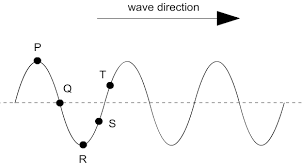 Mechanical waves require a material medium to travel through, and they are categorized based on the direction of motion of the particles in the medium relative to the wave's propagation direction. The two primary types of mechanical waves are transverse waves and longitudinal waves.
Transverse Waves: In transverse waves, the particles of the medium move perpendicular to the direction of the wave's motion. This means that if the wave is moving horizontally, the particles move up and down or side to side. A common example of transverse waves is light waves or the famous Mexican wave seen in stadiums.
Longitudinal Waves: In contrast, longitudinal waves involve particles of the medium moving parallel to the direction of wave propagation. This movement occurs through successive compressions and rarefactions, where particles are pushed closer together or spread apart. An example of a longitudinal wave is the movement of a slinky when it is pushed and pulled horizontally, or sound waves traveling through the air.
Both types of waves demonstrate how energy is transmitted through different mediums, with the motion of particles being key to understanding the nature of the wave.Sound Properties
Introduction to Sound Waves
Sound waves are mechanical waves that require a medium to propagate. The medium, which can be a solid, liquid, or gas, is essential for the transmission of sound. The particles within the medium vibrate and transfer the sound energy from one location to another.Key Points:
Medium Requirement: Sound cannot travel through a vacuum because there are no particles to transmit the vibrations. For example, on the moon, which lacks an atmosphere, sound cannot be heard because there is no medium to carry the sound waves.
Propagation: In everyday life, air is the most common medium for sound waves, allowing us to hear conversations, music, and other noises.
Amplitude, Time Period and Frequency of a Vibration
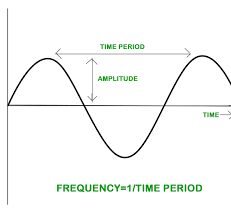 In the study of sound, oscillatory motion refers to the back-and-forth movement of an object, which is also known as vibration. This kind of motion repeats itself in a regular cycle, and the time it takes for one complete cycle is known as the time period. The number of oscillations an object makes in one second is called the frequency, measured in hertz (Hz). For example, a frequency of 1 Hz corresponds to one oscillation per second.
If an object oscillates 20 times in one second, its frequency is 20 Hz.
Recognizing sounds without seeing the source relies on the distinctive properties of sound, which include amplitude and frequency. Amplitude affects the loudness of the sound, while frequency determines its pitch. By examining these properties, we can differentiate between various sounds. For instance, a violin and a piano playing the same note will sound different because their amplitudes and frequencies, along with other characteristics, are not identical. Understanding these properties helps us identify and distinguish sounds in our environment.How Humans Produce Sound
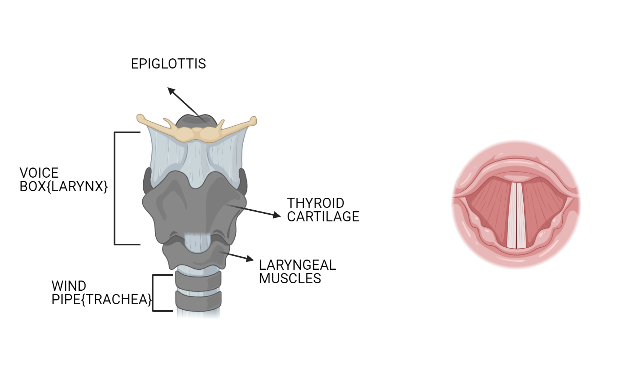 Humans produce sound using the voice box, or larynx, which is located at the upper end of the windpipe. The process involves the following steps:
Vocal Cords: Inside the larynx, there are two vocal cords stretched across a slit. These cords can be tightened or loosened by muscles attached to them.
Air Flow: When we speak or sing, air from the lungs is forced through the slit between the vocal cords.
Vibration: The airflow causes the vocal cords to vibrate. The vibration of these cords produces sound waves.
Pitch and Tone: The tension and thickness of the vocal cords, controlled by the muscles, affect the pitch and quality of the sound. Tight and thin vocal cords produce a high pitch, while loose and thick cords produce a lower pitch.
Hearing
Human Ear Structure:
- Outer Ear: The outer ear, or pinna, collects sound from the surroundings and funnels it through the auditory canal.
- Eardrum: The sound waves travel down the canal and strike the eardrum (tympanic membrane), causing it to vibrate.
- Inner Ear: These vibrations are transmitted to the inner ear. Here, specialized structures convert the vibrations into electrical signals.
- Auditory Nerve: The electrical signals are sent to the brain via the auditory nerve, where they are interpreted as sound.
Amplitude, Time Period, and Frequency:
- Amplitude: The amplitude of a sound wave is the magnitude of disturbance from the medium’s mean value. Larger amplitudes result in louder sounds.
- Frequency: Frequency is the number of oscillations or vibrations per second, measured in Hertz (Hz). Higher frequencies produce higher-pitched sounds.
- Time Period: The time period is the duration of one complete oscillation. It is inversely related to frequency (T = 1/f), where T is the time period and f is the frequency.
Loudness and Pitch:
- Loudness: The loudness of a sound is directly related to the amplitude of the sound wave. Greater force applied to make an object vibrate results in a louder sound.
- Pitch: The pitch of a sound depends on its frequency. Higher frequencies result in higher-pitched sounds, and lower frequencies result in lower-pitched sounds.
Audible and Inaudible Sounds:
- Audible Range: The range of sound frequencies that humans can hear is between 20 Hz and 20 kHz, known as the sonic range.
- Infrasonic Range: Frequencies below 20 Hz are inaudible and are called infrasonic.
- Ultrasonic Range: Frequencies above 20 kHz are inaudible and are called ultrasonic.
CBSE Class 8 Science Notes Chapter 10 FAQs
What is sound?
How does sound travel?
What is the speed of sound?
What is frequency?
What is amplitude?












 Live & recorded classes available at easeDashboard for progress trackingMillions of practice questions at your fingertips

