
The Class 12 Physics board exam will be conducted on 20 February 2026. At this stage, students have very limited time left for preparation. This is the right time to focus on topics that can help in scoring marks quickly in the exam. Physics is a subject that tests both understanding and presentation.
In Class 12 board exams, derivations are very important for scoring marks. Many students focus more on theory and numericals. But they often ignore derivations during revision. This can affect the final result in the exam.
The Top 15 Physics Derivations can help students improve their scores if they revise them properly before the exam. These derivations are commonly asked in board exams. They are also easy to attempt if the steps are clear in your mind.
Derivation-based questions usually carry good marks. These questions often appear in the 3 to 5-mark section. Writing correct steps with proper formulas can help students gain marks even if the final answer is not perfect.
Students should not try to memorise the derivations without understanding them. Instead, they should focus on the logic behind each step. When the concept is clear, writing the answer becomes easier in the exam.
Top 15 Physics Derivations You Must Revise Before Exam
Below are the Top 15 Physics Derivations that students need to practice before the CBSE Class 12 Physics Exam:
Unit 1: Electrostatics
Electrostatics is a heavy-weightage unit. You should start your revision here.
-
Electric Field due to a Dipole (Axial Point): Calculate the field intensity at a point on the axis of the dipole.
-
Electric Field due to a Dipole (Equatorial Point): Find the net field at a point on the perpendicular bisector.
-
Gauss’s Law Application: Derive the electric field due to an infinitely long straight charged wire.
-
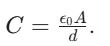
Capacitance of a Parallel Plate Capacitor: Prove the formula
-
Capacitance with a Dielectric Slab: Show how the capacitance increases when you insert a dielectric material.
Unit 2: Current Electricity
These derivations are shorter but very important for numerical problems.
-
Drift Velocity of Electrons: Derive the expression for the average velocity of electrons in a conductor.
-
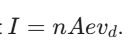
Relation between Current and Drift Velocity: Prove that
 .
. -
Wheatstone Bridge Condition: Use Kirchhoff’s laws to find the balanced condition


Unit 3: Magnetic Effects of Current
This unit requires clear diagrams to show the direction of fields.
-
Magnetic Field due to a Circular Loop: Calculate the field at a point on the axis of the loop.
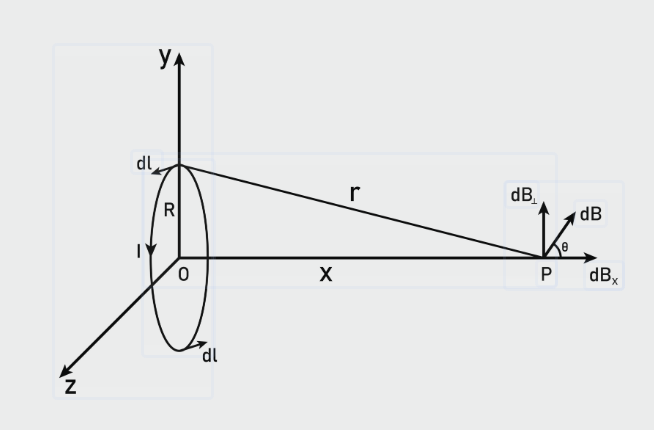
10. Force between Two Parallel Current-Carrying Wires: This is one of the Top 15 Physics Derivations that frequently appear in exams. It helps define the Ampere.
Unit 4: Optics
Ray optics derivations are long but very scoring if you draw neat diagrams.
-
Mirror Formula:

-
Lens Maker’s Formula: This is a vital part of the Top 15 Physics Derivations. It relates focal length to the refractive index and the radii of curvature.
-
Refraction through a Prism: Prove the relation for the refractive index using the angle of minimum deviation.
Unit 5: Modern Physics
Modern physics derivations are direct and based on the Bohr Model.
-
Radius of the nth Orbit: Use Bohr’s postulates to find the radius of an electron's path.
-
Total Energy of an Electron: Derive the expression for kinetic and potential energy in the nth orbit.
Why Focus on These Derivations?
The Top 15 Physics Derivations are essential because CBSE often repeats these topics. Steps in a derivation carry marks even if your final calculation is wrong. Always box your final formula to make it stand out. A well-labeled diagram is mandatory for every derivation.
Last Day Preparation Strategy for CBSE Class 12 Physics Board Exam
On the last day, students should not start new chapters. They should revise the Top 15 Physics Derivations in a planned way.
-
Revise derivations that involve standard assumptions like infinite wire, thin lens, or small-angle approximation. These are often used in Electrostatics and Optics derivations.
-
Check sign conventions in Mirror Formula and Lens Maker’s Formula derivations. Many students lose marks due to incorrect signs.
-
Practise writing Gauss’s Law derivation once with a proper cylindrical Gaussian surface. This improves clarity in field direction.
-
Revise the direction of the magnetic field using the right-hand thumb rule in the circular loop derivation. Direction mistakes reduce marks.
-
Focus on boundary conditions in the dielectric slab derivation. Understand why the electric field changes inside the medium.
-
Go through Bohr Model derivations and revise the force balance between the electrostatic force and the centripetal force. This step is often missed.
-
Practise writing the Drift Velocity derivation with unit consistency. Make sure dimensions match in the final expression.
-
Recheck the minimum deviation condition in prism derivation. Students often skip the symmetry condition.
-
Revise Kirchhoff’s loop rule steps in the Wheatstone Bridge derivation carefully. Equation formation should be correct.
-
Draw diagrams for dipole field derivations again. Vector directions must be clearly shown.
Top 15 Physics Derivations FAQs
How many marks are usually allotted to derivation questions in the Physics board exam?
Should students memorise or understand the Top 15 Physics Derivations?
Is it necessary to draw diagrams in derivation-based questions?
Can students get marks if the final formula is incorrect in a derivation?