








SSC CGL Normalization Process 2026: Formula, Raw Score vs Normalized Score, Marks Calculation Explained
 Aarti .22 May, 2026

The Staff Selection Commission conducts the SSC CGL exam in multiple shifts across different days because lakhs of candidates appear for the examination every year. Since every shift may not have the exact same difficulty level, SSC uses the SSC CGL normalization process 2026 to ensure fair evaluation for all candidates.
Through this process, candidates’ raw marks are adjusted using a statistical method so that no candidate gets an unfair advantage due to an easier or tougher shift. The final result, cutoff, and merit list are prepared using normalized marks instead of raw scores.
Also Read:
What is the SSC CGL Normalization Process 2026?
The SSC CGL exam normalization process is a statistical method used by SSC to equalize marks obtained in different exam shifts.
If one shift is more difficult and another is comparatively easier, the normalization method adjusts the marks accordingly. Candidates appearing in tougher shifts may receive increased normalized marks, while candidates from easier shifts may see a slight reduction in marks.
SSC introduced normalization because conducting a national-level exam in a single shift is not practically possible. The process helps maintain fairness in the recruitment system.
Why Does SSC Use Normalization?
SSC applies normalization for the following reasons:
-
Different shifts may have different difficulty levels
-
Lakhs of candidates appear in multiple sessions
-
A fair comparison between candidates is necessary
-
Final merit must remain unbiased
-
Cutoff preparation becomes more accurate
According to SSC, normalization is based on the assumption that the overall ability level of candidates remains similar across all shifts.
SSC CGL Raw Score vs Normalized Score
Many candidates get confused between raw marks and normalized marks.
|
Type of Score |
Meaning |
|
Raw Score |
Actual marks obtained directly from correct and incorrect answers |
|
Normalized Score |
Adjusted score after applying SSC normalization formula |
The final SSC CGL merit list is prepared using normalized marks, not raw marks.
SSC CGL Normalization Formula
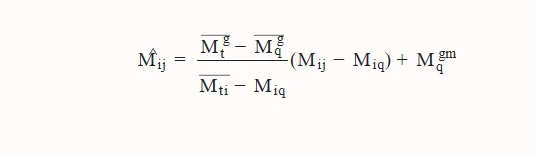
SSC has officially published the normalization formula on its website. The formula uses averages, standard deviation, and top performers’ scores from all shifts to calculate final normalized marks.
The official formula used in the SSC CGL normalization formula is:
M̂ij = [(M̄tg − Mqg) / (M̄ti − Miq)] × (Mij − Miq) + Mqgm
Meaning of Important Terms
M̂ij = Normalized marks of the jth candidate in the ith shift.
M̄tg = Average marks of the top 0.1% candidates considering all shifts (number of candidates rounded up).
Mqg = Sum of mean marks and standard deviation marks of candidates, considering all shifts.
M̄ti = Average marks of the top 0.1% candidates in the ith shift (number of candidates rounded up).
Miq = Sum of mean marks and standard deviation of the ith shift
Mij = Actual marks obtained by the jth candidate in the ith shift.
Mqgm = Sum of mean marks of candidates in the shift having the maximum mean and standard deviation of marks, considering all shifts.
SSC calculates marks up to five decimal places.
Official PDF to check SSC Normalization Method
Candidates can check the official normalization details on the SSC website:
SSC CGL Normalized Marks Calculation Process
The SSC CGL normalized marks calculation generally follows these steps:
-
SSC calculates the raw marks of every candidate
-
The difficulty level of each shift is analyzed
-
Mean and standard deviation of every shift are calculated
-
Scores of top-performing candidates are compared
-
The normalization formula is applied
-
Final normalized score is prepared
This entire process helps balance score differences caused by varying difficulty levels.
SSC CGL Score Calculation Method
Before normalization, SSC first calculates raw marks using the marking scheme.
Tier 1 Marking Scheme
|
Response Type |
Marks |
|
Correct Answer |
+2 |
|
Wrong Answer |
-0.50 |
|
Unattempted |
0 |
Tier 2 Marking Scheme
Negative marking differs section-wise in Tier 2 examination.
After raw marks are calculated, SSC applies the normalization process to prepare the final score. This is known as the SSC CGL score calculation method.
SSC CGL Marks Normalization Rules
Some important SSC CGL marks normalization rules are:
-
Normalization is applied only in multi-shift exams
-
Final merit is based on normalized marks
-
Raw marks can increase or decrease
-
The difficulty level of shifts is considered statistically
-
Candidates are randomly allotted shifts
SSC officially states that the normalization method is designed to maintain fairness across all exam sessions.
SSC CGL Normalization Explained with Example
Suppose:
-
Candidate A appears in an easy shift and scores 160 raw marks
-
Candidate B appears in a difficult shift and scores 150 raw marks
After normalization:
-
Candidate A’s normalized marks may reduce slightly
-
Candidate B’s normalized marks may increase
As a result, Candidate B may finally score higher normalized marks despite having lower raw marks. This is how SSC CGL normalization works in practical situations.
Does Normalization Affect SSC CGL Cutoff?
Yes, normalization directly affects cutoff marks because SSC prepares the final cutoff using normalized scores instead of raw scores.
Sometimes candidates from difficult shifts benefit after normalization, while candidates from easier shifts may experience slight mark reductions.
PW provides SSC exam content, including SSC Exams Updates, sample papers, mock tests, guidance sessions, and more. Also, enroll today in the SSC Online Batches for preparation.
SSC CGL Normalization Process 2026 FAQs
What is SSC CGL normalization process 2026?
Is SSC CGL result based on raw marks or normalized marks?
Can normalized marks be lower than raw marks?


Have questions about your prep?
Our experts can answer all your questions






 Live & recorded classes available at easeDashboard for progress trackingLakhs of practice questions

