








Top Videos on Animal Kingdom for SSC Science by PW

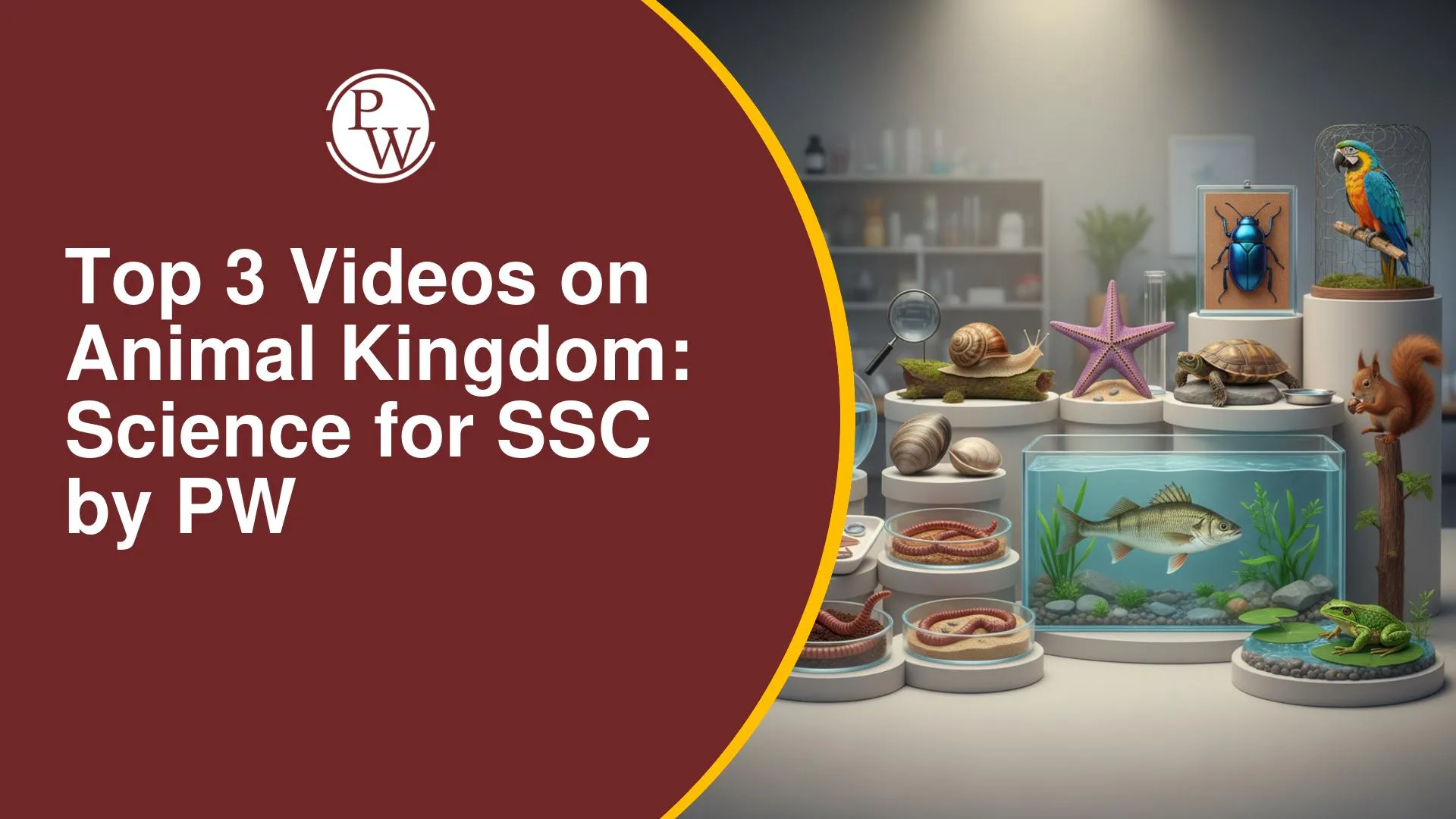
Animal Kingdom includes several groups of organisms, each identified by specific characteristics. If you mix up the features of different phyla or struggle to remember animal examples, answering classification-based questions can become difficult. You also need to understand terms such as coelom, symmetry, germinal layers, and circulation to identify the correct answers.
PW's Animal Kingdom video lessons cover these concepts through structured explanations, comparisons, and practice questions. You can use them to understand the classification system, revise important animal groups, and apply your knowledge to SSC-level Science questions.
Video 1. Understand Major Animal Phyla Through a Structured Classification Lesson
This lesson from SSC Wallah introduces the Animal Kingdom by explaining the characteristics used to classify different animal groups. You will study features such as body organisation, symmetry, germinal layers, and coelom before moving through the major phyla.
The session covers Porifera, Cnidaria, Ctenophora, Platyhelminthes, Aschelminthes, Annelida, Arthropoda, Mollusca, Echinodermata, Hemichordata, and Chordata. It also uses memory techniques to help you remember the sequence and distinguish between groups. These explanations give you a foundation for understanding how animals are classified and identifying their characteristic features.
You can watch this lesson when beginning the topic or preparing your Animal Kingdom revision notes. Learning the phyla in a systematic order makes it easier to recall their names and connect each group with its defining characteristics. It also prepares you to approach classification-based questions in SSC Science with a clearer understanding of the concepts.
Video 2. Practise SSC-Level Questions on Animal Groups and Their Features
This session approaches Animal Kingdom through questions commonly associated with SSC-level Science preparation. It covers the differences between vertebrates and invertebrates, as well as chordates and non-chordates. You will also encounter questions related to reptiles, warm-blooded and cold-blooded animals, codfish, pigeon milk, Ganga dolphins, and Holstein cattle.
Other concepts include open and closed circulation, the water canal system in Porifera, lichen, Mollusca, octopus, and calcium carbonate structures. The explanations connect biological facts with examples and answer options, giving you an opportunity to practise applying what you know.
Use this video after studying the basic classification of animals. Attempting the questions before listening to their explanations can help you identify concepts that need more revision. Pay attention to the characteristics associated with each example, as this can help you distinguish between similar options and answer factual questions more accurately in SSC Examinations.
Video 3. Compare Classification Systems and Revise Animal Kingdom Concepts
This video develops your understanding of biological classification by comparing living and non-living things, plants and animals, and different kingdom systems. You will learn about unicellular and multicellular organisms, prokaryotic and eukaryotic cells, and why fungi are classified separately from plants.
Examples such as bacteria, amoebas, and mushrooms help explain these differences. The lesson also covers major animal phyla, including Porifera, Cnidaria, Platyhelminthes, Mollusca, Annelida, Arthropoda, and Echinodermata. Their characteristics and examples are discussed through comparisons, memory cues, and practice questions.
If you are new to the Animal Kingdom, this session can help you understand the classification concepts before moving to detailed phylum-wise revision. You can also revisit the comparisons and questions while preparing for SSC exams. Focus on the differences between organism groups and the examples associated with each phylum to strengthen your understanding of classification-based questions.
How These Animal Kingdom Videos Help in SSC Preparation
The three PW videos cover different learning needs, making them useful at various stages of your SSC Science Syllabus preparation.
-
Build conceptual understanding: The first and third videos explain animal classification, major phyla, biological terms, and distinguishing characteristics. They help you understand how different animal groups are organised instead of relying only on memorisation.
-
Improve factual recall: The lessons use animal examples, comparisons, and memory techniques to help you remember important facts. Revisiting these explanations can make it easier to identify the correct phylum or animal characteristic in objective questions.
-
Practise question application: The second video focuses on SSC-level questions and their explanations. It helps you apply classification concepts, understand question patterns, and recognise differences between similar answer options.
-
Organise your revision: You can use the concept-based lessons to prepare notes and the question-practice session to identify topics that need more attention. This gives your revision a clear sequence, from understanding concepts to testing your knowledge.
These three PW videos cover different aspects of the Animal Kingdom, from the characteristics used in biological classification to major phyla and SSC-level question practice. Start with the concept lessons if you need to build your understanding, then use the question-based session to test your recall.
Revisiting important animal features, examples, and classification differences will help you organise your revision and prepare for related questions in SSC Science.


Have questions about your prep?
Our experts can answer all your questions






 Live & recorded classes available at easeDashboard for progress trackingMillions of practice questions at your fingertips


