History of Odisha, Ancient, Medieval and Modern History of Odisha

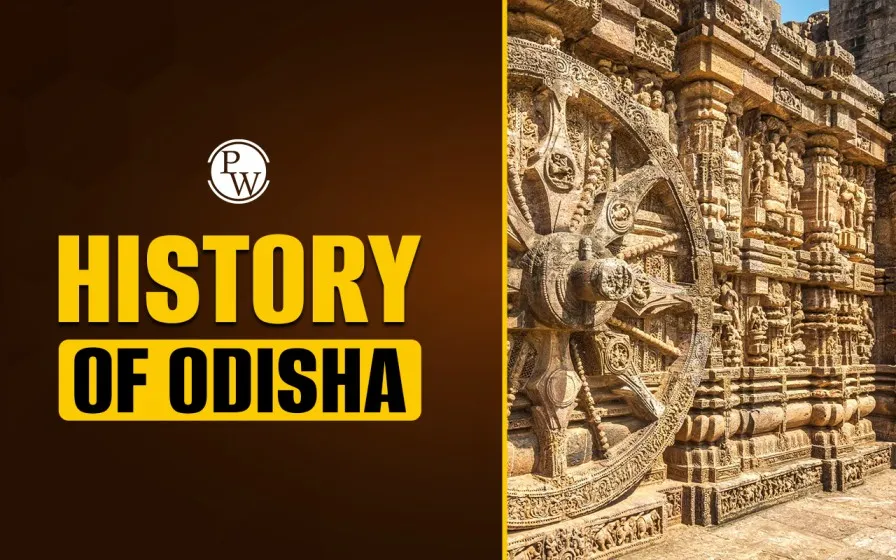
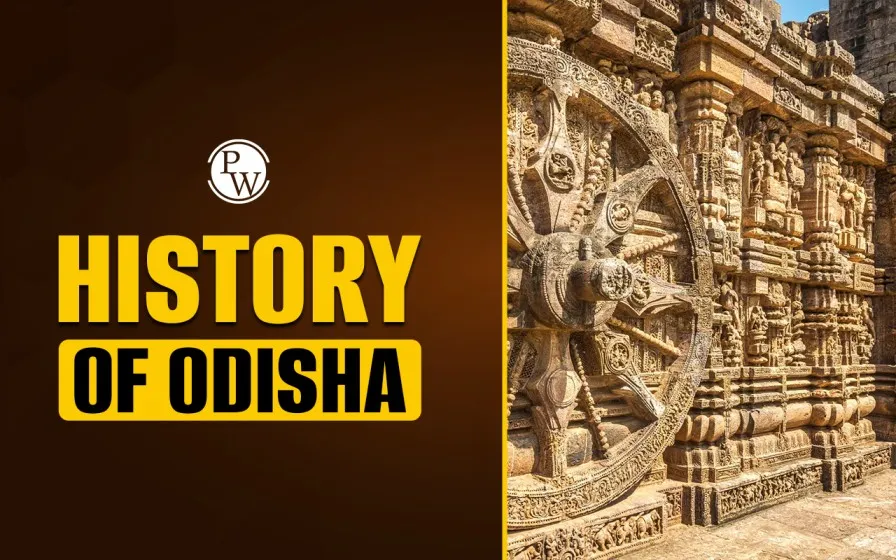
History of Odisha: Odisha is an Indian state. It is located in the eastern section of the country, bordered by Jharkhand and West Bengal to the north and northeast. Cuttack served as the capital of Odisha before India's independence in 1947. The current capitol was built in Bhubaneshwar, near the city's old temples on the east-central coastal plains. Odisha became the official name of the state in late 2011, replacing Orissa.
History of Odisha
Odisha, formerly known as Orissa, is a state in eastern India with a rich and diverse history that dates back to prehistoric times. Known for its ancient maritime trade, cultural heritage, and political significance, Odisha has been a cradle of civilization and a melting pot of various cultures. This article delves into the historical journey of Odisha, from its prehistoric roots to its modern identity.
Also read: Famous Personalities of Odisha
Prehistoric Odisha
The history of Odisha traces back to the Lower Paleolithic era, with significant evidence found in the form of Acheulian tools discovered across various parts of the state. These tools are crucial indicators of early human settlement in the region, highlighting Odisha's importance in prehistoric times. Archaeological excavations have also revealed the presence of other ancient cultures, such as the Madrasian and Sonian cultures, further establishing Odisha as a cradle of early human habitation. These findings provide valuable insights into the evolution of human societies in the Indian subcontinent.
Ancient History of Odisha: The Era of Kalinga
The ancient kingdom of Kalinga, corresponding to modern-day Odisha, holds a significant place in Indian history and mythology. Frequently mentioned in texts like the Mahabharata, Vayu Purana, and Mahagovinda Suttanta, Kalinga was renowned for its cultural and political prominence. According to legend, the kingdom was founded by Prince Kalinga, one of the five sons of King Bali, and became a formidable power on the eastern coast of India. In the Mahabharata, Srutayudha, a valiant king of Kalinga, sided with the Kauravas in the Kurukshetra War but was ultimately slain by Bhima, along with his sons Bhanumana and Ketumana.
The kingdom's strategic location and maritime prowess made it a hub for trade and cultural exchange. After the Mahabharata War, Kalinga regained its glory under a new Kshatriya dynasty, as noted in Buddhist texts like the Mahagovinda Suttanta. Over time, Kalinga evolved into a significant political entity, influencing regional history for centuries.
Kharavela, a Jain ruler from the Mahameghavahana dynasty, was another prominent figure in Odisha's ancient history. He expanded his kingdom across much of India and promoted Jainism. His achievements are inscribed on the Hathigumpha inscription near Bhubaneswar.
Also read: Waterfalls in Odisha
Medieval History of Odisha
The medieval history of Odisha was shaped by the rise and fall of several strong dynasties that influenced the state's politics, culture, and architecture. Starting with the Somavamshi dynasty, followed by the Gajapati Empire, each dynasty played a key role in the region’s development. These rulers built impressive structures, promoted art and culture, and strengthened the state's position in India. However, over time, these powerful dynasties eventually weakened and declined. This article looks at the main dynasties that ruled Odisha, their important contributions, and the reasons behind their fall.
Modern History of Odisha
After India gained independence in 1947, Odisha experienced many important changes that shaped its future. In 1948, Bhubaneswar became the new capital of the state, replacing Cuttack. This move helped Bhubaneswar grow and develop into a modern city. Odisha also became an important industrial hub due to its rich mineral resources, attracting industries like steel, aluminum, and power plants.
The state’s economy began to grow rapidly, creating jobs and opportunities for its people. Every year, on April 1, Odisha celebrates Utkala Dibasa (Odisha Day) to remember the day it became a separate province in 1936. This day marks an important milestone in the state’s history, highlighting its journey towards progress and development.
Also read: Lakes in Odisha
History of Odisha FAQs
When did Odisha become a separate state?
What is the capital of Odisha?
Who were the main dynasties that ruled Odisha in the medieval period?
What is Utkala Dibasa?



 Live & recorded classes available at easeDashboard for progress trackingLakhs of practice questions