Comparatives and Superlatives in English for IELTS, Examples and Sentences

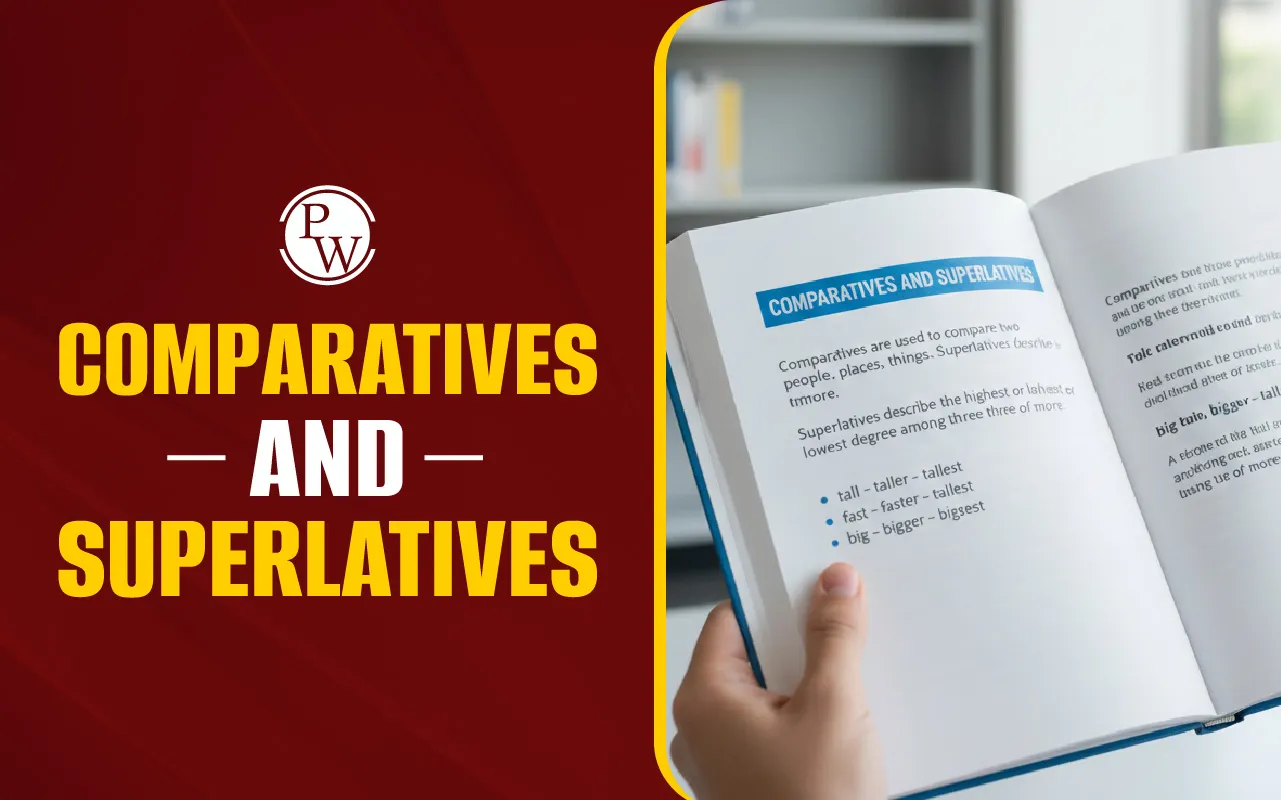
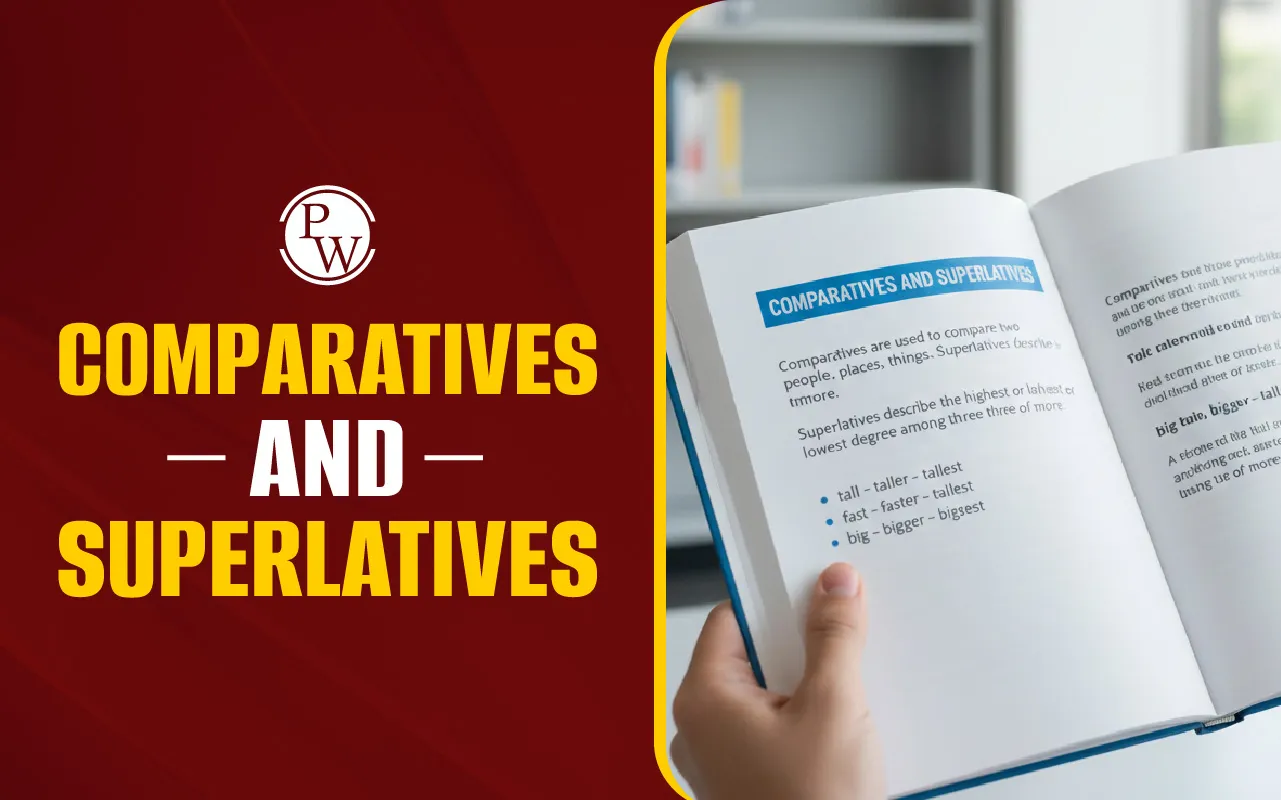
Comparatives and Superlatives are an essential part of English grammar, especially for exams like IELTS. They help learners describe differences, similarities, and extremes clearly and accurately. Understanding comparatives and superlatives in English improves fluency and sentence structure in both speaking and writing tasks.
This topic covers comparative and superlative adjectives, common comparatives and superlatives rules, and real-life comparatives and superlatives examples. For IELTS aspirants, mastering comparative adjectives for IELTS and superlative adjectives for IELTS is crucial to express the correct degree of comparison in English grammar using clear and correct sentences.
What is Comparatives and Superlatives?
Comparatives and superlatives are special forms of adjectives. They help describe differences or extremes between things. Comparatives show differences between two objects. Superlatives describe an object that is at the upper or lower limit within a group. These forms are key for expressing the degree of comparison in English grammar.
Below section details how to use and form comparatives and superlatives. Understanding these rules improves your sentence structure.
Comparative Adjectives for IELTS
Comparative adjectives highlight differences between two items. They typically follow a specific sentence pattern.
Rule: Noun (subject) + verb + comparative adjective + than + noun (object).
The second item can be left out if the meaning is clear.
| Comparative Adjectives for IELTS | ||
|---|---|---|
| Adjective | Comparative | Example Sentence |
| large | larger | My house is larger than hers. |
| fast | faster | Your dog runs faster than Jim's. |
| good | better | I like Jack better. |
Superlative Adjectives for IELTS
Superlative adjectives describe an object's extreme quality within a group. It shows the highest or lowest degree.
Rule: Noun (subject) + verb + the + superlative adjective + noun (object).
The group being compared can be left out if the meaning is clear.
| Superlative Adjectives for IELTS | ||
|---|---|---|
| Adjective | Superlative | Example Sentence |
| large | largest | My house is the largest in our neighborhood. |
| fast | fastest | Your dog ran the fastest in the race. |
| good | best | He is the best student. |
Forming Regular Comparatives and Superlatives
The way you form comparatives and superlatives depends on the adjective's syllables. Understand the comparatives and superlatives rules for correct usage.
One-Syllable Adjectives
Add -er for the comparative. Add -est for the superlative. If an adjective has a consonant + single vowel + consonant pattern, double the final consonant before adding the ending.
| One-Syllable Adjectives | ||
|---|---|---|
| Adjective | Comparative | Superlative |
| tall | taller | tallest |
| fat | fatter | fattest |
| big | bigger | biggest |
| sad | sadder | saddest |
Two-Syllable Adjectives
These adjectives can form comparatives with -er or by using more. They form superlatives with -est or by using most. For adjectives ending in y, change 'y' to 'i' before adding -er or -est.
| Two-Syllable Adjectives | ||
|---|---|---|
| Adjective | Comparative | Superlative |
| happy | happier | happiest |
| simple | simpler | simplest |
| busy | busier | busiest |
| tilted | more tilted | most tilted |
Three or More Syllables
For adjectives with three or more syllables, always use more for the comparative. Use most for the superlative. This is a common comparatives and superlatives sentence structure.
| Three or More Syllables | ||
|---|---|---|
| Adjective | Comparative | Superlative |
| important | more important | most important |
| expensive | more expensive | most expensive |
Irregular Comparatives and Superlatives
Some common adjectives have irregular forms. These must be memorized. Practicing comparatives and superlatives examples helps a lot.
| Irregular Comparatives and Superlatives | ||
|---|---|---|
| Adjective | Comparative | Superlative |
| good | better | best |
| bad | worse | worst |
| little | less | least |
| much | more | most |
| far | further / farther | furthest / farthest |
Comparatives and superlatives sentences: Today is the worst day. You play tennis better than I do.
Key Rules of Comparatives and Superlatives
These rules guide the correct formation of comparative and superlative adjectives. Follow them for precise English.
Rule 1: One-Syllable Adjectives
Add "-er" for comparative and "-est" for superlative. Double the final consonant if the word ends with a consonant-vowel-consonant pattern. Example: big - bigger - biggest.
Rule 2: Two-Syllable Adjectives
You can often add "-er" or "-est", especially if the adjective ends in "y" (change to "i"). Alternatively, use "more" or "most". Example: happy - happier - happiest; useful - more useful - most useful.
Rule 3: Three or More Syllables
Always use "more" for comparative and "most" for superlative forms. Example: beautiful - more beautiful - most beautiful.
Rule 4: Irregular Forms
Some adjectives change completely. These include "good," "bad," "much," "little," and "far." These forms need to be learned directly. Example: good - better - best.
Comparatives and Superlatives FAQs
What is the main difference between comparative and superlative adjectives?
When should I use 'more' and 'most' instead of '-er' and '-est'?
How do you form comparative adjectives for IELTS?
Can 'farther' and 'further' be used interchangeably?