IELTS Academic vs General Tests - What's the Difference?

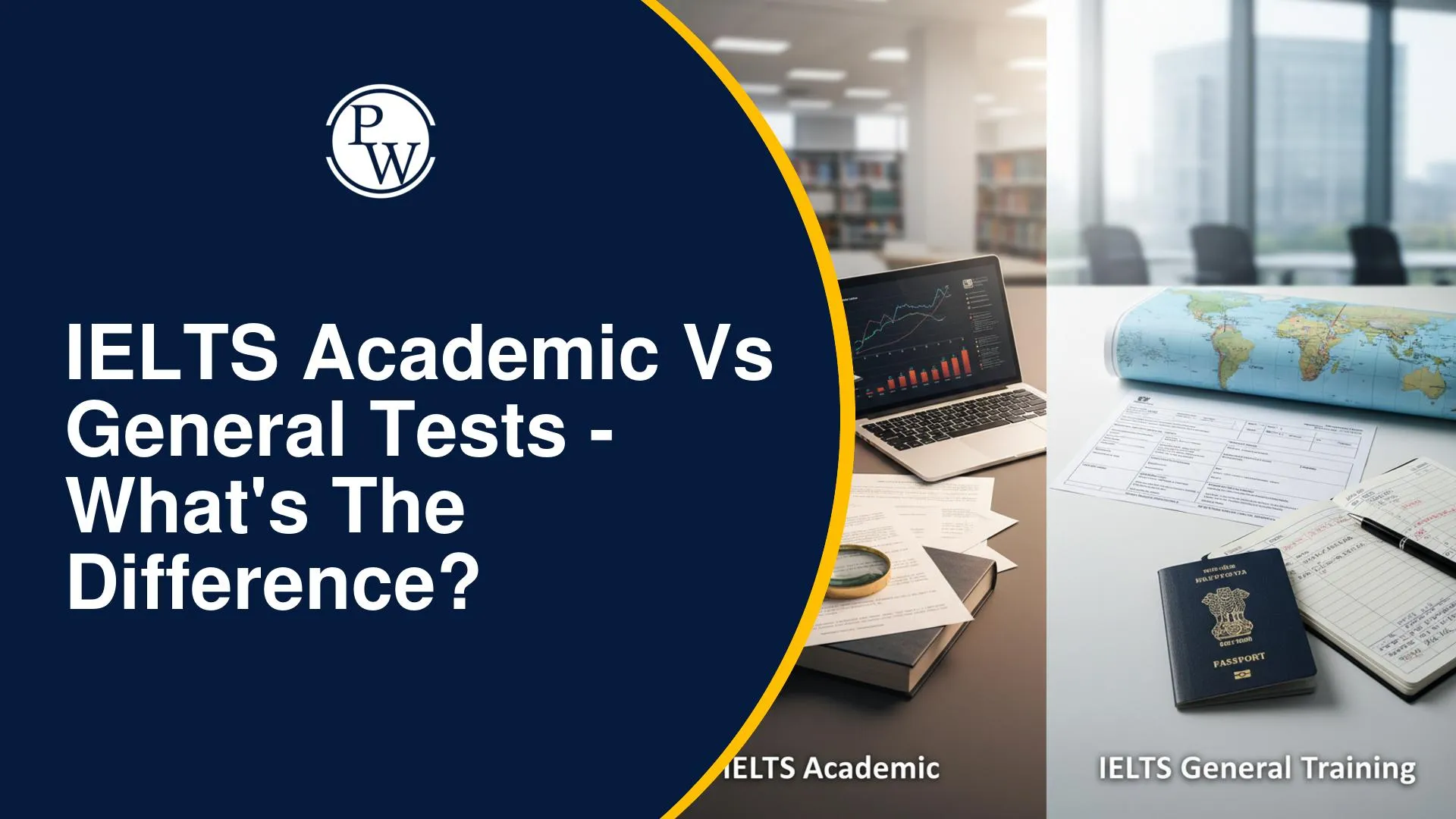
IELTS Academic vs General Tests: Choosing the right IELTS test is an important step for anyone planning to study, work, or migrate to an English-speaking country. Many candidates often get confused between IELTS Academic vs General Tests. Selecting the wrong test may affect university admissions, job opportunities, or immigration processes.
Understanding the difference between IELTS Academic vs General Tests helps candidates choose the correct exam according to their goals. Both versions assess English language proficiency but are designed for different purposes and contexts.
IELTS Academic vs General Tests
The International English Language Testing System (IELTS) evaluates a candidate’s English language skills in four areas: Listening, Reading, Writing, and Speaking. It is widely accepted by universities, employers, and immigration authorities around the world.
There are two main types of IELTS tests:
-
IELTS Academic
-
IELTS General Training
While both tests assess English proficiency using the same band score system, their purpose and exam format vary depending on whether the candidate wants to study, work, or migrate abroad.
IELTS Academic vs IELTS General Training: Purpose
The purpose of your IELTS test depends on your goals.
-
IELTS Academic: This test is for people who want to study at a university or college. It is also for those seeking professional registration in an English-speaking country. It checks your ability to use academic English.
-
IELTS General Training: This test is for people who plan to move to an English-speaking country for work or migration. It is also suitable for those who wish to attend secondary school or vocational training. It focuses on English used in everyday social and workplace settings.
How Are IELTS Academic and General Training Similar?
Even with their different purposes, IELTS Academic and General Training tests share many things.
Both tests:
-
Have four sections: Listening, Reading, Writing, and Speaking.
-
Are 2 hours and 45 minutes long in total.
-
Use a 0-9 band score scale.
-
Allow you to take the test on paper or computer.
-
Have the exact same Listening section. This section includes four recordings and 40 questions.
-
Have the exact same Speaking section. This involves a face-to-face conversation with an examiner, split into three parts.
IELTS Academic vs General Training: Format
The main differences between IELTS Academic and General Training lie in their Reading and Writing sections. These sections are tailored to the specific purpose of each test.
Reading Section
-
IELTS Academic Reading: This section has three long reading passages. These passages are from academic sources like books, journals, and newspapers. The topics are of general interest to university students.
-
IELTS General Training Reading: This section has five or six shorter texts. Section 1 includes texts on everyday topics. Section 2 has work-related factual texts. Section 3 features one longer text of general interest. These texts come from advertisements, company handbooks, or newspapers.
Writing Section
-
IELTS Academic Writing Task 1: You see a graph, table, chart, or diagram. You must describe this visual information in at least 150 words.
-
IELTS General Training Writing Task 1: You get a situation and must write a letter. This letter might ask for information or explain a problem. You need to write at least 150 words.
-
IELTS Academic and General Training Task 2: Both tests have the same Task 2. You write an essay of at least 250 words. You discuss a point of view, an argument, or a problem.
IELTS Academic vs General Training: Highlights
Understanding these key differences helps you prepare better. The table below summarises the distinctions.
|
IELTS Academic vs General Training: Highlights |
||
|---|---|---|
|
Feature |
IELTS Academic |
IELTS General Training
|
|
Purpose |
Higher education, professional registration |
Migration, work, secondary study |
|
Reading |
Academic texts (journals, books) |
Everyday, work-related texts (ads, handbooks) |
|
Writing T1 |
Describe graph, chart, or diagram |
Write a letter (informal/formal) |
|
Listening |
Same for both |
Same for both |
|
Speaking |
Same for both |
Same for both |
IELTS Academic vs General Tests - What's the Difference? FAQs
What is the main difference between IELTS Academic and General Training?
Are the Listening and Speaking sections different for both tests?
Which IELTS test should I take for university admission?
Can I use the General Training test for professional registration?