







Methods of Teaching, Introduction, Types And Characrteristics
Methods of teaching are the techniques and approaches teachers use to promote learning. Effective teaching methods aim to engage students, promote critical thinking, and cater to diverse learning styles.

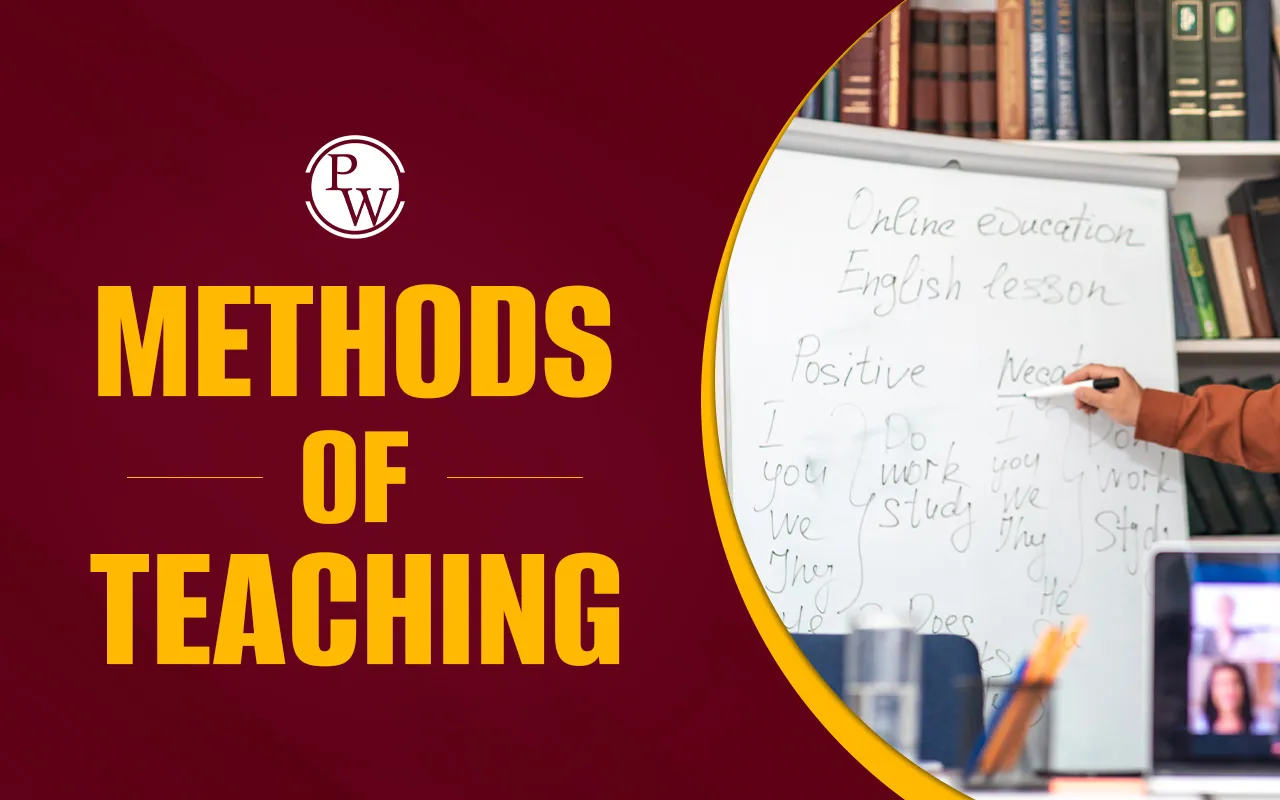
Teaching methods are organised approaches used by educators to transfer knowledge and skills. Students may have visual, auditory, or kinesthetic learning preferences, thus the method used should accommodate their preferences. Additionally, technological integration is emphasized in modern teaching, which uses interactive software, internet resources, and multimedia presentations to improve the learning process.
Know Different Types of Methods of Teaching
Teacher - Centered Methods:- The teacher is the main authority in the classroom, according to teacher-centered methods. With these approaches, students are typically passive information consumers and the teacher plays a key role in imparting knowledge. Some common teacher - centred methods are:-
Lecture Method - The teacher presents content to the class, usually orally. It can be less engaging even though it works well for teaching theoretical knowledge.
Demonstration Method - Using experiments or visual aids, the teacher demonstrates to the class how to carry out a certain job or idea. In disciplines like science, where hands-on demonstration is required, this approach works well.
Expository Method - The teacher provides an organized explanation of a subject, usually by breaking down difficult ideas into smaller parts. This approach is frequently utilized in disciplines like mathematics or technical subjects that need methodical learning.
Direct Instruction - This is a very methodical strategy in which practice and evaluation come after the teacher provides clear and detailed instructions.
Drill and Practice - Repetitive exercises are given to students to support memorization. For areas where mastery of fundamental abilities is crucial, such as mathematics or language study, this approach works well.
Characteristics of Teacher-Centered Methods of Teaching
-
The teacher completely controls the content and learning environment.
-
Emphasis is on teaching knowledge rather than fostering inquiry or exploration.
-
Students often take notes and may not actively engage in discussion.
Learner - Centered Methods:- By moving the emphasis from the instructor to the students, learner-centered methods encourage students to take an active role in their own education. Some common learner - centred methods are:-
-
Discovery/Inquiry-Based Approach - It is encouraged for students to research, ask questions, and come to their own conclusions. This method promotes self-directed learning as well as critical thinking. It is frequently utilized to foster research and analytical abilities in social studies and science classes.
-
Learning Through Discussion (LTD) - Students actively interact with the material and with one another in an LTD setting, which helps them get a deeper comprehension of the subject matter rather than only passively absorbing it.
-
Flipped Classroom - While class time is used for discussions and problem-solving, students typically study new material outside of class (via readings, videos, or other online resources). It encourages the participation of students and active learning in the classroom.
Characteristics of Learner-Centered Methods of Teaching
-
Students engage actively in their learning process.
-
Students take ownership of their learning, setting goals, and tracking progress.
-
Learning often happens through discussions, group work, and peer feedback.
-
These methods emphasize the development of skills that can be applied to real-world challenges.
Content-Focused Methods:- The main information source is the teacher, and the process of learning is centered on the knowledge being imparted. These methods are highly structured, with a clear outline of the content to be taught. Some common content - focused methods are:-
-
Programmed Learning Approach - Systematic and structured instruction.
-
Textbook-Based Learning - Students are given textbooks or reading materials, and the teacher uses these texts as the basis for teaching.
Characteristics of Content-Focused Methods of Teaching
-
The teacher is the primary source of information, and the learning process revolves around the knowledge being shared.
-
The teacher directs the flow of information, ensuring that all necessary content is covered.
-
These methods are often used when there is a need to deliver a large amount of information in a relatively short time.
Interactive/Participative Methods:- Actively involving students in the learning process is the main goal of interactive and participatory teaching methods. These approaches place more of an emphasis on student involvement, teamwork, and interaction than traditional approaches, which mainly involve the teacher guiding the learning process. Some common Interactive/Participative Methods methods are:-
-
Group Discussions - Students work in groups to discuss a particular topic or problem. The teacher may guide the discussion, but students are encouraged to share their ideas, opinions, and insights.
-
Debates - Debates are structured conversations in which two teams of students present opposing viewpoints on a certain topic. This approach improves public speaking, debate, and persuasion strategies in addition to encouraging critical thinking.
-
Role-Playing - Students assume various characters and enact situations that are related to the curriculum through role-playing. Since students encounter difficult ideas or real-life events from several angles, this approach is especially helpful for understanding them.
-
Problem-Based Learning - With little direct guidance from the teacher, students work on a project or problem-solving exercise. To find a solution, they need to conduct study, work together, and put what they've learned into practice. This approach is student-driven and emphasizes the growth of research and problem-solving abilities.
Characteristics of Interactive/Participative Methods of teaching
-
Students actively participate in the learning process.
-
Students are encouraged to think critically, analyze, and solve problems rather than just memorize content.
-
These methods promote idea sharing as well as mutual learning among students.
Conclusion
The methods of teaching play an important role in shaping the learning experience and outcomes for students. Each method be it teacher-centered, learner-centered, content-focused, or interactive/participative offers unique advantages and can be applied depending on the subject, learning objectives, and the needs of students. The content/material of the topic, the learning situation, and the desired results should all be taken into consideration when selecting a teaching strategy. The aim is to create an atmosphere that encourages critical thinking, active participation, and the growth of abilities that students can use in real-world scenarios outside of the classroom.
Methods of Teaching FAQs
What are teaching methods?
What is the difference between teacher-centered and learner-centered methods?
What are some examples of Interactive Teaching Methods?
What is the Lecture Method of teaching?
What are the characteristics of Content - Focused Method of teaching?






 Online Classes for UGC NET Exams.Learn from PW's Educators through Live Lectures.Live & Recorded Classes are available at ease.Lectures are available in Hinglish (Hindi and English mix).Get access to Study Materials, Notes & Mock Tests.

