Best Videos on Structure and Physiography – Indian Physical Geography for UPSC by PW


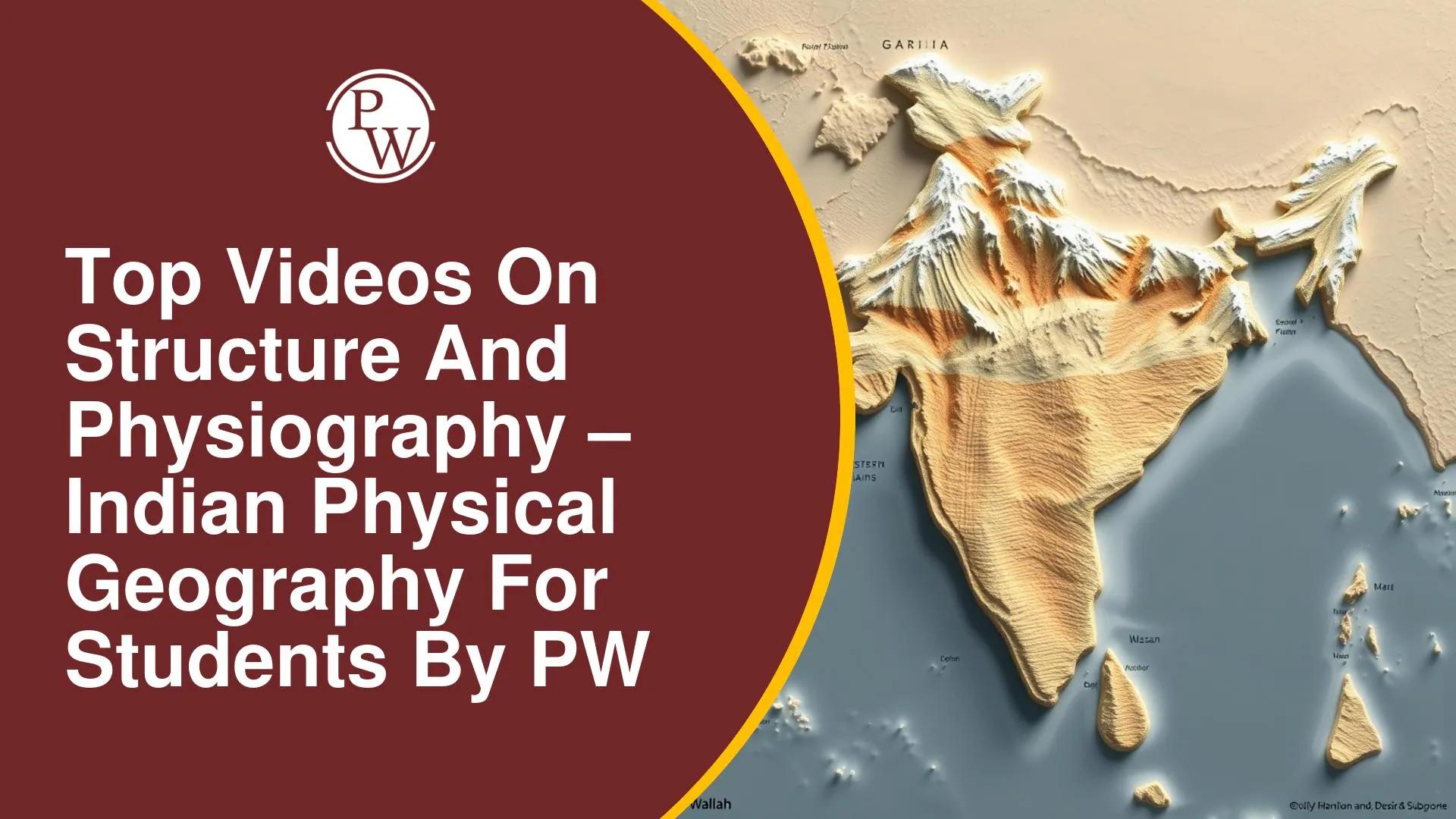
Structure and Physiography is an important part of Indian Physical Geography. Students need to understand how India's geological evolution shaped its major physical regions, including the Himalayas, Northern Plains, Peninsular Plateau, deserts, coastal plains, and islands. Connecting geological processes with regional features and map locations can make the topic challenging during revision.
Physics Wallah YouTube videos explain these concepts through NCERT-based lessons, organised regional coverage, and question practice. You can study the geological foundation, understand the characteristics of different physiographic divisions, and revise their geographical connections.
Video 1: Connect India's Geological Evolution With Its Major Physiographic Divisions
This lecture provides an NCERT-based overview of India's geological evolution and major physiographic divisions. It explains endogenic and exogenic forces, the Indian Peninsula, geological regions, the Himalayas, Peninsular Mountains, and the Indo-Gangetic and Brahmaputra Plains. The lesson also covers the Northern and Northeastern Himalayas, riverine landforms, plateaus, coastal plains, and islands. Mapping practice and UPSC previous-year question relevance add an examination-focused dimension to the topic.
Use this lesson for a broad introduction or a final revision of Indian Physical Geography. Its coverage helps connect geological processes with regional landforms and map-based understanding.
Video 2: Cover the Complete NCERT Chapter With Physiographic Divisions and MCQs
Based on Class 11 NCERT Chapter 2, this lecture presents Structure and Physiography as a complete chapter. It begins with India's geological structure and the Peninsular Block before explaining the Himalayas, Peninsular Mountains, and Indo-Ganga-Brahmaputra Plain. It also covers the Northern and Northeastern Mountains, Northern Plain, Peninsular Plateau, Indian Desert, Coastal Plains, and Islands. Multiple-choice questions at the end provide an opportunity to check chapter understanding.
This YouTube video will help you study the complete NCERT chapter in one sequence. The MCQs help you assess your understanding, while the organised coverage makes it useful for note-making and later revision.
Video 3: Build Your Foundation With India's Geological Structure and Physical Regions
Part 1 introduces Class 11 NCERT Chapter 2 by explaining India's geological structure and its relationship with major physiographic divisions. The discussion focuses on the Himalayas, Indo-Gangetic Plains, and Peninsular Plateau, providing a basic framework for understanding how geological formation contributes to the development of distinct physical regions.
This lecture will help you study the chapter for the first time or need to organise your basic notes. Its focused coverage prepares you to explore the characteristics of India's major physical regions in greater detail.
Video 4: Reinforce the Relationship Between Geological Structure and Landforms
Part 2 continues the Class 11 NCERT discussion of India's geological structure and physical divisions. It revisits the Himalayas, Indo-Gangetic Plains, and Peninsular Plateau, focusing on their formation and basic characteristics. The lesson reinforces the relationship between geological structure and the major landforms that shape India's physical geography.
This YouTube video will help you reinforce your understanding of the three major physical regions. It also supports chapter revision before Geography tests by helping you recall their formation and key characteristics.
These PW UPSC YouTube videos cover Structure and Physiography through geological concepts, major landforms, complete NCERT chapter teaching, and focused revision. Begin with the foundational lessons, then use the complete chapter lecture and broader overview to revisit regional divisions and map-based concepts.