History of Indian Paintings: Timeline, Evolution, Styles & Cultural Significance
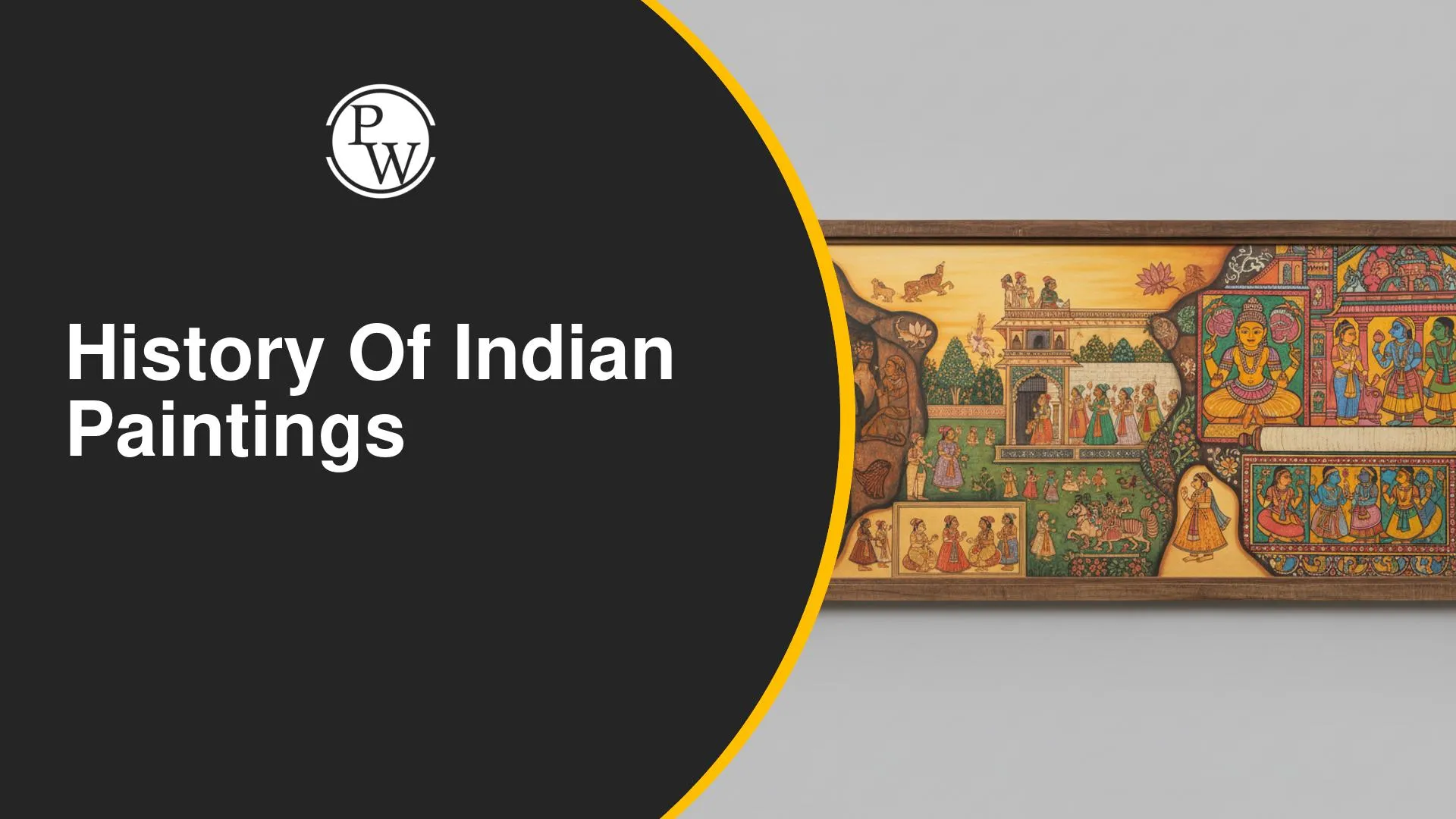
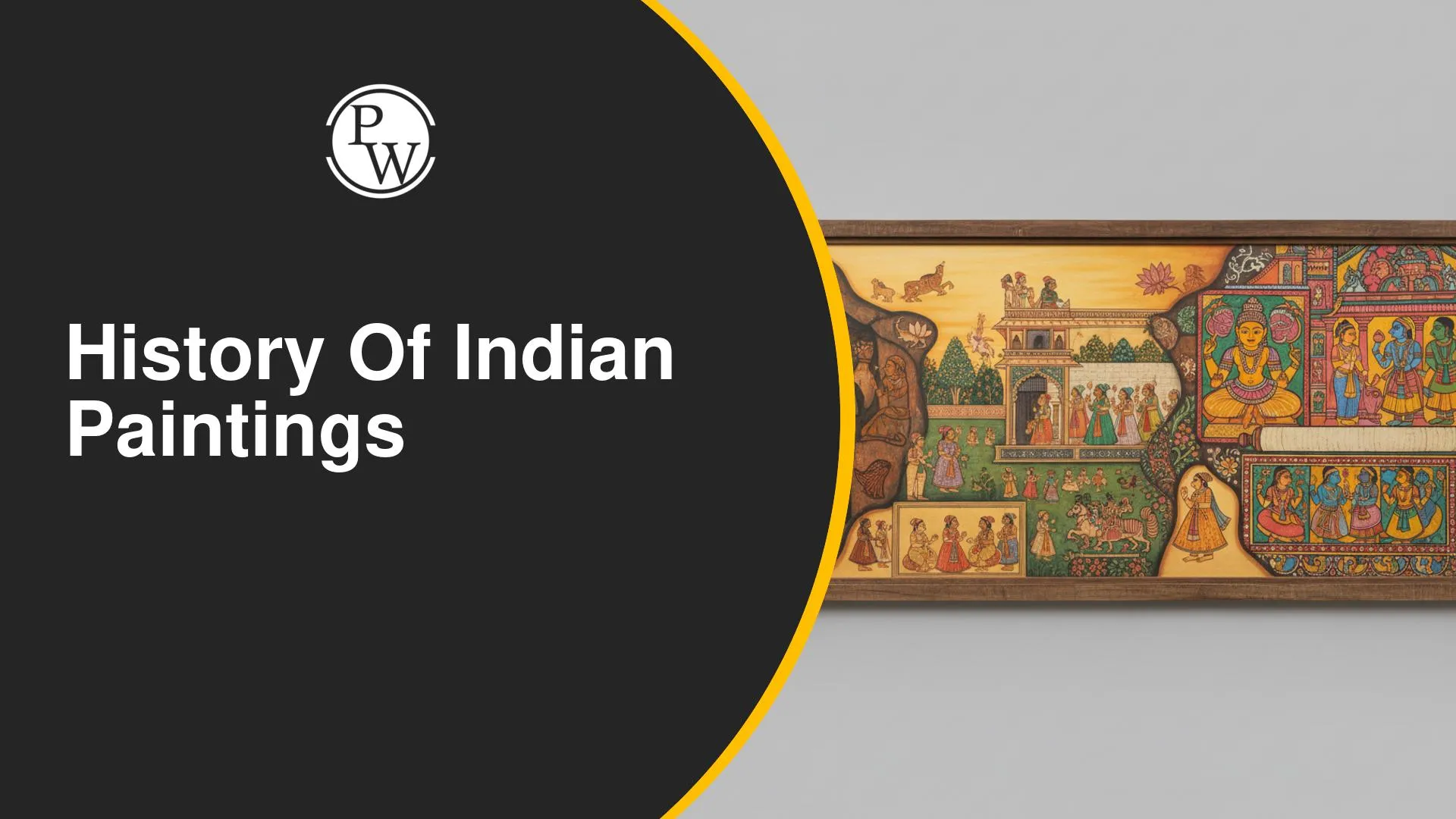
History of Indian Paintings shows the artistic journey of India from prehistoric cave art to modern styles. It includes ancient murals like Ajanta, medieval schools such as Mughal, Rajput, and Pahari, and modern movements like the Bengal School, reflecting cultural, religious, and regional diversity.
The concept of Shadanga (Six Principles of Indian Art) explains the foundation of Indian painting, focusing on form, proportion, emotion, grace, resemblance, and color use. Together, these styles and principles highlight the evolution of Indian art and its importance for culture and UPSC preparation.
History of Indian Paintings
The History of Indian Paintings reflects the rich cultural, religious, and social evolution of India. From prehistoric cave art to contemporary modern expressions, Indian paintings showcase diversity in themes, techniques, and regional influences.
Understanding the evolution of Indian art is crucial for students, especially those preparing for competitive exams like UPSC.
Shadanga or Six Principles of Indian Art
The Shadanga (Six Limbs of Indian Art) were described in ancient texts like the Vishnudharmottara Purana. They form the base of the History of Indian Paintings and help artists create visually appealing and meaningful artworks.
1. Rupa Bheda (Understanding of Forms)
-
“Rupa” means form, and “Bheda” means distinction.
-
It teaches artists to observe and represent different shapes and forms accurately.
-
This principle helps in identifying and drawing objects as they truly appear.
2. Pramana (Proportion and Measurement)
-
This principle focuses on correct size, proportion, and balance.
-
It ensures that all parts of a painting are properly aligned and realistic.
-
It also helps in understanding the structure and anatomy of figures.
3. Bhava (Expression of Emotions)
-
“Bhava” refers to feelings or emotions shown in a painting.
-
It brings life to the artwork by expressing mood, action, and movement.
-
This is why many Indian paintings look expressive and dynamic.
4. Lavanya Yojana (Grace and Beauty)
-
It deals with adding elegance and charm to the composition.
-
This principle enhances the overall beauty of the painting.
-
Artists use it to create a pleasing and harmonious visual effect.
5. Sadrishya (Resemblance or Likeness)
-
This principle ensures similarity between the painting and the subject.
-
It focuses on how closely the artwork matches real-life objects or the artist’s vision.
-
It is important for making the painting look natural and recognizable.
6. Varnika Bhanga (Use of Colors)
-
It refers to the proper use and combination of colors.
-
Artists use different shades and tones to create depth and beauty.
-
This principle helps in making paintings visually attractive and balanced.
Prehistoric Paintings in India
The History of Indian Paintings begins with prehistoric rock art, which dates back to the Upper Paleolithic period. These early paintings give us insights into the life and environment of ancient humans.
One of the most important sites is the Bhimbetka Rock Shelters, where some of the oldest paintings in India have been discovered.
Another important site is Lakhudiyar Caves, known for its ancient rock paintings near the Suyal River.

Upper Paleolithic Period Paintings
-
The earliest paintings show large animals like bison and elephants.
-
Drawings are simple, mostly linear, and use colors like dark red and green.
-
Human figures are shown in basic stick-like forms.

Mesolithic Period Paintings
-
Paintings became smaller but more detailed.
-
Hunting scenes were the most common theme.
-
Animals like deer, tiger, boar, and birds were frequently shown.
-
Humans were drawn in a stylized way, while animals looked more natural.
-
Group activities like dancing were also depicted.

Chalcolithic Period Paintings
-
Paintings show similarities with designs found on pottery.
-
Common patterns include geometric shapes like squares and lines.
-
Tools, daily life objects, and early settlements were depicted.
-
Artists used a variety of colors such as white, yellow, red, brown, green, and black.

Indian Painting History Timeline: From Ancient to Modern Era
The Indian painting history timeline can broadly be divided into three major phases:
1. Ancient Indian Paintings (Prehistoric to 7th Century CE)
-
Includes ancient Indian paintings such as cave art and murals
-
Famous examples: Ajanta cave paintings history, Bagh caves
-
Strong influence of Buddhist art paintings India
-
Themes: Religion, nature, daily life
Key Features:
-
Natural pigments used
-
Fresco technique in caves
-
Spiritual and narrative storytelling

2. Medieval Indian Paintings (7th to 18th Century)
This period saw the rise of different schools of Indian painting and regional styles.
Major Styles:
-
Mughal painting style India
-
Court scenes, portraits, Persian influence
-
Rajput painting style
-
Mythological themes, vibrant colors
-
Pahari painting style
-
Romantic and devotional themes
Other Important Developments:
-
Growth of Indian miniature paintings
-
Rise of temple paintings India
-
Development of regional painting styles India
Key Highlights:
-
Fusion of Persian and Indian elements
-
Fine detailing and intricate brushwork
-
Royal patronage played a major role

3. Modern Indian Paintings (18th Century Onwards)
The modern phase marked a transition in the development of Indian painting styles.
Key Movements:
-
Bengal school of art
-
Revival of traditional Indian art forms
-
Reaction against Western styles
Characteristics of Modern Indian Paintings:
-
Blend of Indian and Western techniques
-
Focus on nationalism and identity
-
Experimentation with styles and mediums

Evolution of Indian Art and Cultural Significance
The evolution of Indian art is deeply connected to India's socio-religious transformations.
Cultural Importance:
-
Reflects Indian art and culture
-
Preserves the cultural heritage of Indian paintings
-
Acts as historical documentation
Religious Influence:
-
Strong presence of Hindu, Buddhist, and Jain themes
-
Prominent in Buddhist art paintings in India and temple murals
Traditional Indian Art Forms and Mural Paintings
India is known for its diverse traditional Indian art forms, including:
-
Madhubani paintings
-
Tanjore paintings
-
Warli art
-
Kalamkari
Indian Mural Paintings History:
-
Found in caves, temples, and palaces
-
Example: Ajanta murals
-
Depict mythology and folklore
Features of Indian Paintings
The features of Indian paintings vary across regions and periods, but some common aspects include:
-
Symbolism and storytelling
-
Use of natural colors
-
Detailed ornamentation
-
Religious and mythological themes
Schools of Indian Painting
These schools highlight the development of Indian painting styles, combining miniature traditions, mural art, and folk expressions across different regions of India.
|
School |
Region/Period |
Key Features |
|
Mughal School |
North India (16th–18th century) |
Persian influence, realistic portraits, court scenes, nature studies |
|
Rajput School |
Rajasthan (16th–19th century) |
Bright colors, mythological themes, Krishna-Radha, Ragamala |
|
Pahari School |
Himalayan Region (17th–19th century) |
Soft colors, romantic themes, delicate expressions (Kangra style) |
|
Deccan School |
South India (16th–18th century) |
Rich colors, large eyes, Persian + Indian blend, royal settings |
|
Pala School |
Eastern India (10th–12th century) |
Buddhist themes, palm-leaf manuscripts, fine lines |
|
Madhubani Art |
Bihar (Traditional) |
Geometric patterns, natural colors, religious motifs |
|
Warli Art |
Maharashtra (Tribal) |
Simple figures, daily life scenes, white on mud background |
|
Kalighat Painting |
Bengal (19th century) |
Bold outlines, social and mythological themes |
|
Tanjore Painting |
Tamil Nadu (South India) |
Gold foil work, vibrant colors, religious icons |
Famous Indian Painters History
The history of famous Indian painters includes several influential artists:
-
Raja Ravi Varma
-
Abanindranath Tagore
-
Nandalal Bose
These artists contributed significantly to the development of Indian painting styles and global recognition of Indian art.
Indian painting history evolved from traditional styles to modern masterpieces, shaped by visionary artists and major art movements.
Pioneers like Raja Ravi Varma and Abanindranath Tagore played a key role in blending Indian themes with new techniques, while later artists introduced modernism and global perspectives.
|
Period/Movement |
Key Personalities |
Key Contributions |
|
19th Century / Early Modernism |
Raja Ravi Varma |
Combined European realism with Indian mythology, painted epics like Shakuntala |
|
Bengal School of Art |
Abanindranath Tagore |
Revived traditional Indian styles, promoted nationalist art |
|
Progressive Artists’ Group (1940s) |
M. F. Husain |
Introduced modernism, broke away from traditional forms |
|
Modern Indian Art Movement |
Amrita Sher-Gil |
Blended Western and Indian styles, focused on rural life and women |
Famous Painters and Their Contributions
-
Amrita Sher-Gil (1913–1941): Known as the “Frida Kahlo of India,” she combined Western techniques with Indian themes, focusing on everyday life and women.
-
Jamini Roy (1887–1972): Inspired by Bengali folk art, he rejected Western styles and promoted indigenous techniques
-
M. F. Husain (1915–2011): Called the “Picasso of India,” he was a leading figure in modern Indian art and part of the Progressive Artists’ Group.
-
V. S. Gaitonde (1924–2001): Famous for abstract, non-objective paintings with rich textures and minimalism.
-
Tyeb Mehta (1925–2009): Known for bold, powerful compositions and unique modern artistic style.
Indian Paintings Current Affairs and UPSC Relevance
For exam aspirants, especially UPSC, Indian paintings current affairs are highly relevant.
Why Important:
-
Questions on Indian Art frequently appear
-
Topics like Ajanta caves, Mughal paintings, and Bengal School are common
-
Helps in Art & Culture section
Development of Indian Painting Styles Across Regions
The development of Indian painting styles reflects geographical diversity:
-
North India: Mughal and Pahari styles
-
Western India: Jain manuscripts
-
South India: Temple murals and Tanjore art
-
Eastern India: Bengal School
This diversity highlights the richness of regional painting styles in India.
The History of Indian Paintings is a testament to India's artistic excellence and cultural depth. From ancient caves to modern canvases, Indian painting traditions continue to evolve while preserving their roots.
For students, especially those preparing for competitive exams, mastering this topic is essential for understanding India’s artistic and cultural identity.
History of Indian Paintings FAQs
What is the history of Indian paintings?
What are the main phases in the Indian painting history timeline?
What are the major schools of Indian painting?