India-Iran Relations: History, Strategic Partnership, Chabahar Port and INSTC Explained

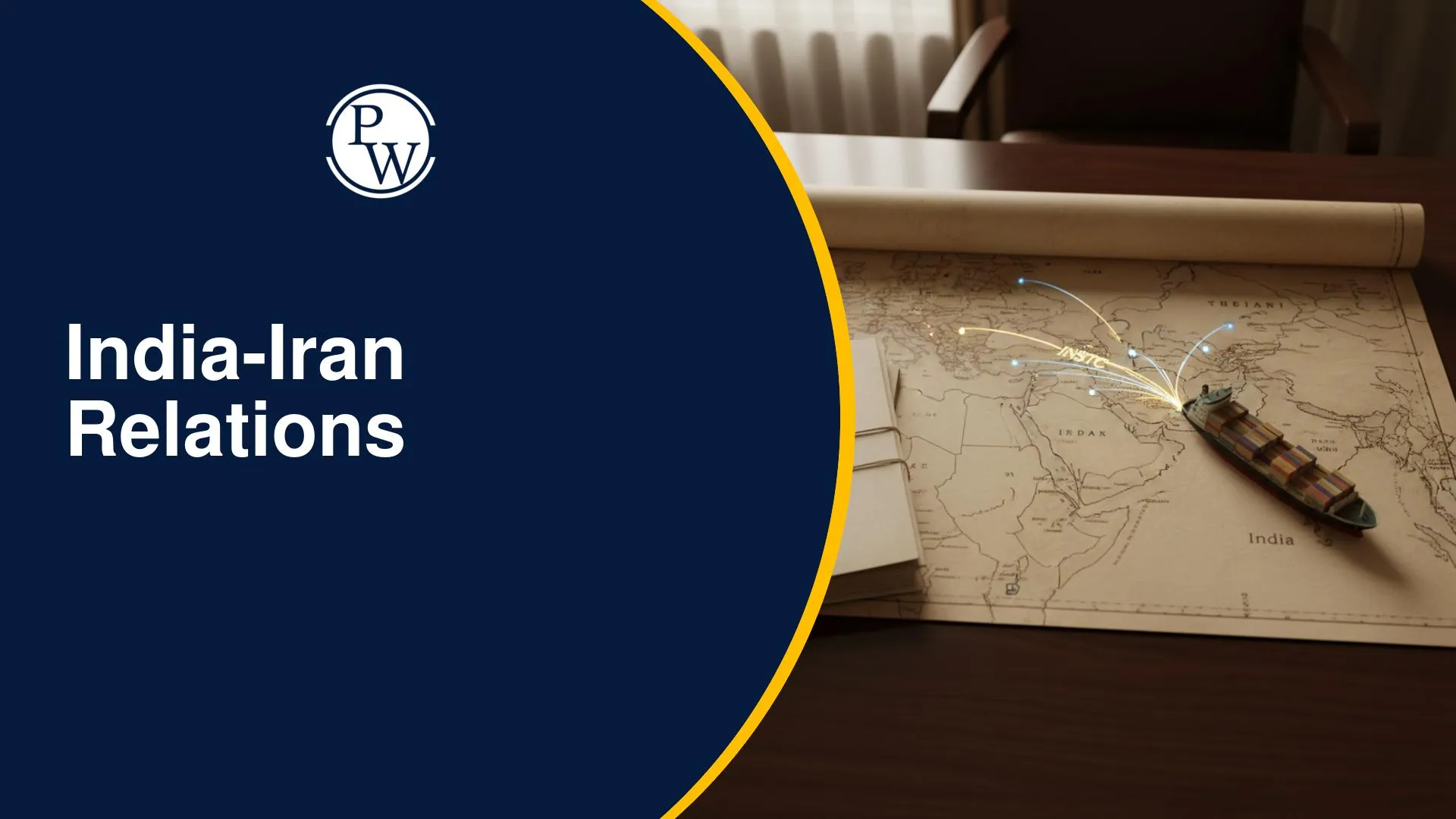
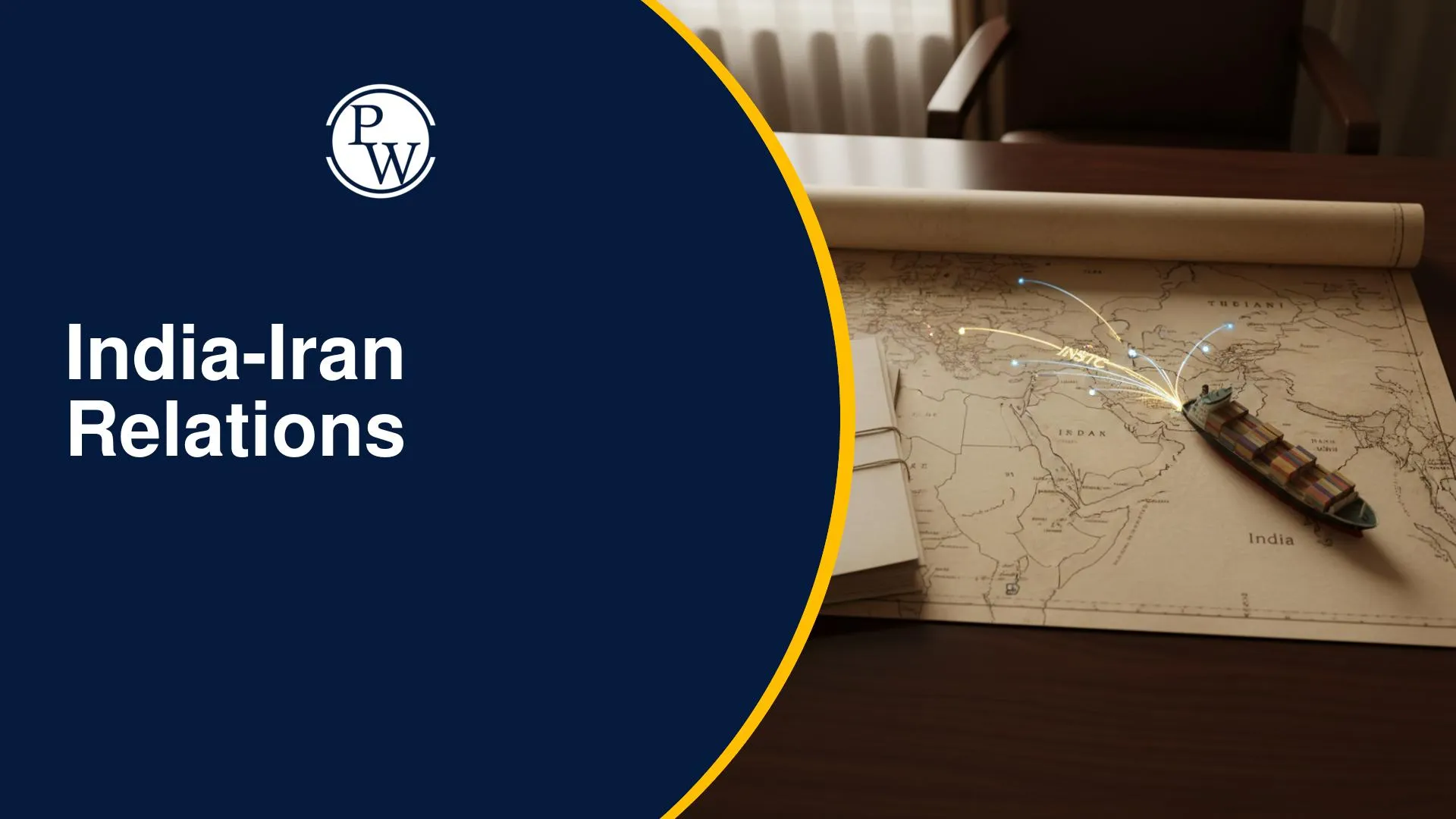
India and Iran share one of the oldest connections in Asia. Their relationship goes back many centuries through trade, cultural exchange, and political contact. Ancient maritime routes across the Persian Gulf helped merchants from the Indian subcontinent and Persia interact regularly. These early exchanges created strong social and economic links between the two regions.
In modern times, India-Iran Relations developed after India gained independence. The two countries formally established diplomatic ties in 1950. Since then, cooperation has expanded in many areas such as trade, energy, connectivity, culture, and regional security. Over time, these engagements have strengthened India Iran bilateral relations and encouraged continuous political dialogue.
Despite several global and regional challenges, the partnership continues to evolve. Strategic projects such as Chabahar Port and regional transport corridors highlight the importance of the partnership. These initiatives also reflect the nature of India and Iran current relations, which include cooperation across economic, political, and strategic sectors.
Historical Background of India-Iran Relations
The historical link between India and Iran is deeply rooted in civilisation and culture. Ancient trade between the Indus Valley region and Persian territories created early economic connections. Traders exchanged spices, textiles, and other goods through maritime routes.
Formal diplomatic ties between India and Iran were established on 15 March 1950, marking the beginning of modern India-Iran Relations. Over time, two key agreements helped strengthen the partnership.
-
Tehran Declaration (2001): Signed during Prime Minister Atal Bihari Vajpayee’s visit to Tehran, this declaration outlined a shared vision for partnership and cooperation between the two countries.
-
New Delhi Declaration (2003): Signed during the visit of Iranian President Mohammad Khatami to India, it created a framework for a long-term strategic partnership and expanded cooperation in several sectors.
India-Iran Relations: Area of Cooperation
India and Iran cooperate across multiple strategic sectors including politics, energy, trade, culture, connectivity, and regional security frameworks. These partnerships shape the broader structure of India Iran bilateral relations and contribute to long-term engagement in regional and global affairs.
1. Political Engagement
Political engagement forms the foundation of India Iran diplomatic relations. The two countries established formal diplomatic ties on 15 March 1950, which created the base for regular political dialogue and cooperation.
High-level visits have played an important role in strengthening ties. Prime Minister P. V. Narasimha Rao visited Iran in 1993, followed by the visit of Iranian President Akbar Hashemi Rafsanjani to India in 1995. These exchanges helped expand political engagement and improve bilateral cooperation.
The relationship gained momentum when Prime Minister Atal Bihari Vajpayee visited Tehran in April 2001. During this visit, both countries signed the Tehran Declaration, which outlined several areas of cooperation and highlighted the importance of dialogue among civilisations.
2. Strategic Partnership
The strategic dimension of India Iran strategic partnership developed further through the New Delhi Declaration, which defined a long-term cooperation framework.
Prime Minister Manmohan Singh later attended the 16th summit of the Non-Aligned Movement in Tehran in 2012, reflecting continued diplomatic engagement.
In 2016, Prime Minister Narendra Modi visited Iran and both countries released a joint statement titled “Civilizational connect, contemporary context.” The statement highlighted shared historical links and reaffirmed the importance of expanding bilateral cooperation.
These initiatives strengthened India Iran geopolitical relations and reinforced long-term diplomatic engagement.
3. Agreements During President Rouhani’s Visit
During the visit of Iranian President Hassan Rouhani to India in February 2018, the two countries signed several agreements covering different sectors.
The agreements included arrangements related to avoidance of double taxation, simplified visa procedures, cooperation in traditional medicine, and an extradition treaty. Both sides also concluded a lease agreement for Phase-1 of Shahid Beheshti Port at Chabahar, which is part of the broader Chabahar Port India Iran project.
These agreements contributed to stronger India Iran economic cooperation and encouraged greater institutional collaboration.
4. Trade and Commercial Relations
Economic exchange forms an important pillar of India Iran trade relations. Historically, trade between the two countries has revolved around India’s import of Iranian crude oil and export of agricultural and manufactured products.
India exports items such as rice, tea, iron and steel, pharmaceuticals, electrical machinery, and organic chemicals to Iran. In return, Iran exports crude oil, petrochemical products, and other resources.
These exchanges have been supported by several India Iran trade agreements, which aim to facilitate business transactions and strengthen economic cooperation.
5. Oil Trade Dynamics
Energy trade has traditionally played a major role in India Iran energy cooperation. Before the tightening of international sanctions, Iran was among India’s major suppliers of crude oil.
At one stage, India was among the largest buyers of Iranian oil globally. During this period, India Iran oil trade significantly contributed to bilateral economic engagement and energy security.
Although sanctions affected imports in later years, energy cooperation remains an important topic in diplomatic discussions between the two countries.
6. Currency Settlement Mechanism
International sanctions created challenges for financial transactions between the two countries. To address these issues, the Reserve Bank of India and Iran’s central bank introduced a currency settlement arrangement.
Under this mechanism, India could pay for Iranian oil using the Indian rupee instead of the US dollar. This arrangement helped maintain trade flows and reduced dependence on dollar-based transactions.
Such arrangements played a role in supporting broader India Iran economic cooperation.
7. Energy Cooperation and Investment
Energy investment discussions have also shaped India Iran energy cooperation. Indian companies have explored opportunities to invest in Iran’s oil, gas, petrochemical, and fertilizer sectors.
There have also been proposals to establish petrochemical plants and fertilizer facilities in the Chabahar Special Economic Zone. These investments aim to strengthen long-term cooperation in the energy sector.
8. Farzad-B Gas Field
The Farzad-B Gas Field in the Persian Gulf was discovered in 2008 by an Indian consortium led by ONGC Videsh Limited.
This gas field remains an important project in discussions related to energy investment and exploration. Negotiations between India and Iran have continued regarding its development and long-term utilisation.
The reserves discovered in the Farzad-B field are considered significant and have potential implications for future energy cooperation.
9. Chabahar Port
The Chabahar Port India Iran project is one of the most significant connectivity initiatives between the two countries.
Located in Iran’s Sistan-Baluchistan province on the Gulf of Oman, Chabahar is Iran’s only oceanic port with direct access to the open sea. In May 2016, India and Iran signed an agreement allowing India to develop and operate two terminals and five berths at the port for a period of ten years.
The port plays a central role in expanding India Iran connectivity projects and improving trade access to Afghanistan and Central Asia.
10. Chabahar–Zahedan Railway Project
Along with port development, India also committed to supporting the Chabahar-Zahedan railway line.
The project aims to connect the port with Iran’s internal railway network, improving transport access toward Afghanistan and Central Asia. This railway corridor is expected to strengthen regional connectivity and support trade logistics.
11. International North-South Transport Corridor (INSTC)
The India Iran INSTC corridor, known as the International North-South Transport Corridor, is a major regional connectivity initiative.
India, Iran, and Russia signed the agreement in 2000 to develop a multi-modal transport network linking Mumbai with cities such as Tehran, Baku, Astrakhan, and Moscow.
The corridor combines ship, rail, and road routes and aims to reduce cargo transit time significantly while lowering transportation costs. It also strengthens India Iran Central Asia connectivity and improves trade links across Eurasia.
12. Ashgabat Agreement
India’s participation in the Ashgabat Agreement strengthened regional transport connectivity.
The agreement involves several countries including Iran, Oman, Kazakhstan, Uzbekistan, and Turkmenistan. It supports a multimodal corridor that facilitates movement of goods between Central Asia and the Persian Gulf region.
This initiative complements broader India Iran connectivity projects.
13. Cultural Exchanges
Cultural cooperation plays an important role in India Iran cultural ties. Cultural institutions operate in both countries to promote educational and cultural exchanges.
An Indian Cultural Centre functions in Tehran, while Iranian cultural centres operate in cities such as Delhi, Hyderabad, and Mumbai. A Hindi language chair has also been established at University of Tehran.
Institutions such as the National Archives of India and the National Library and Archives Organisation of Iran have also collaborated on projects related to historical document preservation and research.
14. Counter-Terrorism Cooperation
Security cooperation is another dimension of India Iran geopolitical relations. Both countries face threats from extremist organisations such as Al-Qaeda and Islamic State.
As a result, India and Iran maintain dialogue on counter-terrorism strategies and regional security issues. These discussions often focus on developments in Afghanistan and West Asia.
This security cooperation supports broader diplomatic engagement and strengthens coordination on regional stability.
Significance of the India Iran Partnership
The partnership between India and Iran carries major strategic importance for regional connectivity and economic cooperation. These ties support India’s broader India Iran foreign policy objectives in West Asia.
-
Bypassing Pakistan: Chabahar provides a direct sea-land route to Afghanistan, where Pakistan denies India transit rights.
-
Countering China: India’s presence in Chabahar balances China's development of the Gwadar Port in Pakistan, located just 100 km away.
-
Geopolitical Balancing: India maintains strong ties with Israel and Arab nations (Saudi Arabia, UAE) while keeping a pragmatic relationship with Iran.
These factors highlight the growing India Iran strategic importance in regional connectivity and geopolitical cooperation.
Major Challenges of India-Iran Relations
The relationship faces significant "headwinds" due to global and regional pressures.
-
US Sanctions: Since the US withdrawal from the Iran nuclear deal (JCPOA) in 2018, India has faced immense pressure to zero out oil imports from Iran.
-
Payment Mechanisms: Banking restrictions have made it difficult for India to pay for goods, leading to the use of a Rupee-Rial settlement mechanism which has seen its reserves deplete over time.
-
Geopolitical Balancing Acts:
-
Iran-Israel: India has a close strategic partnership with Israel, while Iran is a fierce critic.
-
Iran-China: The 25-year strategic pact between Iran and China concerns New Delhi regarding China's expanding footprint in West Asia.
-
Diplomatic Friction: Occasional statements from Iran’s leadership regarding Jammu and Kashmir have caused diplomatic tension, as India views the issue as strictly internal.
India-Iran Relations: Recent Developments (March 2026)
Recent developments show that India-Iran Relations remain active despite regional tensions.
-
Diplomatic Engagement: On March 12, 2026, PM Modi spoke with Iranian President Dr. Masoud Pezeshkian.
-
Security Concerns: Both leaders discussed the evolving security situation in West Asia, with India emphasizing the safety of Indian nationals and the importance of unhindered transit of energy and goods.
-
Joint Commission: The 20th Joint Commission Meeting (JCM) was co-chaired in May 2025, focusing on long-term contracts for the Chabahar port.
India-Iran Relations represent a historically strong partnership shaped by trade, culture, and strategic cooperation. The relationship has expanded across multiple sectors including connectivity, energy, trade, and diplomacy.
Projects such as Chabahar Port and the International North-South Transport Corridor highlight the long-term strategic value of the partnership. Cultural exchanges and economic engagement further strengthen bilateral cooperation.
Although geopolitical challenges and sanctions have affected some areas of cooperation, dialogue and diplomatic engagement continue to support the relationship. As regional connectivity and economic integration increase, India-Iran Relations are expected to remain an important component of regional diplomacy and strategic cooperation.
India-Iran Relations FAQs
When were formal diplomatic relations established between India and Iran?
Why is Chabahar Port important for India?
What is the International North-South Transport Corridor (INSTC)?