Jallianwala Bagh Massacre Day: History, Significance, Facts (13 April 1919)

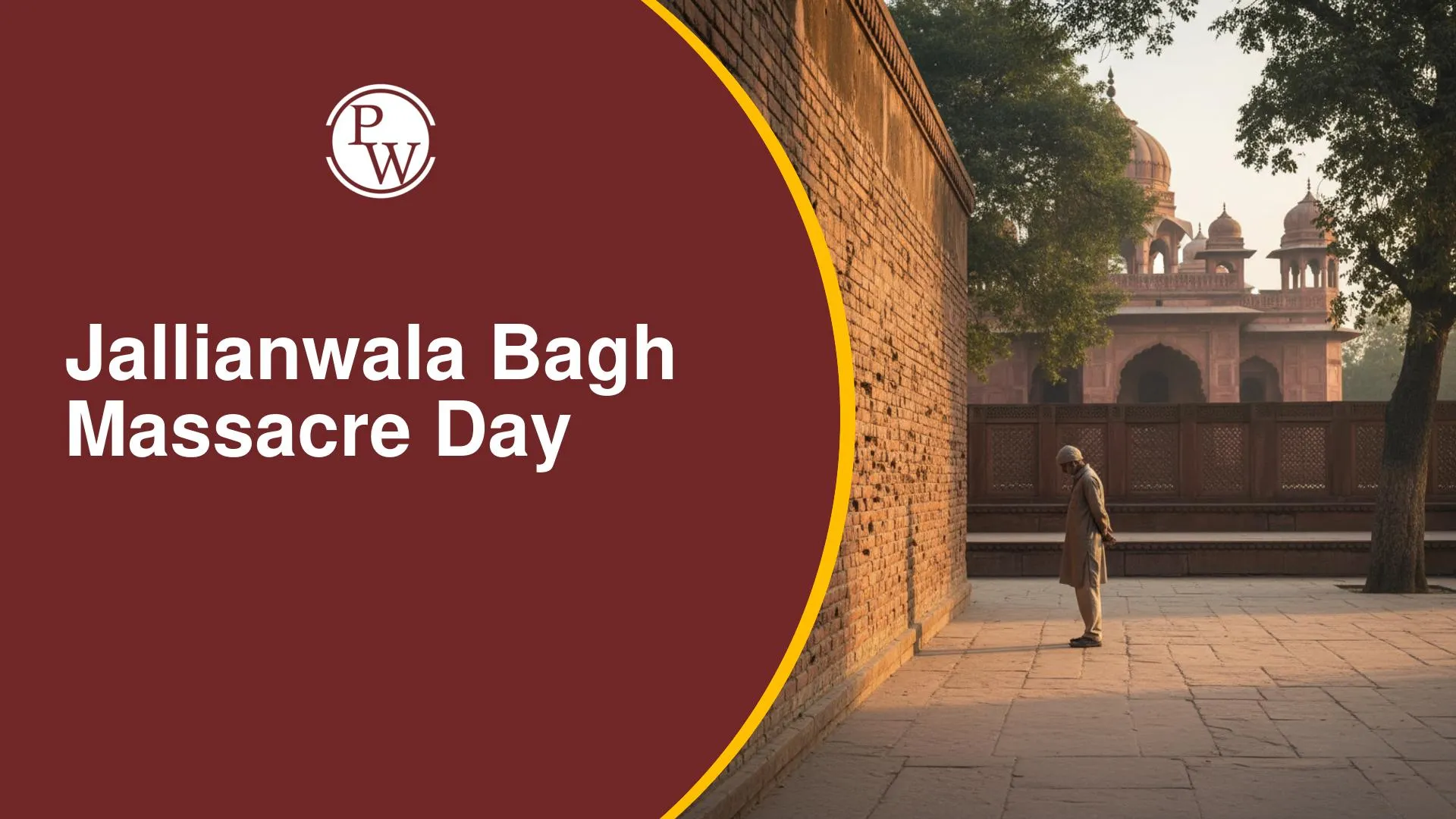
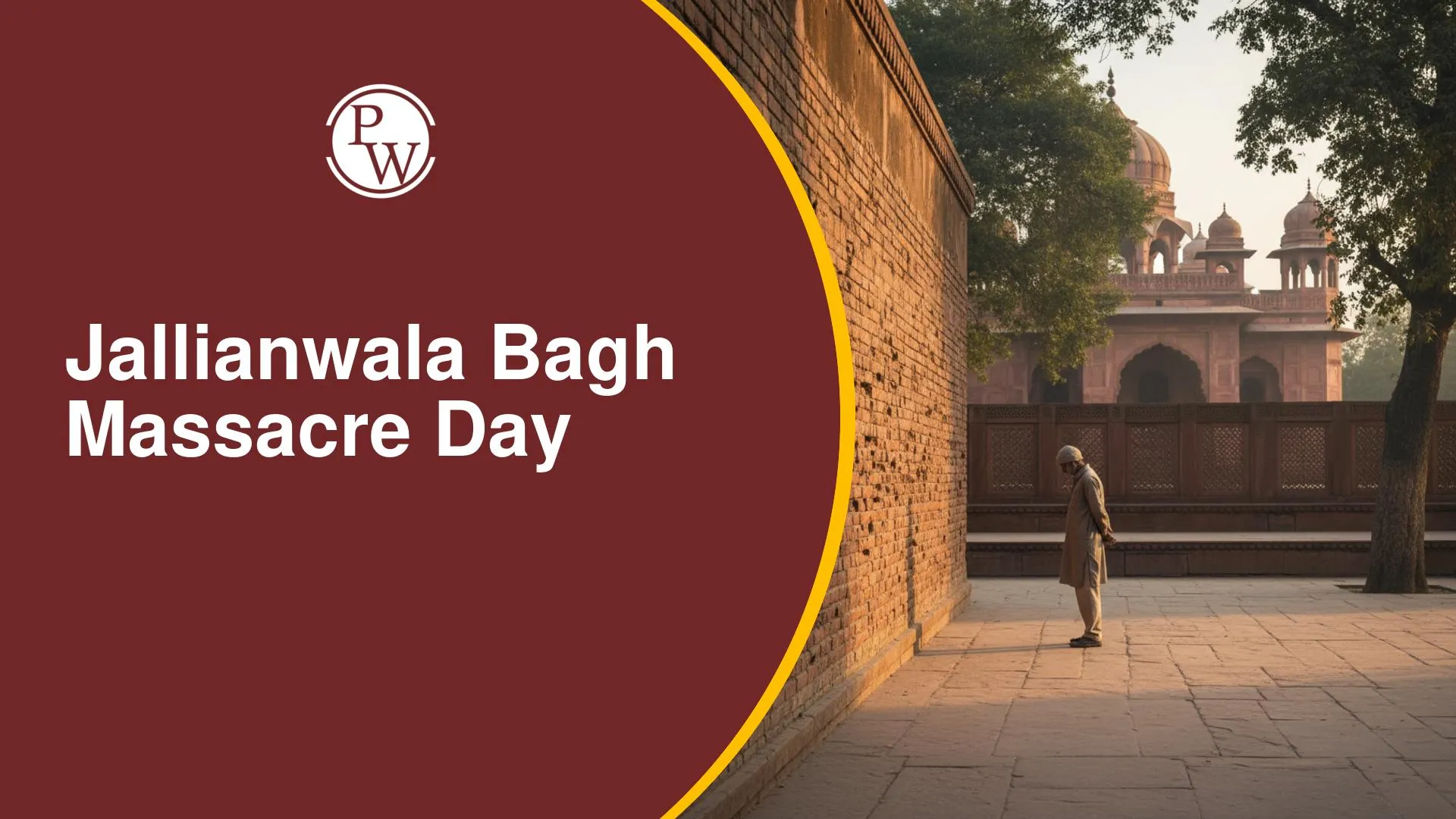
Jallianwala Bagh Massacre Day is remembered as one of the most tragic and shocking events in Indian history. The incident that took place on the Jallianwala Bagh massacre date, 13 April 1919, not only exposed the brutality of British rule but also completely transformed the direction of India’s freedom struggle. What began as a peaceful gathering in Jallianwala Bagh Amritsar soon turned into a horrifying massacre that shook the entire nation.
Understanding the Jallianwala Bagh history is important because it explains how public anger against British rule intensified and how a single event pushed millions of Indians towards demanding complete independence instead of gradual reforms.
Jallianwala Bagh Massacre Day Overview
The Jallianwala Bagh Massacre Day commemorates the brutal killing of hundreds of innocent civilians at Jallianwala Bagh Amritsar.
| Jallianwala Bagh Massacre Day Overview | |
| Category | Details |
| Date of Event | 13 April 1919 |
| Location | Jallianwala Bagh, Amritsar, Punjab |
| Primary Occasion | Baisakhi Festival & Protest against Rowlatt Act |
| British Officer in Command | Brigadier-General Reginald Dyer |
| Immediate Cause | Arrest of Dr. Saifuddin Kitchlew and Dr. Satya Pal |
| Key Protesters | Unarmed civilians (men, women, and children) |
| Casualties | Hundreds killed (Official: 379; Unofficial: 1,000+) |
| Major Consequence | Catalyst for the Non-Cooperation Movement |
Background Leading to the Tragedy
To truly understand the Jallianwala Bagh history, one must look at the political atmosphere of India after World War I. During the war, Indians had supported the British with the hope that they would be rewarded with greater freedom and political rights. However, instead of reforms, the British government introduced stricter laws and increased repression, which created widespread dissatisfaction among Indians.
Punjab, especially Jallianwala Bagh Amritsar, became a centre of growing resistance. The British administration feared a possible uprising and decided to suppress any form of protest. This tense situation laid the foundation for what would soon become the Jallianwala Bagh tragedy.
The Rowlatt Act Protest
The immediate trigger behind the incident was the Rowlatt Act protest Jallianwala Bagh. The Rowlatt Act, passed in 1919, allowed the British government to arrest any person without trial and detain them for long periods. This law was widely criticised and seen as a direct attack on civil liberties.
As a result, protests erupted across the country. Mahatma Gandhi called for a nationwide strike, and people from different regions began organising peaceful demonstrations. In Amritsar, the situation became even more tense after the arrest of popular leaders Dr. Saifuddin Kitchlew and Dr. Satya Pal. Their arrest angered the public and led to large gatherings of people who wanted to protest peacefully.
Many villagers who came to the city for the Baisakhi festival were unaware of the restrictions imposed by the British authorities, which made the situation even more complex.
What Happened on 13 April 1919 Jallianwala Bagh
The events of 13 April 1919 Jallianwala Bagh remain deeply shocking.
Thousands of people gathered:
-
To celebrate Baisakhi
-
To attend a peaceful meeting
Entry of General Dyer
General Dyer Jallianwala Bagh entered the area with armed soldiers.
-
Blocked the only exit
-
Gave no warning
-
Ordered immediate firing
The Firing
-
Continued for about 10 minutes
-
Around 1,650 rounds fired
-
Stopped only when ammunition was exhausted
People had no escape. Many were shot, while others jumped into wells to save themselves.
This brutal act defines the Jallianwala Bagh tragedy.
Jallianwala Bagh Facts
Here are some important Jallianwala Bagh facts that highlight the severity of the incident:
-
Official death toll: 379
-
Estimated deaths: Over 1,000
-
Thousands were injured
-
No medical help was provided
-
Martial law was imposed after the incident
These facts clearly show the cruelty of British rule.
Jallianwala Bagh Causes and Consequences
Understanding Jallianwala Bagh causes and consequences gives a complete picture of the event.
Causes
-
Repressive Rowlatt Act
-
Growing nationalist movement
-
Arrest of popular leaders
-
Lack of communication about restrictions
-
Harsh colonial policies
Consequences
-
Nationwide outrage and protests
-
Loss of trust in British government
-
Rise of mass movements
-
Beginning of organised resistance
This incident marked a shift from moderate politics to mass agitation.
Jallianwala Bagh Significance in Freedom Struggle
The Jallianwala Bagh significance lies in the fact that it marked a turning point in India’s independence movement. Before this incident, many Indian leaders were still hoping for reforms and self-governance within the British Empire. However, after witnessing such brutality, the demand shifted towards complete independence.
The massacre united people across different regions, religions, and communities. It strengthened nationalist feelings and inspired future revolutionaries to take stronger action against British rule. It also gave Mahatma Gandhi the moral ground to launch mass movements like the Non-Cooperation Movement.
Aftermath and Reaction
The Jallianwala Bagh tragedy was strongly condemned both in India and internationally. Indian leaders expressed deep outrage. Rabindranath Tagore returned his knighthood in protest, and Mahatma Gandhi intensified the freedom movement.
The British government set up the Hunter Commission to investigate the incident, but its findings and actions were not satisfactory. Although General Dyer was removed from his position, he was not given severe punishment. This leniency further angered Indians and made them realise that justice could not be expected under British rule.
Jallianwala Bagh Memorial and Anniversary
Today, the Jallianwala Bagh memorial stands at the site in Amritsar as a symbol of remembrance and respect for those who lost their lives. The preserved bullet marks, the Martyrs’ Well, and the memorial structures serve as reminders of the sacrifice made by innocent people.
Every year, the Jallianwala Bagh anniversary is observed on 13 April. On this day, people across India pay tribute to the victims and remember the importance of freedom and justice.
Jallianwala Bagh UPSC Importance
For students preparing for competitive exams, especially Jallianwala Bagh UPSC, this topic is extremely important. Questions are often asked about its causes, impact, and role in the freedom struggle.
Understanding this event helps in analysing how colonial policies influenced mass movements and how public sentiment evolved over time.
Jallianwala Bagh Massacre day FAQs
Q1. What is Jallianwala Bagh Massacre Day?
Q2. What is the Jallianwala Bagh massacre date?
Q3. Who was General Dyer?
Q4. What was the main cause of the massacre?