







Medieval Empires in India: Major Dynasties, Timeline, History, Significance & UPSC PYQs
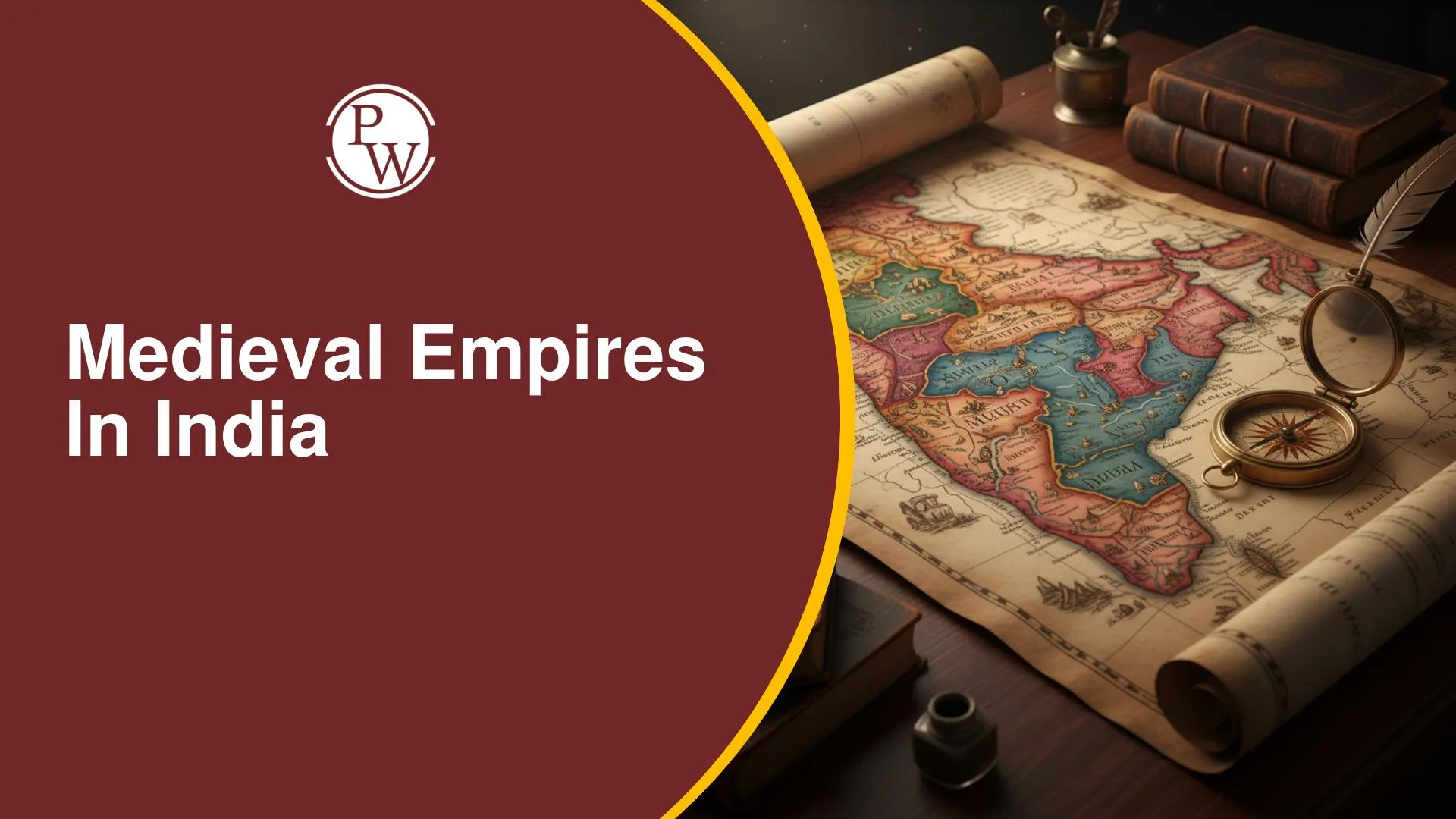
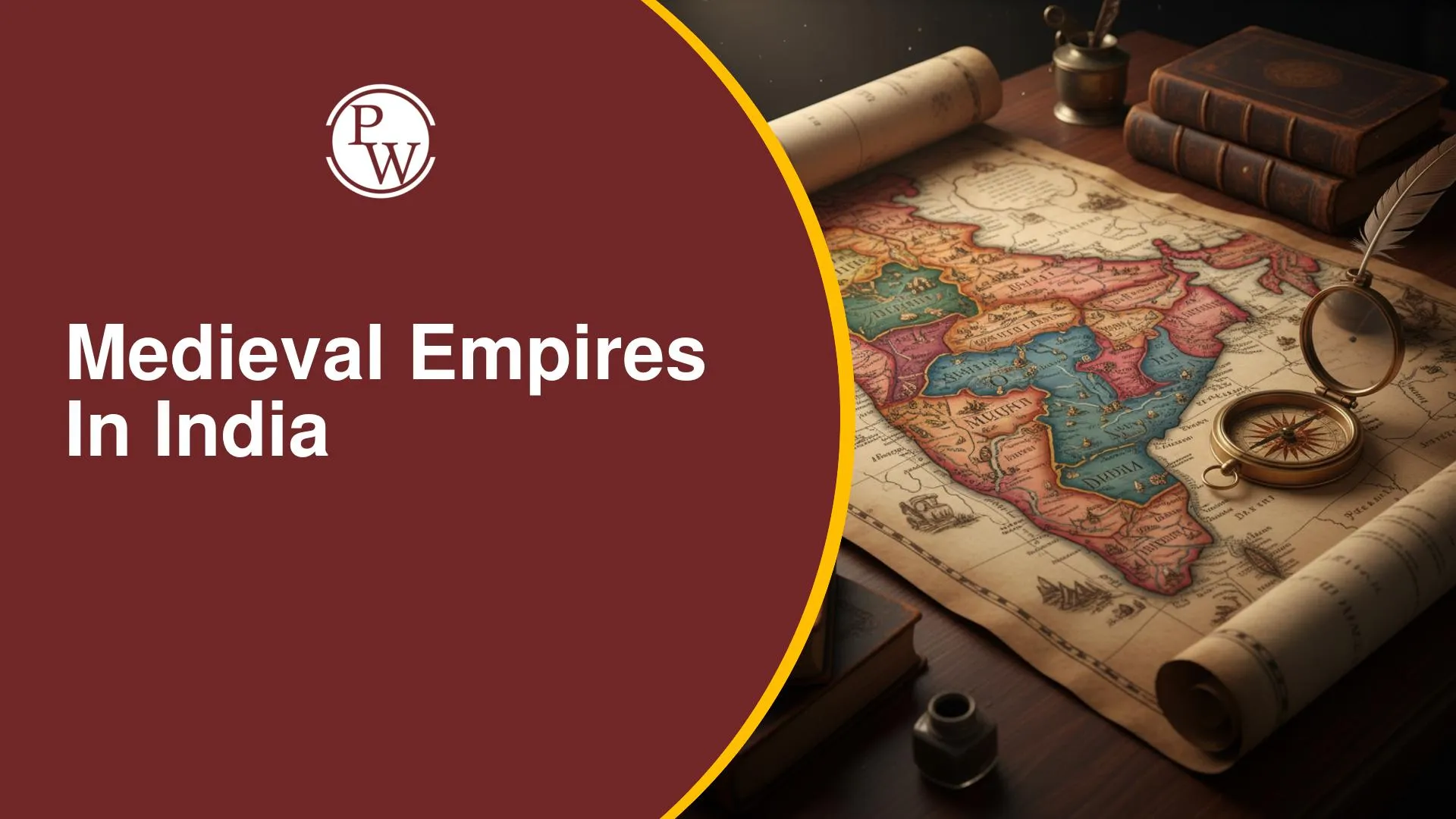
The Medieval Empires in India represent one of the most transformative phases in Indian history, spanning roughly from the 7th century CE to the mid-19th century. This era witnessed the rise and fall of powerful kingdoms, the introduction of new administrative systems, significant developments in art and architecture, and deep cultural exchanges across the subcontinent.
From the Rajput Kingdoms of northern India to the Mughal Empire and the Maratha confederacy, medieval India shaped the political and cultural foundations that influenced modern India.
This topic of 'Medieval Empires in India' is important from the perspective of the UPSC IAS Examination, falling under General Studies Paper I (Medieval Indian History and Culture), Prelims, State PCS Examinations, and History Optional.
Timeline of Medieval Empires in India in Chronological Order
The Medieval Period of Indian History (c. 750 CE–1700 CE) witnessed the rise and fall of several important dynasties and empires that shaped India's political, economic, social, and cultural development.
Major powers such as the Rajputs, Delhi Sultanate, the Vijayanagara Empire, Bahmani Sultanate, and Mughal Empire established distinct administrative systems, promoted trade and urbanisation, and contributed significantly to architecture, literature, art, and religion.
Understanding the chronological sequence of these medieval empires is important for UPSC Prelims and Mains, as questions are frequently asked about their rulers, administration, cultural contributions, and historical significance.
The timeline below provides a quick overview of the major Medieval Empires in India and their periods of rule:
|
Period |
Empire / Dynasty |
|
c. 650–1200 CE |
Rajput Kingdoms |
|
c. 750–1174 CE |
Pala Empire |
|
c. 753–982 CE |
Rashtrakuta Empire |
|
c. 850–1279 CE |
Chola Empire |
|
c. 973–1189 CE |
Western Chalukya Empire |
|
c. 1077–1327 CE |
Hoysala Empire |
|
c. 1206–1526 CE |
Delhi Sultanate |
|
c. 1336–1646 CE |
Vijayanagara Empire |
|
c. 1347–1527 CE |
Bahmani Sultanate |
|
c. 1490–1686 CE |
Deccan Sultanates |
|
c. 1526–1857 CE |
Mughal Empire |
|
c. 1674–1818 CE |
Maratha Empire |
|
c. 1699–1849 CE |
Sikh Empire |
Major Medieval Dynasties of India
Several powerful dynasties and empires ruled India during the medieval period, shaping its political, cultural, economic, and architectural development. Their contributions continue to hold significance in Indian history and are important for UPSC preparation.
Rajput Kingdoms (c. 650–1200 CE)
The Rajput Kingdoms dominated northern and central India before the advent of the Delhi Sultanate. Major Rajput clans included the Paramaras, Chandellas, Chahamanas (Chauhans), and Pratiharas. They were known for their warrior tradition, clan-based political structure, and contributions to temple architecture — notably at Khajuraho and Dilwara.
Pala Empire (c. 750–1174 CE)
Founded by Gopala in Bengal, the Pala Empire was a Buddhist dynasty that promoted Mahayana Buddhism and established great monasteries like Vikramashila and Nalanda as centres of learning. The Palas maintained strong trade ties with Southeast Asia.
Rashtrakuta Empire (c. 753–982 CE)
Based in the Deccan, the Rashtrakutas were known for their military power and patronage of literature and architecture. The Kailasa Temple at Ellora — carved entirely from a single rock — was built under Rashtrakuta ruler Krishna I.
Chola Empire (c. 850–1279 CE)
The Cholas of Tamil Nadu built one of the most powerful naval empires in Indian history. Under Rajaraja I and Rajendra I, they extended their influence to Southeast Asia. The Brihadisvara Temple at Thanjavur remains a landmark of Chola architecture.
Hoysala Empire (c. 1077–1327 CE)
The Hoysalas ruled over present-day Karnataka and are known for their distinctive star-shaped temple architecture — as seen at Belur, Halebid, and Somnathapura. They served as a cultural bridge between northern and southern traditions.
Delhi Sultanate (c. 1206–1526 CE)
The Delhi Sultanate marked the beginning of sustained Islamic rule in India. It comprised five successive dynasties — Mamluk (Slave), Khilji, Tughlaq, Sayyid, and Lodi. Key contributions include the introduction of the iqta system, Indo-Islamic architecture (Qutb Minar), and administrative reforms under Alauddin Khilji and Muhammad bin Tughlaq.
Vijayanagara Empire (c. 1336–1646 CE)
Founded by Harihara I and Bukka I, the Vijayanagara Empire was the last great Hindu empire of the south. Its capital at Hampi was one of the wealthiest cities of its time. The empire served as a cultural and political bulwark against Deccan Sultanate expansion until the Battle of Talikota in 1565.
Bahmani Sultanate (c. 1347–1527 CE)
The Bahmani Kingdom was founded by Alauddin Hasan Bahman Shah in the Deccan. It promoted Persian culture and was known for its rivalries with Vijayanagara. The Bahmani Sultanate later fragmented into five Deccan Sultanates — Bijapur, Golconda, Ahmadnagar, Bidar, and Berar.
Mughal Empire (c. 1526–1857 CE)
Founded by Babur after the First Battle of Panipat in 1526, the Mughal Empire reached its peak under Akbar, Jahangir, Shah Jahan, and Aurangzeb. Key contributions include the mansabdari system, Din-i-Ilahi under Akbar, and monumental architecture such as the Taj Mahal, Red Fort, and Fatehpur Sikri.
Maratha Empire (c. 1674–1818 CE)
Founded by Chhatrapati Shivaji Maharaj, the Maratha Empire challenged Mughal dominance and eventually expanded across much of India under the Peshwas. The Marathas introduced a decentralised administrative system and remained the dominant power in India until the Anglo-Maratha Wars.
Sikh Empire (c. 1699–1849 CE)
The Sikh Empire under Maharaja Ranjit Singh controlled Punjab, Kashmir, and parts of the northwest frontier. It was one of the last independent kingdoms to fall to British rule, after the Anglo-Sikh Wars.
UPSC Previous Year Questions on Medieval Empires in India
UPSC has frequently asked questions on the Delhi Sultanate, Vijayanagara Empire, Mughal Empire, and medieval administrative systems. Practising previous year questions helps aspirants understand important themes, question patterns, and the level of historical understanding required in the UPSC examination.
UPSC Prelims
UPSC Prelims 2022 Question:
Q. With reference to Indian history, consider the following statements
-
The Dutch established their factories/warehouses on the east coast on lands granted to them by Gajapati rulers.
-
Alfonso de Albuquerque captured Goa from the Bijapur Sultanate.
-
The English East India Company established a factory at Madras on a plot of land leased from a representative of the Vijayanagara empire.
Which of the statements given above are correct?
-
1 and 2 only
-
2 and 3 only
-
1 and 3 only
-
1, 2 and 3
Q. Who among the following Mughal Emperors shifted emphasis from illustrated manuscripts to album and individual portrait?
[UPSC Civil Services Exam – 2019 Prelims]
(a) Humayun
(b) Akbar
(c) Jahangir
(d) Shah Jahan
Q. With reference to Mughal India, what is/are the difference/differences between Jagirdar and Zamindar?
-
Jagirdars were holders of land assignments in lieu of judicial and police duties, whereas Zamindars were holders of revenue rights without obligation to perform any duty other than revenue collection.
-
Land assignments to Jagirdars were hereditary and revenue rights of Zamindars were not hereditary.
Select the correct answer using the code given below.
[UPSC Civil Services Exam – 2019 Prelims]
(a) 1 only
(b) 2 only
(c) Both 1 and 2
(d) Neither 1 nor 2
Q. The arrival of Babur into India led to the
-
introduction of gunpowder in the subcontinent
-
introduction of the arch and dome in the region’s architecture
-
establishment of Timurid dynasty in the region
Select the correct answer using the code given below:
[UPSC Civil Services Exam – 2015 Prelims]
(a) 1 and 2 only
(b) 3 only
(c) 1 and 3 only
(d) 1, 2 and 3
Q. Ibadat Khana at Fatehpur Sikri was
[UPSC Civil Services Exam – 2014 Prelims]
(a) the mosque for the use of Royal Family
(b) Akbar’s private prayer chamber
(c) the hall in which Akbar held discussions with scholars of various religions
(d) the room in which the nobles belonging to different religions gathered to discuss religious affairs
Medieval Empires in India FAQs
Which was the first medieval empire established in India?
What was the significance of the Vijayanagara Empire in medieval Indian history?
What are the rights of refugees under the 1951 Refugee Convention?
How did the Mughal Empire contribute to Indian administration?
What caused the fall of the Delhi Sultanate?










 Live & recorded classes available at easeDashboard for progress trackingLakhs of practice questions

