






Property, Plant and Equipment, Understand AS 10 for CA Inter
Learn the detailed accounting treatment of Property, Plant and Equipment under AS 10, including recognition, measurement, depreciation methods, and its applicability for accurate financial reporting.
 Mridula Sharma26 Dec, 2024
Share
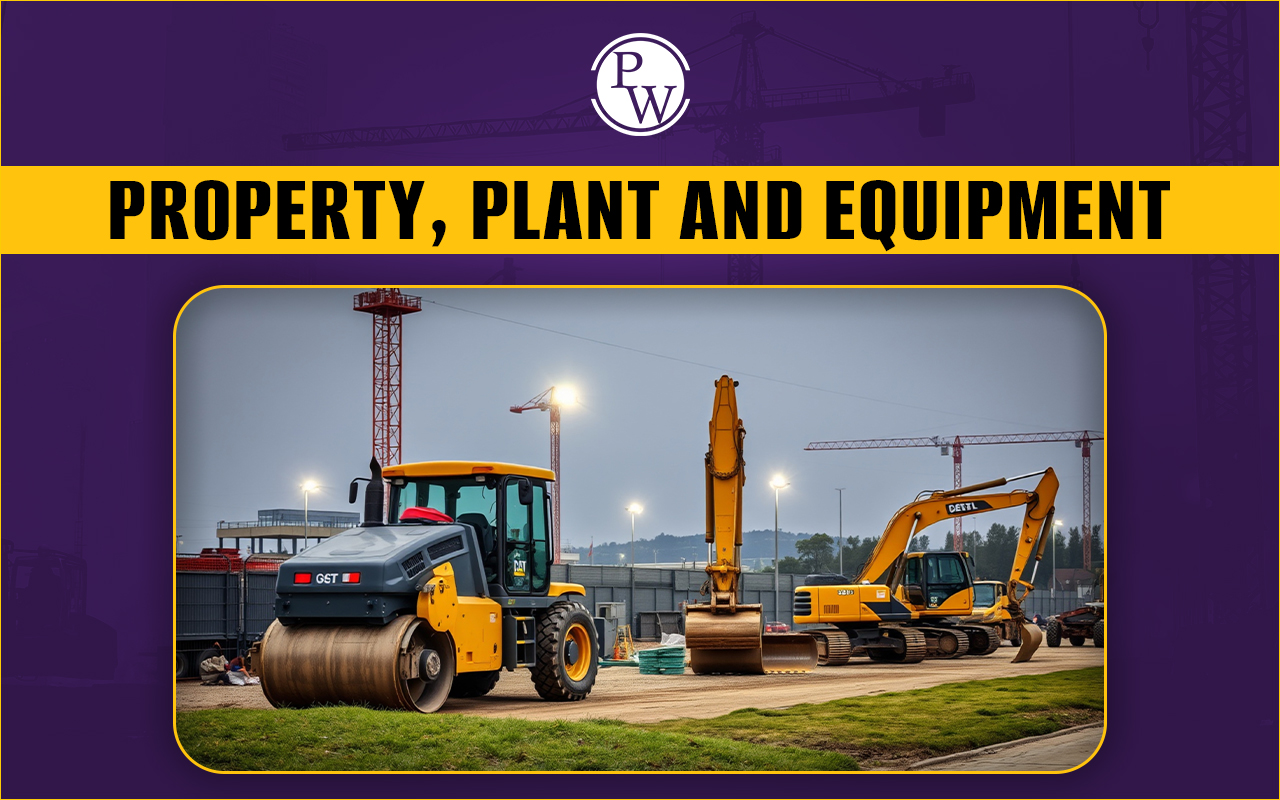
Understanding Property, Plant and Equipment (PPE) is a cornerstone for financial reporting and accounting, especially for CA students aspiring to excel in their CA exams . AS 10 lays down comprehensive guidelines to ensure users of financial statements gain insights into the investments made in PPE and the associated changes over time. It also subsumes the provisions of the now-withdrawn AS 6, which previously governed depreciation.
What Are Property, Plant, and Equipment?
Property, Plant, and Equipment (PPE) refer to tangible assets held by an enterprise for use in production, supply of goods or services, rental, or administrative purposes. These assets are not meant for sale but contribute to the business's long-term operational capabilities. Examples include buildings, machinery, vehicles, and office equipment. The following are the key characteristics of Property, Plant, and Equipment:- They are tangible assets.
- They are held for use in operations and not for sale.
- They provide future economic benefits.
Applicability of AS 10 Property, Plant and Equipment
The scope of Property, Plant and Equipment under AS 10 is specific and excludes certain categories. Biological assets related to agricultural activities are excluded, except for bearer plants, though the standard doesn’t apply to the produce on those plants. Similarly, wasting assets such as mineral rights and costs linked to the exploration and extraction of non-regenerative resources like oil and natural gas are beyond the scope of AS 10. This precise applicability ensures that only relevant assets are subjected to the standard's provisions, enhancing the reliability of financial statements.Recognition and Measurement of Property, Plant, and Equipment
Recognition and measurement are critical to accurately reflecting PPE in financial statements.Recognition:
PPE is recognized as an asset if:- Future economic benefits are probable.
- The cost can be reliably measured.
Measurement:
Enterprises can choose between:- Cost Model: Carrying amount = Cost - Accumulated Depreciation - Impairment Losses.
- Revaluation Model: Carrying amount = Revalued Fair Value - Accumulated Depreciation - Impairment Losses.
Note : Revaluations must occur regularly to ensure the carrying amount aligns with fair value.
Depreciation of Property, Plant and Equipment
Depreciation is a pivotal aspect of accounting standards for Property, Plant and Equipment. AS 10 mandates that depreciation be recognized systematically over the asset’s useful life. The choice of depreciation method, such as the straight-line method or diminishing balance method, should reflect the pattern in which the asset’s economic benefits are consumed. Regular reviews of residual value and useful life ensure that depreciation charges remain relevant and aligned with the asset's actual performance. This systematic approach to depreciation fosters transparency and accountability in financial reporting.Differences Between AS 10 and Ind AS 16
While AS 10 and Ind AS 16 both deal with Property, Plant, and Equipment, there are notable differences:| Differences Between AS 10 and Ind AS 16 | ||
|---|---|---|
| Aspect | AS 10 | Ind AS 16 |
| Real Estate Developers | Excluded | Included |
| Inspection Costs | Not specified | Capitalized |
| Self-Constructed Assets | No explicit mention | Unusual costs excluded |
| Joint Ownership | Specifically addressed | Not addressed (covered in Ind AS 31) |
| Assets Held for Sale | Covered | Addressed under Ind AS 105 |
Also Check: Price Determination in Different Markets
Depreciation Methods and Their Impact on Financial Statements
Choosing the appropriate depreciation method significantly affects profit and loss statements. For instance:- Straight-Line Method (SLM): Spreads costs evenly over the asset's useful life.
- Diminishing Balance Method: Higher depreciation in early years.
- Units of Production Method: Based on usage or output.
Major Updates From AS 6 to AS 10
AS 6, which dealt with depreciation, was withdrawn, and its provisions were incorporated into AS 10. This change provides a unified approach to PPE and depreciation accounting, simplifying compliance and reporting. Achieve your dream of becoming a Chartered Accountant with PW CA Courses. Our expert-led classes and personalized guidance will equip you to master complex topics like Property, Plant and Equipment and succeed in your CA exams. Enroll now to secure your future!| Also Check: | |
| Market Structures | Statistical Representation of Data |
| Correlation and Regression | Probability |
| Sampling | Statistics |
Property, Plant and Equipment FAQs
What are Property, Plant, and Equipment?
PPE are tangible assets used in operations, not for resale, and provide long-term economic benefits.
How is depreciation calculated under AS 10?
Depreciation is based on the asset’s cost, residual value, and useful life using methods like SLM or diminishing balance.
What is the difference between the cost and revaluation models?
The cost model deducts depreciation and impairment losses from the asset's cost, while the revaluation model adjusts the asset's value to fair market value.
Are biological assets covered under AS 10?
Only bearer plants are covered under AS 10; other biological assets are excluded.
🔥 Trending Blogs


Talk to a counsellorHave doubts? Our support team will be happy to assist you!


Check out these Related Articles




Join 15 Million students on the app today!
 Live & recorded classes available at easeDashboard for progress trackingMillions of practice questions at your fingertips


Free Learning Resources
PW Books
Notes (Class 10-12)
PW Study Materials
Notes (Class 6-9)
Ncert Solutions
Govt Exams
Our Other Websites
Class 6th to 12th Online Courses
Govt Job Exams Courses
UPSC Coaching
Defence Exam Coaching
Gate Exam Coaching
Other Exams
Know about Physics Wallah
Physics Wallah is an Indian edtech platform that provides accessible & comprehensive learning experiences to students from Class 6th to postgraduate level. We also provide extensive NCERT solutions, sample paper, NEET, JEE Mains, BITSAT previous year papers & more such resources to students. Physics Wallah also caters to over 3.5 million registered students and over 78 lakh+ Youtube subscribers with 4.8 rating on its app.
We Stand Out because
We provide students with intensive courses with India’s qualified & experienced faculties & mentors. PW strives to make the learning experience comprehensive and accessible for students of all sections of society. We believe in empowering every single student who couldn't dream of a good career in engineering and medical field earlier.
Our Key Focus Areas
Physics Wallah's main focus is to make the learning experience as economical as possible for all students. With our affordable courses like Lakshya, Udaan and Arjuna and many others, we have been able to provide a platform for lakhs of aspirants. From providing Chemistry, Maths, Physics formula to giving e-books of eminent authors like RD Sharma, RS Aggarwal and Lakhmir Singh, PW focuses on every single student's need for preparation.
What Makes Us Different
Physics Wallah strives to develop a comprehensive pedagogical structure for students, where they get a state-of-the-art learning experience with study material and resources. Apart from catering students preparing for JEE Mains and NEET, PW also provides study material for each state board like Uttar Pradesh, Bihar, and others
Copyright © 2026 Physicswallah Limited All rights reserved.