






How to Show CFA Designation on Your Resume



Many students pass a CFA exam level and then feel unsure about the wording on their resume. Should the letters CFA go after the name? Can Level 1 be shown as a title? A small mistake can make a recruiter think you hold a credential that you have not earned yet.
The answer depends on your status. Only active charterholders in good standing can write CFA after their name, while everyone else should state their progress in plain words. PW explains each case with simple examples, and its CFA online batches support students from Level 1 toward the charter.
How to Show CFA Designation on Resume: Check Your Status First
The right wording depends on where you stand in the CFA Program. Before you write anything, find your status in the list below.
You may be one of these:
-
An active CFA charterholder and CFA Institute Charterholder Member in good standing
-
A CFA Program candidate registered for an upcoming exam
-
Someone who has passed Level I, Level II, or Level III
-
Someone who passed all three levels but has not received the charter yet
-
A former (lapsed) charterholder
Each status has its own wording. Using the wrong one can show a credential you do not hold, and recruiters notice that quickly. To become a charterholder, you also need to meet the work experience requirement for charterholder membership.
Where Should CFA Be Listed on a Resume?
There are two natural places to show the CFA designation on a resume. Both are for charterholders, and each does a slightly different job.
1. After your name: This tells the reader about your professional designation right at the top.
Example: Abhinandan Sharma, CFA
2. In a separate credential entry: This gives more detail, such as the issuing body and the year.
Example: CFA® Charterholder, CFA Institute
Many people use both. A CFA charterholder resume often shows the letters beside the name and the full entry lower down.
How to Write CFA After Your Name
If you want to know how to add the CFA designation to resume headers, the rule is simple. The CFA Institute allows the letters CFA after your name only if you are a Charterholder Member in good standing.
-
Correct: Jane Doe, CFA
-
Incorrect: Jane Doe, CFA®
Do not put the registered trademark symbol after a person's name. The ® mark is meant for running text, not for the CFA designation after a name. Use a comma, then the letters, and nothing else.
If you have only passed an exam level, do not use CFA after your name on your resume. Passing Level I, II, or III does not make you a charterholder.
How to Mention CFA in the Education or Certifications Section
You can show CFA in the resume’s education section or in the certifications section. Both are fine. Pick the one that matches the rest of your resume.
For a charterholder, write:
CFA® Charterholder, CFA Institute
Charter awarded: 2026
The year is optional, but it helps when your credentials are listed in order.
If you have passed a level but have no charter yet, the entry should look different, as the table below shows:
| Status | What to write in the section |
| Active charterholder | CFA® Charterholder, CFA Institute |
| Passed Level I | CFA Program: Passed Level I |
| Passed Level II | CFA Program: Passed Level II |
| Registered for next exam | CFA Program candidate |
This is how to write CFA on a resume without confusion. If you are also weighing other finance credentials for the same section, the comparison of CFA vs CAIA can help you decide what to add next.
How to Put CFA Level 1 on Resume
Passing Level I is a real achievement, and you should show it. It is not just a designation. When you want to know how to list CFA Level 1 on a resume, state the result plainly.
Example:
Professional Development
CFA Program: Passed Level I, 2026
Do not write "Name, CFA Level I" or "Name, CFA." That suggests you are a charterholder, which you are not yet.
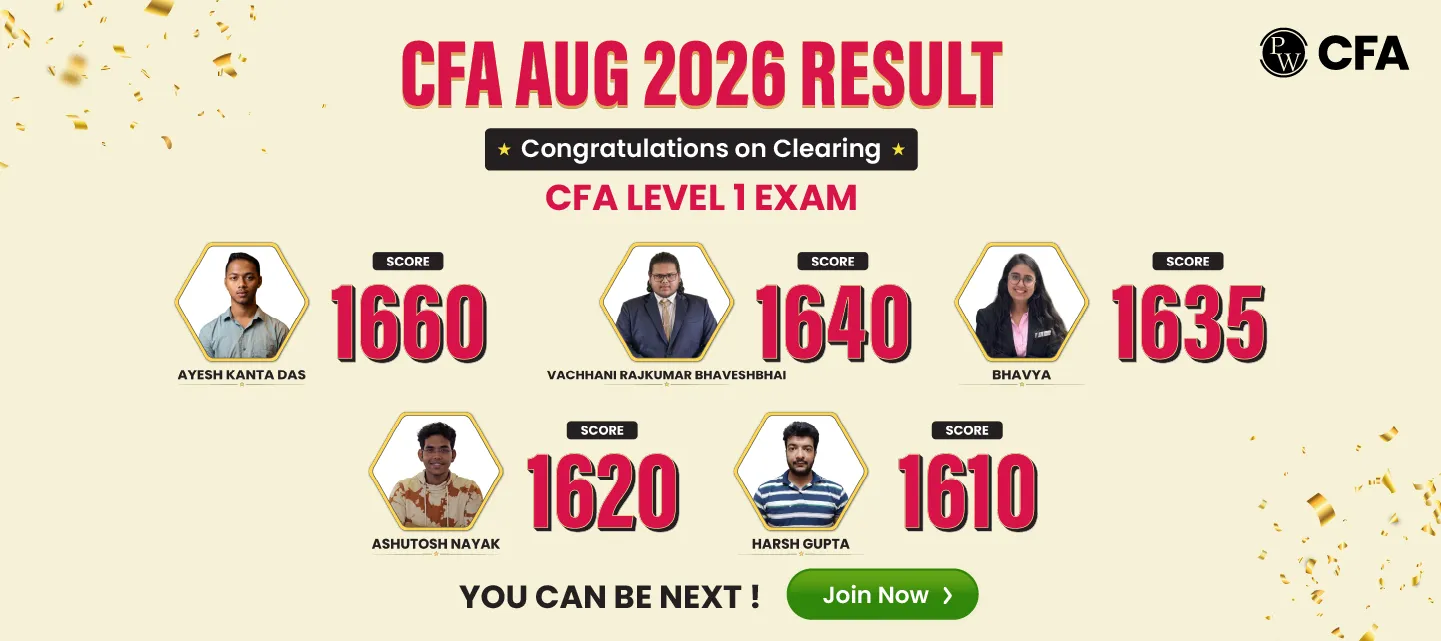
Students who start the program after graduation can read about CFA after B.Com, and the CFA syllabus shows what Level I covers. For a real example of a strong Level I result, read how Ayesh Das scored 1660/1900 in CFA Level 1.
How to Put CFA Level 2 on Resume
The same idea works for CFA Level 2 on a resume. Passing Level II is progress within the program, not a new title.
Example:
CFA Program: Passed Level II, 2026
Avoid "Name, CFA Level II" or "Name, CFA." Both read like a post-nominal, and neither is allowed. To plan for this level, see the CFA Level 2 exam pattern, syllabus and study plan.
How to Put CFA Level 3 on Resume
Level III is the last exam, but passing it does not always mean you have the charter. You also need to meet the work experience and membership requirements.
Until then, describe what you have done:
Passed all three levels of the CFA Program
If it helps, add a short note:
Passed all three levels of the CFA Program; charter award is contingent on meeting applicable work experience and membership requirements.
Do not write CFA after your name until you are entitled to use it. Also avoid giving a future charter date as if it is certain.
How to List CFA Candidate on Resume
Many students ask how to list CFA candidate on a resume. The correct term is "CFA Program candidate." Use it if you are registered for an upcoming exam. Avoid writing only "CFA candidate," because it can sound like a credential.
Example:
CFA Program candidate, August 2027 exam
State your real status and nothing more. Do not suggest you already hold the designation or that the charter is guaranteed. Before you add an exam window, confirm the dates and eligibility in the CFA Exam 2027 details, and read about the CFA 2027 syllabus changes if you plan to appear next year.
How to Mention CFA Charterholder on CV
The same rules apply if you are adding CFA charterholder to your CV or CFA designation on your CV. A CV is often longer, so you can list the charter in the credentials section, with the year and CFA Institute as the issuer. The letters after your name still follow the same rule: only for active charterholders in good standing.
How to Show CFA on LinkedIn
Your LinkedIn profile should match your resume. A charterholder can add the credential under Licenses & Certifications. The fields below show a simple setup.
| LinkedIn Field | What to Enter |
| Name | Chartered Financial Analyst® (CFA) Charterholder |
| Issuing organization | CFA Institute |
| Issue date | Month and year you received the charter |
| Expiration | No expiration, if your membership is active |
| Credential URL | Your official digital badge link, if you have one |
Fill in these fields exactly as shown, because a mismatch with your resume looks careless. Candidates should show the level passed or their candidate status on LinkedIn instead of the charter.
How to Use a CFA Digital Badge
A digital badge is an online way to show a CFA Program achievement or charterholder status. Both candidates and charterholders can receive official badges from CFA Institute.
A badge is useful on LinkedIn and in email signatures because it can be verified. Share only the official badge. Do not make your own CFA-style image, as it may imply a status you do not hold.
How Should Lapsed CFA Charterholders Mention CFA on a Resume?
If you were once a charterholder but are no longer active, do not present yourself as a current one. You can still show your past status, but you must add the dates.
Example:
CFA® Charterholder, CFA Institute, 2020–2024
The dates make the period clear. Avoid any wording that makes an old status look current. If you are planning a career break, you can also read how to keep the charter through CFA designation after retirement.
Common Mistakes to Avoid When Adding CFA to Your Resume
Most errors come from using the wrong words too early. Watch for these five:
-
Writing CFA after your name when you have only passed Level I or II
-
Treating a passed level as a designation
-
Using CFA® after your name instead of CFA
-
Calling yourself "CFA certified," or using CFA certification on a resume or CFA qualification on a resume loosely, when your real status is charterholder or Program candidate
-
Writing an expected charter date as if it is confirmed
Use exact terms such as CFA charterholder, CFA Program candidate, or "Passed Level I of the CFA Program."
Showing CFA on your resume is simple: use “CFA” after your name only if you are an active charterholder in good standing. Otherwise, clearly mention your level passed or candidate status. Keep your resume and LinkedIn details consistent to present your credentials accurately.
How to Show CFA Designation on Your Resume FAQs
How do I write CFA after my name on a resume?
Can I put CFA after my name after passing Level I?
Should CFA go under Education or Certifications?
How do I show I passed all three levels but have no charter?





Get Free Counselling Today
and Clear up all your Doubts
 Live & recorded classes available at easeDashboard for progress trackingLakhs of practice questions

