NIMCET 2026 Computer Important Topics: What to Study & What to Skip
NIMCET 2026 Computer Important Topics includes high-scoring areas like Number System and Boolean Algebra, along with deleted and avoidable topics. Smart preparation strategy based strictly on the video lecture.
 Mishika Gupta28 Apr, 2026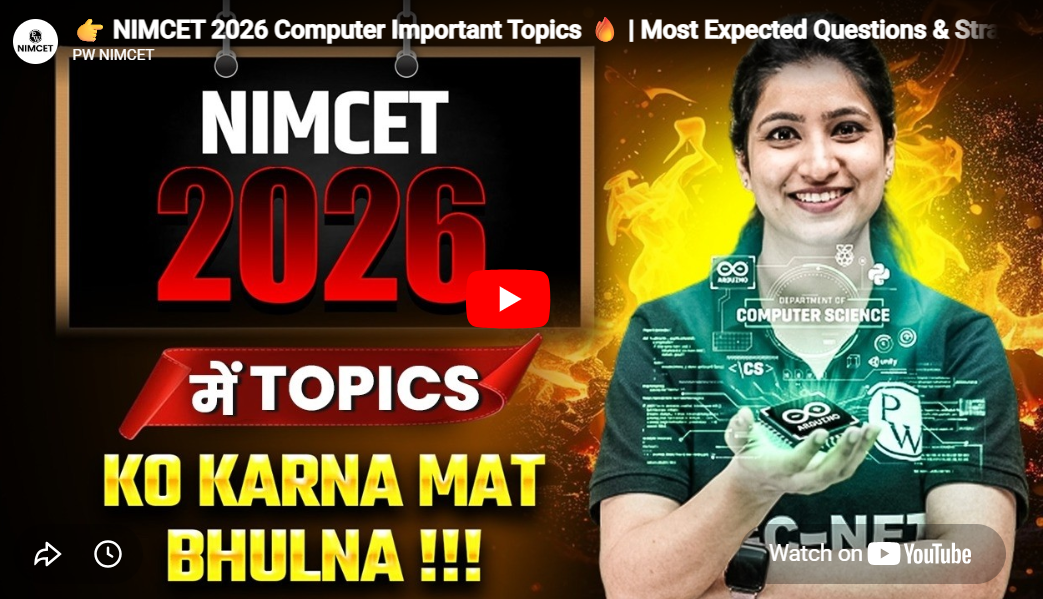
Preparing for NIMCET 2026 requires a smart and selective approach, especially for the Computer section. Many students either over-prepare or spend time on topics that rarely appear in the exam. In reality, this section is direct, scoring, and based on fundamentals.
Go through high-yield topics like Number System, Boolean Algebra, and basic Computer Fundamentals while clearly identifying the areas you can safely skip. With the right priorities and accuracy-focused preparation, you can score well without wasting time on unnecessary depth.
Most Important Topics for NIMCET 2026
To score well in NIMCET 2026, it is crucial to prioritize topics that offer maximum output with minimum effort.
1. Number System (Top Priority)
The Number System is clearly emphasized as one of the most important and scoring topics.
What to focus on:
-
Binary, Decimal, and Hexadecimal conversions
-
Basic arithmetic operations
-
Complement methods
This topic is highly reliable because:
-
Questions are frequently asked
-
Concepts are straightforward
-
Accuracy can be improved with practice
The lecture strongly suggests mastering this area since it offers high returns with limited effort.
2. Boolean Algebra & Logic Gates
Another core area highlighted is Boolean Algebra. Key areas include:
-
Basic logic gates (AND, OR, NOT)
-
Truth tables
-
Simplification of Boolean expressions
The importance of this topic lies in:
-
Conceptual clarity
-
Direct question pattern
-
Limited syllabus but high scoring potential
With proper understanding, students can solve these questions quickly and accurately.
3. Computer Fundamentals (Basic Level Only)
The lecture emphasizes keeping this section simple and limited.
Important areas:
-
Input and output devices
-
Basic structure of a computer
-
Types of memory (basic understanding)
The focus is not on depth but on basic awareness. Questions from this section are generally direct, so over-studying is unnecessary.
Low Priority Topics (Study Selectively)
The lecture also mentions some topics that can be covered lightly. These include:
-
Operating system basics
-
General computer awareness
These topics:
-
Do not require deep understanding
-
Should be revised quickly
-
Should not consume much time
The idea is to avoid spending excessive time on low-weightage areas.
Deleted Topics Of NIMCET 2026
One of the most important takeaways from the lecture is what NOT to study.
Topics to Avoid:
-
Deep programming concepts
-
Advanced data structures
-
Complex algorithms
-
Highly technical or theory-heavy topics
These topics are:
-
Time-consuming
-
Not aligned with exam requirements
-
Low return on investment
The lecture clearly stresses that studying these will waste time without adding value.
How Questions Are Asked
Based on the lecture, the Computer section follows a simple pattern:
-
Mostly direct conceptual questions
-
Minimal calculation
-
No deep coding questions
-
Focus on clarity and basics
This makes the section easy but accuracy-dependent.
Preparation Strategy for NIMCET 2026
Success in NIMCET 2026 is not about studying everything in detail, but about studying the right things in the right way. The exam rewards smart preparation more than long hours of random study.
-
Focus on High-Yield Topics: Instead of spreading yourself too thin, concentrate only on the most important and scoring areas. In Mathematics, topics like Number System and Boolean Algebra should be your top priority. In the Computer section, Basic Computer Fundamentals are usually sufficient for a good score.
-
Keep Your Preparation Limited and Targeted: One of the most important strategies for NIMCET is to avoid over-preparation. Many students waste time going too deep into concepts that are rarely asked in the exam.
-
Accuracy Matters More Than Guesswork: Since the questions in NIMCET are generally moderate to easy, accuracy becomes your biggest advantage. Guesswork can easily lead to negative impact on your score, so it is better to attempt only what you are confident about.
-
Smart Time Management: Time management plays a major role in your performance. The Computer section should not take too much time, as it is usually quicker and more straightforward compared to Mathematics.
-
Core Strategy: Study Smart, Not Excessively: The most important takeaway for NIMCET preparation is simple:
“Study less, but study the right things.”
Instead of trying to cover everything, focus only on selected topics that matter. Avoid distractions, unnecessary books, and deep diving into irrelevant areas.
NIMCET 2026 Computer Important Topics FAQs
Which are the most important Computer topics for NIMCET 2026?
Is programming required for the NIMCET Computer section?
Which topics can be skipped for the NIMCET 2026 Computer section?
How difficult is the Computer section in NIMCET?
How should I prepare for the Computer section?


Have questions about your prep?
Our experts can answer all your questions