






Coal And Petroleum: Useful Insights Of Energy Resources
 Yashasvi Tyagi28 Jul, 2025
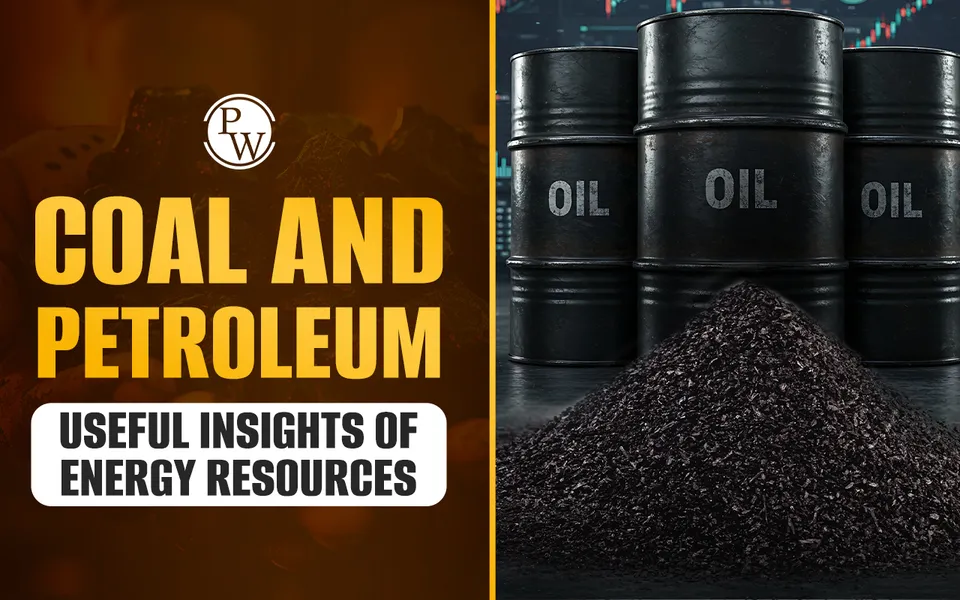
Energy resources play a pivotal role in shaping modern society. They power our homes, fuel our vehicles, and drive industries that sustain economies. Among the various energy sources, fossil fuels hold a significant position, with coal and petroleum being two of the most crucial resources. In this chapter, we will talk about coal and petroleum , their formation, characteristics, uses, and the need for their conservation.
What Is Coal?
Coal is a special kind of rock that's formed from plant remains that have been around for millions of years. This rock has a dark colour, usually black or brownish-black, and it's been a big player in how we get energy for a really long time.How Is Coal Formed?
The formation of coal involves the transformation of organic material into a solid fuel source, influenced by geological processes and environmental conditions. The story of coal formation begins with the accumulation of ancient plant matter in swamps, marshes, and other wetland environments.- Accumulation of Plant Material: Picture this: in those swamps and marshes, layers upon layers of dead plants, leaves, and other organic stuff start piling up.! These environments are pretty soggy, slowing down the breakdown of plant matter due to the lack of oxygen.
- Formation of Peat: With more and more plant material coming in, it starts to break down, but not completely. This results in the creation of peat – a sort of brownish-black material with a high moisture content. Peat is like a snapshot of ancient plants that haven't quite lost their original shape.
- Burial and Compression: As time passes, more peat layers build up. The layers at the bottom get squished by the weight of all the layers on top. This squishing pushes out water and some volatile stuff from the peat, making it denser and more solid.
- Formation of Lignite: As the pressure and heat continue to rise with all those layers piling on, peat transforms into lignite. Lignite is often called "brown coal." It has more carbon in it compared to peat and a darker hue. However, it still holds a lot of water and is pretty soft.
- Further Compression and Heat : As the coal keeps sinking deeper into the Earth's crust, it encounters even more heat and pressure. This causes more water and volatile bits to escape, making the coal even denser and tougher.
- Formation of Bituminous Coal: With more changes, lignite levels up to become bituminous coal. This type of coal has a higher carbon content, which makes it black and shiny. It has fewer impurities compared to lignite, and it packs more energy.
- Metamorphism and Anthracite Coal: If the coal keeps journeying through heat and pressure, it can evolve into anthracite coal, the cream of the crop. Anthracite coal is super hard, super black, and has the most carbon content of all the coal types. It burns really clean and dishes out a ton of heat.
- Geological Time Frame: The whole process, from gathering plant material to getting that anthracite goodness, takes place over millions of years. The whole shebang depends on stuff like the kind of plants, the environment, how deep the coal goes, and how long the Earth's natural processes last.
Types of Coal
Types of Coal and Petroleum Just like how there are various types of ice cream, there are different types of coal too! These different types come from how coal forms and what it's made of. So, here are the four main types:- Peat: Imagine a soggy marsh or swamp. Peat comes from partially rotted plant material that piles up in these kinds of wet places. It has the least carbon and energy, and it's kind of wet. People sometimes use peat as fuel, but it's not very strong in the energy department.
- Lignite: Next up, we have lignite, also known as brown coal. It has more carbon and energy than peat, but it's still quite moist. Lignite is a bit soft, and it's commonly used to make electricity in power plants near where it's found. But because it's still wet, it's not the most efficient or clean-burning.
- Bituminous Coal : Bituminous coal has more carbon and energy than lignite and comes in two flavours: low-volatile and high-volatile. This coal is used for all sorts of things—making electricity, powering factories, and heating buildings. It's kind of the all-purpose coal.
- Anthracite: Anthracite is the top-tier coal with the most carbon and energy. It's been through a lot, like lots of heat and pressure, during its formation. It's really hard, shiny, and black. When you burn anthracite, it's like having a clean and smoke-free fire. People love using it to heat homes where it's available, but it's a bit on the expensive side because it's so good.
Difference Between Coal and Petroleum
Coal and petroleum are two distinct fossil fuels that have played pivotal roles in shaping modern industrial societies. While both are products of ancient organic matter, they differ significantly in terms of origin, composition, properties, and uses. Here are the key differences between coal and petroleum:Coal and Petroleum Origin and Formation
- Coal: Think of coal as the result of ancient plants hanging out in swamps and marshes for a really, really long time. The heat and pressure turned these plant remains into coal through a process called coalification.
- Petroleum: Petroleum, on the other hand, comes from the remains of marine creatures like plankton and algae. These little guys settled at the bottom of oceans and lakes, and over time, they transformed into petroleum due to heat and pressure.
Coal and Petroleum Physical State
- Coal: Coal is the solid form. It comes in different forms, from the softer, brownish peat to the harder, black anthracite.
- Petroleum: Petroleum is the liquid sibling. It's often found hanging out underground in reservoirs or trapped in rocks.
Coal and Petroleum Composition
- Coal: Coal is mostly made up of carbon, with some hydrogen, oxygen, nitrogen, and sulphur mixed in. The quality of coal and how much carbon it has decides how much energy it contains.
- Petroleum: Petroleum is made up of hydrocarbon compounds, which are like a mix of carbon and hydrogen atoms. These compounds can be simple or super complex.
Extraction
- Coal: To get coal, you dig it out using mining methods like digging from the surface or going deep underground.
- Petroleum: Petroleum is more like a treasure hunt. You drill into the Earth's crust to reach the underground oil reservoirs.
 Fundo Class 8 Online Course[/caption]
State of Matter
- Coal: Since coal is solid, it doesn't move around too easily. You often need to crush or grind it before using it.
- Petroleum: Petroleum is the liquid adventurer. It flows easily, making it convenient to move and refine.
Coal and Petroleum Uses
- Coal: Coal has been the go-to for making electricity, heating stuff up, and powering industries. It's also a key ingredient in making steel.
- Petroleum: Petroleum wears many hats. It's used as fuel for vehicles, planes, and ships, and it's also a star in making plastics, chemicals, and other cool stuff.
Environmental Impact
- Coal: Burning coal can be a bit messy. It releases a bunch of carbon dioxide and other not-so-nice stuff, messing with the air and climate.
- Petroleum: When petroleum burns, it also releases carbon dioxide and pollutants, but usually not as much as coal. However, accidents like oil spills can create big environmental problems.
Availability and Reserves
- Coal: Coal is like the friend who shows up to the party in plenty. Many places have loads of coal reserves.
- Petroleum: Petroleum is a bit more unpredictable. Some places have a lot, while others have just a little. The amount of petroleum is limited, which is a bit of a concern.
What Is Petroleum?
Petroleum, commonly known as crude oil, plays a vital role as a fossil fuel. It consists of hydrocarbons, which are organic compounds comprising hydrogen and carbon atoms. The formation of petroleum dates back millions of years when tiny marine organisms settled on the ocean floor. They transformed into this valuable resource over time.Uses of Petroleum
Petroleum is formed through geological processes and derived from ancient marine organisms. It is a complex mixture of hydrocarbons. It can be refined into a range of products that play a vital role in our everyday lives. From powering industries and transportation to providing energy for homes, petroleum has numerous key uses.Transportation Fuels
- Gasoline: Yes, that fuel that powers your car and gets you zooming down the road? That's made from petroleum. It's what makes those engines roar to life and takes us places.
- Diesel: Ever seen those big trucks or buses? They often run on diesel fuel, another product of petroleum. It's great for heavy-duty vehicles and actually gives them more power.
- Jet Fuel: Those aeroplanes soaring high in the sky? They're also running on petroleum-based jet fuel, helping us travel far and fast.
Heating and Electricity Generation
- Heating Oil: When it's chilly outside and we need to warm up our homes or power industrial machines, heating oil, which comes from petroleum, steps in to save the day.
- Power Generation: Though not as common, petroleum products can also be used in power plants to make electricity, though we're trying to use cleaner options for this nowadays.
Industrial Applications
- Petrochemicals: Ever heard of plastics? They're made from chemicals that come from petroleum. And it's not just plastics – think synthetic rubber, fibres, and even some chemicals that go into soaps and cosmetics.
- Lubricants: To keep machines and engines running smoothly, we use lubricating oils that are derived from petroleum. They help reduce friction and make things last longer.
- Asphalt: When we're building roads or need waterproof roofs, we turn to asphalt, which comes from petroleum, to get the job done.
Medicine and Cosmetics
- Medicine and Cosmetics: Believe it or not, some medicines and cosmetic products have ingredients that come from petroleum derivatives. They help keep us healthy and looking good.
- Plastics and Synthetics: So many things around us – from water bottles to phone cases – are made from plastics that are born from petroleum.
- Fertilisers and Agriculture: Petroleum helps in producing fertilisers that help our crops grow better, which means more food for all of us.
Miscellaneous Uses
- Wax and Candles: You know those candles you light for special occasions? Some of them are made using waxes derived from petroleum.
- Solvents: Cleaning products and stuff that gets rid of grease? Some of them have solvents made from petroleum to help get things squeaky clean.
Conservation of Coal and Petroleum
Conserving coal and petroleum is very important in today's fast-changing world. These fossil fuels are like limited treasures – they've been driving our industries and economies for ages, but they're running out faster than we realise. To make sure we have the energy for the long run and to cut down on the not-so-great effects of digging them up and using them, we need to really focus on conserving them. Why? First off, coal and petroleum take forever to form. Like, millions of years forever. We can't just snap our fingers and get more. And as the world's hunger for energy grows, we have to use them wisely to avoid shortages. Plus, getting these fuels out of the ground and using them isn't exactly friendly to the environment. Think pollution, greenhouse gases, and messing up habitats. So, conserving them isn't just about having enough energy but also about keeping our planet healthier. We can start by using energy-efficient stuff and exploring other sources like solar, wind, and water power. These cleaner options not only help us save coal and petroleum but also keep the Earth greener and happier. Final Thoughts Coal and petroleum have undoubtedly shaped the modern world, providing energy and powering progress. However, their utilisation has also raised concerns about environmental sustainability and climate change. As we understand the importance of these energy resources, it's crucial to strike a balance between meeting energy demands and preserving the planet for future generations.| Related Links | |
| NCERT Solution for Class 8 Science Chapter 5 | Science Formulas |
Coal and Petroleum FAQs
Q1. What type of energy is coal? Ans. Coal is primarily a source of thermal energy, as it is burned to produce heat. It is also a potential source of chemical energy when used in various industrial processes. Q2. What is coal and petroleum an example of? Ans. Coal and petroleum are examples of fossil fuels, which are natural resources formed from the remains of ancient plants and organisms over millions of years and used as energy sources. Q3. What are the sources of coal? Ans. Coal primarily originates from ancient plant materials that accumulated and were subjected to pressure and heat over millions of years.What type of energy is coal?
Coal is primarily a source of thermal energy, as it is burned to produce heat. It is also a potential source of chemical energy when used in various industrial processes.
What is coal and petroleum an example of?
Coal and petroleum are examples of fossil fuels, which are natural resources formed from the remains of ancient plants and organisms over millions of years and used as energy sources.
What are the sources of coal?
Coal primarily originates from ancient plant materials that accumulated and were subjected to pressure and heat over millions of years.







Check out these Related Articles









Join 15 Million students on the app today!
 Live & recorded classes available at easeDashboard for progress trackingMillions of practice questions at your fingertips


Free Learning Resources
PW Books
Notes (Class 10-12)
PW Study Materials
Notes (Class 6-9)
Ncert Solutions
Govt Exams
Our Other Websites
Class 6th to 12th Online Courses
Govt Job Exams Courses
UPSC Coaching
Defence Exam Coaching
Gate Exam Coaching
Other Exams
Know about Physics Wallah
Physics Wallah is an Indian edtech platform that provides accessible & comprehensive learning experiences to students from Class 6th to postgraduate level. We also provide extensive NCERT solutions, sample paper, NEET, JEE Mains, BITSAT previous year papers & more such resources to students. Physics Wallah also caters to over 3.5 million registered students and over 78 lakh+ Youtube subscribers with 4.8 rating on its app.
We Stand Out because
We provide students with intensive courses with India’s qualified & experienced faculties & mentors. PW strives to make the learning experience comprehensive and accessible for students of all sections of society. We believe in empowering every single student who couldn't dream of a good career in engineering and medical field earlier.
Our Key Focus Areas
Physics Wallah's main focus is to make the learning experience as economical as possible for all students. With our affordable courses like Lakshya, Udaan and Arjuna and many others, we have been able to provide a platform for lakhs of aspirants. From providing Chemistry, Maths, Physics formula to giving e-books of eminent authors like RD Sharma, RS Aggarwal and Lakhmir Singh, PW focuses on every single student's need for preparation.
What Makes Us Different
Physics Wallah strives to develop a comprehensive pedagogical structure for students, where they get a state-of-the-art learning experience with study material and resources. Apart from catering students preparing for JEE Mains and NEET, PW also provides study material for each state board like Uttar Pradesh, Bihar, and others
Copyright © 2026 Physicswallah Limited All rights reserved.