Sources of Energy: Definition, Types, Importance, Examples
 Shivam Singh2 Jan, 2026
Sources of Energy
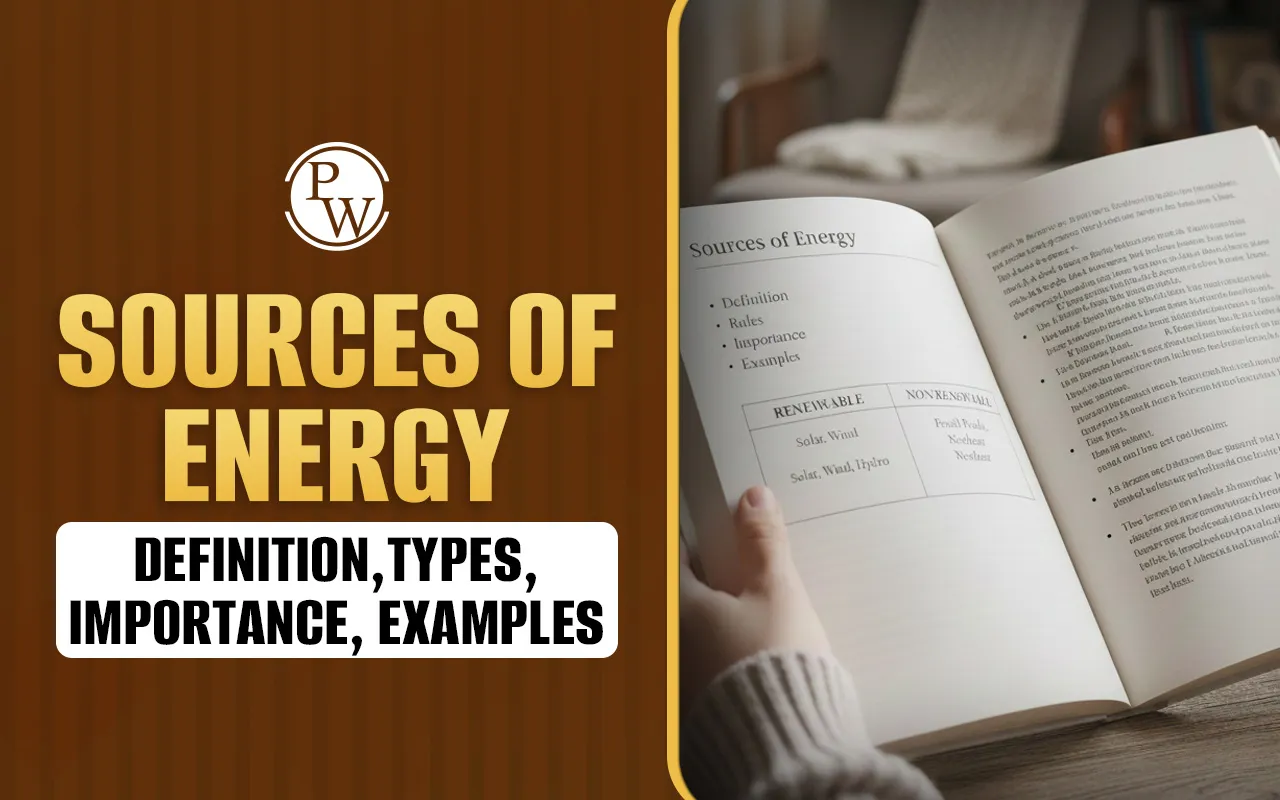
Sources of Energy are natural or man-made sources that provide usable energy for electricity, transportation, and industrial activities. These sources are mainly of two types: renewable energy, which is unlimited, and non-renewable energy, which is available in limited amounts. Understanding this simple energy resources definition is important because global energy needs are increasing every year, making it essential to use these resources wisely and sustainably.
Read More: Work and Energy
Main Source of Energy on Earth
The main source of energy for all life on Earth is the Sun. Almost every energy form—like wind, water, biomass, or fossil fuels—can be traced back to the Sun.
So, when someone asks, “What is the main source of energy?”, the answer is solar energy, because:
-
Plants grow using sunlight
-
Fossil fuels formed from dead plants/animals
-
Winds blow due to uneven heating of Earth
-
Water cycles happen because of solar heat
Directly or indirectly, the Sun powers most of the world’s natural systems.
Different Sources of Energy
Energy resources are broadly divided into two major categories:
1. Renewable Energy Sources
These are natural sources of energy that can be used again and again because they are constantly replenished.
2. Non-Renewable Energy Sources
These resources are limited and take millions of years to form. Once used, they cannot be replaced easily.
Renewable Sources of Energy
1. Solar Energy
Energy received from the Sun is called solar energy. It is captured using solar panels.
Uses: Heating water, generating electricity, drying crops, street lights.
2. Wind Energy
Windmills use the power of moving air to make electricity.
Uses: Electricity generation in wind farms, pumping water.
3. Hydropower (Water Energy)
Fast-moving water in rivers or dams is used to rotate turbines and generate electricity.
Uses: Large-scale electricity production.
4. Biomass Energy
Energy from organic matter like wood, crop waste, and animal dung.
Uses: Cooking, heating, producing biogas.
5. Geothermal Energy
Heat from inside the Earth is used to produce steam and electricity.
Uses: Heating buildings, running power plants.
6. Tidal and Wave Energy
Energy from ocean tides and waves.
Uses: Coastal electricity generation.
Read More: Work Done Formula
Non-Renewable Sources of Energy
1. Coal
Coal is a fossil fuel formed from dead plants under high temperature and pressure.
Uses: Electricity generation, steel production.
2. Petroleum (Oil)
Thick, black liquid extracted from deep underground.
Uses: Fuel for vehicles (petrol, diesel), plastics.
3. Natural Gas
A clean-burning fossil fuel found with petroleum.
Uses: Cooking, heating, electricity generation.
4. Nuclear Energy
Produced from the fission of uranium atoms.
Uses: Power plants, medical equipment.
These non-renewable sources are currently the major source of energy worldwide because they are powerful and easy to use. However, they cause pollution and will run out in the future.
Renewable vs Non Renewable Source of Energy
|
Feature |
Renewable Energy |
Non-Renewable Energy |
|
Availability |
Unlimited |
Limited |
|
Pollution |
Very low |
High |
|
Cost |
High initial cost |
Cheaper |
|
Examples |
Solar, Wind, Water |
Coal, Petroleum, Gas |
Read More: Coal And Petroleum
Why Are Renewable Sources More Popular?
Even though fossil fuels were the most-used energy resources for many years, renewable sources are becoming more common because:
-
They do not cause pollution
-
They are available forever
-
They reduce global warming
-
They create new job opportunities
-
They make countries less dependent on oil imports
As technology improves, renewable energy will become even more affordable and efficient.
Also read: Freezing and Melting
Make After-School Learning Easy and Enjoyable with CuriousJr
If you want online tuition classes that simplify learning and keep your child engaged, CuriousJr School Online Classes are the perfect choice. Our interactive sessions, real-life examples, and fun activities help children understand concepts quickly and stay curious.
Why Choose CuriousJr for Your Child?
-
Live, interactive classes that make every topic simple
-
Two dedicated mentors for personalised guidance
-
Visual and hands-on activities for better, faster learning
-
Curriculum aligned with CBSE, ICSE, and State Boards
-
Regular quizzes, worksheets, and progress tracking
CuriousJr makes learning Science, Maths, English, and Social Studies fun and effective. With consistent support, your child becomes confident, motivated, and develops strong study habits.
Want to see the difference? Book a demo class today!
Do you need help with your homework or preparing for exams?
Study without using the internet
Sources of Energy FAQs
What are sources of energy?
What is the main source of energy on Earth?
What are the major sources of energy used today?
What are renewable energy resources?
What are non-renewable energy resources?






 Live & recorded classes available at easeDashboard for progress trackingMillions of practice questions at your fingertips