








Trending Blogs
JEE Main 2027 Registration
Read More
14 Oct, 2026

JEE Main 2027 Application Form
Read More
14 Oct, 2026

JEE Main 2027 Syllabus
Read More
14 Oct, 2026
JEE Main Chapter-wise Weightage 2027
Read More
14 Oct, 2026
JEE Main Physics Syllabus 2027
Read More
14 Oct, 2026

JEE Main Chemistry Syllabus 2027
Read More
14 Oct, 2026

JEE Main 2027 Registration Fees
Read More
14 Oct, 2026
Featured Blogs
JEE ADVANCED

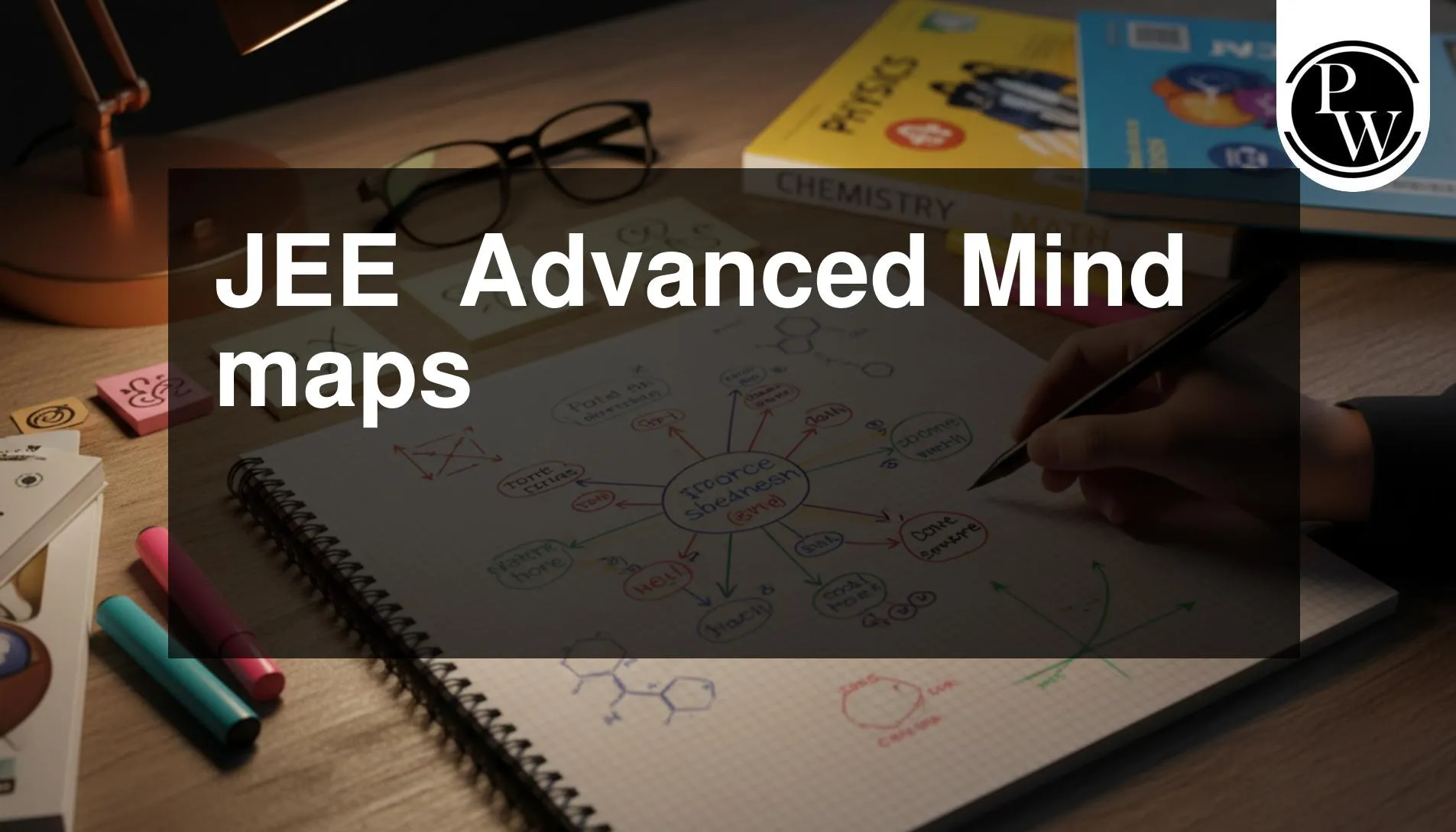
Complete Subject-wise JEE Advanced Mind Maps by Physics Wallah
JEE Advanced Mind Maps help you revise important concepts, formulas and key points from Physics, Chemistry and Mathematics. Use subject-wise mind maps from PW to revisit important topics, strengthen conceptual understanding and support your JEE Advanced revision alongside PYQs and mock tests.

Avisha Das
Oct 09, 2026, 11:44 AM
Read Full Story
JEE ADVANCED
JEE Advanced Negative Marking Scheme 2026: Check Marks Deduction & Marking Pattern
Pondering how negative marking works in JEE Advanced? The marking scheme varies by question type, and not every section carries negative marks. Based on the JEE (Advanced) 2026 question papers, incorrect responses in some sections carried negative marks, while numerical-value questions did not. The JEE Advanced 2027 marking scheme will be confirmed in the official question-paper instructions.
Soumya Tiwari
Sep 28, 2026, 01:01 PM
Read Full Story
JEE ADVANCED
JEE Advanced Negative Marking Scheme 2027: Check Marks Deduction & Marking Pattern
Pondering how negative marking works in JEE Advanced? The marking scheme varies by question type, and not every section carries negative marks. Based on the JEE (Advanced) 2026 question papers, incorrect responses in some sections carried negative marks, while numerical-value questions did not. The JEE Advanced 2027 marking scheme will be confirmed in the official question-paper instructions.
Mehjabeen Hussain
Sep 29, 2026, 04:59 AM
Read Full Story
JEE Advanced Blog
JEE ADVANCED
Complete Subject-wise JEE Advanced Mind Maps by Physics Wallah
Read Full Story
JEE ADVANCED
JEE Advanced Negative Marking Scheme 2026: Check Marks Deduction & Marking Pattern
Read Full Story
JEE ADVANCED
JEE Advanced Negative Marking Scheme 2027: Check Marks Deduction & Marking Pattern
Read Full Story

JEE ADVANCED
JEE Advanced Qualifying Marks 2027: Subject-wise and Aggregate Marks
Read Full Story

JEE ADVANCED
How Many Attempts for JEE Advanced?
Read Full Story
JEE ADVANCED
Minimum Marks Required for JEE Advanced 2027: 75% Rule and Qualifying Marks
Read Full Story
IIT JEE 2027 Exam FAQs
What is the full form of the JEE Exam?
The JEE Exam stands for Joint Entrance Examination. It is an entrance exam conducted at the national level for admission to undergraduate courses.
Is the JEE Exam too tough to crack?
The joint Entrance examination is one of the toughest examinations in India. This year, more than 14 Lakh candidates registered for the JEE Main Session I exam.
Who conducts the JEE Advanced 2027 Exam?
JEE Advanced 2027 exam will conducted by IIT Roorkee.
When to apply for JEE 2027?
JEE Main 2026 registration started on October 31, 2025, and will remain open until November 27, 2025, at 11:50 PM.


Have questions about your prep?
Our experts can answer all your questions
Join 15 Million students on the app today!
 Live & recorded classes available at easeDashboard for progress trackingLakhs of practice questions



Free Learning Resources
PW Study Materials
PW Books
Notes (Class 6-9)
Notes (Class 10-12)
Govt Exams
Our Other Websites
Ncert Solutions
State Boards
Govt Job Exams Coaching
CBSC Online Preparation
Civil Services Exam Coaching
Defence Exam Coaching
Semester Exams Preparation
Gate Exam Coaching
Offline centres
Know about Physics Wallah
Physics Wallah is an Indian edtech platform that provides accessible & comprehensive learning experiences to students from Class 6th to postgraduate level. We also provide extensive NCERT solutions, sample paper, NEET, JEE Mains, BITSAT previous year papers & more such resources to students. We also provide extensive NCERT solutions, sample papers, NEET, JEE Mains, BITSAT previous year papers, which maPhysics Wallah also caters to over 3.5 million registered students and over 78 lakh+ Youtube subscribers with 4.8 rating on its app.
We Stand Out because
We provide students with intensive courses with India’s qualified & experienced faculties & mentors. PW strives to make the learning experience comprehensive and accessible for students of all sections of society. We believe in empowering every single student who couldn't dream of a good career in engineering and medical field earlier.
Our Key Focus Areas
Physics Wallah’s main focus is to create accessible learning experiences for students all over India. With courses like Lakshya, Udaan, Arjuna & many others, we have been able to provide a ready solution for lakhs of aspirants. From providing Chemistry, Maths, Physics formulae to giving e-books of eminent authors, PW aims to provide reliable solutions for student prep
What Makes Us Different
Physics Wallah strives to develop a comprehensive pedagogical structure for students, where they get a state-of-the-art learning experience with study material and resources. Apart from catering students preparing for JEE Mains and NEET, PW also provides study material for each state board like Uttar Pradesh, Bihar, and others
Copyright © 2026 Physicswallah Limited All rights reserved.