








CLAT 2027 Explained: Eligibility, Pattern, Syllabus
CLAT 2027 is the admission cycle for law school entry in 2027, with the exam held in December 2026. To excel in CLAT 2027, candidates must master a 120-minute offline test with 120 comprehension questions across five sections. The marking scheme includes +1 for correct answers and -0.25 for errors. Success requires a rigorous reading habit, mock analysis, and strong legal reasoning skills.

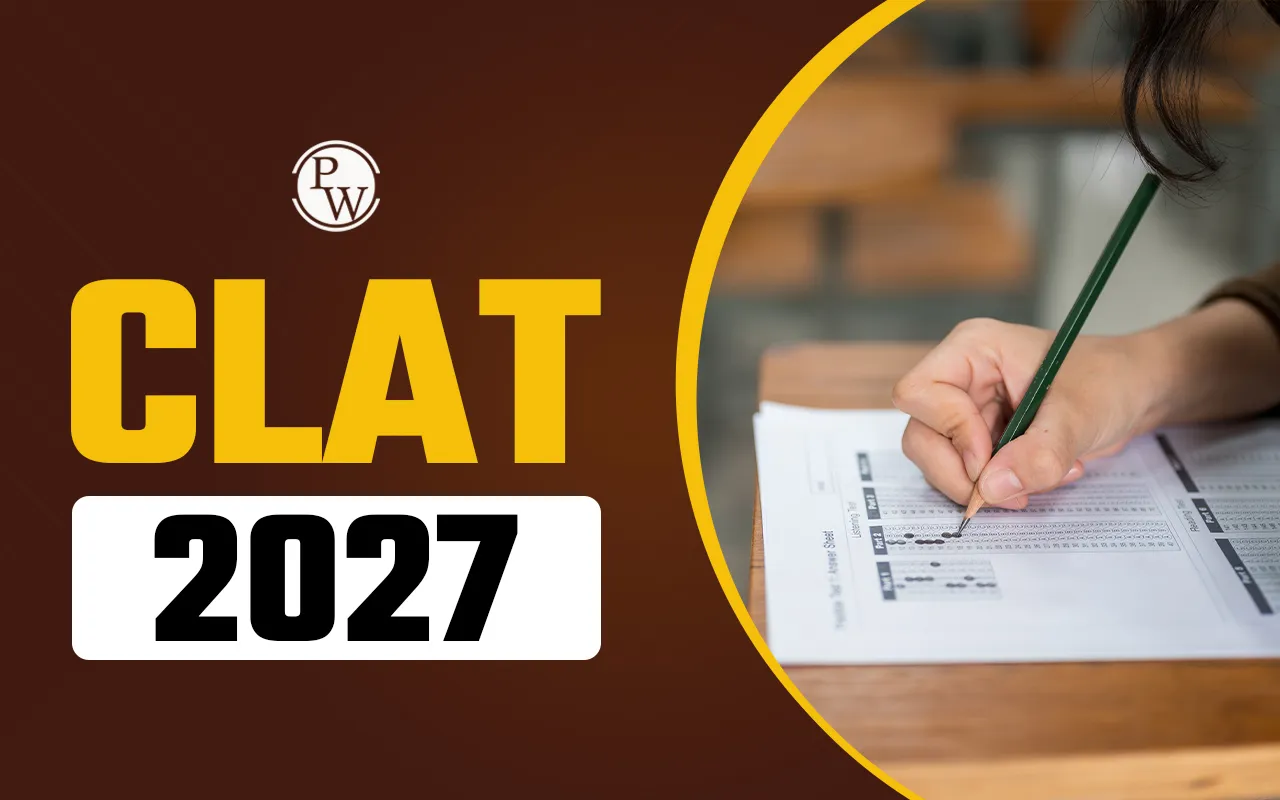
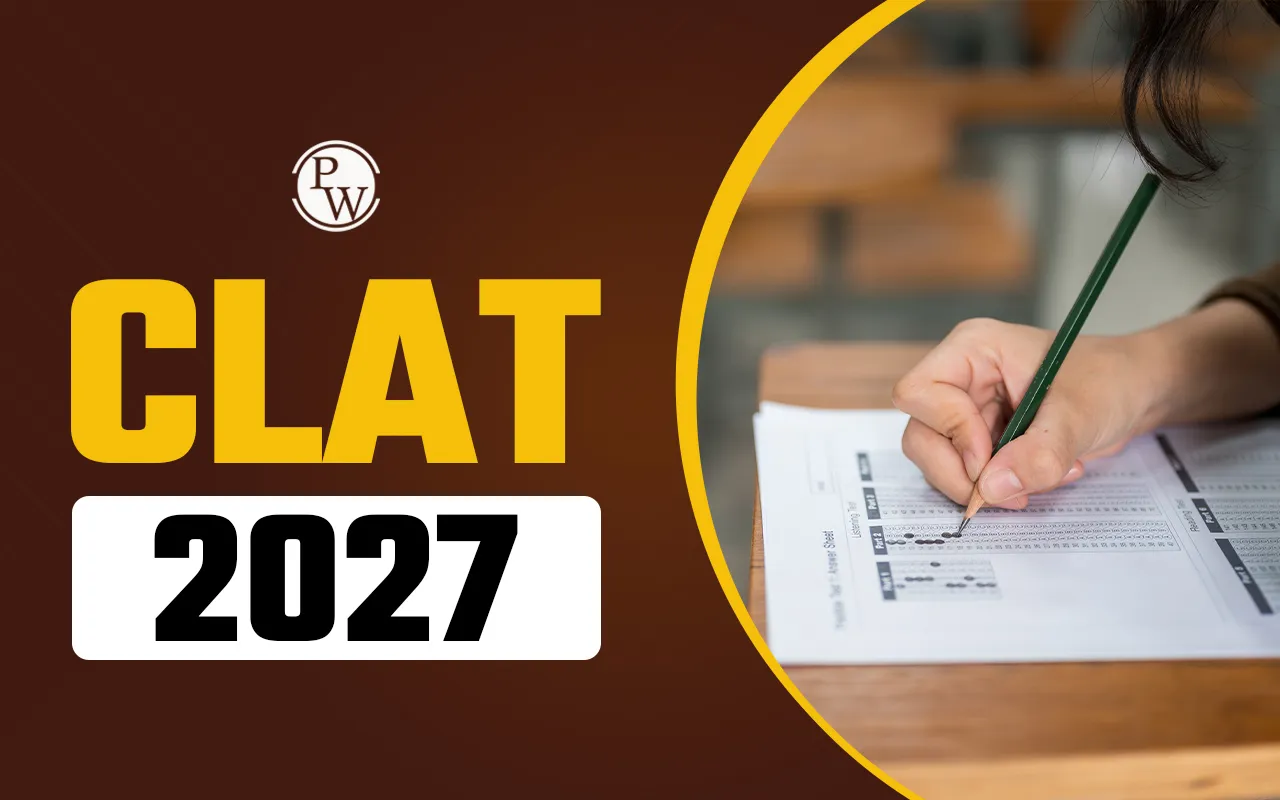
CLAT 2027 exam occurs in December 2026, for students entering or completing Class 12. It is an offline, objective test with 120 questions and negative marking for incorrect answers. The syllabus is entirely comprehension-based across five sections: English, Current Affairs, Legal Reasoning, Logical Reasoning, and Quantitative Techniques. Effective preparation demands full syllabus completion, consistent mock test analysis, strong reading habits, and unwavering consistency.
Eligibility for CLAT 2027
The "CLAT 2027" refers to the admission cycle for universities, not the year the exam is conducted. The actual CLAT exam for 2027 admissions will be held in December 2026.
Eligibility for the CLAT can be broadly categorized into two types of aspirants:
| Eligibility for CLAT 2027 | |
|---|---|
| Category | Description |
| Freshers | Students who will be pursuing or entering Class 12 in the academic year 2026. These candidates are eligible to take the examination in December 2026. This allows them to apply for admission to National Law Universities (NLUs) in 2027 immediately after completing their Class 12 examinations. |
| Repeaters | Students who have already completed their Class 12 examinations in previous years. There is no age restriction or limitation on the number of attempts for taking the CLAT after completing high school. This category includes those who may have taken a gap year or are re-attempting the exam to improve their scores or secure admission to a preferred NLU. |
Key Eligibility Points:
-
No Stream Restriction: Students from any academic stream—including Science (Medical/Non-Medical), Commerce, or Humanities—are eligible to appear for the CLAT. This inclusive approach allows diverse academic backgrounds to pursue legal education.
-
Career Changers: Individuals who initially prepared for other competitive exams (such as NEET or JEE) can also switch their focus and prepare for the CLAT, either during or after their Class 12 studies. This flexibility caters to students exploring different career paths.
CLAT Exam Pattern
A thorough understanding of the exam pattern is fundamental for effective CLAT preparation. The key features of the CLAT examination are outlined below:
-
Mode of Examination: The exam is conducted in offline mode. Candidates are required to use a pen to mark their answers on a provided OMR sheet.
-
Question Type: The entire paper consists of objective type questions. This means candidates must select the correct answer from a set of multiple-choice options provided for each question.
-
Number of Questions: There are a total of 120 questions in the CLAT paper.
-
Duration: The time allotted for completing the entire examination is 120 minutes (2 hours).
Marking Scheme
A critical aspect of the exam pattern that significantly impacts strategy is the negative marking system.
-
Correct Answer: Candidates receive +1 mark for each correct answer.
-
Incorrect Answer: A deduction of -0.25 marks will be applied for every wrong answer.
It is crucial to be mindful of negative marking. Attempting all 120 questions without confidence in the answers can significantly reduce the final score. An ideal attempt typically ranges around 100-110 questions, with a primary focus on maintaining high accuracy. This strategic approach helps maximize the net score.
CLAT Syllabus Overview
The CLAT exam is structured into five distinct sections. A defining characteristic of the exam is its entirely comprehension-based nature. Candidates will be presented with passages across all sections and must derive answers solely from the information provided within those passages.
The five core sections of the CLAT syllabus are:
-
English Language (Primarily comprehension-based passages, testing reading comprehension, vocabulary, and grammar in context)
-
Current Affairs, including General Knowledge (Focuses on recent national and international events, alongside static general knowledge relevant to contemporary issues)
-
Legal Reasoning (Passage-based questions that assess a candidate's ability to identify and apply legal principles to factual scenarios)
-
Logical Reasoning (Includes critical reasoning and some analytical reasoning, evaluating the ability to analyze arguments, draw inferences, and identify logical fallacies)
-
Quantitative Techniques (QT) (Passage-based problems involving data interpretation, basic arithmetic, algebra, geometry, and mensuration)
In-depth Look at the Legal Reasoning Section
The Legal Reasoning section covers a broad spectrum of legal topics, which can be categorized as follows:
-
Static Laws: These are foundational legal principles that form the bedrock of the Indian legal system. Key areas include:
-
Constitutional Law
-
Contract Law
-
Law of Torts
-
Criminal Law
-
Intellectual Property Rights (IPR)
-
Miscellaneous / Trending Laws: Recent trends in the CLAT exam indicate that passages are frequently drawn from contemporary and relevant legal frameworks. Examples include laws such as the Juvenile Justice Act, the Protection of Children from Sexual Offences (POCSO) Act, the Information Technology Act, and various Environmental Laws.
-
Current Legal Updates: Staying updated with contemporary legal developments, recent judgments, and legislative changes is as important as studying the static portions. This often overlaps with the Current Affairs section but with a specific legal focus.
The Importance of Quantitative Techniques (QT)
Although the Quantitative Techniques section has a lower weightage in terms of the number of questions, it must not be ignored. This section can be a deciding factor in securing admission to a top National Law University (NLU). In a highly competitive exam where even fractions of a mark matter, a strong performance in QT can provide a significant advantage, especially if other sections are unusually easy or difficult. You cannot afford to skip any section, as each contributes to the overall score and ranking.
Key Preparation Strategies for CLAT 2027
Effective preparation for CLAT demands a structured and disciplined approach. Here are some key strategies to maximize your chances of success:
1. Complete the Entire Syllabus
The first and foremost rule for CLAT preparation is to complete the entire syllabus thoroughly. Do not skip any topic or section, regardless of its perceived weightage. As highlighted, even low-weightage sections, like Quantitative Techniques, can be decisive in a highly competitive environment. Comprehensive coverage ensures no potential marks are lost due to incomplete preparation.
2. Mock Tests and Analysis
Taking mock tests is an indispensable part of CLAT preparation. Just as a sportsperson practices rigorously before a final event to build stamina and refine technique, mock tests prepare you for the actual exam environment, simulating its pressures and conditions.
Benefits of Mock Tests:
-
Time Management: Mock tests are essential for learning how to complete the entire paper within the stipulated 120-minute timeframe. Regular practice helps you develop a strategy to allocate time effectively across different sections, ensuring no section is left unattempted or rushed.
-
Identify Strengths and Weaknesses: A detailed analysis of your mock test performance helps you pinpoint which subjects or question types are your strengths and which are your weaknesses. This targeted feedback allows you to focus your efforts on areas requiring improvement, optimizing your study plan.
-
Develop Exam Strategy: Through mock tests, you can determine the optimal order for attempting sections based on your personal comfort and speed. Experimenting with different approaches can help you find the most efficient strategy for the actual examination.
Taking responsibility for your own preparation is paramount. Excuses regarding a lack of resources or guidance are unproductive. It is your personal responsibility to analyze the syllabus, review previous year papers (PYQs), and consistently engage in practices like mock tests to prepare effectively.
3. Cultivate a Strong Reading Habit
Since the entire CLAT paper is comprehension-based, developing a strong and consistent reading habit is absolutely crucial for success.
The instructor emphasizes that a good reading habit is like hitting "three targets with one arrow" (Memory Tip: Think of a skilled archer hitting multiple targets with a single, well-aimed shot). This means:
-
Improves Reading Speed & Comprehension: Regular reading helps you read and understand complex passages quickly and accurately in a single attempt, saving valuable time during the exam.
-
Enhances Vocabulary & English Skills: Consistent exposure to diverse texts naturally expands your vocabulary and refines your English language skills, directly benefiting your performance in the English section.
-
Covers General Knowledge & Current Affairs: Reading newspapers, magazines, and reputable online articles naturally helps you cover content for the General Knowledge and Current Affairs sections, keeping you updated on critical developments.
4. Consistency is Key
The most important principle for success in CLAT, or indeed any significant endeavor, is consistency.
CLAT 2027 FAQs
When will the CLAT 2027 exam be conducted?
Who is eligible to appear for the CLAT 2027 exam?
What is the format of the CLAT exam?
Is there negative marking in CLAT?




Have questions about your prep?
Our experts can answer all your questions
 Live & recorded classes available at easeDashboard for progress trackingLakhs of practice questions

