
CLAT 2027: Which Batch Is Right for Mock-Test and Revision Preparation?
 Neha Tanna11 Oct, 2026

Preparing for CLAT 2027 requires more than completing the syllabus. Students must also practise mock tests, revise important concepts, strengthen current affairs knowledge, and improve time management.
Choosing the right preparation batch depends on how much of the syllabus a student has covered and what they need most at this stage. PW offers different CLAT preparation options, including comprehensive batches, mentorship-based learning, extensive practice resources, and dedicated mock-test options.
Why Are Mock Tests and Revision Important for CLAT 2027?
Mock tests and revision help students evaluate their preparation before the examination. Even after completing the syllabus, candidates need regular practice to understand question patterns and improve their performance.
The main benefits of mock tests and revision include:
-
Improved speed and accuracy: Regular practice helps students solve questions more efficiently.
-
Better time management: Mock tests help candidates practise allocating time across sections.
-
Identification of weak areas: Reviewing mistakes highlights topics that need additional attention.
-
Increased exam confidence: Familiarity with timed tests helps students prepare for exam conditions.
-
Better retention: Revising notes, current affairs, and previously studied concepts helps reinforce learning.
Which PW Batch Is Right for CLAT 2027 Preparation?
PW offers different CLAT preparation options for students at various stages. Candidates can compare the following options based on their preparation requirements.
1. CLAT Titan 2027
CLAT Titan 2027 may suit students who want a comprehensive preparation programme rather than focusing only on mock tests and revision. It includes live and recorded learning, practice, tests, and revision support.
Students who have not completed the syllabus can use this type of programme to continue learning while gradually increasing their practice. Those who have covered most concepts can use the available learning resources for revision and reinforce topics that require further attention.
2. CLAT Power Batch 2.0
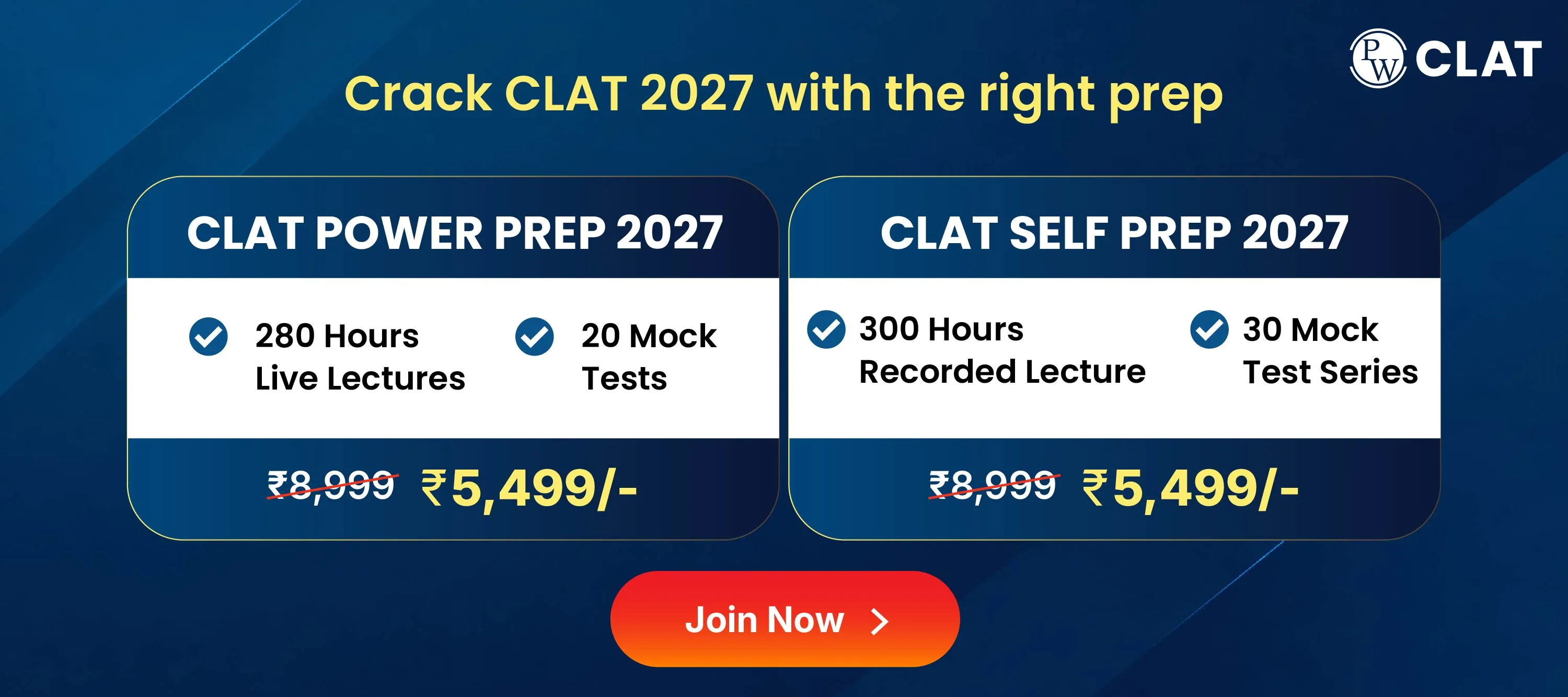
CLAT Power Batch 2.0 may be suitable for students looking for structured preparation with additional mentorship and practice support. Its listed resources include mock tests, study material, mentorship, and other preparation resources.
This option may help students who understand the basics but need guidance to organise revision, maintain consistency, and identify areas for improvement. Candidates should review the current batch details to confirm the resources available to them.
3. CLAT Pro 2027
CLAT Pro 2027 is an option for students seeking extensive practice and test-based preparation. The listed features include full-length mock tests, sectional tests, topic-wise tests, daily practice problems (DPPs), and a large practice question bank.
Students who have completed most of the syllabus and want to focus on applying their knowledge may find these practice resources useful. Topic-wise and sectional tests can help them work on specific areas, while full-length mocks provide an opportunity to practise under exam-like conditions.
4. Dedicated Mock-Test Practice
Students who mainly want to assess their readiness may explore dedicated mock-test options, such as the All India Open Mock 2027 listed on PW's CLAT batches page.
A dedicated mock-test option can be useful for candidates who already have a preparation plan and want to evaluate their performance. However, mock tests should be accompanied by detailed analysis and targeted revision to help students learn from each attempt.
How to Revise Current Affairs for CLAT 2027
Current affairs revision should continue alongside mock-test practice. Students can use current affairs magazines, GK quizzes, personal notes, and practice questions to revise important information.
Recorded lectures can also help revisit previously covered concepts. Instead of repeatedly watching entire lectures, students should identify specific topics that need clarification and focus their revision accordingly.
CLAT Previous years' question papers (PYQs) are another useful practice resource. Solving them can help candidates become familiar with question formats and understand how to apply their knowledge.
How to Use CLAT 2027 Mock Tests Effectively
Taking mock tests regularly is useful, but analysing the results is equally important. Students should follow a consistent process after every test.
-
Attempt the mock under exam-like conditions: Follow the time limit and avoid unnecessary interruptions.
-
Review incorrect answers: Identify whether mistakes occurred because of conceptual gaps, misreading, or calculation and reasoning errors.
-
Analyse unanswered questions: Determine whether time pressure or difficulty with a topic prevented completion.
-
Track section-wise performance: Record progress across sections to identify recurring weaknesses.
-
Revise before the next mock: Practise weak topics and attempt relevant sectional tests before taking another full-length test.
Students should focus on understanding their mistakes rather than judging preparation only by their mock-test scores.
CLAT 2027 Final Revision Strategy
A consistent revision plan can help candidates make better use of their remaining preparation time.
-
Follow a fixed mock-test schedule that allows time for analysis.
-
Revise weak topics regularly instead of postponing them.
-
Practise PYQs, topic-wise questions, and sectional tests.
-
Keep current affairs and general knowledge revision ongoing.
-
Maintain concise notes of important concepts and repeated mistakes.
-
Balance full-length tests with targeted revision.
Before enrolling, candidates should compare the latest batch details and available resources. A consistent routine combining mock tests, revision, current affairs preparation, and performance analysis can help students prepare more systematically for CLAT 2027.
FAQs on CLAT 2027: Mock-Test and Revision Preparation
Which PW batch is best for CLAT 2027 mock-test and revision preparation?
Is CLAT Pro 2027 suitable for mock-test practice?
What is the difference between CLAT Titan 2027 and CLAT Power Batch 2.0?




Have questions about your prep?
Our experts can answer all your questions
 Live & recorded classes available at easeDashboard for progress trackingMillions of practice questions at your fingertips