

How to Start Your Career in Criminal Litigation After Law School
Starting a career in criminal litigation requires practical courtroom skills beyond law school. The PW Advanced Criminal Litigation & Legal Drafting Program 2026 offers live training, 16 practice-oriented modules, 10,000+ editable legal drafts, and practical litigation exposure to help students prepare for professional practice.



Law school provides the legal foundation required to understand criminal law, but beginning a career in criminal litigation often requires practical exposure to courtroom procedures, drafting, evidence handling, and litigation workflow. Many fresh graduates gain these skills through internships and chamber practice, where they learn how criminal matters are handled in real courts.
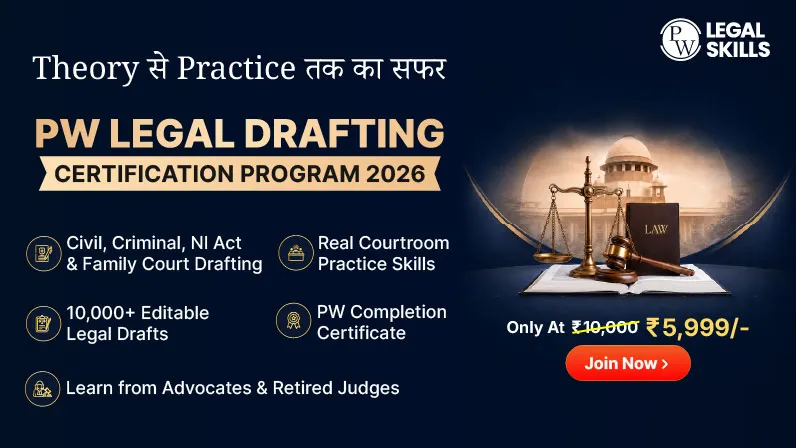
The PW Advanced Criminal Litigation & Legal Drafting Program 2026 is designed to support this transition by offering structured practical training for law students, judiciary aspirants, interns, and young legal practitioners through live weekend classes, legal drafting exercises, and courtroom-oriented learning.
Skills You Need to Build Before Starting a Career in Criminal Litigation
A successful career in criminal litigation involves much more than understanding statutes. Fresh graduates are generally expected to understand court procedures, prepare legal documents, communicate with clients, and assist senior advocates during litigation.
To help students develop these practical skills, the program focuses on:
-
Legal Drafting
-
Introduction to Court Craft
-
Court Procedure & Practice
-
Court Filing Understanding
-
Client Management
-
Judgment Reading & Analysis
-
AI-Powered Legal Drafting
-
Modern Legal Practice
-
Internship Toolkit
These areas are taught through 16 comprehensive practice-oriented modules designed to bridge the gap between legal theory and courtroom practice.
How to Start a Career in Criminal Litigation After Law School?
Starting a career in criminal litigation usually involves combining legal knowledge with practical courtroom exposure. After completing law school, graduates can build their litigation careers by gaining experience through internships, working with senior advocates, joining litigation chambers, and developing practical skills such as legal drafting, court procedures, and client handling.
1. Build a Strong Foundation in Criminal Law
Start by strengthening your understanding of criminal law, procedure, evidence, and other relevant laws. A strong conceptual foundation helps you understand the legal issues involved in criminal matters and follow proceedings more effectively.
2. Gain Practical Experience Through Internships
Internships with criminal law practitioners, advocates, litigation chambers, or law firms can provide exposure to real legal work. During internships, students can observe court proceedings, assist with legal research, study case files, and understand how criminal matters progress through different stages.
3. Work Under a Senior Advocate or Join a Litigation Chamber
After law school, working under an experienced advocate can help fresh graduates understand the day-to-day functioning of criminal litigation. This may involve assisting with research, preparing drafts, organising case documents, attending hearings, and observing client interactions.
4. Develop Legal Drafting and Courtroom Skills
Practical litigation requires skills that may not be developed through classroom learning alone. Focus on learning how to prepare bail applications, criminal complaints, notices, petitions, appeals, revisions, and other legal documents, along with understanding court procedures and filing requirements.
5. Learn to Read and Analyse Judgments
Regularly reading judgments can help you understand how courts interpret legal provisions and apply them to specific cases. Developing this skill can also improve legal research and case preparation.
6. Develop Client Management Skills
Criminal litigation also involves communicating with clients, understanding their concerns, collecting relevant information, and explaining legal processes. Developing professional communication and client-handling skills can therefore be useful when beginning practice.
7. Consider a Practice-Oriented Litigation Program
Students who want comprehensive practical training alongside law school or after graduation can consider a specialised litigation program. The PW Advanced Criminal Litigation & Legal Drafting Program 2026 is one such option that focuses on practical criminal litigation and legal drafting.
The program includes 16 practice-oriented modules, live weekend classes, courtroom-oriented learning, and 10,000+ editable legal drafts in English and Hindi. Its curriculum covers areas such as criminal proceedings, bail practice, criminal complaints, evidence, examination and cross-examination, appeals, revisions, and practical legal drafting.
This type of training can complement internships and chamber experience by giving learners a guided environment to practise drafting and understand litigation processes.
8. Continue Building Experience Through Practice
Criminal litigation is a practice-oriented field, so skills generally develop with continued exposure to cases, court proceedings, drafting, research, and client work. Graduates can gradually take on greater responsibilities as they gain experience and build their professional network.
What Practical Criminal Litigation Training Does the Program Cover?
The curriculum focuses on practical criminal litigation processes that students may encounter during internships, chamber practice, and early legal careers.
Major criminal litigation topics include:
-
Criminal Proceedings from FIR to Judgment
-
Court-wise Bail Practice (Sections 473 to 496 BNSS)
-
Criminal Complaints
-
Electronic Evidence Certification (Section 63 BSA)
-
Framing of Charges and Discharge Applications
-
Examination-in-Chief
-
Cross-Examination
-
Re-Examination
-
Criminal Revision
-
Criminal Appeals
-
Criminal Writ Petitions
-
SLP in Criminal Matters (Article 136)
Students also receive exposure to practical drafting, including:
-
Notices and Reply Drafting
-
FIR Drafting
-
Bail Applications
-
Criminal Complaints
-
NI Act / Cheque Bounce Drafts
-
Agreements
-
Affidavits
-
Plaints
-
Written Statements
-
Petitions
-
Writ Petitions
-
SLP Formats
-
Divorce, Maintenance and Matrimonial Drafts
The program also includes 10,000+ editable legal drafts in English and Hindi for practice and reference.
How Can This Program Support Your Early Litigation Career?
The program is designed to help students develop practical skills that may be useful during internships and the early stages of legal practice.
Some of the practical benefits include:
-
Learning professional legal drafting formats
-
Performing better during internships, litigation chambers, and law firms
-
Assisting senior advocates confidently
-
Understanding real court drafting and litigation workflow
-
Exploring freelance legal drafting opportunities
-
Building practical skills for legal startups
Students also receive:
-
PW Completion Certificate
-
E-Certificate on course completion
-
Placement assistance for 2 interviews in the Delhi NCR region
FAQs
Can I start a career in criminal litigation immediately after law school?
Who is the PW Advanced Criminal Litigation Program designed for?
What practical skills does the program focus on?
Are live classes included?


 Online Classes for LexGlobal (Legal Skills)Learn from PW's Educators through Live Lectures.Live & Recorded Classes are available at ease.Lectures are available in Hinglish (Hindi and English mix).Get access to Study Materials, Notes & Mock Tests.