






Blindness, Symptoms, Causes & Treatments
Blindness can be caused by a variety of factors, including: Wounds, Infections, Illnesses, Ocular trauma, Stroke, Cancer, and Lack of essential nutrition. Read the art8icle to know more.
 Nivedita Dar26 Nov, 2024
Share
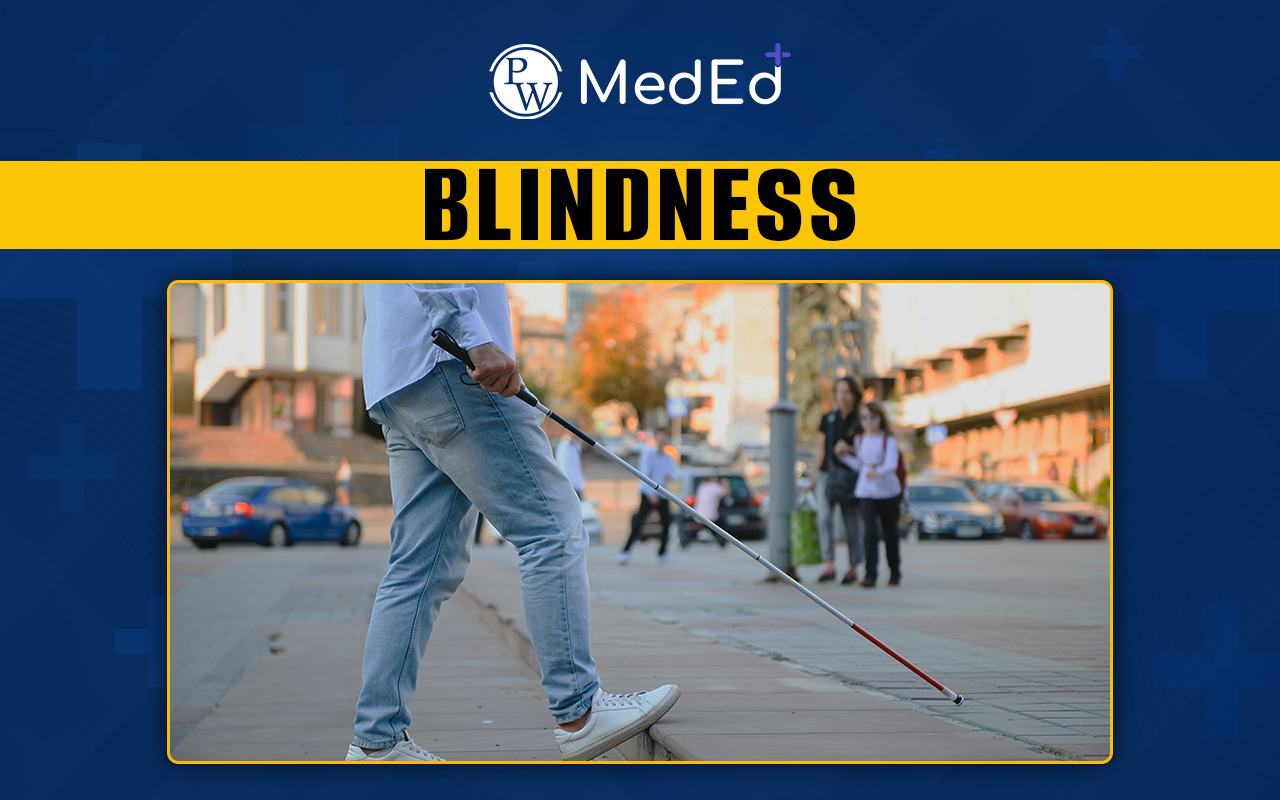
Symptoms of Blindness: Diminished or total loss of vision. Blindness refers to the complete or partial loss of vision that cannot be corrected with glasses’s, contact lenses, or surgery. Vision is one of the most important senses, and losing it can have a significant impact on daily life. While blindness can develop gradually or happen suddenly, recognizing its early symptoms is crucial for seeking timely medical attention. In this article, we will explore the common symptoms of blindness, its causes, and available treatment options.
Visit - MedEd App
Read More - Pharyngeal Arches
What Is Blindness?
Blindness can range from partial vision loss to total loss of vision. It can affect one or both eyes, depending on the underlying cause. In some cases, blindness may develop slowly over time due to conditions like cataracts or glaucoma. In others, it can happen suddenly due to injury or medical emergencies like retinal detachment. The World Health Organization (WHO) defines blindness as having visual acuity of less than 3/60 in the better eye, meaning that a person cannot see at 3 meters what a person with normal vision can see at 60 meters. Blindness can also refer to a significant loss of the visual field, where a person may be able to see light but not details or objects clearly.Symptoms of Blindness
Recognizing the symptoms of blindness early can help in managing the condition and slowing its progression. Some of the common symptoms that may indicate partial or complete vision loss include:Blurry Vision
Blurry vision is one of the most common early signs of vision loss. It may feel like there is a film or fog covering the eyes, making it difficult to see details. Blurriness can affect both near and far vision and may worsen over time if left untreated.Difficulty Seeing in Low Light (Night Blindness)
Some people experience night blindness, where their vision is impaired in dimly lit environments. They may struggle to see in poorly lit rooms or at night while driving. This symptom is often associated with conditions like cataracts or retinitis pigmentosa.Tunnel Vision
Tunnel vision occurs when the peripheral (side) vision starts to fade, leaving only the central part of the visual field intact. This can make it hard to see objects or people that are not directly in front of you. Tunnel vision is commonly linked to glaucoma, where increased pressure in the eye damages the optic nerve.Cloudy or Hazy Vision
Cloudy vision, often described as seeing through a mist or haze, can indicate the early stages of cataracts, where the lens of the eye becomes cloudy. Cataracts develop gradually and can cause difficulty with reading, driving, and recognizing faces.Loss of Central Vision
Losing central vision, which is essential for tasks like reading and recognizing faces, is a key symptom of age-related macular degeneration (AMD). In this condition, the macula, the central part of the retina, is damaged, leading to a blind spot in the center of the visual field.Seeing Flashes or Floaters
Some people may notice flashes of light or floating spots (floaters) in their field of vision. While floaters are common and often harmless, a sudden increase in floaters or flashes may indicate a serious condition like retinal detachment, which requires immediate medical attention to prevent blindness.Double Vision
Double vision, where a person sees two images of a single object, can be a sign of a serious underlying problem, such as a brain injury, stroke, or eye muscle disorder. This symptom can lead to confusion and difficulty with everyday tasks like walking or reading.Total Vision Loss
In some cases, blindness may occur suddenly, leading to complete vision loss. This is often the result of severe injuries, strokes affecting the visual center of the brain, or conditions like optic neuritis (inflammation of the optic nerve). Total vision loss can happen in one or both eyes.Light Sensitivity
Sensitivity to light, also known as photophobia, can make it painful to be in bright environments. This symptom is often linked to infections, eye injuries, or conditions like keratitis (inflammation of the cornea). While photophobia alone does not cause blindness, it can be a warning sign of an underlying issue that may lead to vision loss.Frequent Headaches or Eye Strain
Frequent headaches, eye pain, or eye strain can be signs of vision problems. People with poor vision may unconsciously strain their eyes to focus, leading to discomfort and headaches. Over time, this can worsen if the underlying condition is not addressed.Causes of Blindness
Blindness can be caused by a variety of factors, including diseases, injuries, or genetic conditions. Some of the most common causes of blindness include:Cataracts
Cataracts are the leading cause of blindness worldwide. They occur when the lens of the eye becomes cloudy, preventing light from passing through properly. Cataracts are most common in older adults and can be treated with surgery.Glaucoma
Glaucoma is a group of eye diseases that damage the optic nerve, often due to increased pressure in the eye. If left untreated, glaucoma can cause irreversible vision loss, usually starting with peripheral vision.Age-Related Macular Degeneration (AMD)
AMD affects the macula, the part of the retina responsible for central vision. It is a leading cause of vision loss in people over 50 and can lead to the gradual loss of the ability to see fine details.Diabetic Retinopathy
People with diabetes are at risk of developing diabetic retinopathy, a condition where high blood sugar levels damage the blood vessels in the retina. This can lead to vision loss if not managed properly.Retinal Detachment
Retinal detachment occurs when the retina separates from the back of the eye, leading to vision loss. It is considered a medical emergency and requires immediate treatment to prevent blindness.Trauma
Eye injuries from accidents, chemical exposure, or sharp objects can cause blindness if the damage is severe. Prompt medical treatment is crucial to minimize the risk of permanent vision loss.Visit - MedEd App
Read More - Radiodiagnosis
Treatment of Blindness
Treatment for blindness depends on the underlying cause and the severity of vision loss. In many cases, early intervention can prevent or slow down further vision loss. Some treatment options include: Cataract surgery: A common and effective procedure where the cloudy lens is removed and replaced with an artificial lens. Glaucoma management: Medications, laser treatments, or surgery can help reduce eye pressure and prevent further damage to the optic nerve. AMD treatment: While there is no cure for AMD, treatments like laser therapy, injections, and lifestyle changes can help slow the progression of the disease. Diabetic retinopathy management: Controlling blood sugar levels, along with laser treatment or injections, can help prevent further vision damage. For individuals with permanent vision loss, vision rehabilitation programs, low-vision aids, and mobility training can help them adapt to life with partial or total blindness.Blindness FAQs
What is the pathophysiology of diabetic retinopathy?
Diabetic retinopathy occurs when high blood sugar damages the blood vessels in the retina, leading to leakage, swelling, and abnormal vessel growth, which impairs vision over time.
How can retinal detachment cause blindness?
Retinal detachment separates the retina from its underlying support tissues, cutting off its blood supply. Without prompt treatment, the retina cannot function properly, leading to permanent vision loss.
What is the treatment of age-related macular degeneration?
Treatment for AMD includes lifestyle changes, anti-VEGF injections to stop abnormal blood vessel growth, laser therapy, and, in some cases, nutritional supplements to slow disease progression.
How can glaucoma cause blindness?
Glaucoma increases pressure inside the eye, damaging the optic nerve. This damage leads to gradual vision loss, starting with peripheral vision and, if untreated, progressing to total blindness.


Talk to a counsellorHave doubts? Our support team will be happy to assist you!


Check out these Related Articles



Join 15 Million students on the app today!
 Live & recorded classes available at easeDashboard for progress trackingMillions of practice questions at your fingertips


Free Learning Resources
PW Books
Notes (Class 10-12)
PW Study Materials
Notes (Class 6-9)
Ncert Solutions
Govt Exams
Class 6th to 12th Online Courses
Govt Job Exams Courses
UPSC Coaching
Defence Exam Coaching
Gate Exam Coaching
Other Exams
Know about Physics Wallah
Physics Wallah is an Indian edtech platform that provides accessible & comprehensive learning experiences to students from Class 6th to postgraduate level. We also provide extensive NCERT solutions, sample paper, NEET, JEE Mains, BITSAT previous year papers & more such resources to students. Physics Wallah also caters to over 3.5 million registered students and over 78 lakh+ Youtube subscribers with 4.8 rating on its app.
We Stand Out because
We provide students with intensive courses with India’s qualified & experienced faculties & mentors. PW strives to make the learning experience comprehensive and accessible for students of all sections of society. We believe in empowering every single student who couldn't dream of a good career in engineering and medical field earlier.
Our Key Focus Areas
Physics Wallah's main focus is to make the learning experience as economical as possible for all students. With our affordable courses like Lakshya, Udaan and Arjuna and many others, we have been able to provide a platform for lakhs of aspirants. From providing Chemistry, Maths, Physics formula to giving e-books of eminent authors like RD Sharma, RS Aggarwal and Lakhmir Singh, PW focuses on every single student's need for preparation.
What Makes Us Different
Physics Wallah strives to develop a comprehensive pedagogical structure for students, where they get a state-of-the-art learning experience with study material and resources. Apart from catering students preparing for JEE Mains and NEET, PW also provides study material for each state board like Uttar Pradesh, Bihar, and others
Copyright © 2026 Physicswallah Limited All rights reserved.