
NEET PG 2025 Topper Dr. Jyothi Iyer’s Journey: From Internship Preparation to AIR 156
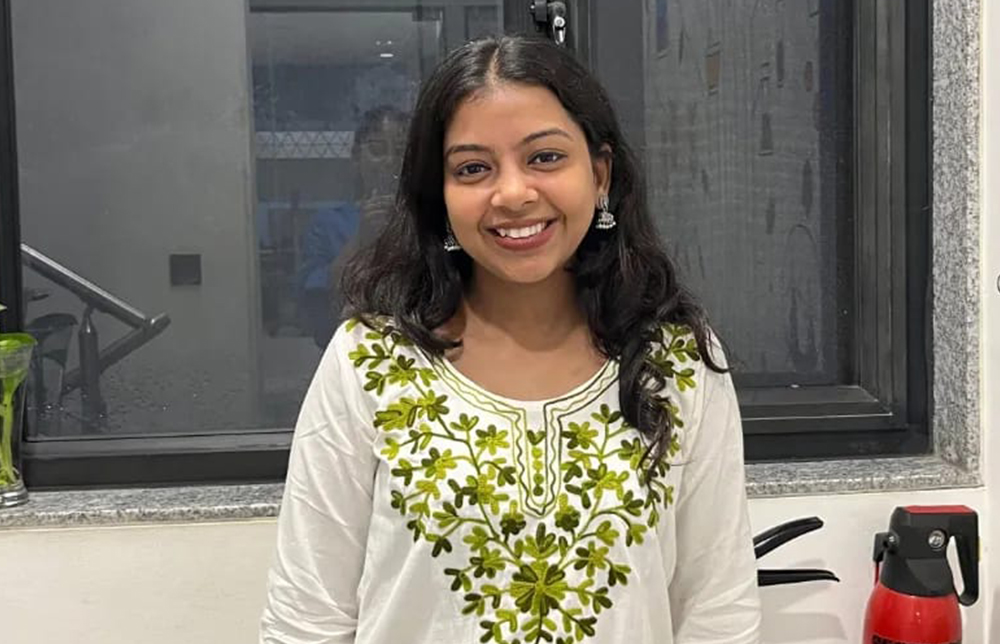
Dr. Jyothi Iyer’s NEET PG preparation started during her internship, but it was not a perfectly consistent journey. Hectic clinical postings made it difficult to maintain a regular routine, and she even considered taking a year off before restarting her preparation. She also used PW’s revision-focused resources alongside her broader preparation.
Eventually, she found a strategy that worked for her. By combining revision resources with MCQs, PYQs, GTs, and targeted revision, Dr. Jyothi secured AIR 156 in NEET PG 2025 in her first attempt.
Dr. Jyothi Iyer Started NEET PG Preparation During Internship
Dr. Jyothi is from Kochi, Kerala, and completed her MBBS from a deemed university. She began exploring NEET PG preparation during internship, initially studying subjects according to her clinical postings.
“So initially I had all my minor postings, so I thought, k, uh, whichever subject is going on, I'll do, you know, that subject, uh, so that I'm like I I'll be I'll be seeing cases in my world as well, so I can, like, relate stuff and, you know, get more of an idea about it.”
This approach helped her connect her preparation with the cases she was seeing during internship. However, major postings such as surgery and OBG became hectic, and she eventually paused her preparation.
Her preparation restarted during a community medicine posting when she had more time to study. By March, she had completed her first reading of most subjects and was ready to move towards more focused revision.
Dr. Jyothi Iyer Built Her Revision Around Practice
Having already studied the main concepts during MBBS, Dr. Jyothi used revision-focused resources, including PW’s revision videos and notes, during her NEET PG preparation. She found these useful for revisiting subjects, but question practice helped her identify topics that needed additional study.
She found the revision notes and videos useful for revisiting subjects, but question practice helped her identify topics that needed additional study. Whenever she came across something unfamiliar while solving PYQs or analysing a GT, she went back to the topic and revised it.
“So that time I used to go back and read that topic again, or whenever I give a GT, uh I when I am analyzing or reviewing my GT, if I find that, okay, this topic is something that I haven't read before... I would go back and read that topic again.”
This gradually turned her revision into a cycle of studying, solving questions, identifying gaps, and revising those gaps.
Dr. Jyothi Iyer Changed Her Strategy When Scores Stagnated
During her first revision, Dr. Jyothi noticed that her scores were still staying within the same range. Instead of continuing with the same approach, she started looking closely at her weaker subjects.
“So I was like, key, uh, I need to, you know, find out where I am going wrong, like find out my weakest subjects that was mainly physio...”
She began using subject-wise tests and exam discussions to strengthen areas where she was less confident. From May onwards, she started giving a GT every week and also solved around 100–150 MCQs each day.
Her MCQ practice followed a simple active-recall approach. She solved questions from previously studied subjects in the morning and questions related to the topics studied that day at night. She also maintained a small notebook of volatile facts and revised it regularly.
MCQs Became a Key Part of Dr. Jyothi Iyer’s Preparation
As her preparation progressed, Dr. Jyothi realised that solving questions had played a major role in improving her preparation.
“So I feel like more than studying, I feel like it's MCQs solving more MCQs- that, uh, you know, helped me and get an idea of how the actual exam will be.”
Looking back, she felt that she should have started solving PYQs earlier rather than waiting until the later stages of preparation.
“I feel like I should have covered the PQS at that time itself... I feel like it would have given me more confidence if I had done that in the initial part of my preparations.”
For students starting during an internship, she suggested beginning GT practice after covering a few subjects rather than waiting until the entire syllabus was complete. This, according to her, can help students understand their preparation level and build confidence as they progress.
Dr. Jyothi Iyer’s Consistent Practice Led to AIR 156
Dr. Jyothi’s journey from an inconsistent start during internship to AIR 156 in NEET PG 2025 was built through gradual changes in her preparation. Her preparation included revision resources, PYQs, MCQs, and GT analysis, with PW resources forming part of the study material she used along the way.
Her experience shows that a preparation strategy does not have to be perfect from day one. For NEET PG aspirants, her journey highlights the value of identifying weak areas, learning from test performance, and consistently adapting the approach as preparation progresses.




 Live & recorded classes available at easeDashboard for progress trackingMillions of practice questions at your fingertips