Parotid Gland: Functions, Anatomical Relationship, Vasculature, Innervation, Disorders

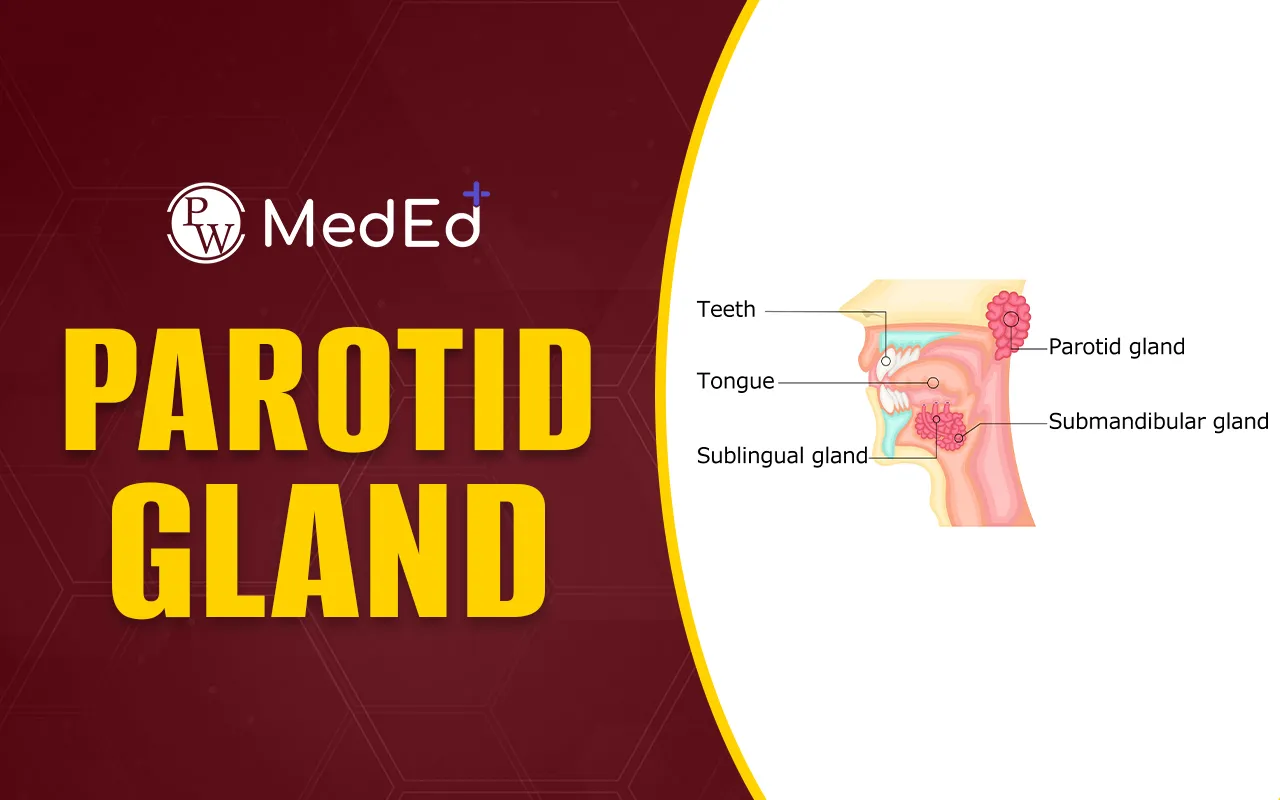
Parotid gland is an important part of your body that helps make saliva (spit). Saliva keeps your mouth wet, helps you chew food, swallow food, and start digestion. The parotid gland is the biggest salivary gland in the body.
This gland is close to important nerves, blood vessels, and muscles in your face. Because of this, it is an important part of how your face works. If something goes wrong with the parotid gland, it can affect how your face moves and how clean and healthy your mouth stays.
Also Read - Types of Scabies
What Parotid Gland?
The parotid gland is one of the main glands in your body that makes saliva (spit). Every person has two parotid glands, one on each side of the face, right in front of the ears. These glands go from your cheek area down toward your jaw.
The parotid gland makes watery saliva that helps you start digesting food. It has a special tube called Stensen’s duct that carries the saliva into your mouth near your upper back teeth.
The gland has two parts, a front part and a deeper inside part. A very important nerve called the facial nerve passes between these two parts.
The parotid gland is yellowish, covered with a thin tissue layer, and shaped like an upside-down triangle. It is about as long as your thumb (around 5.8 cm long) and weighs about 14 grams, which is similar to the weight of a small cookie.
Parotid Gland Functions
One of the major functions of the parotid gland is saliva production. It produces around 10% of resting saliva inside the mouth. At the time of eating, this percentage increases to nearly 25%. The saliva produced by the parotid gland is thin, watery, and rich in enzymes. Mentioned here are some of the key functions of the Parotid Gland:
| Functions of the Parotid Gland | |
| Function | Explanation |
| Lubricating the Mouth | Saliva keeps the mouth wet, helps with talking, and protects mouth tissues. |
| Supporting Digestion | The gland makes amylase, which starts breaking down starchy foods. |
| Protecting Teeth | Saliva removes germs and food bits, helping prevent cavities. |
| Preventing Infection | Saliva has germ-fighting properties that protect the mouth. |
| Aiding Chewing and Swallowing | Saliva makes food soft and easy to chew and swallow. |
Anatomical Relationships
Anatomical Relationships of the parotid gland are important for both diagnosis and surgery. Due to its location, the gland interacts closely with nerves, blood vessels, and muscles.
Location and Boundaries
The parotid gland sits below and in front of the ear. It lies between the jawbone and the sternocleidomastoid muscle. The superficial lobe is near the skin, while the deep lobe extends deeper into the facial region.
Relationship with Facial Nerve
The facial nerve passes through the gland. It divides the parotid gland into superficial and deep lobes. This nerve controls facial expressions. Because of this close relationship, any surgery involving the parotid gland requires careful handling to avoid nerve injury.
Muscular Relations
The gland lies on the masseter muscle, which is involved in chewing. The inner side of the gland touches the jawbone and muscles used for jaw movement.
Relations with Lymph Nodes
Many lymph nodes surround the gland. They play a role in filtering lymph fluid and may swell during infections of the parotid gland.
Relations with Salivary Ducts
Stensen’s duct carries saliva from the gland to the mouth. Its pathway is clinically important because blockages can affect saliva flow.
Also Read - Necrotizing Enterocolitis
Vasculature Innervation
Vasculature Innervation of the parotid gland ensures its blood supply and nerve control. This part is essential for understanding gland function and disease management. Mentioned below are some of the functions of Vasculature Innervation:
| Vasculature Innervation | |
| Category | Details |
| Blood Supply | Supplied by branches of the external carotid artery, mainly the superficial temporal artery and maxillary artery. Venous drainage occurs via veins draining into the external jugular vein. |
| Parasympathetic Nerve Supply | Stimulates saliva production; originates from the glossopharyngeal nerve (CN IX) and reaches the gland through the otic ganglion. |
| Sympathetic Nerve Supply | Controls the thickness of saliva; arises from the superior cervical ganglion. |
| Sensory Nerve Supply | Provided by the auriculotemporal nerve; detects pain and swelling in parotid gland disorders. |
| Clinical Relevance | Any disruption of vascular or nerve supply may cause reduced saliva flow, nerve pain, or surgical complications. |
Disorders of Parotid Gland
There are several Disorders of the Parotid Gland that affect normal function. These conditions range from infections to tumors. Early detection helps manage these disorders effectively.
| Disorders of the Parotid Gland | |
| Disorder | Explanation |
| Parotid Gland Swelling | Swelling happens due to blockage, infection, or dehydration. It becomes worse while eating. |
| Sialolithiasis (Salivary Stones) | Hard stones form inside ducts, blocking saliva. Causes pain, swelling, and trouble eating sour foods. |
| Sialadenitis (Infection) | Infection from bacteria or viruses like mumps. Causes swelling, fever, pain, and redness. |
| Parotid Gland Tumors | Lumps may form in the gland. Most are noncancerous but need medical checkup. |
| Parotid Gland Cancer | Rare condition. Can spread to lymph nodes if not treated early. |
| Blocked Ducts | Ducts get blocked by mucus, stones, or inflammation, causing pain and less saliva. |
Diagnosis Methods
Common diagnostic steps include:
-
Physical examination
-
Ultrasound
-
MRI
-
CT scan
-
Needle biopsy
These tests help determine the cause of the disorder.
Treatment Options
Treatment depends on the underlying cause:
-
Antibiotics for infections
-
Warm compresses to reduce discomfort
-
Sour candy or lemon therapy to increase saliva
-
Massage to clear blockage
-
Surgery for tumors or stones
People with parotid gland cancer may require surgery, radiation, or chemotherapy.
Parotid Gland FAQs
What is the parotid gland and where is it located?
What is the function of the parotid gland?
Why does the parotid gland swell while eating?