







Peripheral Arterial Disease
Peripheral artery disease (PAD) reduces blood flow to limbs due to narrowed arteries, causing symptoms like leg pain. Atherosclerosis is a primary cause. PAD's "5Ps" include pain, pallor, paresthesia, paralysis, pulselessness, poikilothermic limbs. Factors like smoking, atherosclerosis, and trauma can trigger PAD.
 Priyanka Agarwal14 Aug, 2026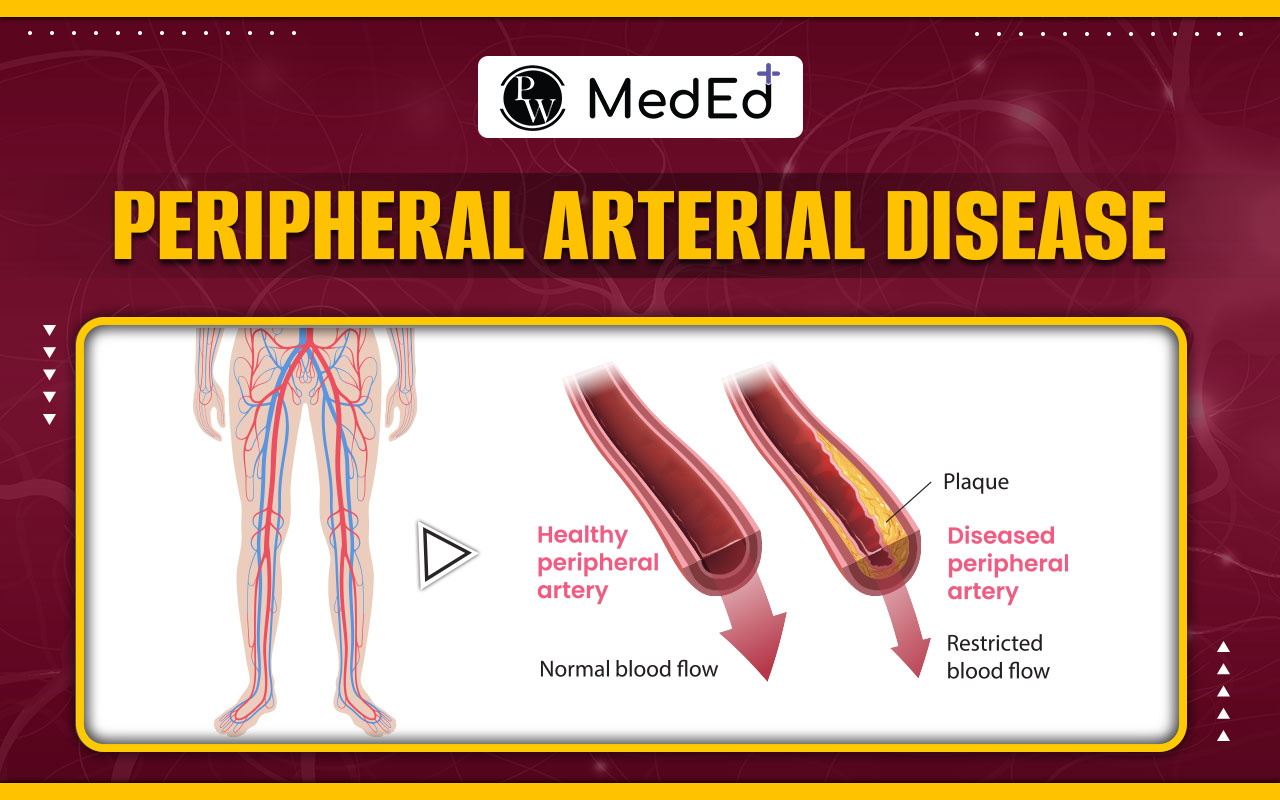
Peripheral artery disease (PAD), also referred to as peripheral arterial disease, is a condition characterized by reduced blood flow to the arms and legs due to narrowed arteries. This insufficiency in blood flow can result in symptoms such as walking-induced leg pain (claudication) and other discomforts. Typically associated with atherosclerosis, PAD occurs when fatty deposits accumulate within the arteries, causing them to narrow and restrict blood circulation to the extremities.
Signs and Symptoms of Peripheral Arterial Occlusion
Symptoms indicating peripheral arterial occlusion are often denoted by the mnemonic "5Ps":- Pain
- Pallor
- Paresthesia
- Paralysis
- Pulselessness
- Poikilothermic
Causes of Peripheral Arterial Disease
Peripheral Arterial Disease FAQs
What is Peripheral Arterial Disease (PAD)?
Peripheral Arterial Disease (PAD) is characterized by narrowed arteries in the arms and legs due to conditions like atherosclerosis, leading to reduced blood flow and symptoms such as leg pain during walking.
What are the signs and symptoms of Peripheral Arterial Occlusion?
Signs of peripheral arterial occlusion include "5Ps": Pain, Pallor, Paresthesia, Paralysis, Pulselessness, and Poikilothermic (coolness of the limb).
What are the common causes of Peripheral Arterial Disease?
Common causes of PAD include atherosclerosis, Borges disease, Takayasu arteritis, systemic lupus erythematosus, post-traumatic injury, and radiation injury.
How is Embolic Occlusion diagnosed?
Embolic occlusion is diagnosed clinically with no history of claudication, identification of the embolic source, absence of palpable distal pulses, painful limb movements, and severe limb pain and numbness.
What is the management approach for Embolic Occlusion?
Management includes urgent initiation of intravenous heparin and performing embolectomy or thrombectomy with a Fogarty balloon catheter to restore blood flow
🔥 Trending Blogs



Check out these Related Articles

Join 15 Million students on the app today!
 Live & recorded classes available at easeDashboard for progress trackingMillions of practice questions at your fingertips


Free Learning Resources
PW Books
Notes (Class 10-12)
PW Study Materials
Notes (Class 6-9)
Ncert Solutions
Govt Exams
Our Other Websites
Class 6th to 12th Online Courses
Govt Job Exams Courses
UPSC Coaching
Defence Exam Coaching
Gate Exam Coaching
Other Exams
Know about Physics Wallah
Physics Wallah is an Indian edtech platform that provides accessible & comprehensive learning experiences to students from Class 6th to postgraduate level. We also provide extensive NCERT solutions, sample paper, NEET, JEE Mains, BITSAT previous year papers & more such resources to students. Physics Wallah also caters to over 3.5 million registered students and over 78 lakh+ Youtube subscribers with 4.8 rating on its app.
We Stand Out because
We provide students with intensive courses with India’s qualified & experienced faculties & mentors. PW strives to make the learning experience comprehensive and accessible for students of all sections of society. We believe in empowering every single student who couldn't dream of a good career in engineering and medical field earlier.
Our Key Focus Areas
Physics Wallah's main focus is to make the learning experience as economical as possible for all students. With our affordable courses like Lakshya, Udaan and Arjuna and many others, we have been able to provide a platform for lakhs of aspirants. From providing Chemistry, Maths, Physics formula to giving e-books of eminent authors like RD Sharma, RS Aggarwal and Lakhmir Singh, PW focuses on every single student's need for preparation.
What Makes Us Different
Physics Wallah strives to develop a comprehensive pedagogical structure for students, where they get a state-of-the-art learning experience with study material and resources. Apart from catering students preparing for JEE Mains and NEET, PW also provides study material for each state board like Uttar Pradesh, Bihar, and others
Copyright © 2026 Physicswallah Limited All rights reserved.