







Plantar Warts Causes, Symptoms, Risk Factors, And Treatment
Plantar warts are hard, grainy skin growths on the soles of the feet caused by the human papillomavirus (HPV) and are often painful. Learn more about the causes, symptoms, risk factors, and treatment of plantar warts here.
 Nivedita Dar9 May, 2024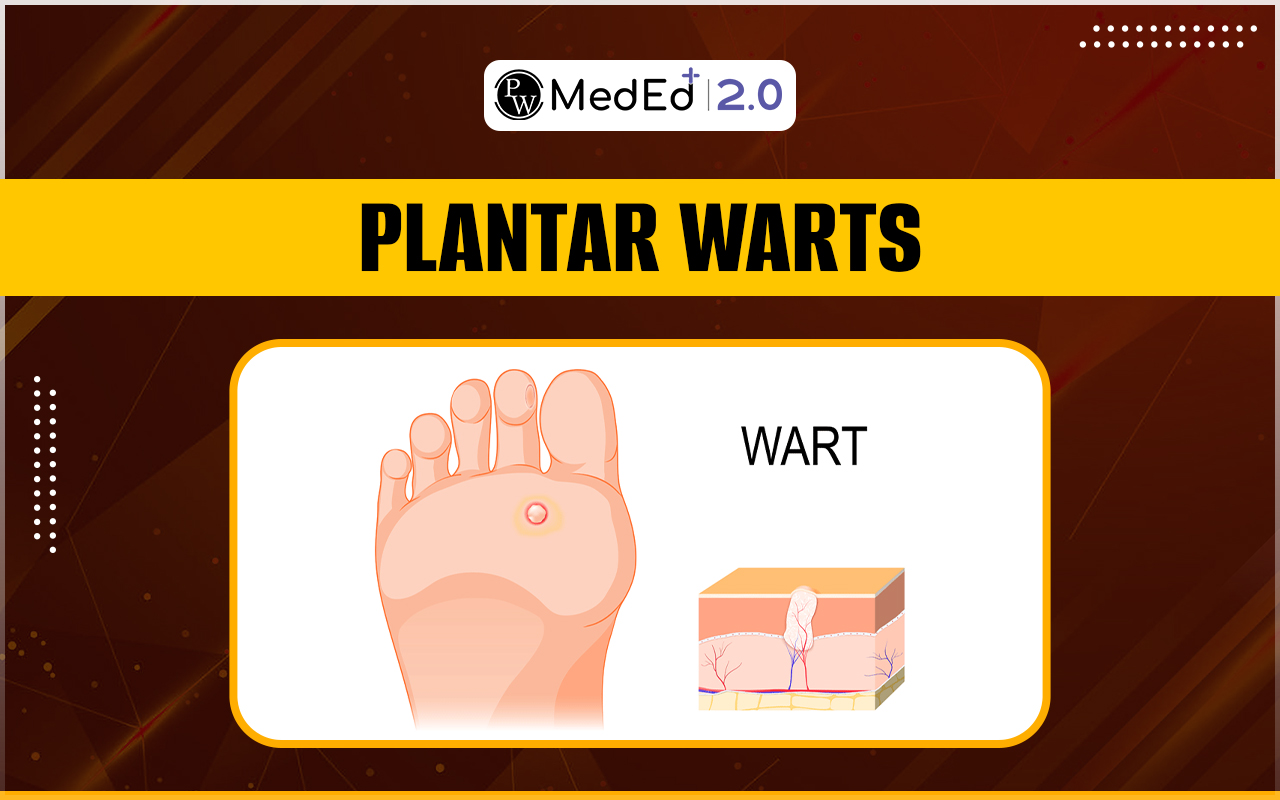
Plantar warts are a form of skin infection on the foot that causes small growths to appear in areas of the feet subject to the most significant pressure. It is not harmful but may cause pain or discomfort while moving. There are various options for treatment, including medications, home therapies, or other remedial measures.
What are plantar warts?
Plantar warts, medically termed verruca plantaris, are rough, tiny growths that mainly develop on the underside of the toes and heels of the feet. The excess pressure on specific points on the sole may cause the wart to grow beneath a layer of skin that becomes hard and thick. Most plantar warts, especially in children under 12, are not very dangerous and usually go away independently.Causes of Plantar Warts
The reason behind the formation of plantar wars is the attack by human papillomavirus (HPV) that enters the body through tiny cracks or cuts on the soles of the feet. A wart forms when the virus causes the infected cells to increase more quickly than the surrounding cells. People can contract the HPV virus that causes plantar warts under the following conditions:- Individuals who have compromised immune systems, which make it more difficult for the body to fight off the HPV virus,
- Walking barefoot in a locker room, public shower area, or swimming pool;
Transmission of the HPV virus
The immune systems of different people react differently to HPV. Even members of the same family respond differently to the infection. The virus can spread through direct contact and be absorbed more readily if skin cracks or wounds occur. Because the virus prefers warm, humid environments, strolling barefoot near swimming pools or locker rooms increases your risk of contracting the virus. The exchange of shoes or dirty socks that come into contact with each other's bare feet can also result in this problem.Symptoms of Plantar Warts
Symptoms and indicators of plantar warts include:- A tiny, rough growth on the bottom of your foot, typically on the ball, heel, or base of your toes
- Where a wart has grown inward, the skin has hardened and become hard (callus).
- Wart seeds, which are tiny, clotted blood vessels, can be seen around the marks.
- The growth may be single or a collection of growths on the foot's sole (mosaic warts).
- A growth that obstructs the skin's natural ridges and lines on your foot.
- Pain or uneasiness while standing or walking.
Risk Factors for Plantar Warts
Plantar warts can affect everyone. However, the risk of developing plantar warts may increase under the following circumstances:- Y ou are a child or teenager.
- You are affected by an autoimmune disease.
- Your immune system is weak.
- You are above the age of 65.
Diagnosis of Plantar Warts
If the wart is bothering you with pain or discomfort, you should consult a doctor immediately. A medical professional can diagnose the extent of wart growth beneath your skin by physically examining it or removing the top layer with a knife and looking for clots. According to your doctor, the most appropriate course of treatment will depend on how far along the wart is. If the wart is growing and spreading to other parts, the physician could remove a sample of the wart's skin and send it to a lab for more critical examinations to identify the presence of HPV.Treatment of Plantar Warts
The majority of plantar warts are harmless and gradually disappear on their own without any treatment. Suppose you would like to get rid of warts sooner that are spreading, causing pain, and making you uncomfortable. In that case, your healthcare professional can apply one or more of the following treatments that may be beneficial for you:- Cryotherapy: In this process, the plantar wart is frozen and destroyed using extremely low temperatures. Your healthcare practitioner will use liquid nitrogen or argon gas to induce an intense cold.
- Immunotherapy: Immunotherapy improves the defence systems of your body against HPV. Diphencyprone (DCP) is one of the topical chemicals used in this technique, which removes the wart through a mild allergic reaction.
- Laser treatment: This therapy destroys the tiny blood vessels inside the plantar wart, which stops the blood flow and eliminates the plantar wart.
- Electrocautery: The doctor will use an electric current to burn and remove the plantar wart.
- Topical medication : A liquid medication containing the chemical cantharidin is applied to cut the blood flow to the wart. Your healthcare provider will remove the dead plantar wart about a week later.
- Peeling Medicine : Salicylic acid-containing medicines can gradually eliminate a wart's layers. It also strengthens your immune system to combat the infection.
- Surgery: The surgical procedure involves cutting the wart using a sharp surgical knife (scalpel), removing it with tweezers, or scooping it out with a little scoop (curette).
Complications of Plantar Warts
Plantar warts can make walking or running painful, forcing you to alter your normal posture or stride to accommodate the discomfort . Over time, these adjustments to your natural gait could lead to additional issues such as stress and pain in the muscles or joints of your other problems.Prevention of Plantar Warts
To minimize the risk of plantar warts, one should take the following steps:- Refrain from touching plantar warts on yourself or other people.
- After coming into contact with a plantar wart, thoroughly wash your hands with warm water and antibacterial soap.
- Ensure thoroughly wash your toes, feet, and spaces between your toes.
- Dry your feet, toenails, and spaces between your toes following a swim or shower.
- Do not share shoes, socks, towels, washcloths, nail clippers, or other personal items.
- Put on fresh, moisture-absorbing socks made of cotton or synthetic materials.
- Use wipes or sprays to sanitize your shoes.
- Protect your feet with sandals when using public showers, saunas, steam rooms, or locker rooms.
- Any emery boards, pumice stones, or abrasive material you use to scrape off dead skin from your warts should not be reused.
Plantar warts FAQs
What is the difference between a plantar wart and a corn?
Plantar warts grow at the bottom of your foot, caused by the HPV virus, whereas corns are formed due to friction on the skin of hands, fingers, and feet.
Is the HPV vaccine effective in treating plantar warts?
An individual below 26 years of age can be given an HPV vaccine that may help prevent plantar warts, although more studies are needed on this.
How effective is surgical removal of warts?
Surgical removal of plantar warts has not been effective because any leftover tissue may remain, and the wart may grow again afterward.
How common are plantar warts among children and teenagers?
About 10%–20% of children and teenagers suffer from plantar warts.
Do plant-based warts have any impact on mental health?
Dealing with plantar warts indirectly impacts mental health because you may feel self-conscious about your posture, walking, etc., which causes stress and anxiety.




Check out these Related Articles










Join 15 Million students on the app today!
 Live & recorded classes available at easeDashboard for progress trackingMillions of practice questions at your fingertips


Free Learning Resources
PW Books
Notes (Class 10-12)
PW Study Materials
Notes (Class 6-9)
Ncert Solutions
Govt Exams
Our Other Websites
Class 6th to 12th Online Courses
Govt Job Exams Courses
UPSC Coaching
Defence Exam Coaching
Gate Exam Coaching
Other Exams
Know about Physics Wallah
Physics Wallah is an Indian edtech platform that provides accessible & comprehensive learning experiences to students from Class 6th to postgraduate level. We also provide extensive NCERT solutions, sample paper, NEET, JEE Mains, BITSAT previous year papers & more such resources to students. Physics Wallah also caters to over 3.5 million registered students and over 78 lakh+ Youtube subscribers with 4.8 rating on its app.
We Stand Out because
We provide students with intensive courses with India’s qualified & experienced faculties & mentors. PW strives to make the learning experience comprehensive and accessible for students of all sections of society. We believe in empowering every single student who couldn't dream of a good career in engineering and medical field earlier.
Our Key Focus Areas
Physics Wallah's main focus is to make the learning experience as economical as possible for all students. With our affordable courses like Lakshya, Udaan and Arjuna and many others, we have been able to provide a platform for lakhs of aspirants. From providing Chemistry, Maths, Physics formula to giving e-books of eminent authors like RD Sharma, RS Aggarwal and Lakhmir Singh, PW focuses on every single student's need for preparation.
What Makes Us Different
Physics Wallah strives to develop a comprehensive pedagogical structure for students, where they get a state-of-the-art learning experience with study material and resources. Apart from catering students preparing for JEE Mains and NEET, PW also provides study material for each state board like Uttar Pradesh, Bihar, and others
Copyright © 2026 Physicswallah Limited All rights reserved.