







Rhodophyceae, Definition, Characteristics, Reproduction and MCQs
 Krati Saraswat4 Jun, 2025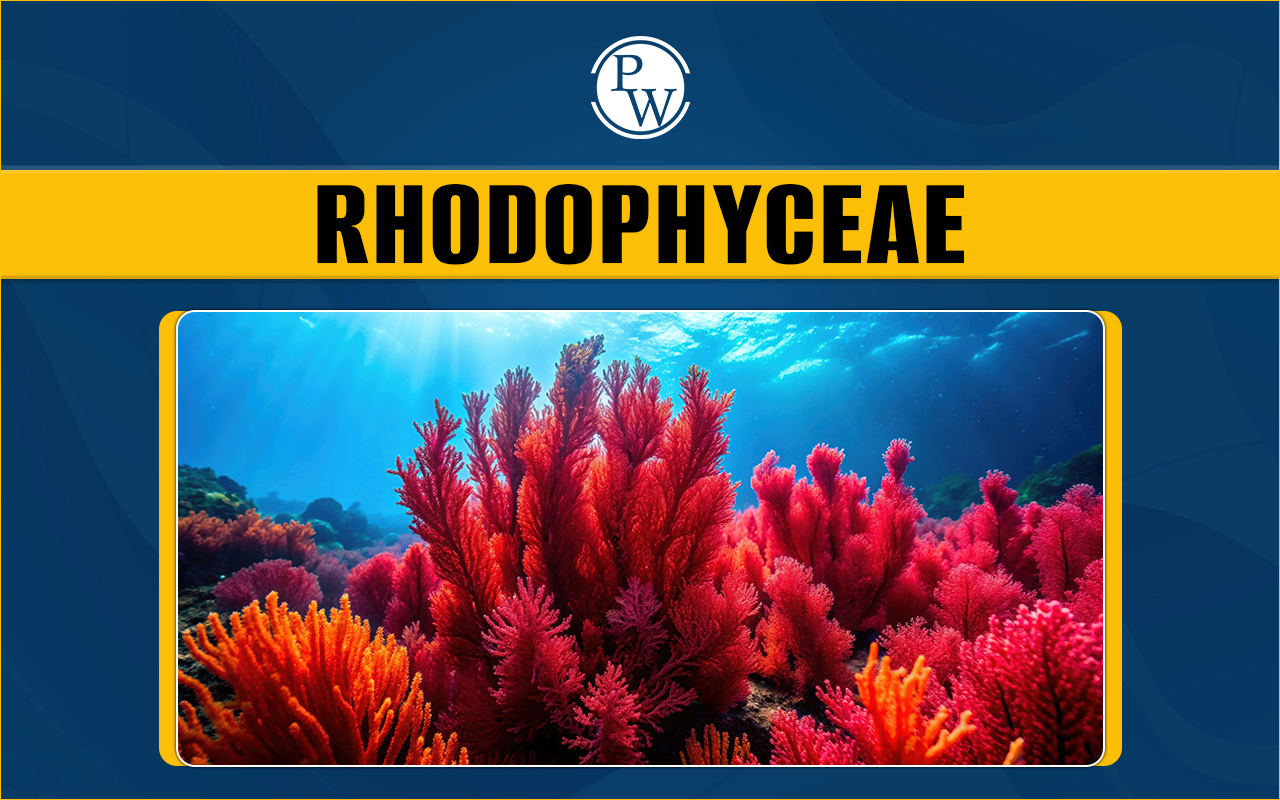
Rhodophyceae, commonly known as red algae, are primarily marine algae characterized by their red color, which is due to the presence of the pigment r-phycoerythrin. Red algae are an important topic for the NEET Exam as they exhibit unique characteristics, reproductive methods, and adaptations that make them a critical part of marine ecosystems.
Definition of Rhodophyceae
Rhodophyceae, or red algae, are a group of mostly marine algae found abundantly in warmer oceanic regions. They are called red algae because r-phycoerythrin, a red pigment, is predominant in their cells, giving them their distinct color. This group of algae includes both simple and complex multicellular forms, which can survive in diverse light conditions, from shallow waters to significant ocean depths.Characteristics of Rhodophyceae
Red algae have several unique characteristics that differentiate them from other algae. Below are the primary features of Rhodophyceae:
- The red color of Rhodophyceae is due to the pigment r-phycoerythrin, which conceals the green color of chlorophyll. Other pigments, such as chlorophyll a and d, are also present, allowing them to absorb light efficiently, even in deep waters with low light.
- Red algae are predominantly marine and are more concentrated in warmer waters. They can be found in well-lit, shallow areas and at significant depths in the ocean where little light reaches.
- Most red algae have multicellular thalli, which can range from simple forms to more complex body structures. This complexity enables them to survive in various marine environments.
- The cell walls of red algae are complex, containing cellulose and pectin. Additionally, they have unique compounds like xylan, galactose, polyuronic acid, and polysulphate esters, which strengthen their structure and provide flexibility.
- Red algae store food as floridean starch, a carbohydrate similar in structure to amylopectin and glycogen.
- Red algae do not have any motile stage in their life cycle. They lack cilia and flagella, meaning both their spores and gametes are non-motile.
- Common Examples: Some well-known examples of red algae include Polysiphonia, Porphyra, Gracilaria, and Gelidium.
Reproduction in Rhodophyceae
Reproduction in red algae occurs through vegetative, asexual, and sexual methods, all of which play a role in their adaptability and survival in marine environments.
- Vegetative Reproduction : Red algae can reproduce vegetatively by fragmentation, where parts of the thallus break off and develop into new organisms.
- Asexual Reproduction : Asexual reproduction in red algae occurs via non-motile spores. Since these spores lack motility, they rely on water currents to disperse to new locations.
- Sexual Reproduction: The sexual reproduction in red algae is oogamous, involving a large, non-motile female gamete (egg) and a smaller, non-motile male gamete (sperm). This type of reproduction is often complex and involves intricate post-fertilization developments.
MCQs of Rhodophyceae
Q1. The pigment that gives rhodophyceae its distinctive red colour is;
- chlorophyll - a, b.
- chlorophyll - a, c.
- r-phycoerythrin.
- chlorophyll - a, c and d.
Q2. Consider the following statements.
- In red algae, vegetative reproduction takes place by fragmentation.
- Sexual reproduction occurs by non-motile gametes in Porphyra.
- In red algae, sexual reproduction is anisogamous and oogamous type.
Which of the statements given above are correct?
- I and II
- I and III
- II and III
- All of these
Q3. What is NOT true for red algae?
- Lacks cilia and flagella.
- The majority of the red algae are marine with greater concentrations found in the warmer areas.
- They reproduce asexually by non-motile spores.
- The stored food is Floridian starch which is very similar to cellulose.
Answers of MCQs of Rhodophyceae
Ans1 . r-phycoerythrin., Ans2 . I and II, Ans3 . The stored food is floridean starch which is very similar to cellulose. Physics Wallah (PW) offers the NEET Online Coaching in India, designed to make quality education accessible to all aspiring medical students.
| NEET Exam Important Links | |
|---|---|
| NEET Syllabus | NEET Biology Diagrams |
| NEET Biology MCQ | NEET Biology Chapter wise Weightage |
| NEET Biology Notes | NEET Previous Year Question papers |
Rhodophyceae FAQs
Q. What are Rhodophyceae?
Q. Why are Rhodophyta called red algae?
Q. What is the habitat of Rhodophyceae?
Q. What is another name for Rhodophyceae?
Q. The members of Rhodophyceae are commonly called?
Q. What is the stored food in Rhodophyceae?
Q. What are examples of Rhodophyceae?














 Live & recorded classes available at easeDashboard for progress trackingMillions of practice questions at your fingertips

