GNM Nursing Course 2026: Latest Update and Preparation Resources by Physics Wallah
 Priyanka Agarwal3 Sept, 2026
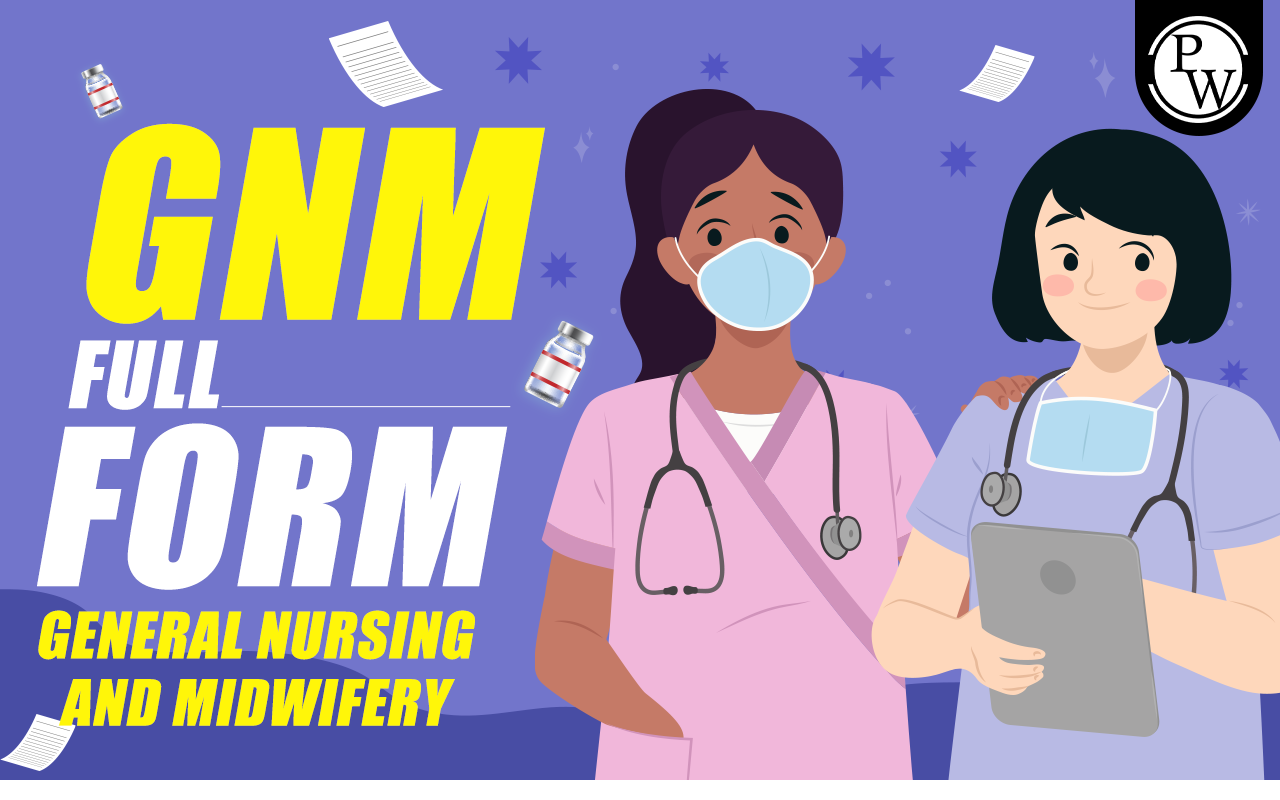
GNM Nursing is a diploma-level nursing programme designed for students who want to build a career in nursing and patient care. GNM stands for General Nursing and Midwifery. The course combines classroom learning with practical and clinical training.
The GNM Nursing Course 2026 admission process is not the same across India. Some states conduct entrance examinations, while others use merit-based admission or a state counselling process. Therefore, you should check the admission route applicable to your state before applying.
GNM Nursing Course 2026 Latest Update
GNM Nursing admission for the 2026-27 session is being conducted through different state-level admission authorities. There is no single national GNM entrance exam that is used for admission to all GNM colleges in India.
For example, West Bengal conducts the ANM(R) & GNM Entrance Exam for admission to GNM courses in the state. The West Bengal Joint Entrance Examinations Board conducted the 2026 entrance examination for admission to three-year GNM courses for the 2026-27 academic session.
Uttar Pradesh also conducts the UP GNM Entrance Test (UPGET) for admission to GNM courses. The 2026 information bulletin states that admission to government GNM nursing colleges and eligible private institutions in Uttar Pradesh is conducted through UPGET.
Rajasthan follows its own admission process for the GNM training course. The state has a dedicated online portal for the 2026-27 GNM admission session.
Since admission rules and schedules can differ by state, you should check the notification issued by the concerned state authority before completing the application
GNM Nursing Important Information
GNM Nursing is generally a three-year programme. For admission, the Indian Nursing Council specifies 10+2 with English and a minimum of 40% marks as a basic qualification. Science is preferred. Candidates from recognised State Open Schools and NIOS can also be eligible under the prescribed conditions. The minimum age is generally 17 years, while the INC specifies an upper age limit of 35 years for GNM admission. State-level rules may also apply.
The GNM subject list generally covers nursing foundations, anatomy and physiology, microbiology, psychology, sociology, nutrition, medical-surgical nursing, child health nursing, mental health nursing, community health nursing, midwifery and nursing education. Practical and clinical training are also important parts of the programme.
The GNM Nursing Course Fees depend on the institution, state and type of college. Government nursing institutions generally have different fee structures from private institutions. Candidates should check the fee notification of the institution or state authority before taking admission.
The table below brings together key GNM Nursing resources and state-wise admission routes in one place.
|
GNM Nursing Resource |
Details / Link |
|
ANM and GNM |
|
|
GNM Nursing Admission |
View Details |
|
GNM Nursing Eligibility |
View Details |
|
GNM Nursing Syllabus |
View Details |
|
GNM Nursing Exam Pattern |
View Details |
|
GNM Nursing Entrance Exams |
View Details |
|
GNM Nursing Course Details |
View Details |
|
GNM Nursing Course Fees |
View Details |
|
GNM Nursing Subject List |
View Details |
|
WB ANM(R) & GNM Entrance Exam |
|
|
UPGET |
|
|
DCECE / State Admission Process |
View Details |
|
Maharashtra ANM/GNM Admission Process |
View Details |
|
ANM/GNM Admission Through State Counselling |
|
|
Jharkhand ANM/GNM Admission |
|
|
CG GNM Admission |
View Details |
|
HP GNM Admission |
View Details |
|
Rajasthan GNM Admission |
|
|
Uttarakhand ANM/GNM Admission |
View Details |
|
Haryana ANM/GNM Admission |
View Details |
|
Punjab GNM Admission |
|
|
Assam GNM Admission |
View Details |
|
Kerala GNM/ANM Admission |
|
|
TG GNM Admission |
View Details |
|
AP GNM Admission |
View Details |
The exact entrance exam, application process, merit criteria, and counselling schedule can change from one state to another. For example, West Bengal uses an OMR-based common entrance test for ANM and GNM admissions, while Uttar Pradesh uses UPGET for GNM admissions.
GNM Nursing Preparation Support by PW
Preparing for a state-level GNM entrance exam requires a clear study plan. The subjects, question pattern, and selection process can vary across states. PW provides study support that can help you build concepts, practise questions, and revise important topics.
1. Live and Recorded Classes
Live classes help you learn concepts with guidance from teachers. You can attend classes according to the available schedule and clarify questions during the learning process.
Recorded classes are useful when you need to revisit a topic. You can use them for revision or study topics that need more attention.
For GNM entrance preparation, focus on understanding the basic concepts first. Once your concepts are clear, move towards question practice.
2. Subject-Wise and Topic-Wise Preparation
A planned subject-wise approach makes preparation easier. Start by checking the GNM syllabus and identifying the subjects included in your state-level examination.
Divide large topics into smaller sections. Complete one topic before moving to another. Keep short notes for definitions, formulas, facts and important concepts that you may need during revision.
Your preparation should also account for the specific pattern followed by your state. Do not rely on the pattern of another state's entrance exam without checking the official notification.
3. Practice Questions and DPPs
Regular question practice helps you understand how concepts are tested in an entrance examination. Daily Practice Problems can be used to revise topics after completing a class.
Try to solve questions without immediately checking the answer. Once you finish a set, review your mistakes. Identify whether the error happened because of a concept gap, incorrect calculation or lack of understanding.
Maintain a record of topics where you make repeated mistakes. Revise those topics before attempting another question set.
4. Mock Tests and Exam Practice
PW Nursing Mock Tests help you practise solving questions within a fixed time. They also help you understand your preparation level across different subjects.
Start with topic-wise tests and gradually move to full-length mock tests. After every test, check the questions you got wrong and the questions you could not attempt.
Do not focus only on your score. Analyse your mistakes and use the results to improve your preparation strategy.
5. Doubt-Solving and Revision Support
Doubt-solving support can help when a concept remains unclear even after studying it. Resolve your doubts before moving to advanced topics.
Revision should be part of your preparation from the beginning. Do not wait until the final days to revise the complete syllabus.
Create a simple revision cycle. Revise recently completed topics regularly and return to older topics at fixed intervals. This can help you retain important concepts for the examination.
GNM Nursing Course FAQs
What is the full form of GNM?
What is GNM Nursing?
What are the GNM qualifications?







 Live & recorded classes available at easeDashboard for progress trackingMillions of practice questions at your fingertips