PW Class 7 Social Science Chapter 4 Notes: New Beginnings: Cities and States
 Mishika Gupta18 Sept, 2026
The decline of the Harappan civilisation brought major changes to settlements and ways of life across the Indian subcontinent. After a long period dominated by rural communities, new towns and political territories gradually appeared. The growth of agriculture, use of iron, expanding trade, and changing forms of governance contributed to the emergence of more organised societies.
PW Class 7 Social Science Chapter 4 Notes help you follow this transition from post-Harappan rural life to the growth of cities and states. You can revise Janapadas, Mahājanapadas, monarchies, republics, technological developments, social organisation, trade networks, and the early kingdoms of South India.
What Happened After the Decline of the Harappan Civilisation?
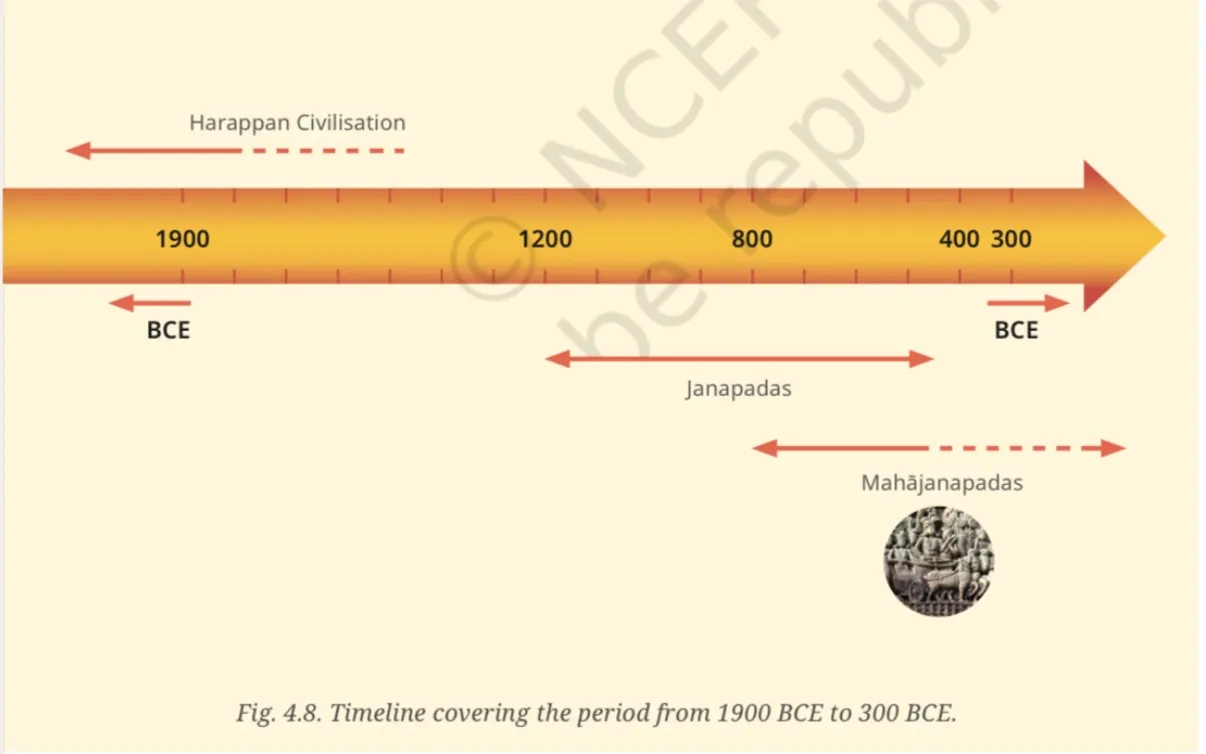
The decline of the Harappan civilisation around 1900 BCE was followed by a period when large urban centres became less prominent. Many communities adopted more rural ways of living. During this period, large cities, extensive markets, writing systems, sanitation networks, and centralised administrations associated with Harappan urban centres were no longer widespread in the same form. This post-Harappan rural phase continued for several centuries before urban centres began appearing again.
What Led to the Second Urbanisation?
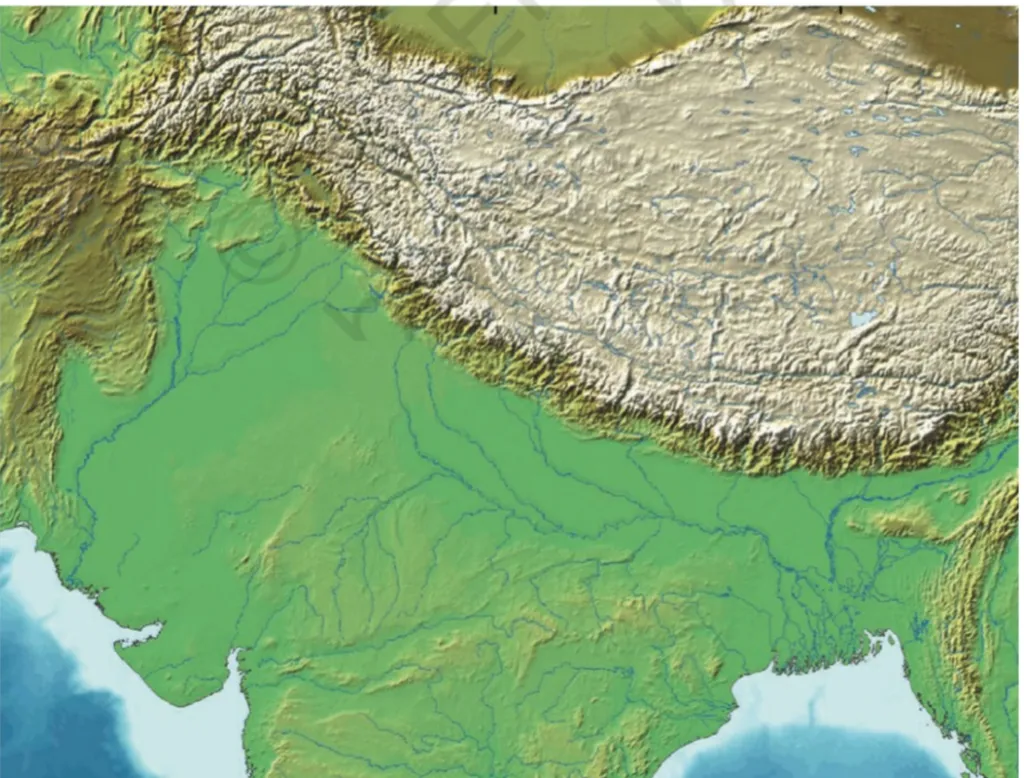
From around 1000 BCE, urban life began developing again in the Ganga plains and neighbouring regions. This phase is known as the Second Urbanisation.
Several developments supported the growth of towns and cities:
-
Agricultural Development: Improved tools increased the ability to cultivate land.
-
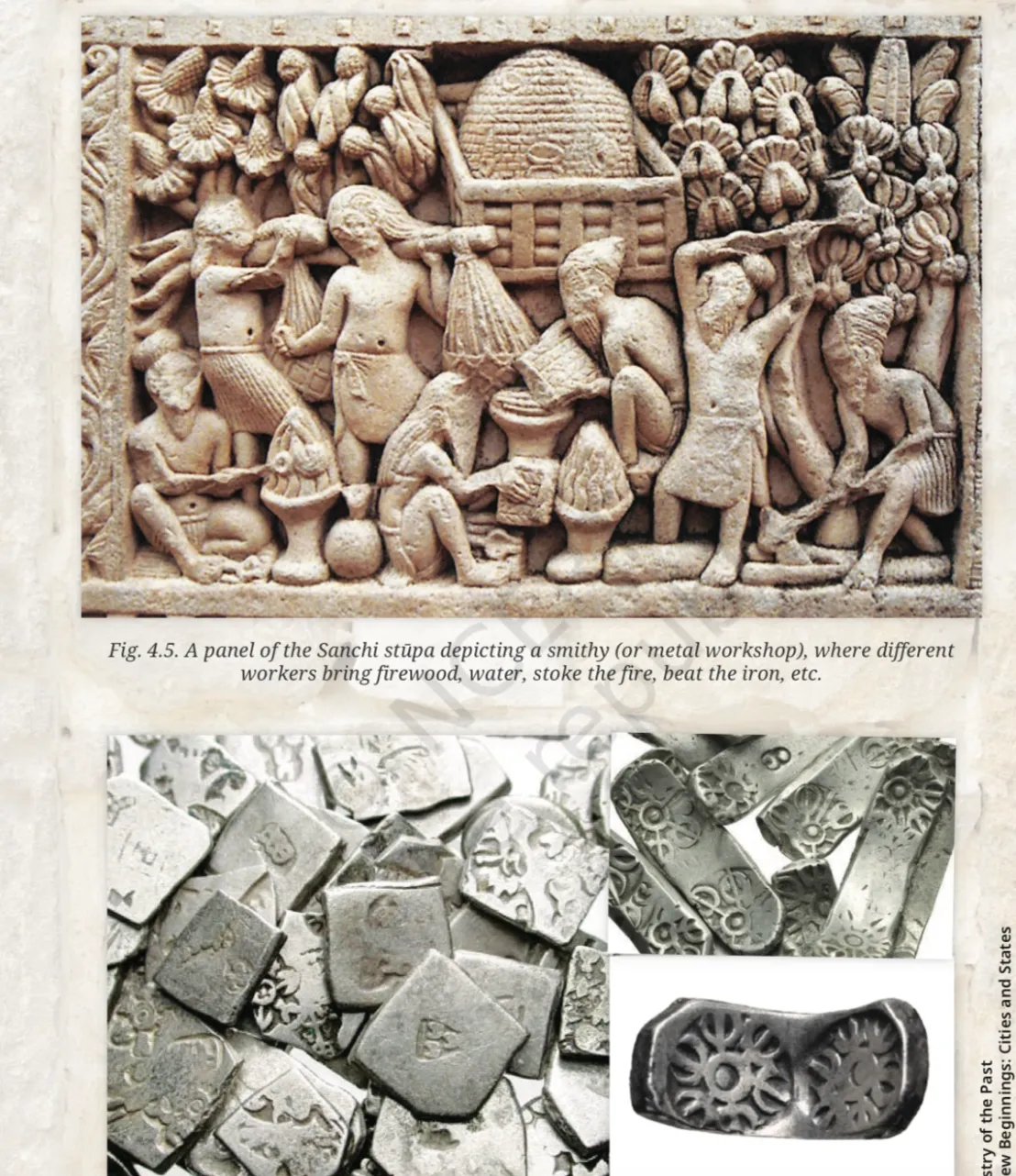
Use of Iron: Iron tools supported farming, forest clearance, and warfare.
-
Growth of Trade: Expanding trade created greater demand for markets and urban settlements.
-
Coinage: Punch-marked coins supported exchange and commercial activities.
-
Political Organisation: More organised states encouraged the growth of administrative and economic centres.
Unlike the earlier Harappan urban phase, the Second Urbanisation developed alongside new political institutions and expanding trade networks.
What Were Janapadas and How Did They Develop?
Janapada refers to a territory where a particular group or community settled. The word is formed from jana, meaning people, and pada, meaning foot or place.
Important features of Janapadas included:
-
Communities settled in defined territories.
-
Many Janapadas were governed by a rājā.
-
Assemblies such as sabhā and samiti had roles in governance.
-
Agriculture formed an important part of the economy.
-
Local trade supported economic activity.
The development of Janapadas marked an important stage in the growth of territorial political communities.
What Were the Mahājanapadas?
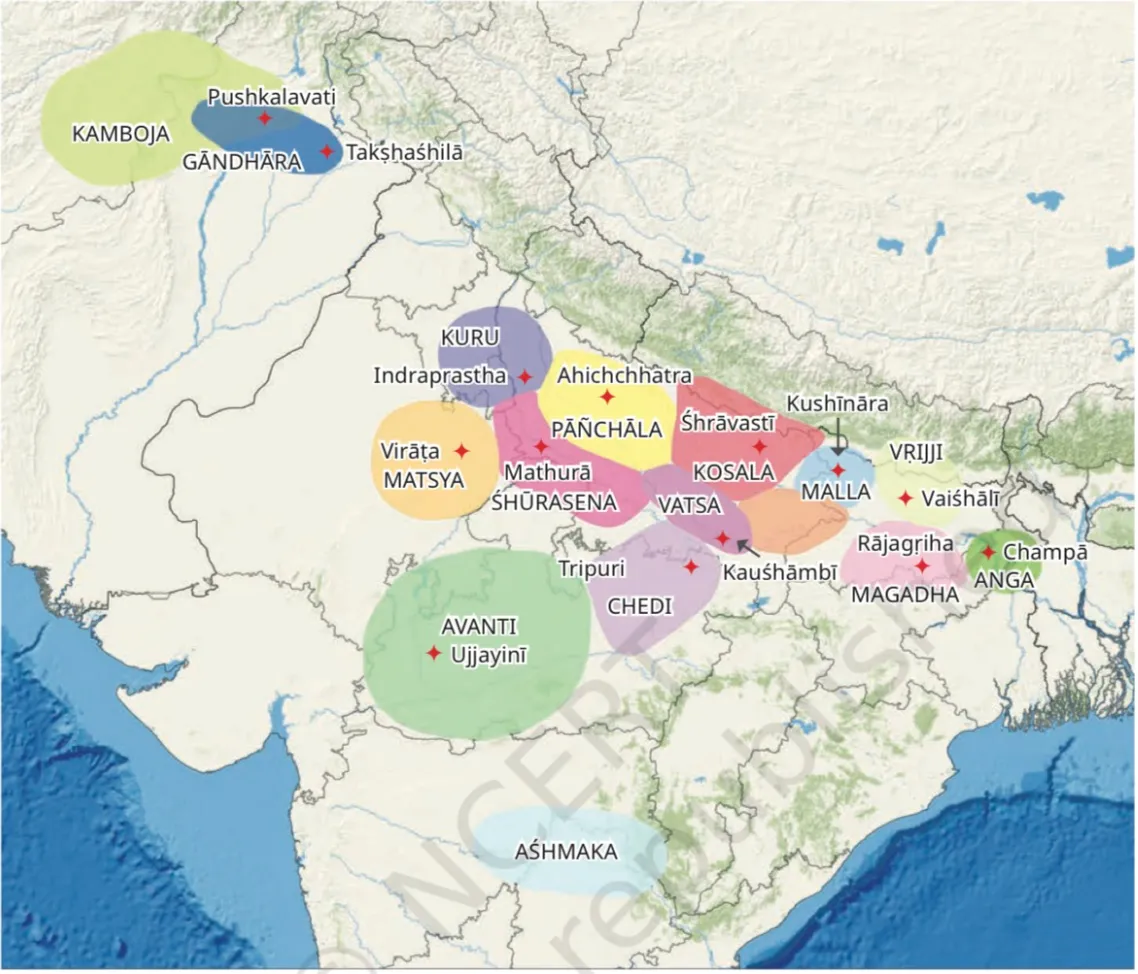
By around 600 BCE, some Janapadas became larger and more powerful. These states came to be known as Mahājanapadas, meaning great Janapadas.
Ancient sources mention 16 Mahājanapadas. Several important examples were:
|
Mahājanapada |
Important Capital |
|
Magadha |
Rājagṛiha |
|
Kosala |
Śhrāvastī |
|
Vatsa |
Kauśhāmbī |
|
Avanti |
Ujjayinī |
|
Vajji |
Associated with republican governance |
|
Malla |
Associated with republican governance |
Mahājanapadas generally had stronger political organisations, fortified centres, armies, taxation systems, and greater control over territories and trade routes.
What Were the Two Main Forms of Governance?
The Mahājanapadas did not all follow the same form of government. Two important forms were monarchies and gaṇa-saṅghas.
What Were Monarchies?
In a monarchy:
-
A king held the main position of authority.
-
Power was generally hereditary.
-
Assemblies such as sabhās and samitis could provide advice.
-
Kings organised armies and administered territories.
-
Taxes were collected to support the state.
Magadha and Kosala are examples of important monarchies.
What Were Gaṇa-Saṅghas?
Gaṇa-saṅghas were political systems in which authority was exercised through an assembly rather than being concentrated in a single hereditary king.
-
Important decisions were taken through assemblies.
-
Leaders or members of ruling groups participated in decision-making.
-
Vajji and Malla are examples associated with this form of governance.
These systems represent early forms of collective political decision-making.
What New Ideas and Religious Teachings Spread During This Period?
This period saw the spread of new intellectual and religious ideas. Late Vedic traditions, Buddhism, and Jainism developed and spread across different regions.
The movement of:
-
Monks
-
Scholars
-
Teachers
-
Pilgrims
-
Traders
helped ideas and teachings travel between settlements and regions.
The growth of cities and trade routes provided additional opportunities for interaction among different communities.
What Role Did Iron and Coinage Play in Economic Growth?
Technological and economic changes contributed to the development of agriculture, warfare, trade, and urban life.
How Did Iron Change Society?
The use of iron became widespread during the early first millennium BCE.
Iron tools were useful for:
-
Ploughing agricultural land
-
Clearing forests
-
Making weapons
-
Supporting expanding settlements
What Was the Importance of Punch-Marked Coins?
Early Indian coins included silver punch-marked coins. Their use supported commercial exchanges and helped facilitate trade across different areas.
The increasing use of iron and coinage contributed to economic and social changes during this period.
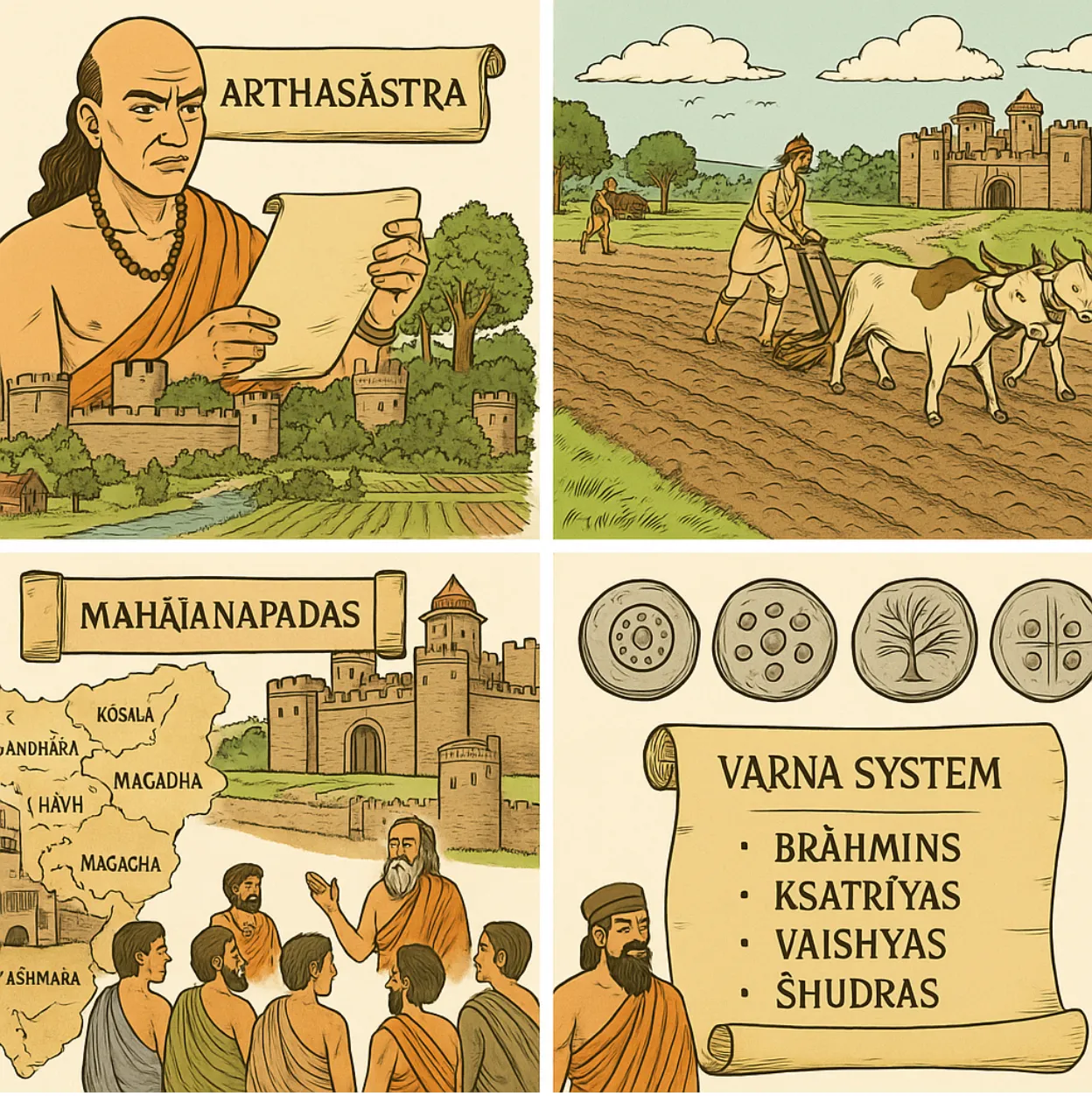
What Was the Varṇa–Jāti System?
Society became increasingly differentiated according to occupations, social roles, and communities.
What Were the Main Varṇas?
-
Brahmins: Associated with priests and teachers.
-
Kshatriyas: Associated with rulers and warriors.
-
Vaishyas: Associated with traders and farmers.
-
Shudras: Associated with artisans and labourers.
The jāti system involved more specific social and occupational groups. These groups became increasingly associated with particular occupations and hereditary identities over time.
What Led to the Growth of Cities Across Different Regions?
Urban development expanded beyond the Ganga plains into central and southern parts of the subcontinent.
Important developments included:
-
Growth of settlements and cities.
-
Expansion of agricultural production.
-
Development of trade routes.
-
Increasing movement of goods and people.
-
Connections between northern, central, and southern regions.
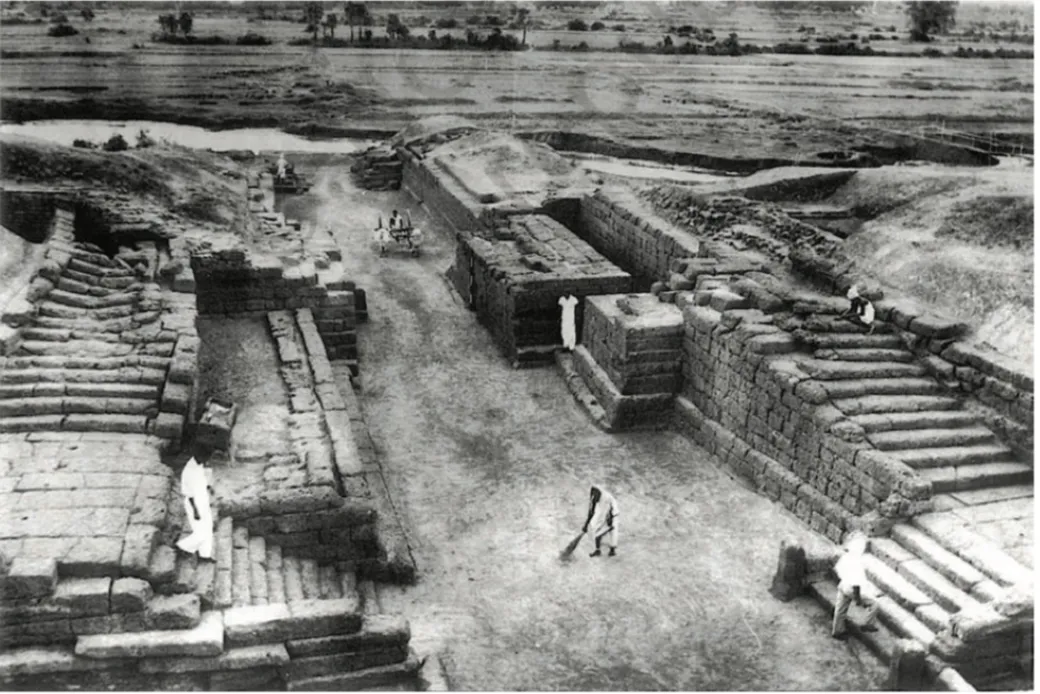
Cities such as Śiśupalgarh and Kodumanal became part of this wider process of urban growth.
What Were Uttarapatha and Dakshinapatha?
Uttarapatha and Dakshinapatha were important routes connecting different parts of the subcontinent.
-
Uttarapatha: Connected regions across northern India and beyond.
-
Dakshinapatha: Connected northern areas with central and southern parts of the subcontinent.
These routes supported the movement of traders, goods, people, and ideas.
What Were the Early South Indian Kingdoms?
Political developments and urban growth also took place in southern India.
The Cholas, Cheras, and Pandyas emerged as important early South Indian kingdoms. Their territories became connected with trade and cultural exchanges.
Trade networks linked southern India with other parts of the subcontinent and overseas regions. Goods such as spices, precious materials, and other commodities were exchanged through these networks.
What Happened to the Mahājanapadas?
By around 300 BCE, the period of the Mahājanapadas had changed significantly as larger political powers emerged.
The Mauryan Empire became one of the major powers in the subcontinent. The earlier Mahājanapadas had nevertheless played an important role in the development of:
-
Cities and fortified settlements
-
Territorial states
-
Taxation and administration
-
Armies and political institutions
-
Trade networks
-
Different forms of governance
What Did Kautilya's Arthaśāstra Say About a Good Kingdom?
Kautilya, also known as Chanakya, described ideas about governance and the organisation of a kingdom in the Arthaśāstra.
His description included several features of a well-managed kingdom:
-
Protection: Fortifications were important for security.
-
Resources: Forests, mines, cattle, and other resources supported prosperity.
-
Water Management: Wells, canals, and reservoirs could reduce dependence on rainfall.
-
Transport: Roads and waterways supported movement and trade.
-
Preparedness: A kingdom needed to support its population during difficult periods.
These ideas show the importance given to planning, resources, infrastructure, and preparedness in discussions of governance.
What Can PW Class 7 Social Science Chapter 4 Notes Help You With?
New Beginnings: Cities and States brings together historical developments involving urbanisation, political organisation, technology, society, and trade. Physics Wallah Class 7 Social Science Chapter 4 Notes help you connect these developments and recall the important examples, terms, rulers, states, and routes discussed in the chapter.
-
Trace the Growth of Cities: Follow the shift from post-Harappan rural settlements to the Second Urbanisation and the rise of new towns.
-
Understand the Early States: Learn how Janapadas developed and how the 16 Mahājanapadas emerged.
-
Compare Forms of Governance: Distinguish between monarchies and gaṇa-saṅghas and examine how decisions were made in each system.
-
Examine the Role of Technology: Revise how iron tools and punch-marked coins supported agriculture, warfare, production, and trade.
-
Explore Social Organisation: Understand the Varṇa–Jāti system and the connection between occupations and different social groups.
-
Follow Ancient Trade Routes: Learn how Uttarapatha and Dakshinapatha connected regions and supported the movement of goods and ideas.
-
Revise the Southern Kingdoms: Explore the Cholas, Cheras, and Pandyas, along with their connections to trade and cultural exchange.
The emergence of cities and states transformed political, economic, and social life across the Indian subcontinent. Janapadas expanded into Mahājanapadas, trade routes connected distant regions, and new technologies supported economic activity. These developments also encouraged diverse forms of governance, changing social groups, and stronger connections between northern, central, and southern India.
Related Resources
-
CBSE Class 7 Social Science Important Questions
-
CBSE Class 7 Social Science Sample Paper
Class 7 Social Science Chapter 4 Notes FAQs
What were Uttarapatha and Dakshinapatha?
Which early kingdoms emerged in South India?
What was the importance of iron during this period?





 Live & recorded classes available at easeDashboard for progress trackingMillions of practice questions at your fingertips