PW Class 6 Science Chapter 9: Methods of Separation in Everyday Life Important Questions
 Gunika Shah31 Aug, 2026
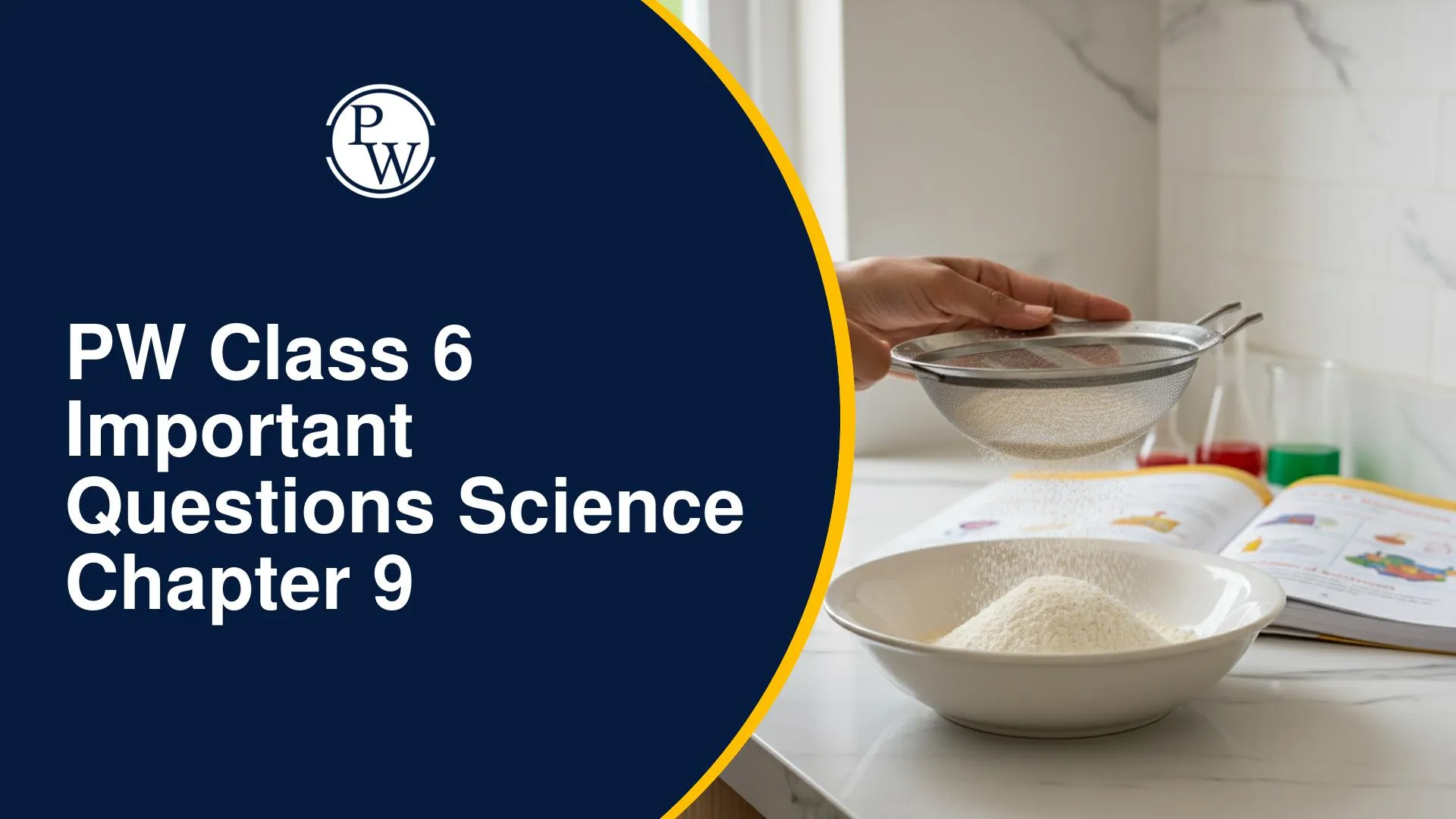
Separating stones from grains, getting salt from seawater, or removing sand from water requires different methods because the materials in each mixture have different properties. Methods of Separation in Everyday Life explains how these differences in size, weight, solubility, and other properties can be used for separation.
PW Class 6 Science Chapter 9 Important Questions help students apply these concepts to both direct and everyday situations. The questions below are selected from the PW practice material and include MCQs, short answers, True/False statements, fill-in-the-blanks, comparisons, and application-based questions.
Methods of Separation in Everyday Life: Important Questions for Practice
Different mixtures require different separation methods. These PW questions begin with objective questions and then move to short answers, True/False, fill-in-the-blanks, comparisons, and everyday situations where students need to choose a suitable method.
1. Handpicking is used when:
(A) The impurities are smaller than the food item
(B) The impurities look different and are in small quantity
(C) The mixture is a solution
(D) The mixture contains only liquids
Answer: (B) The impurities look different and are in small quantity
2. Threshing helps to separate:
(A) Sand from water
(B) Stones from rice
(C) Grain from stalks
(D) Iron filings from sand
Answer: (C) Grain from stalks
3. Evaporation is useful in obtaining:
(A) Pure sand from water
(B) Salt from seawater
(C) Oil from milk
(D) Ice from water
Answer: (B) Salt from seawater
4. A mixture of sand and water is kept undisturbed for some time. What will you observe first?
(A) The sand starts floating on the water
(B) The sand settles down at the bottom
(C) The water turns into steam
(D) The sand dissolves in the water
Answer: (B) The sand settles down at the bottom
5. Filtration is used to separate:
(A) Sugar dissolved in water
(B) Oil from water
(C) Sand from water
(D) Salt from water
Answer: (C) Sand from water
6. A child accidentally drops iron nails into a box full of dry sand while playing. The nails are small and look similar to the sand grains in colour. Which is the easiest way to separate them?
(A) Washing the mixture with water
(B) Passing the mixture through a sieve
(C) Using a tool that attracts only one component
(D) Allowing the mixture to settle in a container
Answer: (C) Using a tool that attracts only one component
7. A mixture of small pebbles and sugar crystals is given. The sugar dissolves in water but the pebbles do not. What should be done first to separate them?
(A) Heat the mixture strongly
(B) Add water to the mixture
(C) Blow air over the mixture
(D) Use a magnet
Answer: (B) Add water to the mixture
8. A shopkeeper wants to remove very tiny stones mixed with wheat grains. The stones are too small to be picked by hand, but they are heavier than the grains. Which method is most suitable?
(A) Using a magnet
(B) Using wind or blowing air
(C) Passing the mixture through a mesh with holes
(D) Leaving the mixture under the sun
Answer: (B) Using wind or blowing air
9. Why is handpicking not useful when impurities are very small?
10. How does sieving help in separation? Give an example.
11. What is the principle behind magnetic separation?
Check the Statements
15. State True or False:
A mixture of oil and water can be separated by allowing the liquids to settle.
16. State True or False:
Sieving is useful only when the sizes of particles are almost the same.
17. State True or False:
Filtration can separate mud dissolved in water.
Methods of Separation in Everyday Life Important Questions PDF
PW provides the Class 6 Science Chapter 9 Important Questions PDF for additional practice with different methods of separation. The PDF contains MCQs, short-answer questions, True/False statements, fill-in-the-blanks, comparisons, and situation-based questions.
Class 6 Important Questions Science Chapter 9 PDF
Study without using the internet
Complete Class 6 Science Resources from PW
After practising the Chapter 9 questions, students can use these PW resources to revise the concepts again and continue with broader Class 6 Science preparation:
-
Class 6 Science Syllabus – Check the complete list of chapters and plan revision accordingly.
-
Class 6 Science Notes – Revise separation methods and other chapter concepts before practising questions.
-
Class 6 Science Sample Papers – Practise mixed-chapter questions and check how well concepts can be applied.
-
Class 6 Science NCERT Solutions – Work through textbook exercises and refer to chapter-wise solutions.
-
Class 6 Science Important Questions – Move to important questions from other chapters for continued practice.
The PW Class 6 Science Chapter 9 Important Questions give students practice in deciding which separation method works for different mixtures. From handpicking and winnowing to filtration, evaporation, churning, and magnetic separation, the questions connect each method with its practical use. Students can combine this practice with other PW Class 6 Science resources to strengthen their chapter preparation.
Class 6 Important Questions Science Chapter 9 FAQs
1. What are the important topics in Class 6 Science Chapter 9?
2. Why is sieving used for separating mixtures?
3. How can salt be separated from seawater?
4. What should students focus on while answering separation-method questions?




 Live & recorded classes available at easeDashboard for progress trackingMillions of practice questions at your fingertips