







CBSE Class 9 English Kaveri Chapter 2 NCERT Solutions: The Pot Maker by PW
 Mishika Gupta11 Sept, 2026
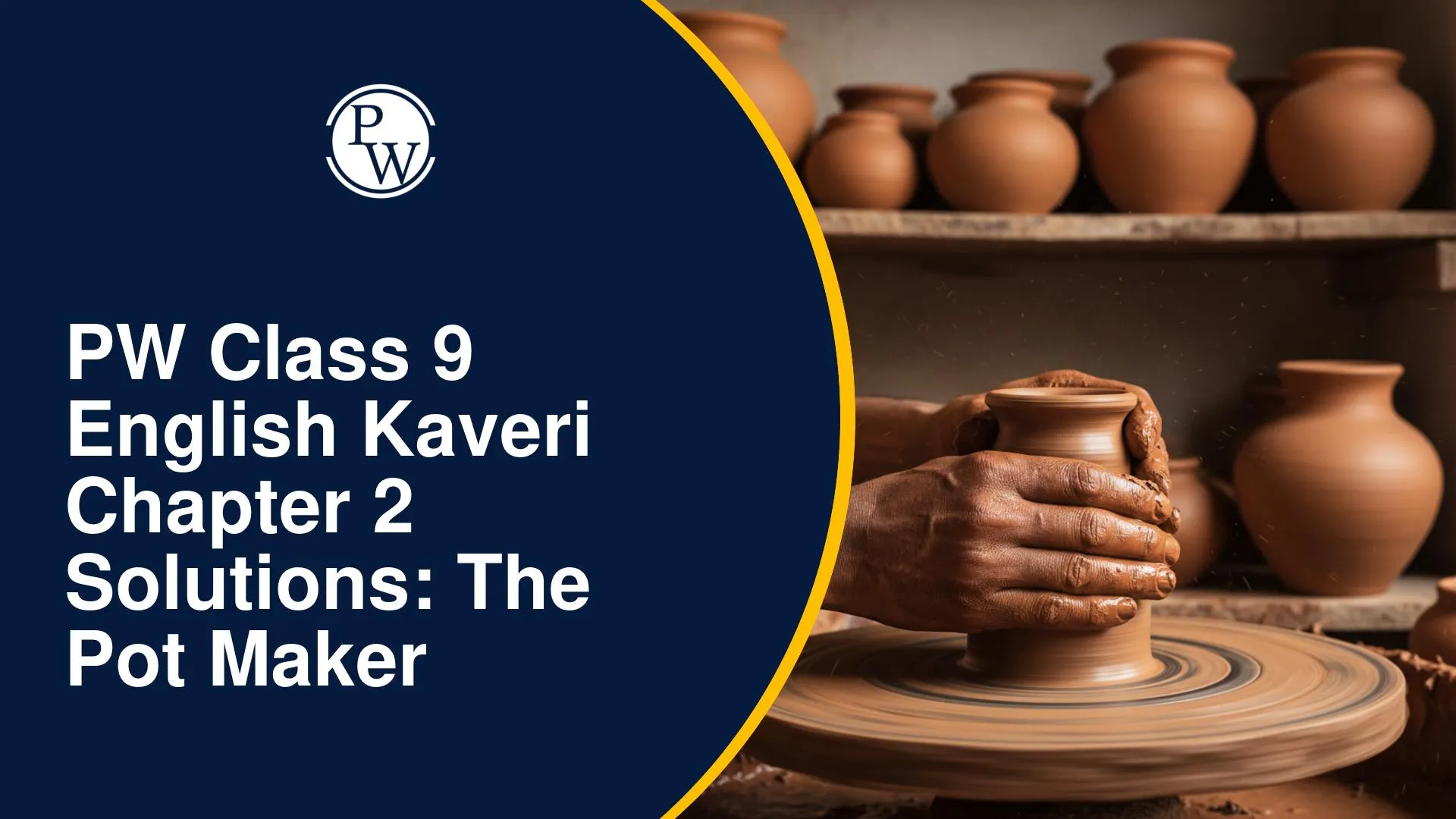
Traditional skills often carry the knowledge and experiences of generations. The Pot Maker presents the story of Sentila, who wants to learn pottery from her mother, Arenla. However, Arenla believes that weaving would be a better choice because it is less demanding, can be done indoors, and offers better returns. This creates a conflict between family expectations and the need to preserve a traditional skill.
The Physics Wallah Class 9 English Kaveri Chapter 2 NCERT Solutions provide answers to important questions from the chapter. You can refer to them after attempting the questions yourself to understand why Sentila struggles at first, how the village council responds to the situation, and how repeated effort eventually helps her master pottery.
Class 9 English Kaveri Chapter 2 Solutions
The Pot Maker focuses on Sentila's determination to learn pottery and the challenges involved in preserving a traditional craft. The following questions cover important events, character traits, vocabulary, and ideas from the chapter.
1. Why did Arenla want Sentila to learn weaving instead of pot making?
Answer:
Arenla wanted Sentila to learn weaving because weaving could be done indoors, gave better returns, and was less messy than pot making. She believed it would be a more practical and profitable skill for Sentila.
2. Why did the village council call Mesoba?
Answer:
The village council called Mesoba to ask why Arenla was refusing to pass on the pot-making skill to Sentila. The council considered passing traditional skills from one generation to another important.
3. Why does Arenla want Sentila to learn weaving?
Answer:
Arenla prefers weaving because it is more profitable and less difficult than pot making. It can be done indoors in different seasons, takes less time, and also provides useful cloth for the family.
4. State one advantage that weaving has over pot making.
Answer:
One advantage of weaving is that it can be done indoors throughout the year. Pot making requires outdoor work and depends on suitable conditions for drying and firing the pots.
5. Choose the sentence that uses the word "handsome" in the same way as in the phrase "the return is handsome."
Answer:
B) They will make a handsome profit selling this property.
Here, "handsome" means considerable or generous in amount, rather than describing someone's appearance.
6. "And the reward? A few rupees." What is the author's purpose in using a question mark here?
Answer:
The question mark emphasises Arenla's frustration and disappointment. It draws attention to the contrast between the hard physical work involved in pot making and the small amount of money earned from it.
7. How far was the riverbank, where the grey and red clay required for making pots is found, from the village?
Answer:
The riverbank where the grey and red clay was found was sixteen kilometres away from the village.
8. How did Sentila feel after failing to learn pot making from her mother?
Answer:
Sentila felt ashamed and frustrated after failing to learn the skill from her mother. Her difficulty, however, did not make her give up on her desire to become a pot maker.
9. Why was Sentila initially unable to shape the clay properly when attempting it alone?
Answer:
Sentila was initially unable to shape the clay properly because she was too tense while making the pot. Her nervousness affected her ability to work with the clay smoothly.
10. What did the village council warn Mesoba about regarding traditional skills?
Answer:
The village council warned Mesoba that Arenla must pass on the traditional pot-making skill to Sentila. The council wanted the knowledge and skill to continue to the next generation.
11. Why did Onula stand silently in the work shed?
Answer:
Onula stood silently because she realised that Sentila had finally mastered pottery. Her silence reflected the importance of the moment as Sentila demonstrated that she had successfully learned the traditional craft.
12. What does the line "A new pot maker was born" mean?
Answer:
The line means that Sentila had finally become skilled in pottery. After struggling and practising repeatedly, she was able to make pots successfully and carry forward the traditional skill.
Class 9 English Kaveri Chapter 2 Solutions PDF
You can use the PDF solutions while revising The Pot Maker or checking your answers after completing the questions independently. The chapter solutions are divided into two parts based on the two available PDF lectures.
PW Solutions for Class 9 English Kaveri Chapter 2: The Pot Maker – Part 1
Study without using the internet
PW Solutions for Class 9 English Kaveri Chapter 2: The Pot Maker – Part 2
Study without using the internet
How Can Physics Wallah Class 9 English Solutions Help You?
Physics Wallah's solutions can help you understand the chapter and check your answers while preparing for school examinations.
-
Check Your Answers: Compare your responses with the solutions after attempting each question yourself.
-
Understand the Character: Learn how Krishtakka's experiences shape her determination to become literate.
-
Revise Important Events: Revisit key moments such as the narrator's absence, the grandmother's decision to learn, and her first reading experience.
-
Understand the Themes: Use the answers to revise ideas such as education, independence, determination, and lifelong learning.
-
Improve Written Answers: Observe how answers can be written clearly while including the important points from the chapter.
-
Learn from Mistakes: Identify missing details or incorrect interpretations by comparing your answers with the solutions.
-
Prepare for Tests: Use the solved questions for quick revision before class tests and examinations.
Why Choose Physics Wallah for Class 9 English Preparation?
You can use Physics Wallah resources along with the Class 9 English Kaveri Chapter 1 Solutions to understand the syllabus, revise the chapter, practise important questions, and assess your preparation.
-
Know What to Study: Check the Class 9 English Syllabus to understand the chapters, topics, and overall course requirements before starting your preparation.
-
Strengthen Chapter Understanding: Use the Class 9 English NCERT Solutions to check your answers and understand the important events, characters, themes, and ideas from the chapter.
-
Practise Important Questions: Solve Class 9 English Important Questions to revise key concepts and practise answering questions based on the chapter.
-
Assess Your Preparation: Attempt Class 9 English Sample Papers to practise different question formats and evaluate your preparation before examinations.
The story of Krishtakka shows that learning does not have an age limit. Her decision to become literate at sixty-two reflects her courage, determination, and desire for independence. Use the Class 9 English Kaveri Chapter 1 Solutions after attempting the questions to check your understanding and revise the important ideas from How I Taught My Grandmother to Read.
PW Solutions for Class 9 English Kaveri Chapter 2 FAQs
What is The Pot Maker about?
Why did Arenla prefer weaving for Sentila?
Why did the village council intervene?
Why did Sentila struggle with pottery at first?


Have questions about your prep?
Our experts can answer all your questions


 Live & recorded classes available at easeDashboard for progress trackingLakhs of practice questions

