







Handicrafts of Madhya Pradesh, Some Famous Handicrafts of Madhya Pradesh

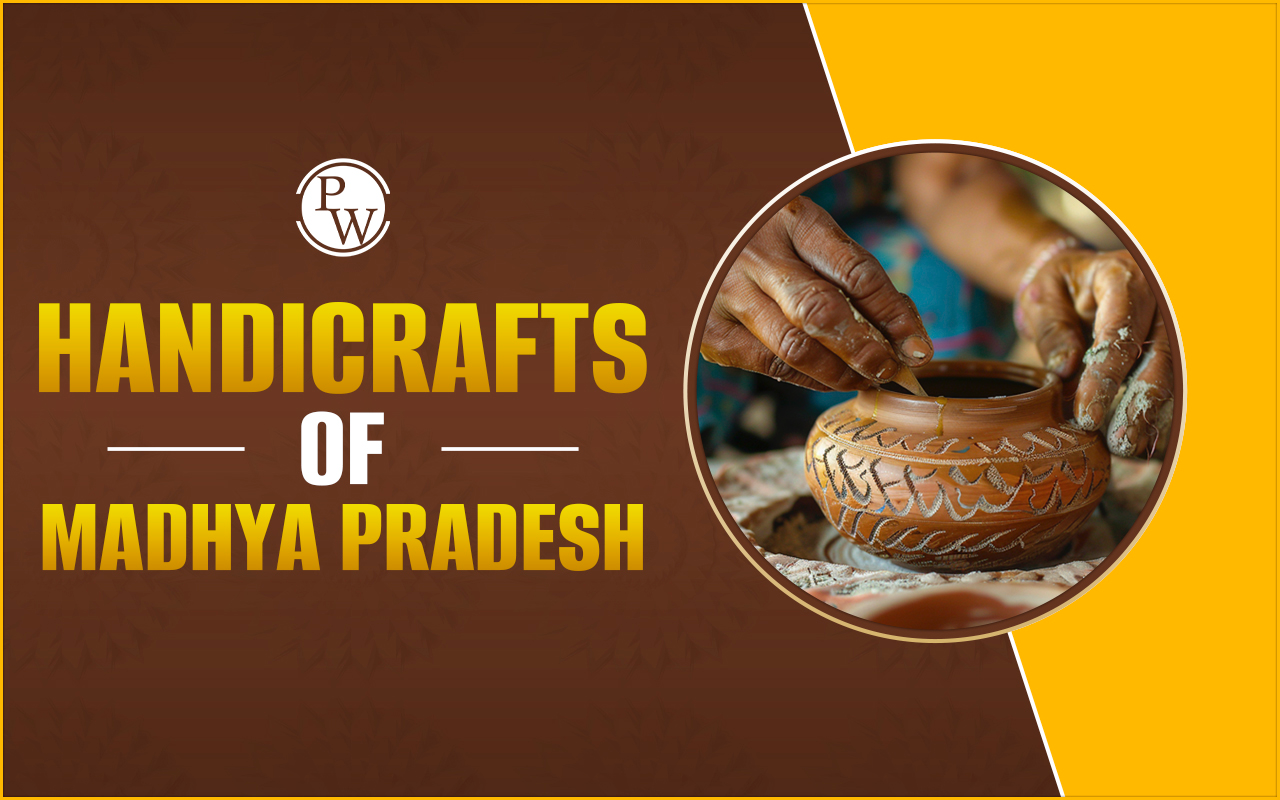
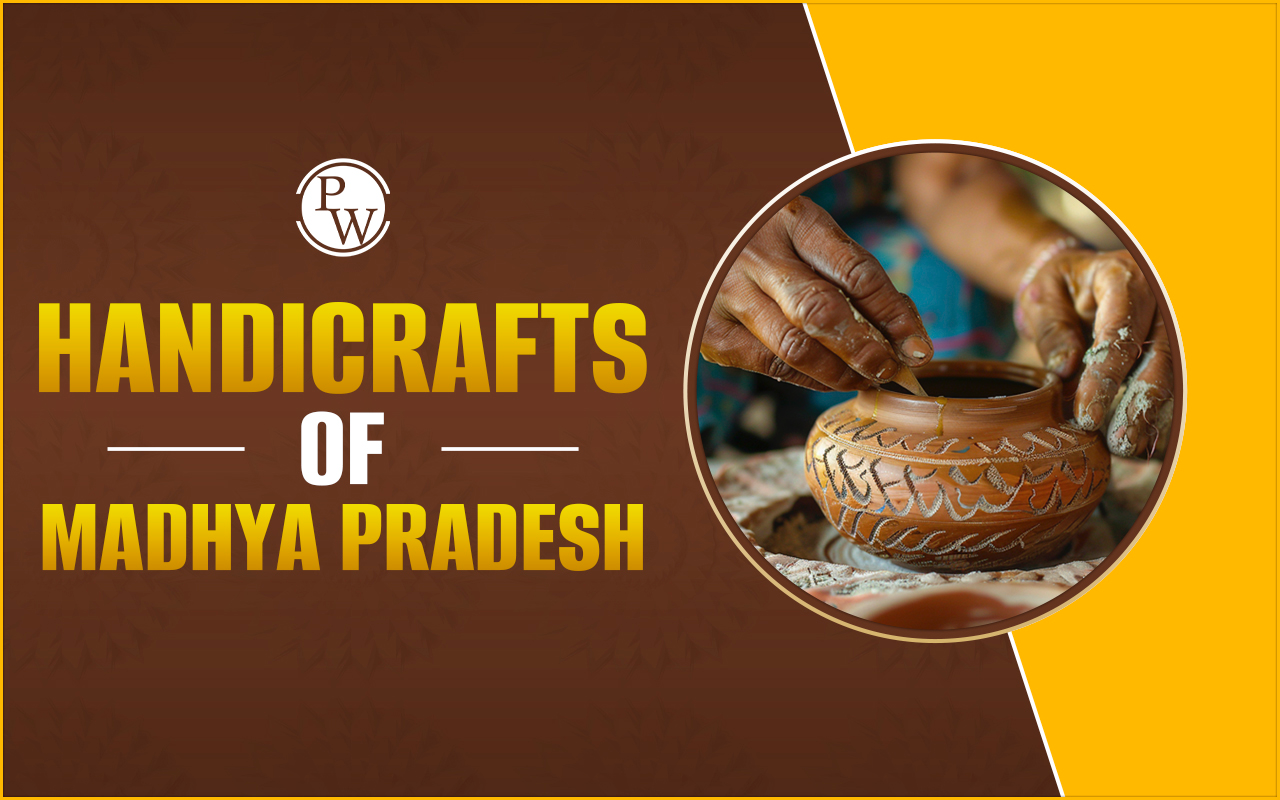
Handicrafts of Madhya Pradesh: The handicrafts of Madhya Pradesh offer a stunning variety, reflecting the state's rich cultural diversity. The state is famous for its handloom textiles, including the renowned Chanderi and Maheshwari sarees, and Dhokra metalwork, which showcases intricate tribal art. Additionally, traditional crafts like wood and stone carving, block printing, pottery, and terracotta art are prominent in local markets.
Also read: Wildlife Sanctuaries of Madhya Pradesh
Handicrafts of Madhya Pradesh
Madhya Pradesh is famous for its rich and diverse handicrafts that have become an integral part of the state's cultural heritage. These crafts have evolved into small and medium industries, creating a significant economic impact and generating employment for a large portion of the state's population. Artisans from various regions of Madhya Pradesh showcase their talent through unique crafts like Chanderi and Maheshwari sarees, Tussar silk, Bamboo crafts, and Stone carving.
These handicrafts not only provide livelihood opportunities but also serve as a platform for local artisans to express their creativity and skills. With an increasing demand for these crafts both within India and internationally, they have helped bring global attention to the craftsmanship and cultural richness of Madhya Pradesh. The state government has also taken steps to preserve and promote these traditional art forms through exhibitions, fairs, and support for artisan communities.
Some Famous Handicrafts of Madhya Pradesh
Madhya Pradesh, the central state, is a cultural melting pot where customs, art, and most importantly, culture coexist. A story with a rich history and amazing tales is the inspiration behind every weaving, brushstroke, and moulded metal. This collection of the most well-known Madhya Pradesh handicrafts features the finest examples of these handcrafted goods that honour our nation.
Also read: Small and Cottage Industries of Madhya Pradesh
-
Chanderi Silk, Ashoknagar
This gorgeous cotton-silk blend saree has a gossamer translucency thanks to the single flature quality of the yarn. According to legend, it was delivered to Akbar, the Mughal Emperor, in the slender hollow of a bamboo stalk. The cloth was big enough to cover an elephant, so when it was pulled out of the bamboo stalk, it sent forth a shockwave. Royalty and nobility were drawn to the exquisite gold butis and patterns, and they still are.
-
Maheshwari Silk, Maheshwar
Its distinctively bordered classic five-stripe design, which runs parallel throughout its length and on its Pallav (the edge that runs across the shoulder), combines fine handloom cotton and silk yarn to create a reversible piece that was ahead of its time.
In 1767, Maheshwar became the capital of Malwa under Queen Ahilyabai Holkar. During her tenure, she turned this sleepy hamlet beside the Narmada River into a bustling hub of industry and commerce. One step the Queen took in this direction was the creation of the Maheshwari Saree, or sari. What started off as a plain grey cotton fabric became a representation of elegance and beauty.
-
Bagh Prints, Dhar
The settlement and the craft both get their names from the "Baghini" River, which runs through it and acts as the craft's spine. Using carefully cut wooden blocks and vegetable dyes, bagh printing creates a variety of vibrant geometric and floral designs. The Dhar tribe of Madhya Pradesh places great religious and cultural importance on the distinctive red, black, and white colours utilised in the designs.
Its name comes from the association of tigers (also known as bagh) with the thick forests that encircle abandoned Buddhist caves close to the Bagh River, where the fabric is repeatedly washed to produce a delicate texture.
Also read: Universities in Madhya Pradesh
-
Zari Zardozi, Bhopal
The combination of the Urdu words "zar," which means gold, and "doz," which means handiwork, stitching, or embroidery, has been used to adorn royal clothing since the Rig Vedic era. Usually for weddings, metallic threads are used to weave sequins and stones into intricate designs. Zardozi is now exportable, beginning with the Begums of Bhopal, and its growing popularity has resulted in a great admiration for the skill and accuracy of the traditional craftspeople, making everyone feel like a king or queen.
-
Batto Bai Dolls, Jhabua
Tribes from all across the subcontinent use these dolls to identify themselves since they accurately mimic their looks. Brides get them as gifts, and they serve as sentimental mementos and a useful teaching tool on the precarious existence of tribes that persist in the face of overwhelming adversity.
Recycled leftover fabric is used in the sustainable process. After six months of training, the artisans—who are typically women—create a doll that develops with you into companionship and is frequently thrown to the ground to demonstrate its durability.
Also read: Tribes in Madhya Pradesh
-
Dhokra Metal Casting, Betul
The craft of creating brass sculptures by the age-old lost-wax casting method. Unique accessories and beautiful and utilitarian 3D motifs, including elephants and peacocks in their native tribal portrayal, are made using this kind of traditional bell metal casting.
Beautiful designs are produced by coiling the wax strings. The natural beeswax is a great option for creating coiled shapes and tiny patterns that combine realism and abstraction since it maintains its malleability even after cooling. Through this art, tribal stories, magic, and nature-inspired motifs are given shape.
-
Gond Painting, Patangarh
The Gond tribe in the little Dindori district settlement lives on these traditional visual displays. These vibrant, evocative paintings are comprehensive representations of the tribal way of life that is in danger of vanishing completely.
These vibrant, abstract depictions of the tribal way of life, which transcend beyond merely ornamental values on the walls, are allegedly the result of the intoxicating indigenous "Mahua" drink. They are used to convey stories at weddings and other events, and they are etched on bodies and weaves (baskets, etc.).
Also read: Biggest Mall in Bhopal
-
Nandana Prints, Tarapur
The ladies of the Bhil tribe it was originally used to decorate and its modern counterparts both hold this mud resist block printing technique in high regard as one of the few art forms still in existence in its most authentically traditional form.
Natural dyes on chaste cotton evoke the rustic aesthetic. The surrounding flora and animals do not always have an impact on the traditional designs of Nandna prints. The Chippa community's former nomadic lifestyle has influenced people from Punjab, Madhya Pradesh, Rajasthan, Gujarat, and Uttar Pradesh. Additionally, the majority of the blocks were from Pethapur, where the designs were diverse. As a result, traditional themes are not influenced by culture; rather, they are derived from nature.
-
Batik Prints, Behrugarh
Wax, a popular resist technique from antiquity that has been used in Indonesia and other places, is used in place of the mud that was previously described. The printed fabric is what's left after the fabric is cleaned in hot water to remove the wax. This produces desired results when repeated several times. It is among the world's most inventive methods of printing textiles.
The genesis narrative of wax resist dyeing is based on a Chinese folktale from the modern-day Guizhou Province, much like the unexpected discovery of silk in China. Currently, chippas in India continue to practise the trade.
-
Leather Animals, Indore
In order to satisfy taxidermy fans, artisans and their families create miniature to life-size replicas of animals using a simple photographic reference. With lifelike precision, the artisans make an authentic figurine that includes details like posture and muscular curvature. Only after orders are placed is the stuck leather worked on.The majority of artisans are members of scheduled castes or tribes and frequently work from home for bigger export companies. Children and women also participate in the task. In the several phases needed, different families have developed specialisations.
Also read: First in Madhya Pradesh
Handicrafts of Madhya Pradesh FAQs
What are the famous handicrafts of Madhya Pradesh?
What is Dhokra art?
Where can you buy Madhya Pradesh handicrafts?
What is Chanderi saree?
What is the significance of Maheshwari sarees?












 Live & recorded classes available at easeDashboard for progress trackingLakhs of practice questions

