







A Bar At The Folies Reading Answers with IELTS Passage
 Porishmita .24 Jun, 2025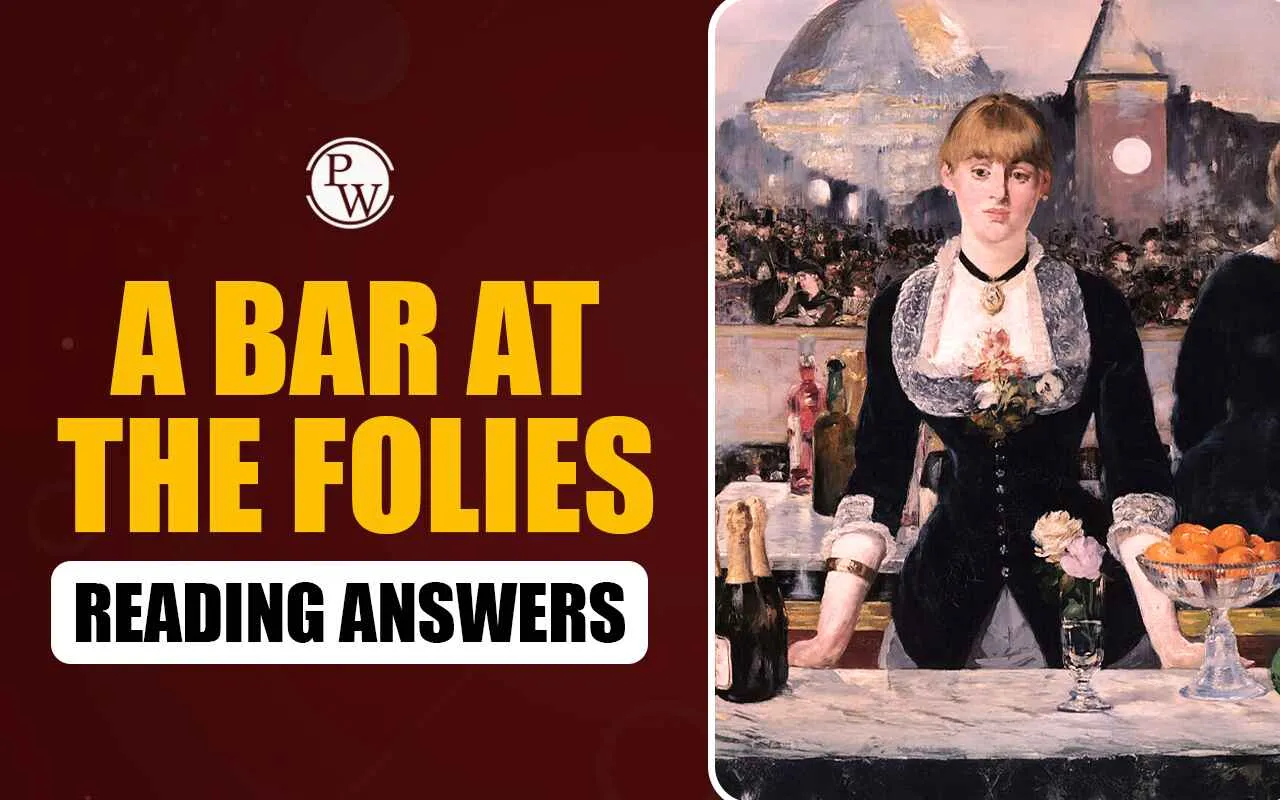
A Bar At The Folies Reading Answers: The IELTS Academic Reading test often includes passages related to art, history, and cultural analysis. A Bar at the Folies is a typical example that requires candidates to understand descriptive language, artistic interpretation, and emotional contrast. Based on Edouard Manet’s famous painting, the passage explores the visual composition, symbolic meaning, and historical context of the artwork. This type of text tests your ability to match headings, evaluate statements as true or false, and select correct answers from multiple choices—all essential skills for achieving a high band score in the IELTS Reading section.
Free IELTS Reading Practice Tests
A Bar At The Folies Reading Answers Passage
A Bar at the Folies reading answers
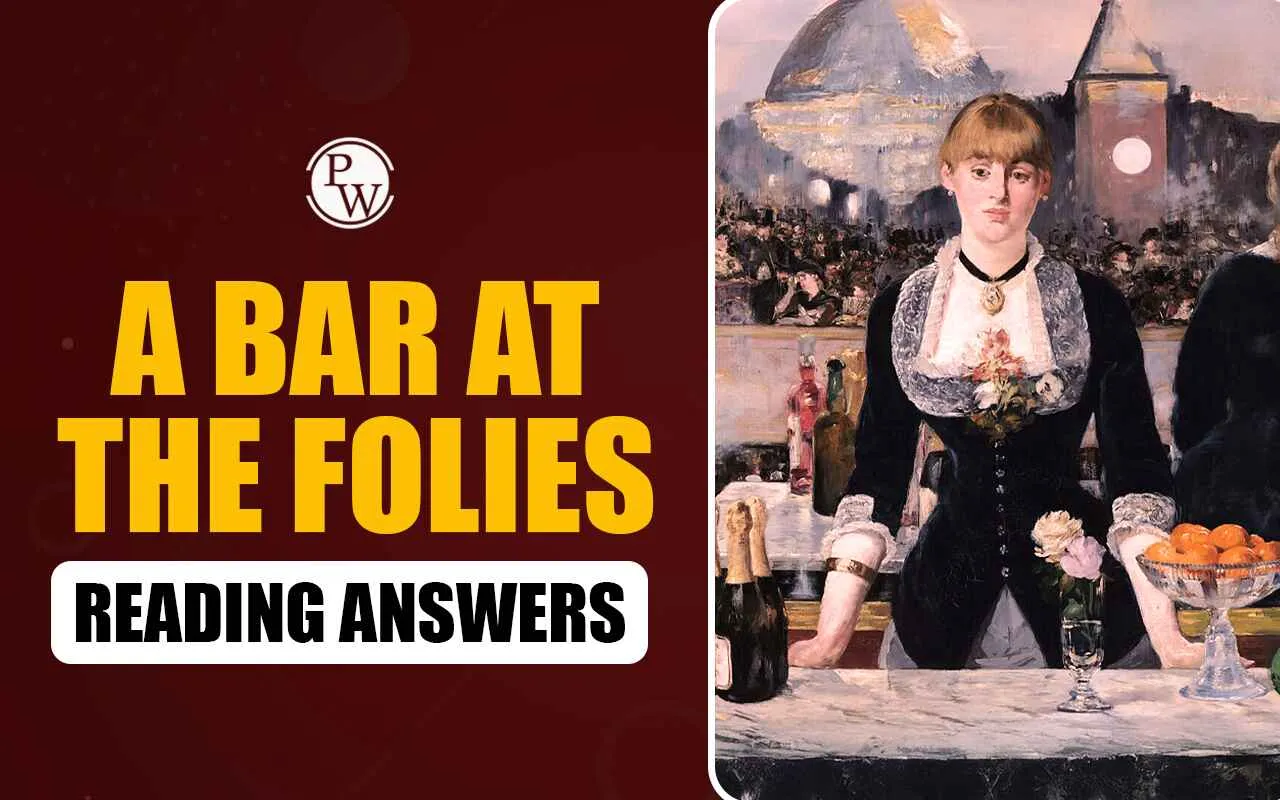
A. One of the most critically renowned paintings of the 19th-century modernist movement is the French painter Edouard Manet’s masterwork, A Bar at the Folies. Originally belonging to the composer Emmanuel Chabrier, it is now in the possession of The Courtauld Gallery in London, where it has also become a favourite with the crowds.
B. The painting is set late at night in a nineteenth-century Parisian nightclub. A barmaid stands alone behind her bar, fitted out in a black bodice that has a frilly white neckline, and with a spray of flowers sitting across her décolletage. She rests her hands on the bar and gazes out forlornly at a point just below the viewer, not quite making eye contact. Also on the bar are some bottles of liquor and a bowl of oranges, but much of the activity in the room takes place in the reflection of a mirror behind the barmaid. Through this mirror we see an auditorium, bustling with blurred figures and faces: men in top hats, a woman examining the scene below her through binoculars, another in long gloves, even the feet of a trapeze artist demonstrating acrobatic feats above his adoring crowd. In the foreground of the reflection a man with a thick moustache is talking with the barmaid.
C. Although the Folies (-Bergère) was an actual establishment in late nineteenth-century Paris, and the subject of the painting was a real barmaid who worked there, Manet did not attempt to recapture every detail of the bar in his rendition. The painting was largely completed in a private studio belonging to the painter, where the barmaid posed with a number of bottles, and this was then integrated with quick sketches the artist made at the Folies itself.
D. Even more confounding than Manet’s relaxed attention to detail, however, is the relationship in the painting between the activity in the mirrored reflection and that which we see in the unreflected foreground. In a similar vein to Diego Velazquez’ much earlier work Las Meninas, Manet uses the mirror to toy with our ideas about which details are true to life and which are not. In the foreground, for example, the barmaid is positioned upright, her face betraying an expression of lonely detachment, yet in the mirrored reflection she appears to be leaning forward and to the side, apparently engaging in conversation with her moustachioed customer. As a result of this, the customer’s stance is also altered. In the mirror, he should be blocked from view as a result of where the barmaid is standing, yet Manet has re-positioned him to the side. The overall impact on the viewer is one of a dreamlike disjuncture between reality and illusion.
E. Why would Manet engage in such deceit? Perhaps for that very reason: to depict two different states of mind or emotion. Manet seems to be conveying his understanding of the modern workplace, a place – from his perspective – of alienation, where workers felt torn from their ‘true’ selves and forced to assume an artificial working identity. What we see in the mirrored reflection is the barmaid’s working self, busy serving a customer. The front-on view, however, bears witness to how the barmaid truly feels at work: hopeless, adrift, and alone.
F. Ever since its debut at the Paris Salon of 1882, art historians have produced reams of books and journal articles disputing the positioning of the barmaid and patron in A Bar at the Folies. Some have even conducted staged representations of the painting in order to ascertain whether Manet’s seemingly distorted point of view might have been possible after all. Yet while academics are understandably drawn to the compositional enigma of the painting, the layperson is always likely to see the much simpler, more human story beneath. No doubt this is the way Manet would have wanted it.
Also Read:
A Bar At The Folies Reading Answers Sample Questions
Questions 1–4: Matching Headings
Choose the correct heading for each paragraph A–D.
-
Paragraph A
-
Paragraph B
-
Paragraph C
-
Paragraph D
Questions 5–7: Multiple Choice Questions
Choose ONE correct answer
-
What is the main subject of Manet’s painting?
A. The customers at the Folies
B. The emotions of the barmaid
C. A famous theatre performance
D. The historical setting of Paris -
What technique did Manet use to complete his painting?
A. He painted entirely at the Folies
B. He used photographs taken at the bar
C. He combined studio work with real sketches
D. He invited guests to pose in the nightclub -
What has puzzled art historians about the painting?
A. The choice of colours
B. The expressions of the crowd
C. The real identity of the barmaid
D. The spatial layout and reflections
Questions 8–10: True / False / Not Given
Write True if the statement agrees with the information, False if it contradicts the information, and Not Given if there is no information.
-
The barmaid is looking directly at the viewer.
-
The mirror shows exactly the same posture as the real barmaid.
A Bar At The Folies Reading Answers with Explanations
Answers to Questions 1-10
|
Question |
Answer |
Explanation |
|---|---|---|
|
1 |
vi – A widely admired painting |
Paragraph A introduces the painting's background and reputation. |
|
2 |
i – Description of the scene |
Paragraph B describes the painting’s visual elements and the reflection. |
|
3 |
iv – The creative process behind the painting |
Paragraph C explains how Manet combined studio work and sketches. |
|
4 |
ii – A confusing visual layout |
Paragraph D discusses the strange mirror reflection and altered perspective. |
|
5 |
B – The emotions of the barmaid |
The passage focuses on the barmaid’s expression and emotional state. |
|
6 |
C – He combined studio work with real sketches |
Manet worked in his studio using a live model and sketches from the bar. |
|
7 |
D – The spatial layout and reflections |
Historians debated the positioning of figures in the reflection. |
|
8 |
False |
The barmaid gazes slightly downward, not directly at the viewer. |
|
9 |
False |
The reflection differs; she leans and engages the customer. |
|
10 |
True |
The text says Manet shows a contrast between appearance and emotion. |
| IELTS Reading Band Score | IELTS Listening Band Score |
| IELTS Speaking Band Score | IELTS Writing Band Score |
Guidance of PW IELTS
Physics Wallah offers a few popular online IELTS courses for all students. Follow the latest IELTS articles to better prepare for the exam.
| IELTS Registration | IELTS Eligibility Criteria |
| IELTS Exam Pattern | IELTS Syllabus |
| IELTS Exam Dates | IDP IELTS Test Centers |
A Bar At The Folies Reading Answers FAQs
What is the painting A Bar at the Folies about in the IELTS passage?
Why is the mirror important in the painting?
What question types are covered in this IELTS reading passage?
What skill does this passage help develop for IELTS candidates?
Is knowledge of art required to answer questions in this passage?






Get Free Counselling Today
and Clear up all your Doubts
 Live & recorded classes available at easeDashboard for progress trackingLakhs of practice questions

