Paulo Freire’s Educational Journey, From Recife to Revolution
Paulo Freire’s revolutionary educational philosophy, highlighting critical consciousness, dialogue, and learner empowerment, and its profound influence on global and Indian education.

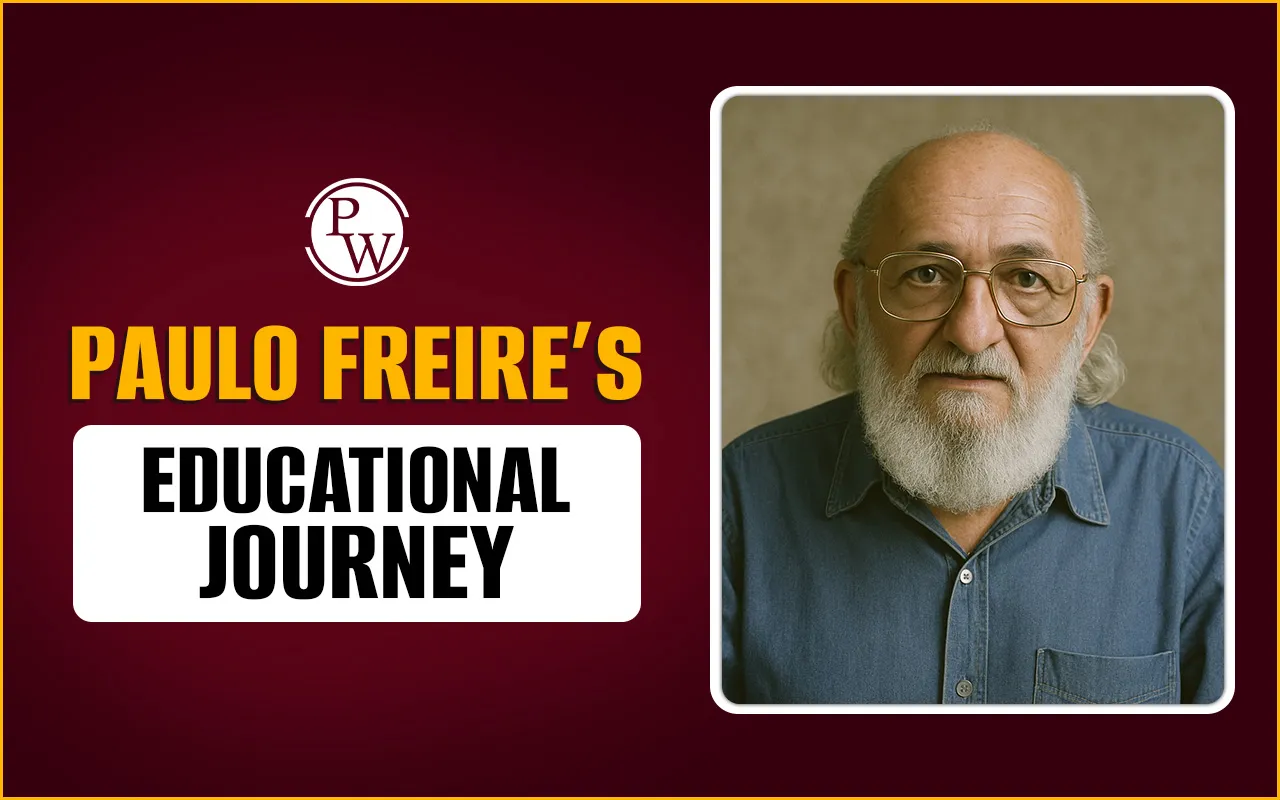
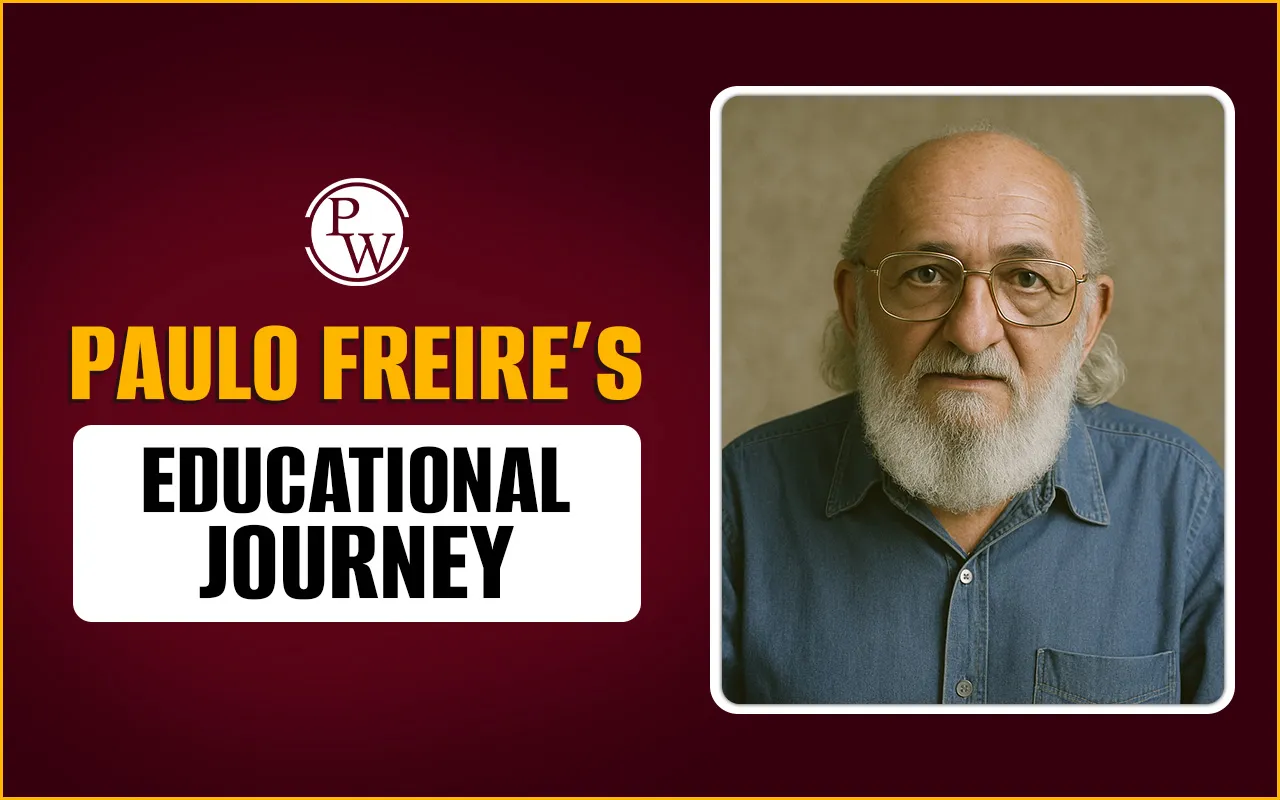
Paulo Freire was a Brazilian educator and philosopher whose revolutionary ideas transformed the way educators and learners understand the purpose and process of education. Born in 1921 in Recife, Brazil, Freire grew up in poverty, witnessing firsthand the oppressive effects of inequality. These early experiences informed his later commitment to creating an education system that empowered the marginalized. His work emerged in a context defined by neo-colonialism, military dictatorship, and widespread illiteracy in Latin America. Freire sought to address these challenges through a pedagogy that would awaken critical consciousness and enable people to change the social structures that oppressed them.
Paulo Freire's Critique of the Banking Concept of Education
The banking concept of education, as critiqued by Paulo Freire, represents a traditional model in which students are treated as passive containers to be filled with information, a process that undermines critical thinking and reinforces oppressive social structures.
In this model, education is viewed as a transaction in which teachers deposit information into passive students, who receive, memorize, and repeat it. Freire argued that this approach dehumanizes learners by treating them as empty vessels rather than active participants in their own learning. It reinforces the hierarchical structure between teacher and student, and by extension, between the oppressor and the oppressed. In such a framework, the student is not encouraged to question or understand the world but is instead conditioned to accept it as it is. Freire believed that this model serves to maintain existing power relations and stifle the possibility of social transformation.
Problem-Posing Education and the Role of Dialogue
Problem-posing education, central to Freire's philosophy, offers a transformative alternative to passive learning by engaging students as active participants in dialogue, where knowledge is co-constructed through reflection, inquiry, and mutual respect.
In contrast, Freire proposed the “problem-posing” model of education, which treats learners as co-creators of knowledge. Rather than being passive recipients, students are invited to engage critically with content that reflects their lived realities.
The classroom becomes a space for dialogue, not lecture; for reflection, not rote memorization. For Freire, dialogue is not merely a pedagogical method but an existential necessity. It is through authentic conversation that people come to understand their reality and are inspired to transform it. Dialogue creates a horizontal relationship between teacher and student, allowing both to learn, reflect, and act together. In this model, education becomes a shared journey of discovery, grounded in mutual respect and the search for meaning.
Conscientization: Awakening Critical Consciousness
Conscientization, or the awakening of critical consciousness, is a foundational element in Freire's pedagogy, emphasizing the learner's journey from passive awareness to an active, reflective understanding of social realities and injustices.
Central to Freire’s philosophy is the concept of “conscientization,” or the development of critical consciousness. This refers to the process by which individuals become aware of the socio-political forces that shape their lives and begin to challenge them. Freire saw this as a necessary step toward liberation. He believed that education should enable learners to perceive contradictions in their world, reflect on them, and take action to overcome them. Conscientization is not simply about becoming aware of injustice but about developing the capacity to engage in transformative action. It is a dynamic process that connects thought and practice, reflection and activism.
Praxis: The Unity of Reflection and Action
Praxis, in Freire's educational philosophy, signifies the dynamic interplay between reflection and action, where true learning occurs through the continuous process of thinking critically about the world and taking informed steps to transform it.
Freire emphasized that education should not be limited to theoretical understanding. True learning, he argued, involves “praxis”—the unity of reflection and action. Praxis allows learners to test their ideas in real life and to use their experiences to refine their understanding. It is not enough to know; one must act. In this view, education is not preparation for life but life itself, lived consciously and purposefully. Through praxis, individuals develop agency, taking responsibility for their knowledge and its implications in the real world. This ongoing cycle of reflection and action lies at the heart of Freire’s pedagogy and distinguishes it from traditional educational models.
Humanization and the Ethics of Education
Humanization and the ethics of education lie at the heart of Freire's philosophy, asserting that education must affirm the dignity, agency, and potential of every learner by fostering relationships rooted in empathy, respect, and a shared commitment to justice.
Underlying Freire’s educational vision is a deep commitment to humanization. He believed that the true purpose of education is to restore the humanity of both the oppressed and the oppressor. Dehumanization, he argued, is the result of systems that strip individuals of their capacity to think, feel, and act freely. Education, therefore, must be an ethical process, grounded in love, humility, and faith in human potential. Freire saw education as an act of hope—a means by which people can become more fully human. This humanistic perspective challenges educators to view their students not as objects of instruction but as subjects capable of understanding and transforming their world.
Political Dimensions of Education
The political dimensions of education, as emphasized by Paulo Freire, highlight that teaching is never a neutral act but a deeply political one, shaping how learners understand, engage with, and transform the world around them.
Freire was clear that education is never neutral. It is always a political act, either serving to maintain the status quo or to challenge it. He called on educators to recognize their role in shaping the consciousness of their students. For Freire, teaching is a political responsibility that requires courage, integrity, and commitment to justice. Teachers must examine their own assumptions and biases and create classrooms that encourage critical inquiry and democratic participation. Education, in Freire’s vision, should be aligned with the struggle for social equality, and the classroom should serve as a microcosm of the democratic society we aspire to build.
Influence on Global and Indian Education
Freire’s ideas have had a profound impact on education systems worldwide. His influence is visible in adult literacy campaigns, community education, social movements, and progressive teaching practices.
In India, his philosophy resonates strongly with the goals of education for equity and inclusion. The National Curriculum Framework echoes Freirean principles by advocating for child-centered pedagogy, constructivist approaches, and the role of teachers as facilitators rather than authorities. Freire’s emphasis on dialogue and critical thinking also aligns with indigenous educational goals, where learning is seen as a collective, culturally grounded process.
Even decades after his most influential works were published, Freire’s philosophy remains vital. In a world marked by rising inequality, ecological crisis, and authoritarianism, his call for critical, democratic, and liberatory education is more urgent than ever. Educators inspired by Freire seek to create learning environments that are inclusive, dialogical, and transformative. His belief that learners must not only understand their world but also act upon it continues to guide those who see education as a path toward justice and human dignity.
1. National Curriculum Framework (NCF) 2005
NCF 2005 is the most explicitly aligned with Freirean ideals. It emphasizes child-centric, constructivist learning, recognizing the child as an active participant in knowledge construction. Freire’s rejection of the "banking model" is paralleled by the document’s critique of rote memorization and textbook-driven instruction.
-
Learning through dialogue and questioning.
-
Teacher as a facilitator, not a transmitter of information.
-
Knowledge construction through social interaction and lived experience.
-
Emphasis on critical thinking and making meaning from real-life contexts.
-
Teaching as a transformative act, not just technical delivery.
NCF Quote Echoing Freire:
“Learning is not the transmission of information but an active construction of knowledge by the child.”
2. National Curriculum Framework for Teacher Education (NCFTE) 2009
This policy guides teacher education in India and deeply echoes Freire’s vision of reflective and ethical teaching. It emphasizes teacher autonomy, critical engagement, and social commitment, core to Freire's idea of education as a political and ethical act.
-
Teachers must be critically aware of social structures and inequalities.
-
Dialogic pedagogy is central—teachers should encourage learners to question and reflect.
-
Teaching involves praxis—a blend of reflection and action for societal betterment.
3. National Education Policy (NEP) 2020
NEP 2020 marks a significant pedagogical shift toward learner-centered and flexible education, further embedding Freirean values in Indian policy.
Freirean Themes in NEP 2020:
“Education must build not only cognitive capacities, but also social, ethical, and emotional capacities and dispositions.”(NEP 2020)
-
Move away from rote to inquiry-based learning.
-
Emphasis on experiential learning, similar to Freire’s problem-posing model.
-
Equity and inclusion for marginalized groups, reflecting Freire’s commitment to the oppressed.
-
Recognition of multilingualism and cultural relevance—akin to Freire’s use of vernacular literacy to empower local communities.
-
Promotion of critical thinking, creativity, and character building.
Adult Education and Literacy Missions (e.g., Total Literacy Campaign):
These campaigns used participatory, dialogue-based learning models grounded in real-life issues—mirroring Freire’s adult literacy methods in Brazil.
Sarva Shiksha Abhiyan (SSA) and Right to Education Act (RTE) 2009:
Emphasize inclusive, equitable education and learner dignity—central to Freire's educational ethics.
NCERT Textbooks and Guidelines
From upper primary levels onward, textbooks increasingly include open-ended questions, prompts for reflection, and activities encouraging real-world connection—reflecting a problem-posing orientation.
Following are the names of the book written by Paulo Freire:
-
Pedagogy of the Oppressed
-
Education for Critical Consciousness
-
Pedagogy of Hope
-
Teachers as Cultural Workers
-
Pedagogy of Freedom
-
Learning to Question
-
Pedagogy of the Heart
-
Letters to Cristina
Freire’s legacy is not confined to pedagogy; it is a philosophy of life. His work challenges us to ask not just how we teach, but why we teach—and for whom. He invites educators and students alike to engage in the shared task of remaking the world through knowledge, reflection, and action.
Paulo Freire Educational Journey FAQs
Why did Paulo Freire oppose the "banking model" of education?
What does Freire mean by "conscientization"?
How is dialogue different from traditional teaching methods in Freire's philosophy?
Why is education considered a political act according to Freire?
How has Paulo Freire influenced education in India?


 Online Classes for UGC NET Exams.Learn from PW's Educators through Live Lectures.Live & Recorded Classes are available at ease.Lectures are available in Hinglish (Hindi and English mix).Get access to Study Materials, Notes & Mock Tests.