







Bankim Chandra Chattopadhyay: Life, Works, and the National Song Vande Mataram
Bankim Chandra Chattopadhyay, the legendary Indian writer and creator of the national song Vande Mataram, made lasting contributions to modern Bengali literature and inspired nationalism in India.
 Deeksha Dixit21 Nov, 2025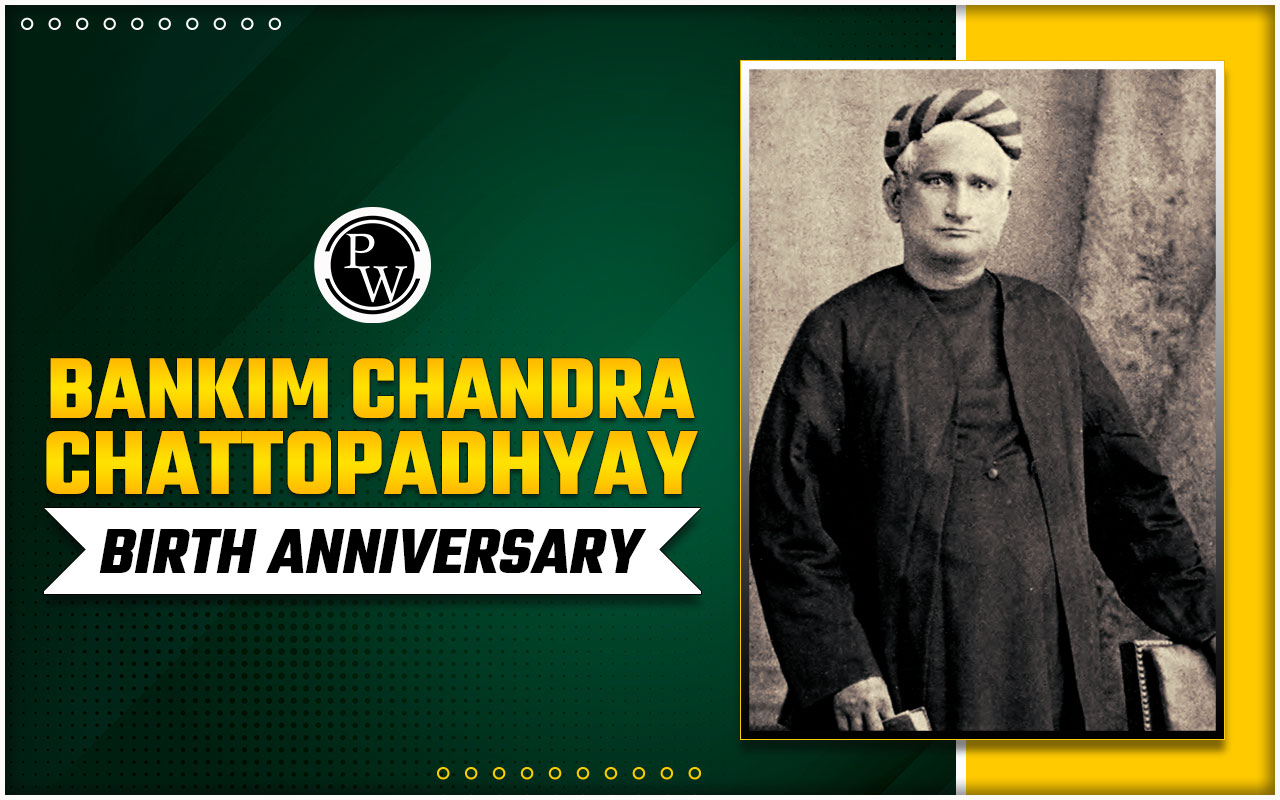
Bankim Chandra Chattopadhyay was one of India’s most influential writers and a key figure in shaping modern Bengali literature.
Best known as the creator of the patriotic song Vande Mataram, he used his powerful stories and ideas to spark a sense of pride and nationalism during British rule. His novels, essays, and poems continue to inspire readers and hold an important place in India’s literary and cultural history.
Bankim Chandra Chattopadhyay Overview
Bankim Chandra Chattopadhyay was one of India’s most influential writers and a key figure in modern Bengali literature. His works, especially Vande Mataram, played a major role in inspiring nationalism during British rule.
|
Bankim Chandra Chattopadhyay Overview |
|
|
Category |
Details |
|
Full Name |
Bankim Chandra Chattopadhyay |
|
Born |
26 June 1838 |
|
Birthplace |
Kanthalpara, near Naihati, Bengal |
|
Family Background |
Traditional Hindu family |
|
Education |
Presidency College; one of the first graduates of the University of Calcutta (1859) |
|
Government Service |
Deputy Magistrate & Deputy Collector for 30+ years |
|
Literary Title |
Sahitya Samrat (Emperor of Literature) |
|
Major Contribution |
Pioneer of modern Bengali literature; Father of the modern Indian novel |
|
First Novel (English) |
Rajmohan’s Wife |
|
First Bengali Novel |
Durgeshnandini (1865) |
|
Other Famous Works |
Kapalkundala, Devi Chaudhurani, Bishabriksha |
|
Magazine Founded |
Bangadarshan (1872) |
|
Most Famous Novel |
Anandamath (1882) |
|
National Song Contribution |
Author of Vande Mataram |
|
Theme of Anandamath |
Sannyasi Rebellion, nationalism, Mother India (Bharat Mata) |
|
Died |
8 April 1894 |
Early Life of Bankim Chandra Chattopadhyay
Bankim Chandra was born on June 26, 1838, in Kanthalpara near Naihati in Bengal. He came from a traditional Hindu family. His father, Yadav Chandra Chattopadhyay, worked as a government official.
Bankim Chandra was a brilliant student. He studied at Presidency College, Calcutta, and in 1859, he became one of the first two graduates of the University of Calcutta. After completing his education, he joined the British administration and worked as a Deputy Magistrate and Deputy Collector for more than 30 years. He retired in 1891.
Bankim Chandra Chattopadhyay as the Pioneer of Modern Bengali Literature
The most lasting impact of Bankim Chandra Chattopadhyay is in the field of literature. He is considered the father of the modern novel in India. He was the first author to truly establish prose as a major form of writing in the Bengali language.
His most important literary contributions include:
-
First Novel: His first attempt at writing fiction was a novel in English called Rajmohan's Wife.
-
First Bengali Novel: In 1865, he published his first major Bengali work, Durgeshnandini. This was a romantic novel set against a historical background.
-
Other Works: He wrote many famous works of fiction like Kapalkundala (1866) and Devi Chaudhurani (1884). His novel Bishabriksha (The Poison Tree) dealt with important social issues like widow remarriage.
-
Bangadarshan Magazine: In 1872, he started a famous literary magazine named Bangadarshan. This magazine became an important platform to promote Bengali literature and national feelings.
Anandamath and 'Vande Mataram'
Bankim Chandra Chattopadhyay is best remembered for his iconic novel Anandamath, which was published in 1882.
-
The Story: The book is set against the backdrop of the Sannyasi Rebellion. This was an uprising by a group of monks against the East India Company's rule in the 18th century. The novel tells the story of people fighting for their freedom.
-
The Motherland: In Anandamath, the author presented the idea of India as a Mother Goddess. This idea of "Bharat Mata" (Mother India) strongly motivated the freedom movement.
-
The National Song: The novel is home to the patriotic poem, "Vande Mataram". The words mean "I praise thee, Mother". This hymn was written in Sanskritised Bengali in the 1870s. It became the powerful slogan of India's fight for independence. The first two stanzas of this poem were later adopted as the National Song of India in 1950.
Legacy of Bankim Chandra Chattopadhyay
Bankim Chandra passed away on April 8, 1894. His contributions remain a cornerstone of Indian history and culture. He did not just write stories; he used his words to build a nation's pride. His works continue to be studied and celebrated for their literary excellence and patriotic zeal.
Bankim Chandra Chattopadhyay Death
Bankim Chandra Chattopadhyay passed away on April 8, 1894, in Calcutta (now Kolkata), at the age of 55. His death marked the end of an era for Bengali and Indian literature. Although his career as a government official ended a few years earlier in 1891, he left behind a rich legacy. His writings, filled with strong nationalist feelings, continued to inspire the movement for India's freedom long after he was gone. He remains celebrated as a literary giant who helped shape India's cultural and national identity.
Bankim Chandra Chattopadhyay FAQs
Who was Bankim Chandra Chattopadhyay?
Why is Bankim Chandra Chattopadhyay famous?
Which novel includes the song Vande Mataram?
What are some of his well-known works?
What was his first novel?












 Live & recorded classes available at easeDashboard for progress trackingMillions of practice questions at your fingertips

