Top 5 Videos on Drainage Systems of India in Indian Physical Geography for UPSC by PW
 Mehjabeen Hussain25 Nov, 2026

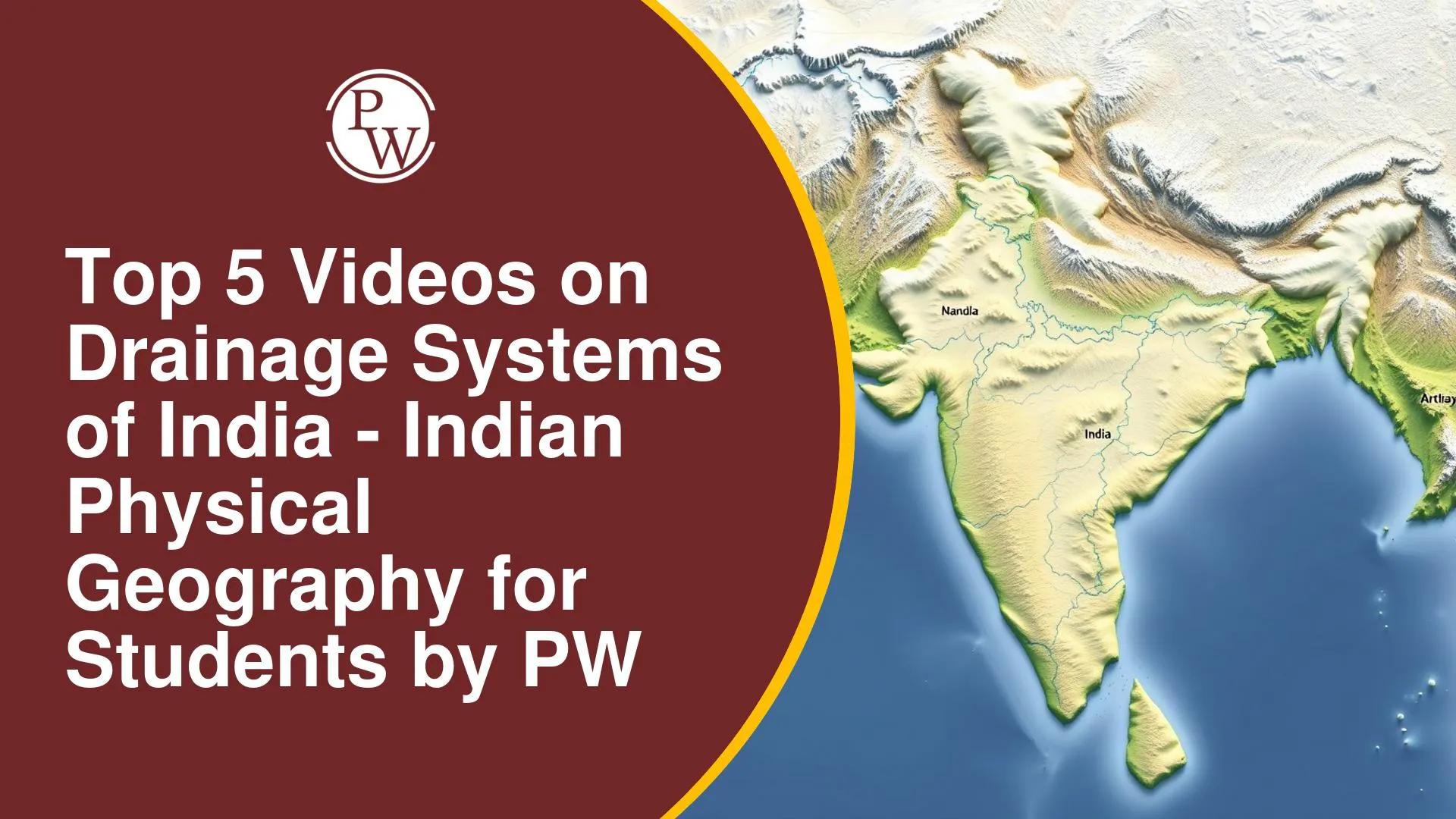
Drainage is a topic where small details decide the answer. A river's origin, its left-bank or right-bank tributaries, its basin and its pattern can all appear in a single statement-based question. If you revise from scattered notes, names and locations are easy to forget, especially without a map in front of you.
Physics Wallah lectures help you to cover Indian Geography in a sensible order. You can begin with the NCERT series, move to a full Class 6 to 12 revision, study drainage patterns and terms with maps, and then revise rivers in Hindi. Each lecture helps you connect a river or term with how the exam asks about it.
Video 1: Build A Strong Drainage Systems Foundation With River Comparisons
This free NCERT series lecture starts with the meaning, classification and patterns of drainage, then compares Himalayan and Peninsular rivers. It explains the Indus, Brahmaputra and Ganga systems, including the Yamuna and its tributaries, right-bank and left-bank tributaries, Uttarakhand developments and smaller Peninsular rivers, with NCERT-linked facts. Watch it as your first study or chapter recap, so you can compare river systems, recall tributaries and link facts with maps before Prelims and Mains questions.
Watch Now -
Video 2: Cover Class 6 to 12 NCERT Drainage System in One Complete Lecture
Do you need one connected account of India's rivers from the NCERT books? This lecture starts with drainage, drainage patterns, river classification, drainage basin and watershed, then explains the evolution of Himalayan drainage and the Indus, Ganga and Brahmaputra systems. It moves on to the Mahanadi, Godavari, Krishna, Kaveri, Narmada, Aravalli rivers, inland drainage and Indian lakes, comparing origin, flow and features. Watch it for complete NCERT revision, so you can build a foundation, recall facts and handle comparison and map-based questions before advanced practice.
Watch Now -
Want to check how rivers and drainage are tested in Prelims? Solve UPSC Prelims previous year questions
Video 3: Revise Drainage Patterns and River Terms From Class 11 NCERT Chapter 3
Do catchment area, watershed and divide still sound alike? This Part 2 lecture reviews perennial Himalayan and ephemeral Peninsular rivers and the factors behind them, such as topography, geological history, slope and water flow. It then teaches dendritic, radial, trellis, centrifugal and centripetal drainage patterns, major, medium and minor systems, Indobrahma evolution, meanders and sediment deposition through maps and comparisons. Watch it before tests if you learn best from maps, so you can identify patterns, recall terms and explain why rivers meander or deposit sediments.
Watch Now -
Video 4: Memorise India's River Systems with Maps in One Complete Lecture
Do river names, tributaries and confluences slip away when you revise without a map? This Hindi lecture takes you through the Himalayan and Peninsular divisions, perennial Himalayan rivers and the Indus, Ganga and Brahmaputra basins. The Indus part covers the six major rivers, origins, tributaries, confluences, dams, older names and water-sharing points, while the Ganga part adds Alaknanda, Bhagirathi, Panch Prayag and how the Ganga forms, with memory aids. Watch it before Prelims practice, so you can recall rivers, tributaries and locations quickly in Hindi.
Watch Now -
Looking for map-based classes and notes to cover the full Geography syllabus? Explore PW's UPSC preparation batches.
Video 5: Start Apvaha Tantra in Hindi with a UPSC-Focused Indian River System Lecture
Is Apvaha Tantra the right place to begin your Hindi drainage preparation? This Hindi lecture builds a UPSC-focused foundation in India's drainage system. It introduces Himalayan and Peninsular rivers, major drainage patterns and key geography terms linked with the Indian river system, with explanations suited to both objective and descriptive answers. Watch it when you prefer Hindi explanations or need a starting point, so you can organise the topic before detailed study, move from basic terms to UPSC-style questions and recall concepts better during revision.
Watch Now -
Drainage Systems of India becomes easier when you learn the classification first, add the river terms and patterns, and then revise each river system on a map. Start with the NCERT lectures, move to patterns and terms, and use the Hindi lectures for quick recall of rivers and tributaries. Revising with them regularly can help you answer Geography questions with better accuracy and steadier recall with PW.