Top 5 Videos on World Mapping for UPSC Physical Geography by PW


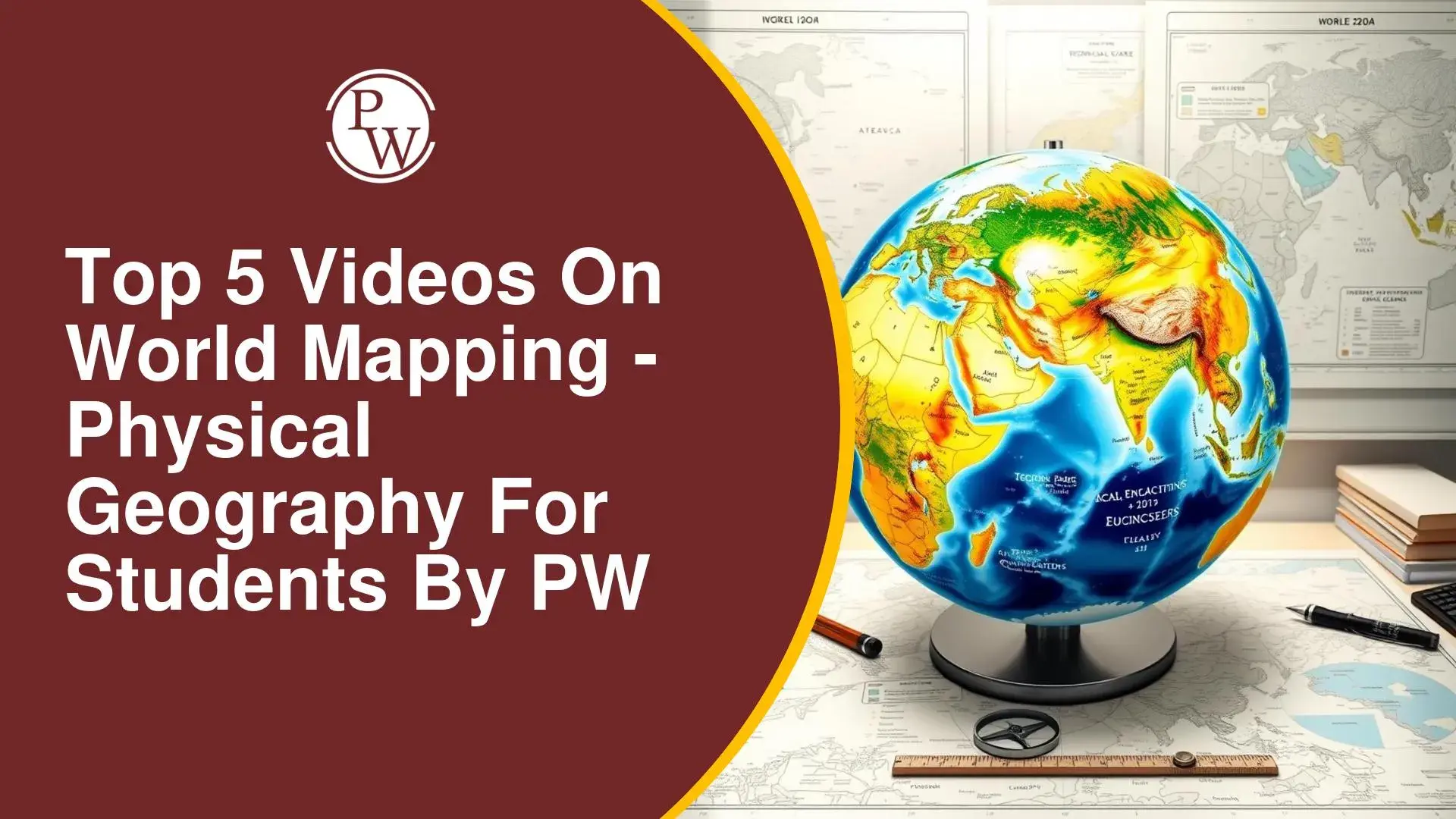
World Mapping is an important part of Physical Geography for UPSC preparation. You need to remember the locations of mountains, rivers, lakes, seas, straits and mineral regions across different continents. Some places may look familiar, but identifying them correctly on a map can be difficult, especially when you are revising several regions together.
PW's World Mapping videos help you learn these locations through maps, examples and continent-wise explanations. You can start with a complete overview of the world and then focus on individual continents to understand their physical features.
Here are five PW videos that can help you build map awareness, revise important geographical locations and prepare for location-based questions in UPSC Prelims and other competitive examinations.
Video 1: Master All Seven Continents with a Complete World Mapping One-Shot
If you are starting World Mapping or need to revise the entire topic, this one-shot is a good place to begin. It covers all seven continents and their important geographical features, including countries, seas, oceans, straits, gulfs, mountain ranges, deserts, plateaus, rivers and lakes.
The video uses maps to help you understand where these features are located and how they relate to one another. It also covers important places in the news and common types of map-based questions asked in UPSC Prelims.
You can use this lecture to build your basic understanding before studying individual continents. It is also useful for revision when you want to go through important locations without watching several separate classes.
For more information on the topics covered in the examination, refer to the UPSC Prelims Geography Syllabus.
Video 2: Learn Africa Mapping Through Mountains, Rivers, Minerals and Wildlife
Africa has several important geographical features that you need to locate on a world map. This video covers the continent's major seas, mountain ranges, rivers and lakes. It also explains the locations of important mineral resources, vegetation patterns and wildlife.
The map-based explanation helps you connect physical features with the regions where they are found. For example, you can study important rivers and mountain ranges alongside the surrounding landforms and resource-rich areas.
This lecture is useful if you find it difficult to remember African geographical locations. You can also use it to revise physical features and resources before attempting map-based questions in UPSC Prelims or Geography Optional.
Video 3: Revise Australia Mapping with Mountains, Rivers, Lakes and Mineral Locations
Australia's physical geography becomes easier to revise when you study its features together on a map. This video covers the surrounding seas, coastal features, major mountain ranges, important rivers and lakes, and mineral-resource locations.
The lesson helps you understand where these features are located and how they relate to one another. It also uses memory aids to make revision easier.
If you often confuse Australian geographical locations, this video can help you revise them separately. You can return to it during your final revision to check your understanding of the continent's landforms, drainage systems and mineral regions.
Video 4: Master South America Mapping with Important Mountain Ranges, Rivers and Landforms
South America has several important geographical features that are relevant to World Mapping questions in competitive examinations. This video helps you locate and revise them through detailed map-based explanations.
You will learn about major mountain ranges and peaks, rivers, lakes, plateaus, plains and mineral regions. These explanations will help you remember the locations of important physical features and understand their geographical relationships.
If you find it difficult to recall South America's rivers, mountain ranges and mineral-rich regions, you can use this lesson for focused revision before attempting map-based questions.
Video 5: World Mapping Marathon for Quick Revision
After studying individual continents, you need to revise important geographical locations regularly. This World Mapping marathon brings together major global locations in a quick revision format.
The video covers continents, oceans, seas, straits and countries. It also connects world geography with current affairs, helping you revise locations that become important because of recent developments. You can watch this lecture after completing your continent-wise preparation or before attempting a mock test.
The quick revision format will help you test your geographical recall, identify locations more efficiently and reduce mistakes while solving map-based questions in UPSC Prelims and other competitive examinations.
How to Prepare World Mapping for UPSC
Watching videos can help you understand geographical locations, but you also need to practise using a map regularly. Follow these steps to make your World Mapping preparation more effective.
-
Start with the basics: Learn the seven continents and five oceans before moving to individual geographical features.
-
Study one continent at a time: Mark important mountains, rivers, lakes, seas and other physical features on a map.
-
Prepare location-based notes: Write down important geographical features along with their countries and surrounding regions.
-
Connect locations with current affairs: Whenever a place appears in the news, locate it on a world map and revise its nearby geographical features.
-
Practise blank maps: Try marking important locations without looking at your notes. This will help you check how much you remember.
-
Solve previous-year questions: Attempt map-based questions to understand how geographical locations are tested in UPSC Prelims.
You can also refer to the UPSC Geography Questions in Prelims 2026 to review the types of Geography questions asked in the examination.
These five PW videos cover World Mapping through a combination of global revision, continent-wise learning and map-based practice. You can begin with the complete world map, study Africa, Australia and South America separately, and then use the marathon for quick revision.
Regular map practice, along with these video lessons, can help you remember important locations and prepare for Physical Geography questions in UPSC Prelims and other competitive examinations.