Top Videos on India and Its Neighbourhood for UPSC International Relations by PW


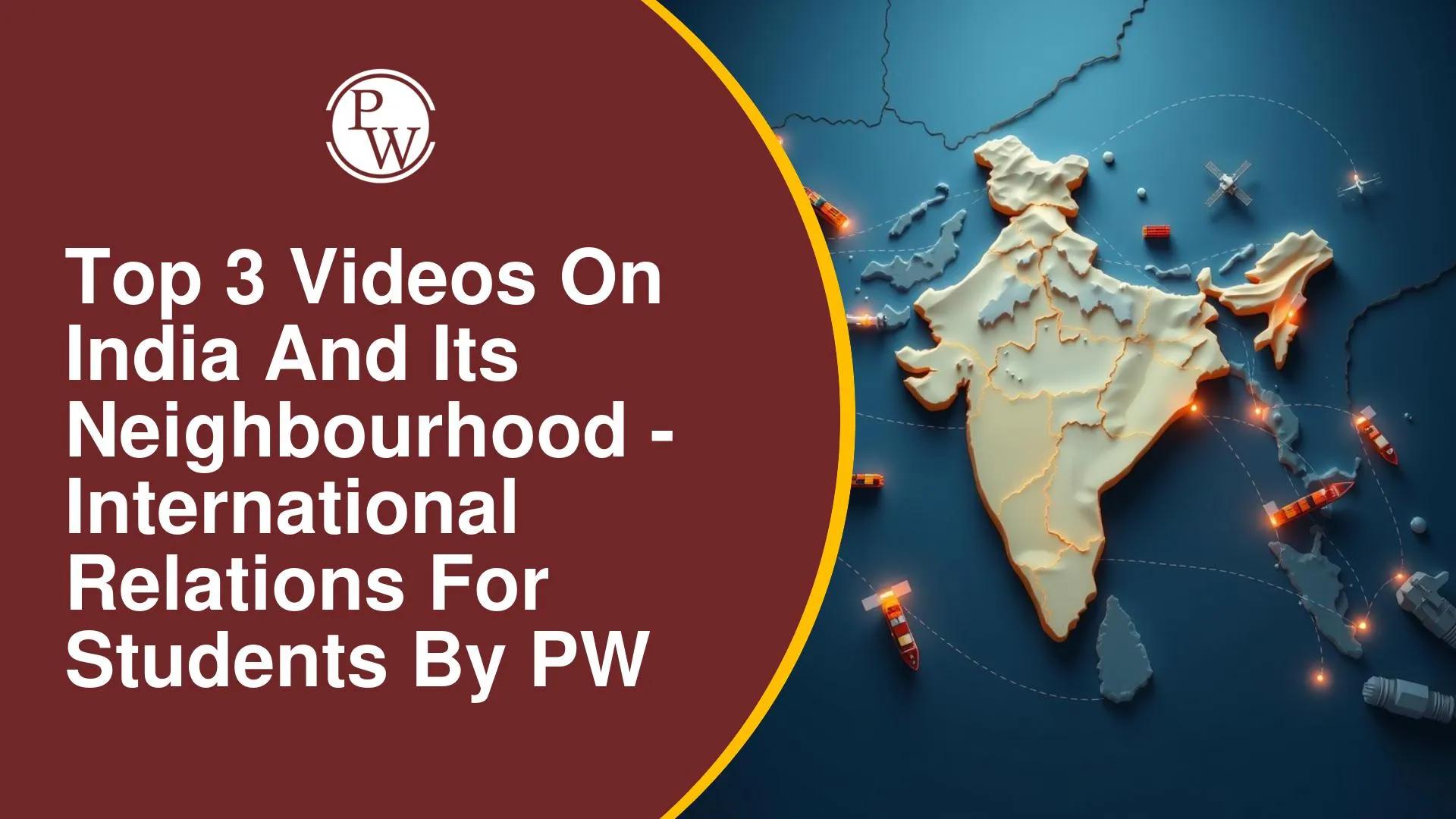
India and Its Neighbourhood is an important topic in International Relations for UPSC. However, preparing this section requires more than remembering the names of neighbouring countries. You need to understand India's diplomatic relations, border disputes, trade agreements, regional security concerns, and important developments in the news.
Physics Wallah videos help you connect these topics through country-wise explanations, historical events, maps, and current-affairs examples. You can use these lessons to understand India's relationship with Pakistan, China and other neighbouring countries while preparing for International Relations questions in UPSC Prelims and Mains.
Video 1: Understand India-Pakistan Relations with Regional Security Analysis
If you want to understand India's relationship with Pakistan, start with this video. It explains Pakistan's strategic importance in India's neighbourhood through geography, history, and regional security. The lesson covers Pakistan's connections with Afghanistan, Central Asia, Eurasia and West Asia. It also discusses terrorism, drug trafficking, energy routes, non-state actors, and the security challenges affecting the region.
Another important part of the discussion is India's response to Pakistan through dialogue, Track One and Track Two diplomacy, soft power, hard power, and other strategic measures. You can use this video to understand why India-Pakistan relations remain important for regional stability. It will also help you develop arguments and examples for analytical questions in UPSC Mains.
Read about the UPSC syllabus to understand how International Relations connects with India's foreign policy, security and bilateral relations.
Video 2: Revise India-China Relations Through Maps and Important Events
India-China relations involve several issues, including border disputes, trade, diplomacy, and regional security. This one-shot video explains the relationship through important historical events and geographical references.
It covers the establishment of diplomatic relations, the 1962 India-China War, the Line of Actual Control (LAC), and different boundary sectors. You will also learn about the McMahon Line, Johnson Line, and McDonald Line, which are important for understanding the boundary dispute.
If you find it difficult to remember the sequence of India-China developments, this video can help you connect historical events with present-day diplomatic and strategic concerns. The map-based explanation is also useful for improving geographical recall.
Go through Important Topics for UPSC Prelims to revise important areas and connect static concepts with current developments.
Video 3: Revise India's Neighbouring Countries Through Important Agreements
The lesson uses maps, location-based questions, and previous-year question references to help you remember important facts.
Some of the topics covered include:
-
India-Pakistan relations: The Indus Waters Treaty, eastern and western rivers, the World Bank and the Permanent Indus Commission.
-
India-Bhutan relations: Project Dantak and the role of the Border Roads Organisation.
-
India-Afghanistan relations: The role of the United Nations Assistance Mission in Afghanistan (UNACMA) in peace and development.
-
India-Maldives relations: The Greater Male Connectivity Project and its importance for regional connectivity.
You can watch this video to understand how developments in neighbouring countries affect India's diplomatic and strategic interests.
Explore Current Affairs Important Topics for UPSC Prelims to revise important national and international developments.
How to Prepare India and Its Neighbourhood for UPSC
Watching video lectures can help you understand India's relations with neighbouring countries. However, you should also revise important events, agreements, and geographical locations regularly.
Follow these steps to make your International Relations preparation more effective:
-
Study country-wise relations: Start with Pakistan, China, Nepal, Bhutan, Bangladesh, Sri Lanka, Maldives, Myanmar and Afghanistan.
-
Understand border issues: Make short notes on important disputes, border agreements, and strategic locations.
-
Revise important treaties: Cover agreements such as the Indus Waters Treaty and other important bilateral arrangements.
-
Use maps for revision: Locate neighbouring countries, important border areas, ports, rivers and connectivity projects on an India map.
-
Follow current affairs: Keep track of diplomatic visits, regional developments, trade relations and security issues involving neighbouring countries.
-
Prepare examples for Mains: Connect historical events and recent developments with broader themes such as regional cooperation, national security and India's foreign policy.
-
Practise questions: Attempt Prelims MCQs and Mains answer-writing questions to check your understanding.
You can also practise with the PW UPSC Online Mock Test Series to assess your preparation and improve your accuracy through regular tests.
These three PW videos cover India and Its Neighbourhood through country-wise explanations, historical developments, maps, and current-affairs examples. You can use them to understand India's relations with neighbouring countries, revise important agreements, and prepare better answers for International Relations questions.