
UPSC Topper 2025 Anuj Agnihotri Rank 1 Mock Interview

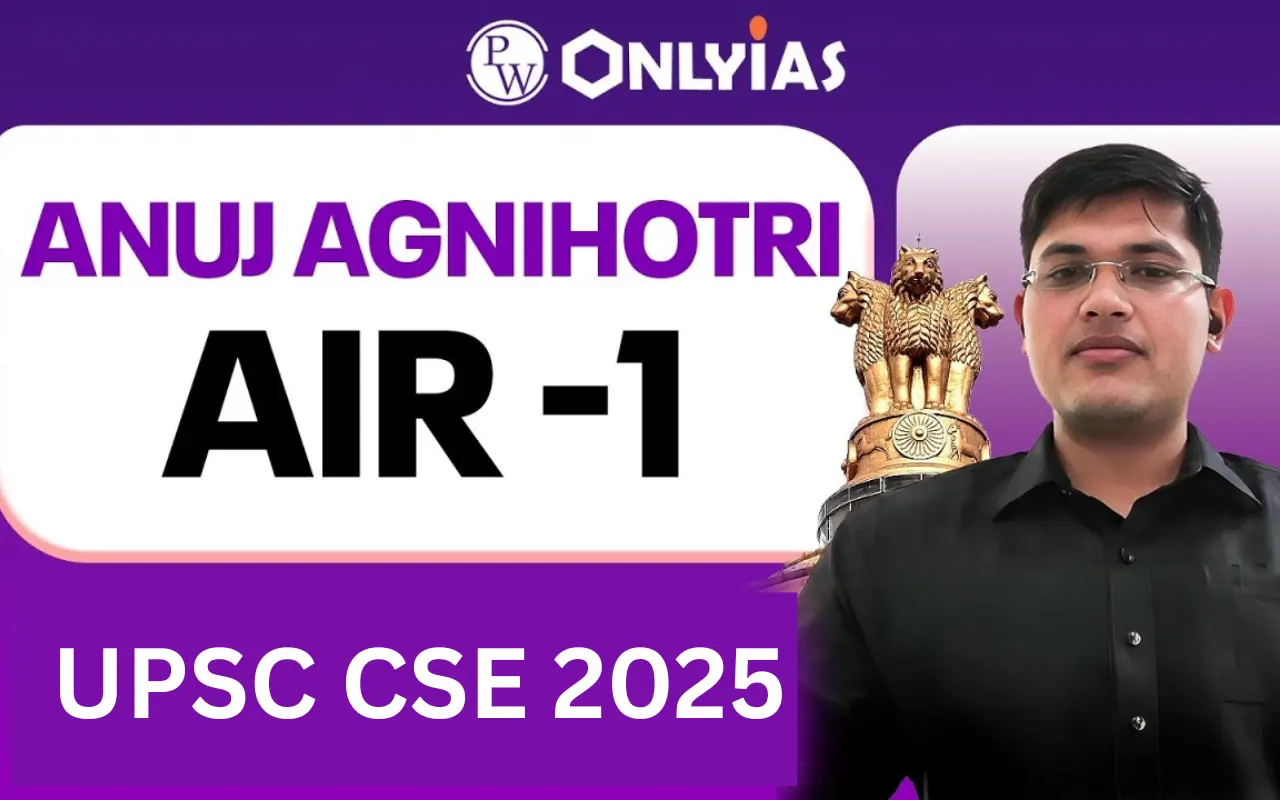
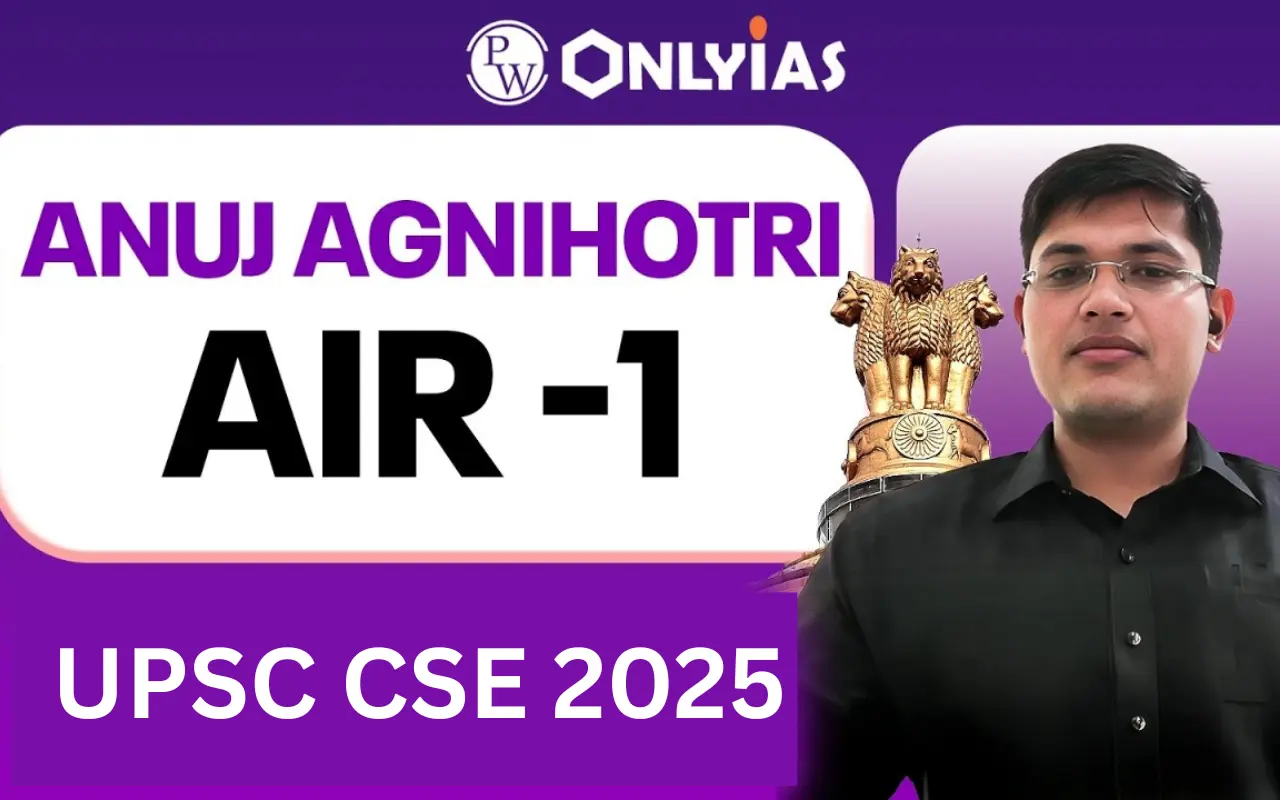
UPSC Topper 2025 Anuj Agnihotri Rank 1 Mock Interview: In this session, Anuj Agnihotri AIR 1 UPSC 2025 faces a simulated UPSC Personality Test / Mock Interview, where experienced mentors evaluate his clarity of thought, analytical ability, communication skills, and decision-making — the same qualities that the UPSC Interview Board looks for in Civil Services candidates.
UPSC Topper 2025 Anuj Agnihotri Rank 1 Mock Interview
The UPSC Civil Services Examination (CSE) 2025 Result has inspired lakhs of aspirants preparing for UPSC 2026 and UPSC 2027, and this mock interview offers a realistic glimpse into how toppers approach the final stage of the exam.
Through this discussion, aspirants can learn how to handle DAF-based questions, situational questions, opinion-based questions, and governance-related discussions that are commonly asked in the UPSC Personality Test.
Anuj Agnihotri Background and Career Shift
The candidate, a doctor, transitioned to DANICS due to a desire for more public interaction, aligning with skills in dealing with people. This shift was driven by a motivation to solve fundamental problems for the public and make a broader impact for society.
UPSC Topper 2025 Anuj Agnihotri Rank 1 Mock Interview Key Insights Introduction
UPSC Topper 2025 Anuj Agnihotri Rank 1Mock Interview distills key insights from a mock UPSC interview, highlighting crucial concepts for aspiring civil servants. It covers demographic challenges like Total Fertility Rate, public health strategies, critical infrastructure projects, and contemporary issues in governance and administration. The discussion emphasizes the need for informed policy decisions, ethical considerations, and effective leadership in addressing India's complex socio-economic landscape. Know the topics asked and how the candidates figured out the answers in a well explained manner.
Total Fertility Rate in India
India's Total Fertility Rate (TFR) has fallen below the replacement level, indicating a potential future problem of an aging population. Historically, population control strategies were often poorly planned. Measures during the Emergency, such as forced sterilization, were stringent. However, the number of vasectomies during the Emergency was relatively small, though the manner in which they were conducted was inappropriate, leading to negative publicity.
The actual cause for the significant reduction in TFR largely stems from the 1990s. During this period, district administrations competitively pursued high numbers of tubectomies and vasectomies, often neglecting other critical aspects of community health. This era saw the neglect of broader community health objectives, with birth control being enforced rather than advised as part of comprehensive community health. A TFR below the replacement level is a serious concern, predicting an aging population similar to countries like China in 30-50 years. The principles of universal health coverage, as conceived by committees like the Bore Committee and Mudalier Committee, and the Alma-Ata Declaration, are still not fully realized today.
Health Intervention as a District Magistrate
As a District Magistrate (DM), a proposed intervention includes mandating a yearly health check-up for every person above 40 years of age. The rationale is that Non-communicable diseases (NCDs) like diabetes and hypertension often present no early symptoms or signs, making regular screening essential for early detection. Ensuring the proper functioning of Primary Health Centers (PHCs) and effective delivery of the Community Health Mandate is also crucial.
Perfusion Technology
Perfusion technology plays a vital role in complex medical procedures. When thinking about perfusion technology, consider its role in open heart surgeries, the lung-heart machine, and organ transplantation. (Memory Tip: Remember perfusion is about circulating fluids, like blood, in complex medical scenarios.) This technology has significantly evolved over the last 20 years, enabling these procedures to be performed without complications, positively impacting humanity.
Great Nicobar Infrastructure Project
The Great Nicobar Infrastructure Projects are a significant cause of contention, particularly among the tribal population.
Implications of the Project:
-
Positive Impacts:
-
Imparts immense strategic and military value.
-
Acts as an economic multiplier for the country.
-
Negative Impacts:
-
Significant impact on the environment.
-
Adverse effects on indigenous people, specifically tribes like the Shompen of Nicobar Island.
-
Threat to the region's status as a biodiversity hotspot.
These factors necessitate comprehensive consideration.
Role of Civil Society in Andaman & NicobarIslands like Andaman, once considered dormant regarding civil society engagement, are now experiencing increased activism. Civil society plays a crucial role by advocating for the fundamental needs of the population and acting as a vital stakeholder in good decision-making.
Tourism Development and Management in Port Blair
Government initiatives to promote tourism in Port Blair include improved connectivity (daily flights), extending internet penetration deep into the islands, hospitality development involving local communities, and niche tourism targeting specific groups like Japanese tourists due to historical connections.
For waste management and sustainable tourism, proposed solutions include a Waste-to-Energy Generation Plant, which offers a win-win situation by addressing both waste management and the region's power deficit. Another approach is adopting a High-Value, Low-Quantity Tourism Model (Bhutan Model), implementing entry fees for critical hotspots to limit tourist numbers and maintain sanctity. It's also important to involve tribal communities in tourism initiatives and raise awareness among tourists to respect tribal rights, habitat, and privacy.
The faculty emphasizes that while attracting environmentally conscious tourists is ideal, restricting visitors is unrealistic, as "Every Indian has a right to visit." The administration must take harsh preventive actions to address garbage mismanagement, given the generally poor civic sense in India. Infrastructure development for tourism must be well-planned, not haphazard, to prevent private players from exploiting resources.
India's Health Expenditure
Approximately 2.5% of government expenditure is allocated to health initiatives in India.
Improving Health Infrastructure with Limited Budget
To improve health infrastructure with a limited budget, the strategy focuses on preventive medicine over curative approaches. This involves promoting vaccination for newborns and mothers and encouraging healthy lifestyle practices among the public to combat Non-Communicable Diseases (NCDs). Engaging youth in sports and physical activities also fosters healthy lifestyles. These are low-budget interventions with the potential for large impacts. It is crucial to invest in preventive healthcare where the input-output ratio is very high, such as in malaria prevention, yielding maximum output from small investments.
Diethylene Glycol (DEG) in Pharmaceutical Products
Diethylene Glycol (DEG) is a solvent recently in the news, particularly concerning its presence in cough syrups. While it's sometimes used by industries as a short-term, low-cost solution for cheap medicines, DEG is NOT a normal component of cough syrup; it is an adulterant. Recent controversies highlight children's deaths due to DEG-contaminated cold syrups, particularly in Madhya Pradesh and Rajasthan.
Agencies Dealing with Spurious Drugs
The primary agencies involved in combating spurious drugs are:
-
CDSCO (Central Drugs Standard Control Organization): The main regulatory body responsible for checking the quality and standards of drugs before market release.
-
State Health Departments: Responsible for checking batches of medicines supplied within their respective states.
Shanti Bill Controversy
One controversy surrounding the Shanti Bill is the government's decision to allow private and foreign organizations to fund nuclear power projects, which, even with mandated stakes less than 49%, could pose significant strategic and security risks. Another highly controversial aspect, widely reported, concerns the provision for fixing the liability of the supplier of the reactors.
6th Schedule Status: Ladakh vs. Andaman & Nicobar
The demand for 6th Schedule status by Ladakh, which has a nearly 97% tribal population, aims to protect its tribal culture and livelihood, as it feels disconnected from the mainstream. The situation in Andaman & Nicobar, also a Union Territory with tribal populations, differs:
-
Andaman & Nicobar (Reasons for not demanding 6th Schedule status):
-
Cosmopolitan Cities: Major cities like Port Blair are largely cosmopolitan, with diverse populations, meaning no single identity dominates.
-
Tribal Demographics: Tribal populations are relatively few in number and do not assert demands for a complete state or extensive special rights.
-
Habitat Preservation: Their primary desire is for an uninterrupted habitat.
-
Mainstream Integration: The population, including tribal communities, is seen as being a strong part of the mainstream.
-
Ladakh (Reasons for demanding 6th Schedule status):
-
High Tribal Population: Comprises almost 97% tribal areas.
-
Cultural Preservation: Seeks to protect its distinct culture and livelihood.
-
Sense of Disconnect: The population perceives itself as not aligned or incorporated into the mainstream population.
-
Autonomy: Demands to be treated at par with 6th Schedule states to gain greater autonomy.
General Interview Feedback and Strategy
Key areas for improvement include addressing knowledge gaps (e.g., perfusion technology), enhancing the organization and articulation of answers, and ensuring factual accuracy even when avoiding "politically correct" responses. For candidates with a medical background, thorough subject-specific preparation is crucial.
For interview technique, replies should be cogent and chronologically wise. Adhering to the "30-second mantra"—delivering answers concisely within 30 seconds followed by a pause—allows all board members an opportunity to interact. Candidates should be prepared for "blasting issues" (highly sensitive and controversial topics) related to tribal affairs, agitation, and modernization. Policy suggestions must be realistic; for instance, regarding tourism, one cannot restrict visitors as "Every Indian has a right to visit," necessitating harsh preventive actions for waste management. Infrastructure development must be well-planned, not haphazard, to prevent exploitation by private entities. Crucially, interviewees must be aware of recent controversies and basic facts relevant to their area or current affairs, such as the Shanti Act liability or DEG in cough syrups, as there is "no excuse" for not knowing such high-profile issues.
Explore PW UPSC Online Courses to access guidance, a structured syllabus coverage, regular test series, and more, designed to help you!
UPSC CSE Top 10 Rank Holders 2025
|
UPSC CSE Top 10 Rank Holders 2025 |
||
|
Rank |
Candidate Name |
Roll Number |
|
1 |
1131589 |
|
|
2 |
4000040 |
|
|
3 |
3512521 |
|
|
4 |
0834732 |
|
|
5 |
0409847 |
|
|
6 |
6410067 |
|
|
7 |
0818306 |
|
|
8 |
0843487 |
|
|
9 |
0831647 |
|
|
10 |
1523945 |
|
UPSC Topper 2025 ANUJ AGNIHOTRI Rank 1 Mock Interview FAQs
How can I watch UPSC Topper 2025 ANUJ AGNIHOTRI Rank 1 Mock Interview?
When was the UPSC CSE Result 2026 declared?
Will the cut-off marks for UPSC CSE 2026 be released?
Who is the Topper who secured AIR 1 in UPSC CSE 2026?