Number System for Competitive Exams: Topics, Basics, Formulas & Examples
 Priyanka Dahima28 Sept, 2026
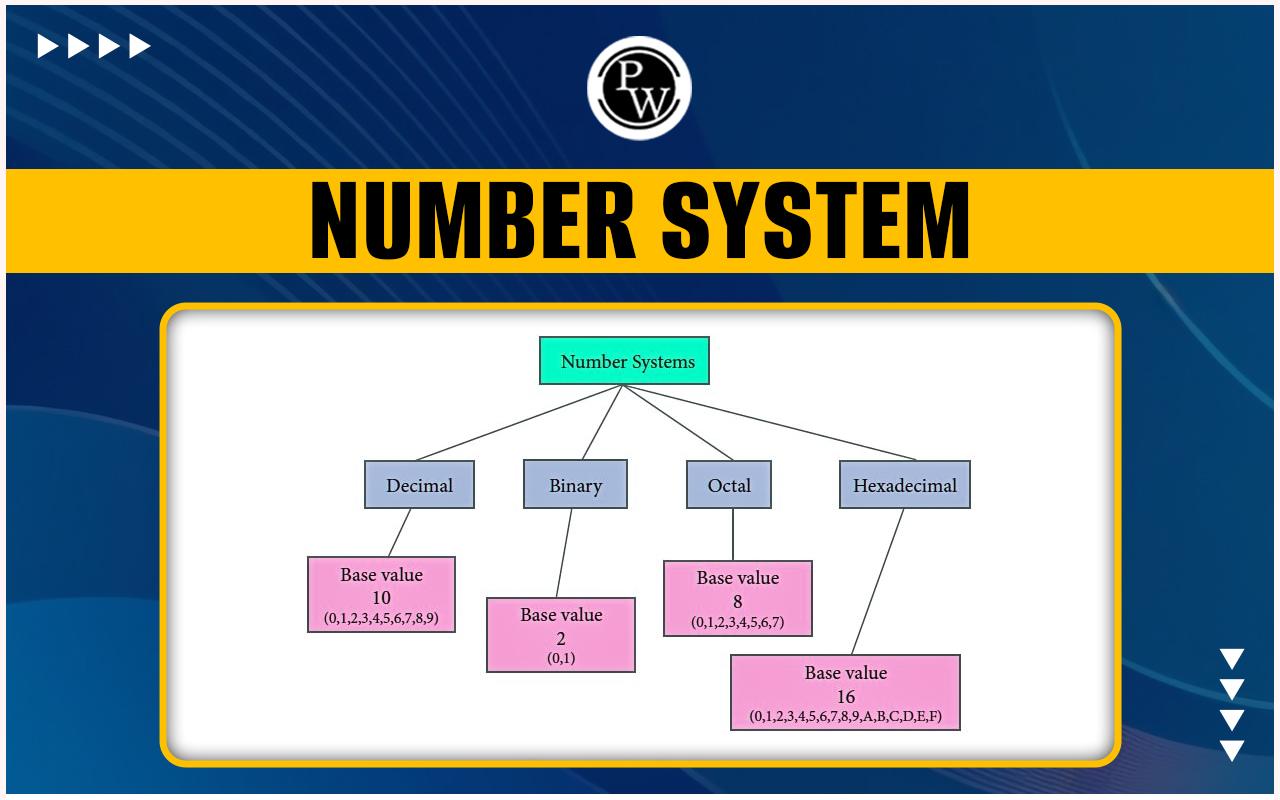
Number System is a fundamental part of mathematics and quantitative aptitude. In competitive exams, including banking exams, questions from Number System test your understanding of different types of numbers, their properties, factors, multiples, divisibility, prime factorization, and basic arithmetic operations.
This guide covers the Number System topics for competitive exams, including Number System basics, important formulas, divisibility rules, HCF, LCM, factorial, permutation and combination, estimation and rounding, solved questions, and practice questions.
Number System Topics for Competitive Exams
The important Number System topics for competitive exams include:
-
Types of Numbers
-
Place Value System
-
Basic Arithmetic Operations
-
Factors and Multiples
-
Divisibility Rules
-
Prime Factorization
-
HCF and LCM
-
Properties of Numbers
-
Factorial
-
Permutation and Combination
-
Estimation and Rounding
-
Simplification using BODMAS/BIDMAS
These topics cover the core concepts generally studied under Number System in quantitative aptitude. They are useful for solving direct Number System questions as well as calculation-based questions.
Number System Basics for Competitive Exams
The Number System deals with different types of numbers and their properties. These concepts are used in quantitative aptitude questions involving calculations, divisibility, factors, multiples, HCF, LCM and simplification.
Types of Numbers
Numbers can be classified into different categories based on their properties.
Natural Numbers
Natural numbers are positive integers starting from 1.
Natural Numbers = 1, 2, 3, 4, 5, ...
Whole Numbers
Whole numbers include zero and all natural numbers.
Whole Numbers = 0, 1, 2, 3, 4, 5, ...
Integers
Integers include positive numbers, negative numbers and zero.
Integers = ..., -3, -2, -1, 0, 1, 2, 3, ...
Integers do not include fractions or decimal numbers that are not whole values.
Rational Numbers
Rational numbers are numbers that can be expressed in the form:
p/q, where p and q are integers and q ≠ 0.
Examples include:
-
1/2
-
3/4
-
5
-
-2
-
3.75
Every integer is also a rational number because it can be written as a fraction with denominator 1.
Irrational Numbers
Irrational numbers cannot be expressed as the ratio of two integers.
Examples include:
-
√2
-
√3
-
π
Their decimal representations are non-terminating and non-repeating.
Real Numbers
Real numbers include both rational and irrational numbers.
Therefore:
Real Numbers = Rational Numbers + Irrational Numbers
Prime Numbers
A prime number is a natural number greater than 1 that has exactly two positive factors: 1 and the number itself.
Examples:
2, 3, 5, 7, 11, 13, ...
The number 2 is the only even prime number.
Composite Numbers
A composite number is a natural number greater than 1 that has more than two positive factors.
Examples:
4, 6, 8, 9, 10, 12, ...
The number 1 is neither prime nor composite.
Place Value System
Place value refers to the value of a digit according to its position in a number.
For example, in the number 5,482:
-
5 is in the thousands place.
-
4 is in the hundreds place.
-
8 is in the tens place.
-
2 is in the units place.
Understanding place value is useful in questions involving number formation, digits and numerical calculations.
Basic Arithmetic Operations
The basic arithmetic operations are addition, subtraction, multiplication and division.
Addition
Formula:
a + b
Example:
25 + 28 = 53
Subtraction
Formula:
a - b
Example:
55 - 23 = 32
Multiplication
Formula:
a × b
Example:
15 × 6 = 90
Division
Formula:
a ÷ b
Example:
40 ÷ 5 = 8
These operations form the foundation of most quantitative aptitude calculations.
Properties of Numbers
The important properties of numbers include commutative, associative and distributive properties.
Commutative Property
The order of numbers does not affect the result of addition or multiplication.
Addition:
a + b = b + a
Example:
3 + 2 = 2 + 3 = 5
Multiplication:
a × b = b × a
Example:
2 × 3 = 3 × 2 = 6
The commutative property does not generally apply to subtraction and division.
Associative Property
The grouping of numbers does not affect the result of addition or multiplication.
Addition:
a + (b + c) = (a + b) + c
Example:
2 + (3 + 4) = (2 + 3) + 4 = 9
Multiplication:
(a × b) × c = a × (b × c)
Example:
(2 × 3) × 4 = 2 × (3 × 4) = 24
Distributive Property
The distributive property connects multiplication with addition or subtraction.
a × (b + c) = (a × b) + (a × c)
Example:
2 × (3 + 4)
= (2 × 3) + (2 × 4)
= 6 + 8
= 14
Factors and Multiples
A factor of a number is a number that divides it exactly without leaving a remainder.
For example, the factors of 12 are:
1, 2, 3, 4, 6 and 12
A multiple is the result obtained by multiplying a number by an integer.
For example, the multiples of 5 are:
5, 10, 15, 20, 25, ...
Factors and multiples are important for understanding HCF, LCM and prime factorization.
Number System Formulas for Competitive Exams
Number System formulas and divisibility rules are frequently used to solve quantitative aptitude questions quickly. The following rules cover important divisibility tests and other formulas used in Number System.
Divisibility Rules
Divisibility rules help determine whether a number is divisible by another number without performing complete division.
Divisibility Rule for 2
A number is divisible by 2 if its last digit is even.
The possible last digits are:
0, 2, 4, 6 and 8
Example: 2468
The last digit is 8, which is even.
Therefore, 2468 is divisible by 2.
Divisibility Rule for 3
A number is divisible by 3 if the sum of its digits is divisible by 3.
Example: 12345
Sum of digits:
1 + 2 + 3 + 4 + 5 = 15
Since 15 is divisible by 3:
12345 is divisible by 3.
Divisibility Rule for 4
A number is divisible by 4 if the number formed by its last two digits is divisible by 4.
Example: 1236
The last two digits are 36.
Since:
36 ÷ 4 = 9
Therefore, 1236 is divisible by 4.
Divisibility Rule for 5
A number is divisible by 5 if its last digit is 0 or 5.
Example: 1010
The last digit is 0.
Therefore, 1010 is divisible by 5.
Divisibility Rule for 6
A number is divisible by 6 if it is divisible by both 2 and 3.
Example: 672
The last digit is 2, so 672 is divisible by 2.
Sum of digits:
6 + 7 + 2 = 15
Since 15 is divisible by 3, 672 is also divisible by 3.
Therefore, 672 is divisible by 6.
Divisibility Rule for 7
To check divisibility by 7:
-
Take the unit digit.
-
Multiply it by 2.
-
Subtract the result from the remaining part of the number.
-
If the result is 0 or a multiple of 7, the original number is divisible by 7.
Example: 798
The unit digit is 8.
8 × 2 = 16
The remaining part is 79.
79 - 16 = 63
Since 63 is a multiple of 7:
798 is divisible by 7.
Divisibility Rule for 8
A number is divisible by 8 if the number formed by its last three digits is divisible by 8.
Example: 512
512 ÷ 8 = 64
Therefore, 512 is divisible by 8.
Divisibility Rule for 9
A number is divisible by 9 if the sum of its digits is divisible by 9.
Example: 729
Sum of digits:
7 + 2 + 9 = 18
Since 18 is divisible by 9:
729 is divisible by 9.
Divisibility Rule for 10
A number is divisible by 10 if its last digit is 0.
Example: 230
The last digit is 0.
Therefore, 230 is divisible by 10.
Divisibility Rule for 11
A number is divisible by 11 if the difference between the sums of digits in alternate positions is 0 or a multiple of 11.
Example: 1331
Sum of digits in alternate positions:
1 + 3 = 4
Sum of the other positions:
3 + 1 = 4
Difference:
4 - 4 = 0
Therefore, 1331 is divisible by 11.
Divisibility Rule for 12
A number is divisible by 12 if it is divisible by both 3 and 4.
Example: 5864
Sum of digits:
5 + 8 + 6 + 4 = 23
Since 23 is not divisible by 3, 5864 is not divisible by 3.
The last two digits are 64, which is divisible by 4.
However, divisibility by 12 requires divisibility by both 3 and 4.
Therefore, 5864 is not divisible by 12.
Divisibility Rule for 13
To check divisibility by 13:
-
Take the unit digit.
-
Multiply it by 4.
-
Add the result to the remaining part of the number.
-
If the result is 0 or a multiple of 13, the original number is divisible by 13.
Example: 1092
The unit digit is 2.
2 × 4 = 8
The remaining part is 109.
109 + 8 = 117
Since:
117 = 13 × 9
Therefore, 1092 is divisible by 13.
Quick Divisibility Rules Table
|
Divisor |
Divisibility Rule |
|
2 |
Last digit is even |
|
3 |
Sum of digits is divisible by 3 |
|
4 |
Last two digits form a number divisible by 4 |
|
5 |
Last digit is 0 or 5 |
|
6 |
Number is divisible by both 2 and 3 |
|
7 |
Double the last digit and subtract it from the remaining number; the result should be 0 or a multiple of 7 |
|
8 |
Last three digits form a number divisible by 8 |
|
9 |
Sum of digits is divisible by 9 |
|
10 |
Last digit is 0 |
|
11 |
Difference between alternate digit sums is 0 or a multiple of 11 |
|
12 |
Number is divisible by both 3 and 4 |
|
13 |
Multiply the last digit by 4 and add it to the remaining number; the result should be 0 or a multiple of 13 |
Prime Factorization
Prime factorization means expressing a number as a product of prime numbers.
Example
Find the prime factorization of 60.
60 = 2 × 2 × 3 × 5
Therefore:
60 = 2² × 3 × 5
Prime factorization is useful for solving questions involving factors, HCF and LCM.
HCF and LCM
HCF
HCF stands for Highest Common Factor. It is the greatest number that divides two or more numbers without leaving a remainder.
Example:
Factors of 12:
1, 2, 3, 4, 6, 12
Factors of 18:
1, 2, 3, 6, 9, 18
Therefore:
HCF of 12 and 18 = 6
LCM
LCM stands for Least Common Multiple. It is the smallest positive number that is a multiple of two or more numbers.
Example:
Multiples of 12:
12, 24, 36, 48, ...
Multiples of 18:
18, 36, 54, ...
Therefore:
LCM of 12 and 18 = 36
Relationship Between HCF and LCM
For two positive integers a and b:
HCF(a, b) × LCM(a, b) = a × b
For example:
HCF(12, 6) = 6
LCM(12, 6) = 12
Therefore:
6 × 12 = 12 × 6 = 72
Factorial
The factorial of a positive integer n is the product of all positive integers from n down to 1.
It is represented by n!.
Formula
n! = n × (n - 1) × (n - 2) × ... × 2 × 1
Example
5! = 5 × 4 × 3 × 2 × 1
Therefore:
5! = 120
Also, by definition:
0! = 1
Factorial is used extensively in permutations and combinations.
Permutation and Combination
Permutation and combination use factorials to count arrangements and selections.
Permutation
A permutation is an arrangement in which order matters.
Formula
P(n, r) = n! / (n - r)!
Example
P(5, 3) = 5! / (5 - 3)!
= 5! / 2!
= 60
Therefore:
P(5, 3) = 60
Combination
A combination is a selection in which order does not matter.
Formula
C(n, r) = n! / [r!(n - r)!]
Example
C(5, 3) = 5! / [3! × 2!]
= 10
Therefore:
C(5, 3) = 10
Estimation and Rounding
Estimation means finding an approximate value instead of calculating an exact value.
When rounding a number to the nearest integer:
-
If the digit immediately to the right of the required place is less than 5, round down.
-
If the digit immediately to the right is 5 or greater, round up.
Example 1
7.3 rounded to the nearest integer is 7.
Example 2
7.8 rounded to the nearest integer is 8.
Simplification Using BODMAS/BIDMAS
Simplification questions involve performing arithmetic operations in the correct order.
BODMAS stands for:
-
B – Brackets
-
O – Orders
-
D – Division
-
M – Multiplication
-
A – Addition
-
S – Subtraction
BIDMAS is another commonly used version:
-
B – Brackets
-
I – Indices
-
D – Division
-
M – Multiplication
-
A – Addition
-
S – Subtraction
When multiplication and division occur at the same level, evaluate them from left to right. The same applies to addition and subtraction.
Number System Syllabus for Competitive Exams
The Number System syllabus for competitive exams covers the fundamental concepts required to understand and solve number-based quantitative aptitude questions.
|
Topic |
Key Areas |
|
Types of Numbers |
Natural, whole, integers, rational, irrational, real, prime and composite numbers |
|
Place Value |
Units, tens, hundreds and other positions |
|
Arithmetic Operations |
Addition, subtraction, multiplication and division |
|
Number Properties |
Even, odd, positive and negative numbers |
|
Factors and Multiples |
Factors, multiples, HCF and LCM |
|
Divisibility |
Rules from 2 to 13 |
|
Prime Factorization |
Expressing numbers as products of prime numbers |
|
Factorial |
n! and factorial calculations |
|
Permutation |
Arrangements where order matters |
|
Combination |
Selections where order does not matter |
|
Estimation and Rounding |
Approximation and rounding rules |
|
Simplification |
BODMAS/BIDMAS |
The exact distribution of questions can differ between competitive examinations. Candidates should therefore also refer to the syllabus and exam pattern of the specific examination they are preparing for.
Number System for Banking Exams
Number System is a fundamental part of quantitative aptitude preparation for banking exams. Its concepts are used in direct questions and can also support calculations in other areas of mathematics.
Number System concepts are connected with topics such as:
-
Simplification
-
HCF and LCM
-
Factors and multiples
-
Divisibility
-
Arithmetic
-
Ratio and proportion
-
Percentage
-
Profit and loss
-
Averages
-
Data interpretation
A good understanding of Number System can therefore support preparation across several quantitative aptitude topics.
Is Number System Important for Bank Exams?
Number System forms an important foundation for quantitative aptitude because it develops an understanding of numbers, their properties and calculations.
Questions can test concepts such as:
-
Divisibility rules
-
Factors and multiples
-
Prime factorization
-
HCF and LCM
-
Properties of numbers
-
Simplification
The number and difficulty of questions can vary according to the specific banking examination and its paper pattern.
Number System Weightage in Bank Exams
The weightage of Number System can vary depending on the banking examination and the exam-conducting body. Therefore, a fixed number of questions should not be assumed for every bank exam.
Candidates should prepare the core Number System concepts and refer to the latest syllabus and exam pattern for the particular examination.
Number System Solved Questions
1. Is the number 582 divisible by 3?
Solution:
Sum of the digits:
5 + 8 + 2 = 15
Since 15 is divisible by 3:
582 is divisible by 3.
2. Is the number 7600 divisible by 4?
Solution:
The last two digits are 00.
Since 00 is divisible by 4:
7600 is divisible by 4.
3. Is the number 1248 divisible by 6?
Solution:
A number must be divisible by both 2 and 3 to be divisible by 6.
1248 is even, so it is divisible by 2.
Sum of its digits:
1 + 2 + 4 + 8 = 15
Since 15 is divisible by 3, 1248 is divisible by 3.
Therefore:
1248 is divisible by 6.
4. What is a positive number?
A positive number is a number greater than zero.
Examples include:
1, 2, 3, 4, 5, ...
On a number line, positive numbers are located to the right of zero.
5. What is an integer?
An integer is a number without a fractional or decimal part. Integers can be positive, negative or zero.
Examples include:
..., -3, -2, -1, 0, 1, 2, 3, ...
Integers are represented by the symbol Z.
6. What is a number line?
A number line is a straight line on which numbers are represented in their order.
Zero is used as the reference point. Negative numbers are represented to the left of zero, while positive numbers are represented to the right.
For example:
... -3 — -2 — -1 — 0 — 1 — 2 — 3 ...
7. Which one of the following statements is not correct?
(a) 1 is neither prime nor composite.
(b) 0 is neither positive nor negative.
(c) If pq is even, then p and q are always even.
(d) 2 is an irrational number.
(e) All correct.
Answer: (c) and (d)
Explanation
Statement (a) is correct because 1 is neither prime nor composite.
Statement (b) is correct because 0 is neither positive nor negative.
Statement (c) is incorrect. If the product pq is even, at least one of p or q must be even, but both do not have to be even. For example:
2 × 3 = 6
Statement (d) is incorrect because 2 is rational:
2 = 2/1
Therefore, the incorrect statements are:
(c) and (d).
8. Consider the following statements.
-
Of two consecutive integers, one is even.
-
The square of an odd integer is of the form 8n + 1.
Which of the following statements is/are correct?
(a) Only 1
(b) Only 2
(c) Both 1 and 2
(d) Neither 1 nor 2
(e) None of the above
Answer: (c) Both 1 and 2
Explanation
Two consecutive integers always have opposite parity. Therefore, one of them must be even.
For an odd integer, let:
x = 2k + 1
Then:
x² = (2k + 1)²
= 4k² + 4k + 1
= 4k(k + 1) + 1
Since k(k + 1) is always even, 4k(k + 1) is divisible by 8.
Therefore:
x² = 8n + 1
for some integer n.
Hence, both statements are correct.
Answer: (c)
Number System Practice Questions
-
Is the number 1045 divisible by 5?
-
Is the number 247 divisible by 11?
-
What is the result of the smallest numbers that are 15?
-
State the difference between the 5 greatest digits and the smallest 5 digits.
-
If y and q are digits in the number 653yq and the number is divisible by 80, what would be the value of y + q?
| Related Links | |
|---|---|
| Quadratic Equations | Number System |
| Vedic Maths | Pie Chart DI |
| Time and Work | Problem on Ages |
| Flow Chart DI | |
| Arithmetic DI | Permutation and Combination |
Number System FAQs
What is the Number System for Competitive Exams?
What are the Important Number System Topics for Competitive Exams?
What is the Number System Syllabus for Competitive Exams?
Is Number System Important for Bank Exams?
What are Even and Odd Numbers?
What is the Difference Between a Factor and a Multiple?


Have questions about your prep?
Our experts can answer all your questions