








NID Exam Important Topics 2027: Object Drawing, Product Design, Storytelling & Hypothetical Questions

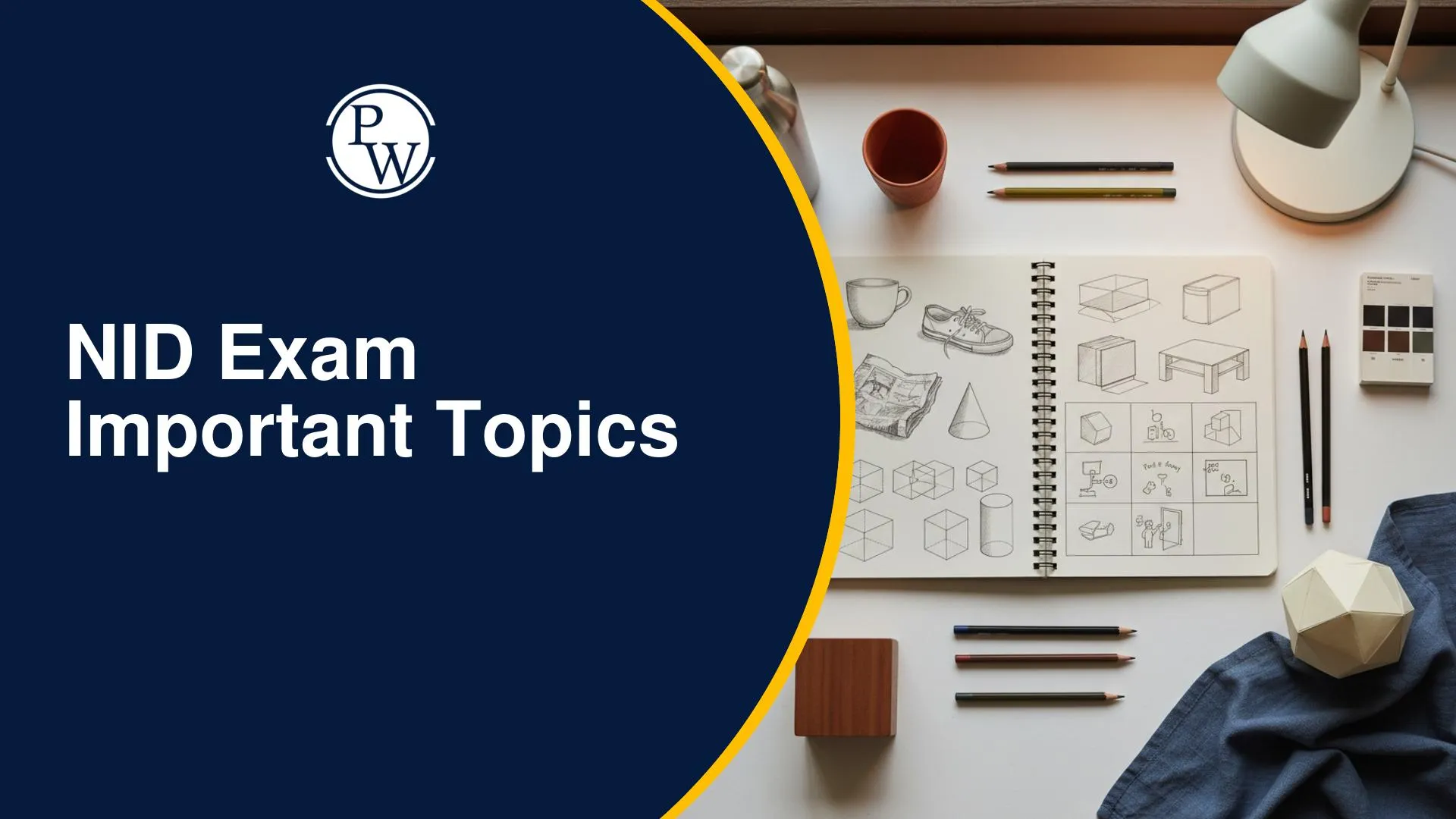
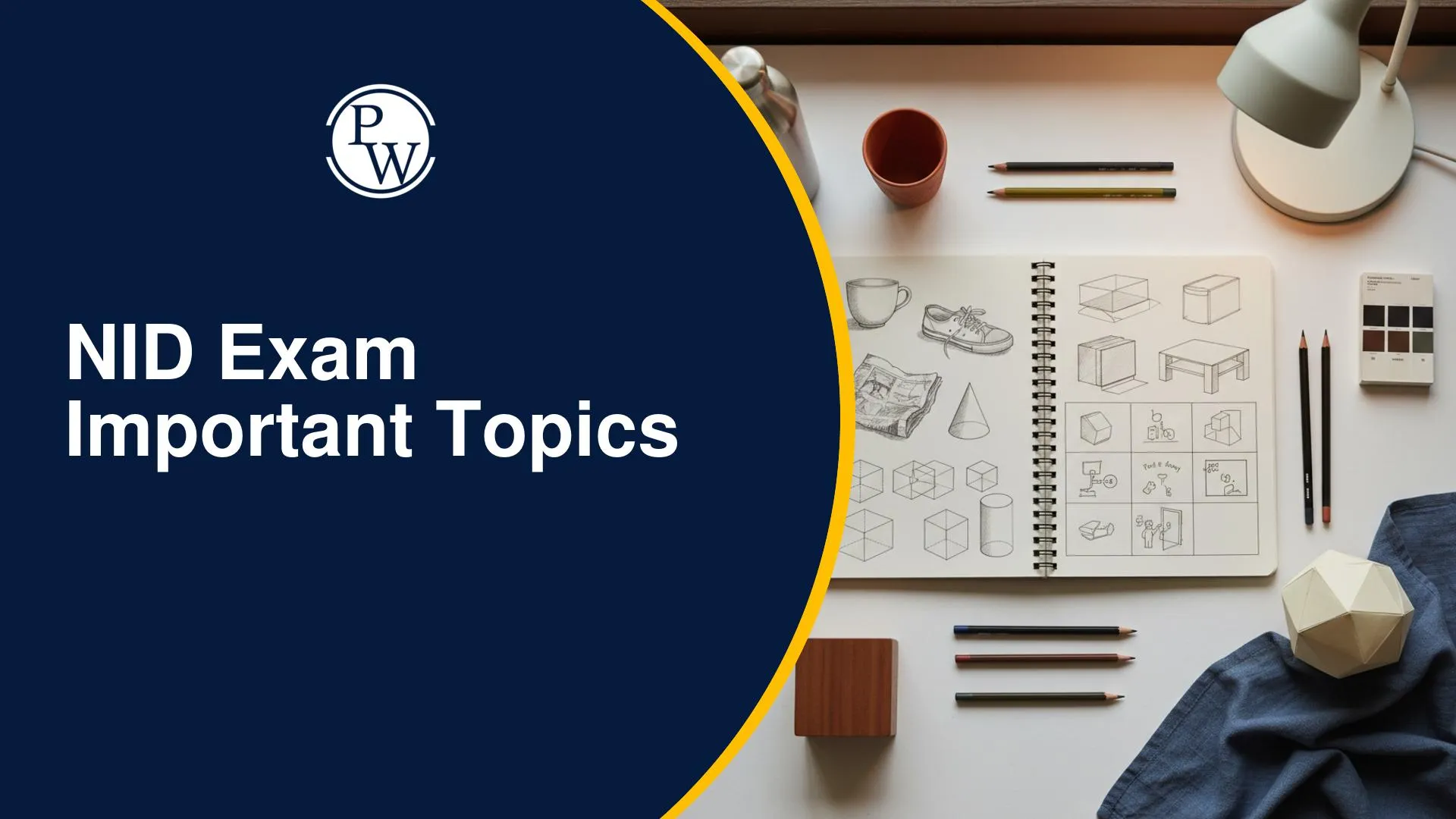
The National Institute of Design Design Aptitude Test ( NID DAT) evaluates a candidate's drawing skills, visualisation, creativity and understanding of design concepts. The examination covers different areas, including object drawing, product design, communication design, visual storytelling, and creative problem-solving.
Understanding these areas can help you organise your preparation and practise different types of design-based questions for NID DAT 2027.
NID Exam Important Topics 2027
The NID Exam Important Topics cover several areas, including observational drawing, communication design, product development, storytelling, and creative problem-solving. These areas help you understand the different ways in which design questions can be presented in the examination.
However, it is important to remember that NID DAT does not restrict questions to a fixed list of topics. A question may present an unfamiliar situation and ask you to develop an original solution using your observation and imagination.
For instance, you may be asked to design a water-carrying solution for a mountaineer or illustrate how a room would look without gravity. Such questions assess your ability to understand a problem and communicate your ideas through drawings.
For preparation, you can refer to the NID DAT 2027 complete guide and understand the examination requirements before starting topic-wise practice.
1. Observation and Object Drawing
Observation and object drawing are important parts of design preparation. You should practise drawing familiar objects while paying attention to their proportions, structure, surface quality and functionality.
The NID Object Drawing Important Topics include the following areas:
-
Everyday objects: Nails, stationery, utensils, bottles and household items.
-
Kitchen objects: Cooking tools, containers and appliances.
-
Furniture: Chairs, tables, cupboards and space-saving furniture.
-
Mechanical objects: Bicycles, fans, tools and their individual components.
-
Transparent objects: Glass bottles, containers and other objects with transparent surfaces.
-
Reflective surfaces: Metallic utensils, mirrors and polished objects.
-
Fabric folds: Different fabric textures, creases and draping patterns.
-
Hand-object proportions: Drawing hands holding, using or interacting with objects.
-
Object composition: Arranging three to five objects in a visually balanced composition.
You should also practise hatching, shading and rendering to represent different surface qualities. For example, you may be given an object silhouette and asked to show its material and texture through appropriate drawing techniques.
2. Visual Memory and Perspective Drawing
Visual memory drawing tests your ability to observe a scene and reproduce its important details without depending entirely on a reference image.
For this section, practise drawing situations that involve multiple people, movements and activities.
Some important areas include:
-
Railway stations and bus stops
-
Markets and street vendors
-
Classrooms and school assemblies
-
Parks and playgrounds
-
Festival celebrations
-
Traffic signals and road crossings
-
Accident scenes
-
Public gatherings
Perspective drawing is equally important. Instead of always asking you to draw a scene directly, a question may provide an image and ask you to recreate it from another person's point of view.
Practise changing viewpoints while maintaining correct proportions, spatial relationships and object placement. These exercises can strengthen your ability to represent a scene from different perspectives.
3. Communication Design
Communication design focuses on presenting information and messages through visual elements. Questions may require you to communicate an idea, promote awareness or create a visual identity for a particular purpose.
Important areas to practise include:
-
Poster and banner design
-
Social awareness campaigns
-
Logo design
-
Typography and visual composition
-
Social media posts
-
Infographics
-
Application interface layouts
-
Calendar design
-
Packaging design
-
Branding concepts
For example, you may be asked to create an awareness poster explaining digital payment safety to elderly people. Your design should communicate the message clearly and use suitable visuals, colours and text.
The NID DAT Important Topics also include communication exercises that test how effectively you can organise information for a specific audience. Therefore, practise creating designs with a clear purpose instead of focusing only on decoration.
4. Product Design and Problem-Solving
Product design questions generally assess your ability to identify everyday problems and develop practical solutions. You may be asked to redesign an existing object or create a product for people with particular requirements.
The NID Product Design Important Topics include:
-
Redesigning everyday objects
-
Space-saving furniture
-
Multifunctional products
-
Sustainable product design
-
Products for elderly people
-
Designs for children
-
Products for women and pregnant women
-
Inclusive designs for people with disabilities
-
Emergency shelter design
-
Urban problem-solving solutions
-
Eco-friendly product alternatives
While practising these topics, consider the user's needs, comfort, safety and ease of use.
For example, imagine designing a water bottle for a mountaineer. You would need to consider its weight, capacity, portability and ability to withstand outdoor conditions.
Similarly, a product designed for elderly people should consider accessibility, grip, visibility and ease of operation. Your drawings should communicate both the appearance and functionality of the proposed design.
5. Hypothetical and Imaginative Situations
NID may present situations that do not exist in everyday life and ask you to illustrate what could happen in those circumstances. These questions assess your imagination, logical thinking, and ability to develop original ideas.
Some useful NID Hypothetical Questions topics for practice include:
-
What if gravity suddenly disappeared?
-
What if trees developed self-defence mechanisms?
-
What if humans could fly?
-
What if animals ruled the world?
-
What if cities moved on wheels?
-
What would life underwater look like in 2050?
-
What if machines controlled human emotions?
-
How would the world function without electricity?
-
What if humans became invisible?
You may be asked to present your ideas through a perspective drawing, illustration or comic strip.
For example, imagine a child planting pea and corn seeds together. The next morning, the child discovers an unexpected result. You may be asked to sketch the outcome and show how the hybrid plant develops over time.
Such exercises require you to think beyond familiar situations while maintaining a logical connection between the problem and your proposed visual solution.
6. Storytelling and Sequential Drawing
Storytelling questions assess how well you communicate an idea through a sequence of illustrations. You may be required to show a process, explain an incident or develop a short visual narrative.
The NID Storytelling Important Topics include:
-
Comic strip creation
-
Sequential storytelling
-
Before-and-after situations
-
Step-by-step processes
-
Social issue-based narratives
-
Character transformation
-
Situation-based stories
-
Visual metaphor storytelling
For practice, choose a simple situation and represent it through a sequence of drawings. Each frame should contribute something to the overall story.
For example, you can illustrate how a public place changes after the introduction of proper waste management facilities. Your sequence should show the initial problem, the proposed intervention and the resulting change.
Focus on maintaining continuity between frames, using appropriate expressions and making the story understandable without lengthy explanations.
7. Design Sensitivity and Social Awareness
Design is closely connected to people's needs and the environment. Therefore, NID questions may assess whether you can identify social concerns and develop thoughtful design solutions. Important areas include:
-
Sustainability and climate change
-
Waste management
-
Water conservation
-
Mental health awareness
-
Gender equality
-
Rural innovation
-
Inclusive design
-
Public space improvement
For instance, you may be asked to design a dustbin that encourages people to dispose of waste correctly. Your solution could include suitable placement, clear visual instructions and a user-friendly opening.
How to Prepare These Topics for NID DAT 2027?
Knowing the topics is only the starting point. You should also develop a regular practice routine that combines drawing fundamentals with creative thinking.
Consider the following preparation methods:
-
Practise daily observation: Observe household objects, public spaces, people, and their activities. Try sketching what you notice.
-
Improve drawing fundamentals: Work on proportions, perspective, human anatomy, shading and rendering.
-
Solve design problems: Pick one everyday problem and develop multiple possible solutions before selecting one.
-
Build visual storytelling skills: Create short comic strips and sequential drawings based on different situations.
-
Stay aware of social issues: Follow environmental concerns, accessibility requirements, and developments that affect everyday life.
-
Attempt mock tests: Practise answering questions within a time limit to improve your speed and idea presentation.
You can also follow the NID 3-month preparation strategy to organise your study schedule. For additional practice, attempt the All India Open Mock 2027 for NID, NIFT and UCEED.
Preparing for NID DAT requires a combination of observation, imagination, drawing ability and practical problem-solving. The NID Exam Important Topics discussed above can help you organise your preparation and practise different question formats.
NID Exam Important Topics FAQs
What are the most important topics for NID DAT 2027?
Which drawing topics should I practise for the NID exam?
What type of product design questions are asked in NID DAT?
Are hypothetical questions important for NID DAT preparation?
How can I improve storytelling skills for the NID exam?


Have questions about your prep?
Our experts can answer all your questions











 Live & recorded classes available at easeDashboard for progress trackingMillions of practice questions at your fingertips


