






Vaccines for Emerging Infectious Diseases
Vaccines for Emerging Infectious Diseases are vital, offering proactive defense against evolving health threats. Know the details of different types of vaccines available for treating emerging infectious diseases.
 Nivedita Dar22 Apr, 2024
Share
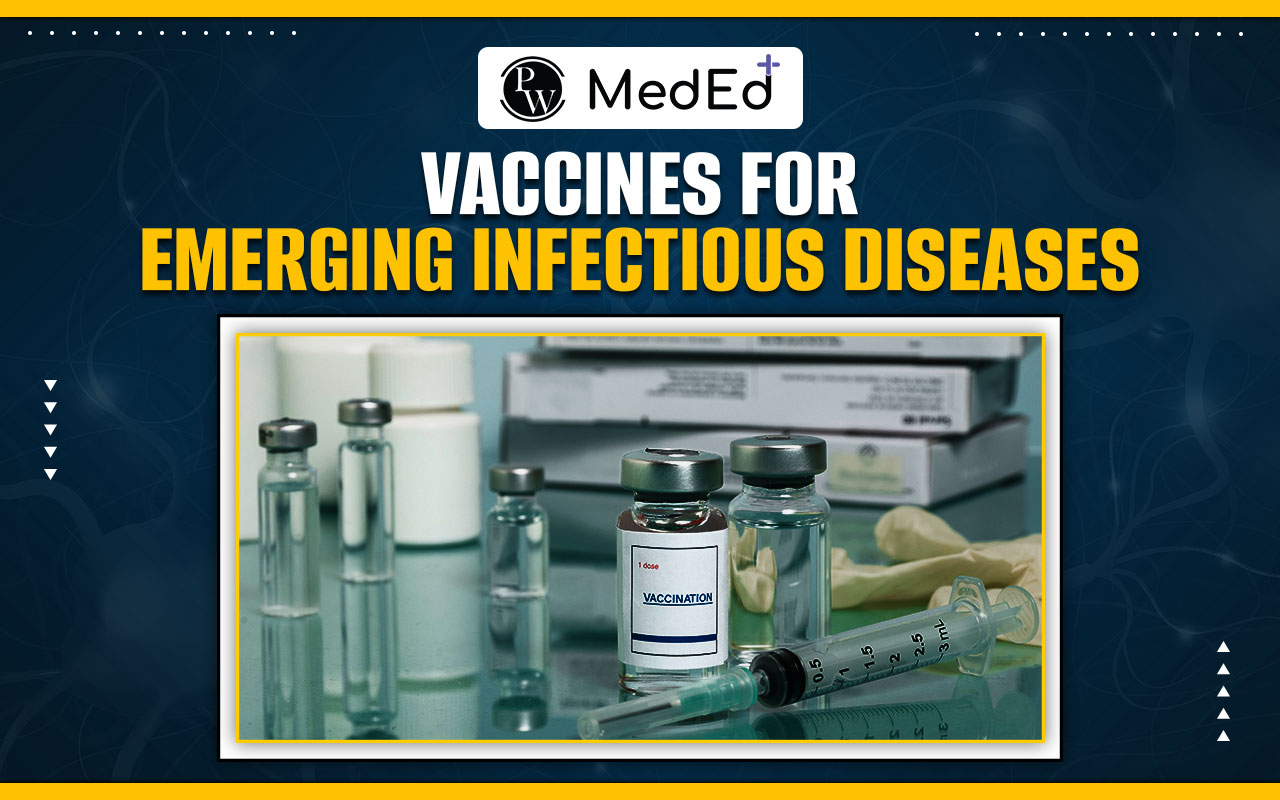
Vaccines for emerging infectious diseases: The rapid spread presents new hurdles for vaccine development, regulation, and distribution. While speed is crucial, ensuring safety, monitoring for variants, and equitable access are equally important.
In the last fifteen years, there have been many new infectious diseases. Each time a new disease appears, there's a need for quick vaccine development. It discusses the difficulties in making vaccines and how we test them to ensure they work against constantly changing diseases.Vaccines for Emerging Infectious Diseases Overview
New infectious diseases have threatened humanity for a long time; the following are the details mentioned about developing vaccines for emerging diseases.- Factors like population growth, urbanization, and travel contribute to the spread of infectious diseases.
- The COVID-19 pandemic, caused by the SARS-CoV-2 virus, had a significant impact worldwide, leading to millions of infections and deaths.
- Vaccines offer the best hope for controlling pandemics like COVID-19.
- This highlights the need for better surveillance, management, and global cooperation to control future disease threats.
Emerging and Reemerging Infectious Diseases
New infectious diseases have existed for ages, even before we knew what caused them. Despite progress in making tests, treatments, and vaccines, global travel and connections between countries make controlling these diseases harder. As human communities grow, there are more chances for new diseases to appear. A list of some infectious diseases that have emerged over the years is given below:- Yellow Fever: A disease spread by mosquitoes, common in Africa and South America. There have been outbreaks in countries like Angola, Congo, Nigeria, and Brazil. There are vaccines available, but there have been concerns about having enough supply.
- Dengue: Another mosquito-borne disease that is spreading in many countries. Around 400 million people get dengue each year, with up to 22,000 deaths. One vaccine, Dengvaxia, is licensed in many countries but not widely used due to safety concerns.
- Cholera: A bacterial disease causing severe diarrhea, often in Asia and Africa. Antibiotic resistance is growing, making treatment more challenging. Vaccines are available and used during outbreaks.
- Typhoid fever: A severe bacterial disease with more drug-resistant strains, especially in Pakistan and India. New vaccines are being developed to fight these resistant strains.
Quick COVID-19 Vaccine Development: Key Factors
Vaccine development usually takes 5 to 10 years, but this is too slow during an epidemic. The Ebola outbreak in 2014 lasted over two years, allowing time to develop and test vaccines. However, with COVID-19, the entire process, from sequencing the virus to testing vaccines, took under 300 days. COVID-19 vaccines developed in under a year is a significant scientific achievement, sparking hope for future vaccine advancements. Below are the key highlights behind the success of COVID-19, and this model can be used for other emerging infectious diseases.- New Technologies: mRNA, viral vector technologies, and recombinant protein approaches were important in quick vaccine development.
- Helpful in Other Diseases: These new vaccine platforms may also benefit diseases like HIV, malaria, and tuberculosis (TB), although success isn't guaranteed.
- Funding and Support: Funding accelerated vaccine development, allowing for simultaneous preclinical studies, trials, and manufacturing.
- Future Investments: Increased funding for neglected and emerging diseases could bring significant global health benefits.
- Governance Innovations: Initiatives like the Coalition for Epidemic Preparedness Innovations (CEPI) helped pivot efforts towards COVID-19 vaccines and could be done the same for other diseases.
- Global Distribution: Lessons learned from COVID-19 vaccine distribution highlight the need for equal allocation systems based on principles of fairness and justice.
Different Types of Vaccines for Treating Emerging Infectious Diseases
The type of vaccines generated is based on its manufacturing materials. The table below mentions the types of vaccines with examples:| Vaccine Types for Emerging Infectious Diseases | ||
| Vaccine Type | Examples | Manufacturing Requirements |
| Live attenuated |
|
Biosafety level 3 manufacturing plant for handling dangerous viruses |
| Whole inactivated |
|
Biosafety level 3 manufacturing plant for dangerous viruses; needs adjuvant; HPB regimens possible |
| DNA |
|
|
| mRNA |
|
Rapidly adaptable to new emerging viruses; HPB regimens possible; ultracold chain currently impractical for large-scale use in resource-limited settings |
Challenges Faced During Vaccine Development
There are various challenges faced during the development of vaccines, some of which are listed below:- Studies comparing immune responses could replace endpoint trials.
- Finding immune protection clues is tough.
- Trials might not fully show how vaccines benefit whole populations.
- Future trials might focus on vaccine effectiveness and group protection.
- Whether trials will use clinical endpoints or immune responses is uncertain.
- It's hard to find immune clues, especially with highly effective vaccines.
- Safety and risks like enhanced respiratory disease need careful study.
Strategies to Expedite Vaccine Availability and Distribution
Manufacturing vaccines quickly is challenging due to technical platforms, dosages, schedules, and manufacturer capabilities. Below are the details given to speed up the availability of diseases.- Vaccine nationalism and bilateral agreements between high-income countries and manufacturers can impact initial vaccine access.
- The Developing Countries Vaccine Manufacturers Network (DCVMN) aims to increase the availability and affordability of vaccines, with its members supplying a large portion of global vaccine needs.
- Technology transfers to DCVMN members have contributed significantly to global health, such as the oral cholera vaccine.
- For COVID-19 vaccines, many companies have licensed production to other manufacturers worldwide.
- Practical aspects like supply, dosing, and storage need optimization for more comprehensive vaccine implementation.
- Some vaccines require ultracold storage because of scalability challenges, while research is ongoing to assess the effectiveness of single doses.
Vaccines for Emerging Infectious Diseases FAQs
What disease was first eradicated through vaccination?
Smallpox is the first disease to be eradicated through vaccination.
Which type of pathogen is used in vaccination?
In the case of live attenuated vaccines, the body is given attenuated pathogens.
Who is the father of vaccination?
Dr Edward Jenner created the world’s first successful vaccine.
Which are killed vaccines?
Killed vaccines are taken from a protein or other small pieces of a virus or a bacteria.
🔥 Trending Blogs


Talk to a counsellorHave doubts? Our support team will be happy to assist you!


Check out these Related Articles








Join 15 Million students on the app today!
 Live & recorded classes available at easeDashboard for progress trackingMillions of practice questions at your fingertips


Free Learning Resources
PW Books
Notes (Class 10-12)
PW Study Materials
Notes (Class 6-9)
Ncert Solutions
Govt Exams
Our Other Websites
Class 6th to 12th Online Courses
Govt Job Exams Courses
UPSC Coaching
Defence Exam Coaching
Gate Exam Coaching
Other Exams
Know about Physics Wallah
Physics Wallah is an Indian edtech platform that provides accessible & comprehensive learning experiences to students from Class 6th to postgraduate level. We also provide extensive NCERT solutions, sample paper, NEET, JEE Mains, BITSAT previous year papers & more such resources to students. Physics Wallah also caters to over 3.5 million registered students and over 78 lakh+ Youtube subscribers with 4.8 rating on its app.
We Stand Out because
We provide students with intensive courses with India’s qualified & experienced faculties & mentors. PW strives to make the learning experience comprehensive and accessible for students of all sections of society. We believe in empowering every single student who couldn't dream of a good career in engineering and medical field earlier.
Our Key Focus Areas
Physics Wallah's main focus is to make the learning experience as economical as possible for all students. With our affordable courses like Lakshya, Udaan and Arjuna and many others, we have been able to provide a platform for lakhs of aspirants. From providing Chemistry, Maths, Physics formula to giving e-books of eminent authors like RD Sharma, RS Aggarwal and Lakhmir Singh, PW focuses on every single student's need for preparation.
What Makes Us Different
Physics Wallah strives to develop a comprehensive pedagogical structure for students, where they get a state-of-the-art learning experience with study material and resources. Apart from catering students preparing for JEE Mains and NEET, PW also provides study material for each state board like Uttar Pradesh, Bihar, and others
Copyright © 2026 Physicswallah Limited All rights reserved.