VLSI vs Embedded Systems vs Robotics: Which Career Path Is Right for You

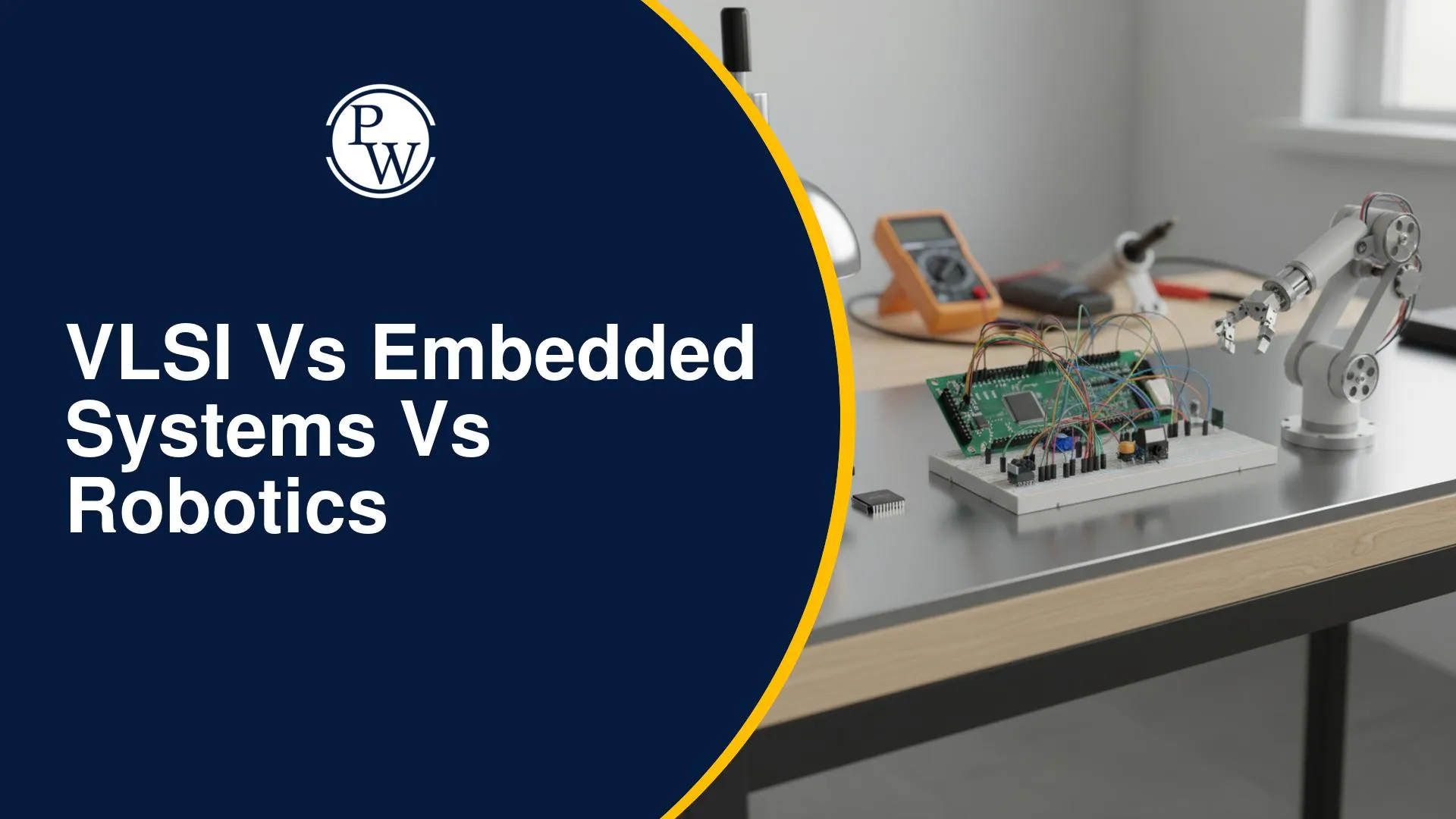
Students from electronics, electrical, and related engineering branches may find it difficult to decide between VLSI, Embedded Systems, and Robotics. Although these fields are connected to electronics and technology, they differ in the type of work, skills, and systems involved.
VLSI focuses on chip design, while Embedded Systems deals with programming devices and machines. Robotics takes a broader approach by combining electronics, programming, control systems, sensors, motors, and other technical areas to build intelligent machines. Understanding these differences can help students identify the field that best matches their interests and career goals.
VLSI vs Embedded Systems vs Robotics Key Differences
The main difference between these fields is the type of technology and work involved. Understanding this distinction can help students identify the area that matches their interests.
|
Field |
Main Focus |
Key Areas |
|
VLSI |
Chip designing |
Digital electronics, analogue design, RTL design, verification, physical design and testing |
|
Embedded Systems |
Programming devices and systems |
C/C++, microcontrollers, ARM architecture, Embedded C, RTOS and hardware debugging |
|
Robotics |
Building intelligent machines |
Control systems, programming, computer vision, sensors, motors, actuators and AI/ML |
What Is VLSI?
VLSI is mainly related to chip design. The field includes roles such as analogue design, digital design, fabrication, testing and verification. The chip contains the circuitry that enables electronic devices to perform specific functions.
Important VLSI areas mentioned in the session include digital electronics, EDC, analogue concepts, CMOS fundamentals, RTL design, functional verification, timing analysis, physical design and EDA tools. Career roles can include RTL Design Engineer, Verification Engineer, Physical Design Engineer, Analogue Engineer and DFT Engineer.
What Is Embedded Systems?
Embedded systems focus on programming a device or machine and giving it instructions about how it should operate. Microcontrollers are one example where programming is used to control the functioning of a system.
The skills discussed include C and C++, microcontrollers, ARM architecture, Embedded C, RTOS, Embedded Linux, UART, SPI, CAN and hardware debugging. Embedded Systems also have applications in areas such as automotive electronics, IoT and Edge AI.
What Is Robotics?
Robotics focuses on building intelligent machines. It brings together multiple technical areas rather than focusing on only one domain. A robotics system can involve programming, electronics, mechanical balance and control engineering.
The skills mentioned for Robotics include control systems, C++, Python, computer vision, sensors, LiDAR, motors, actuators and AI/ML for advanced robotics.
Core Skills Comparison: VLSI vs Embedded Systems vs Robotics
Each technology requires a different set of technical skills. VLSI focuses mainly on chip design and verification, Embedded Systems combines software with hardware, while Robotics brings together embedded systems, programming, sensing, control and intelligent technologies.
|
Field |
Core Skills Required |
|
VLSI |
Digital Electronics, CMOS, Verilog/SystemVerilog, RTL Design, Functional Verification, STA, Physical Design and EDA Tools |
|
Embedded Systems |
C/C++, Microcontrollers, ARM Architecture, Embedded C, RTOS, Embedded Linux, Communication Protocols and Hardware Debugging |
|
Robotics |
Embedded Systems, C++/Python, ROS/ROS 2, Computer Vision, Radar/LiDAR, SLAM & Navigation, Motors & Actuators, and AI/ML |
Career Scope and Industry Applications
VLSI, Embedded Systems and Robotics are connected to different areas of the technology industry. VLSI is closely associated with semiconductor design and manufacturing, Embedded Systems is widely used in electronic and automotive systems, and Robotics focuses on automation and intelligent machines.
|
Field |
Career and Industry Areas |
|
VLSI |
Semiconductor design, chip development, verification, physical design, semiconductor manufacturing and packaging |
|
Embedded Systems |
EVs, automotive electronics, IoT, smart devices, Edge AI and connected systems |
|
Robotics |
Smart factories, drones, warehouse automation, medical devices, defence systems and autonomous machines |
VLSI Growth in India
India's growing semiconductor ecosystem is creating opportunities across chip design, semiconductor manufacturing and packaging. Areas such as fabs, OSAT/ATMP and compound semiconductors are contributing to the development of the sector.
Embedded Systems and Robotics Growth Areas
Embedded Systems and Robotics are being used across several technology-driven applications. EVs and automotive electronics, smart factories, drones, warehouse automation, medical devices, defence systems and autonomous machines are among the areas where these technologies are applied.
Top Companies Hiring in VLSI, Embedded Systems, Automotive, Robotics and Automation
Companies across the semiconductor, embedded, automotive, robotics and automation industries hire professionals with relevant technical skills. Some examples are:
|
Technology Area |
Companies |
|
VLSI / Semiconductor |
NVIDIA, Qualcomm, AMD, Intel, Texas Instruments, Micron, Synopsys and Cadence |
|
Embedded / Automotive |
Bosch, Continental, NXP, STMicroelectronics, Tata Elxsi and KPIT |
|
Robotics / Automation |
ABB, Siemens, Honeywell and Larsen & Toubro (L&T) |
Which Field Should You Choose?
The right choice depends on the type of technology and work that interests you. Students interested in chip design, semiconductor technology and hardware architecture can explore VLSI. Those interested in programming devices, microcontrollers and hardware-software integration can consider Embedded Systems. Students who want to work with intelligent machines, sensors, control systems, computer vision and automation can explore Robotics.
|
If You Are Interested In |
You Can Explore |
|
Chip design and semiconductor technology |
VLSI |
|
Programming devices and hardware-software integration |
Embedded Systems |
|
Intelligent machines, automation and robotics |
Robotics |
All three fields offer different career paths and require continuous skill development. The best option depends on your interests, technical strengths and the type of work you want to pursue.
Build Your Technical Foundation with PW
Choosing between VLSI, Embedded Systems and Robotics requires a strong understanding of core engineering concepts and consistent preparation. Students from engineering backgrounds can strengthen their fundamentals through structured learning and exam-oriented preparation with PW. GATE preparation can also help build a strong foundation in subjects relevant to electronics and related engineering domains, while providing a focused approach to technical concepts, practice and revision.
Students looking for structured preparation can explore PW GATE Online Batches to strengthen their subject knowledge and prepare for the GATE examination.
VLSI, Embedded Systems and Robotics offer different career paths based on your interests and technical skills. VLSI focuses on chip design, Embedded Systems on hardware-software integration, and Robotics on intelligent machines and automation. Understanding their skills, applications and career scope can help you choose the field that best matches your goals.
FAQs
What is the main difference between VLSI and Embedded Systems?
What skills are important for VLSI?
What skills are required for Embedded Systems?
What skills are required for Robotics?
Is VLSI connected to Robotics?
Which is better among VLSI, Embedded Systems and Robotics?




 Live & recorded classes available at easeDashboard for progress trackingMillions of practice questions at your fingertips