







Chemistry Periodic Classification and Periodicity JEE Formulae by Physics Wallah
 Avisha Das11 Jul, 2026
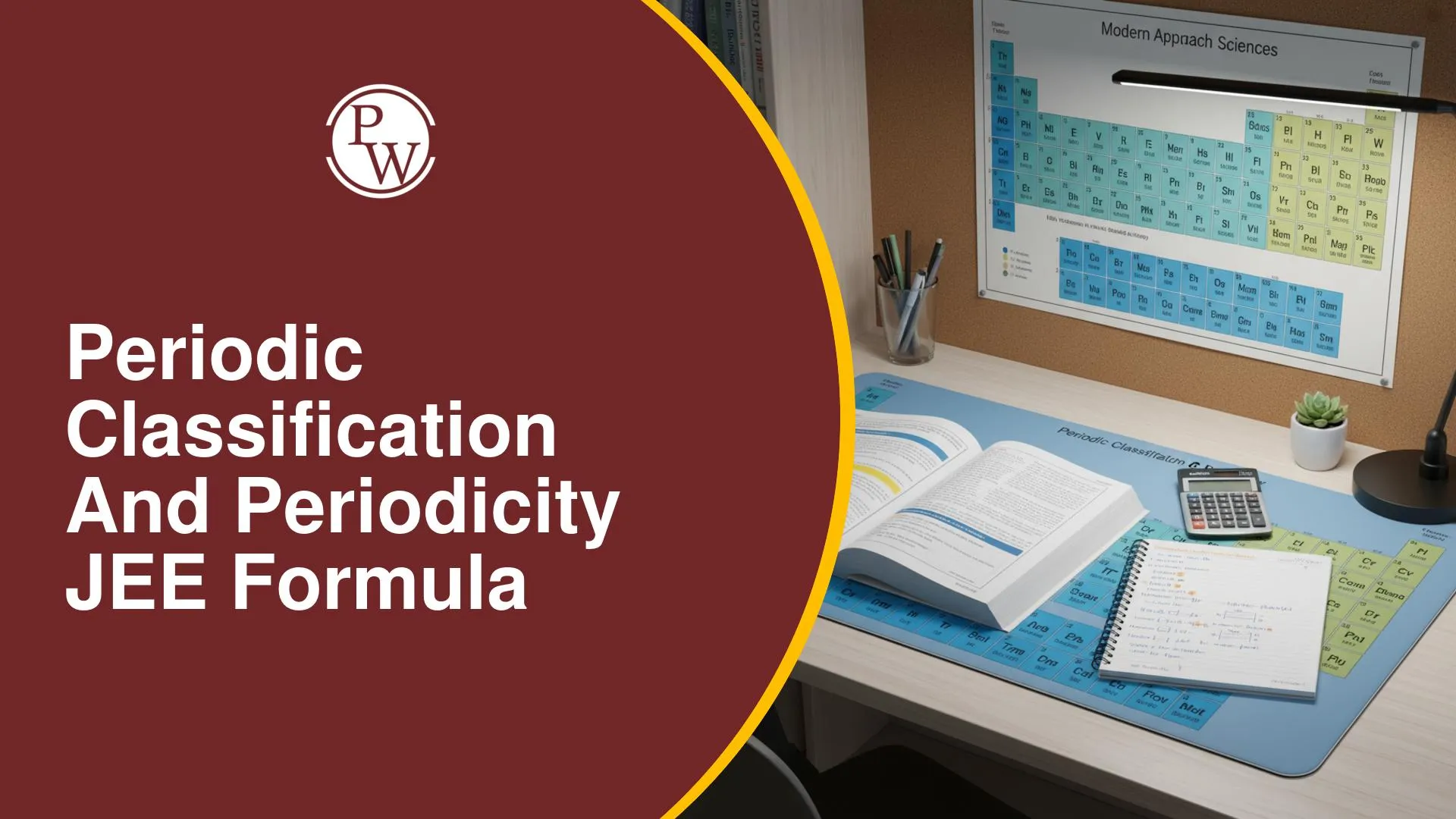
The periodic table is often described as the map of Chemistry. At first glance, it appears to be a simple arrangement of elements, but hidden within its rows and columns are patterns that explain the behaviour of nearly every known element.
Periodic Classification and Periodicity explores these recurring trends and shows how atomic structure influences chemical properties. Rather than memorising isolated facts, the chapter helps you understand why elements behave differently as you move across periods and down groups. Physics Wallah provides Periodic Classification and Periodicity JEE formulae to help you revise the important relationships and strengthen your understanding of periodic behaviour.
Periodic Classification and Periodicity JEE Formulae PDF
Although this chapter is largely trend-based, it contains several important relationships and definitions that are frequently applied in conceptual and numerical questions. Revising them together can help improve retention and analytical thinking.
The formulae PDF provides a focused revision resource for revisiting important concepts before mock tests, question practice, and examinations.
Periodic Classification and Periodicity JEE Formulae PDF
Why Use PW Periodic Classification and Periodicity JEE Formula Sheet?
The chapter requires students to compare properties across different elements and predict behaviour using periodic trends. Regular revision helps make these comparisons quicker and more intuitive.
1. Helps Decode Element Behaviour
Periodic trends provide valuable clues about how elements react and interact. Revising the key relationships helps strengthen these interpretations.
2. Improves Trend-Based Question Solving
Many JEE questions test comparative reasoning rather than direct memorisation. Formula and trend revision helps improve decision-making.
3. Makes the Periodic Table More Meaningful
The chapter transforms the periodic table from a list of elements into a logical system governed by recurring patterns.
4. Supports Better Concept Linking
Several topics in Chemistry rely on periodic properties. Revisiting the formulas and trends helps connect ideas across chapters.
5. Useful for Quick Revision Before Exams
A dedicated formula sheet allows you to review important relationships and periodic patterns without revisiting extensive theory.
Also Check:
- JEE Main formulas
- JEE Advanced formulas
- JEE Main Physics formulas
- JEE Main Maths formulas
- JEE Main Chemistry formulas
|
Chemistry Formulas |
||
Periodic Classification and Periodicity JEE Formulae FAQs
Which formulas and relationships are important from Periodic Classification and Periodicity for JEE?
Why is this chapter important in Chemistry?
Does Physics Wallah provide other resources for this topic?









Get Free Counselling Today
and Clear up all your Doubts
 Live & recorded classes available at easeDashboard for progress trackingLakhs of practice questions

