







Chemistry Redox Reactions and Equilibrium JEE Formulae by Physics Wallah
 Avisha Das11 Jul, 2026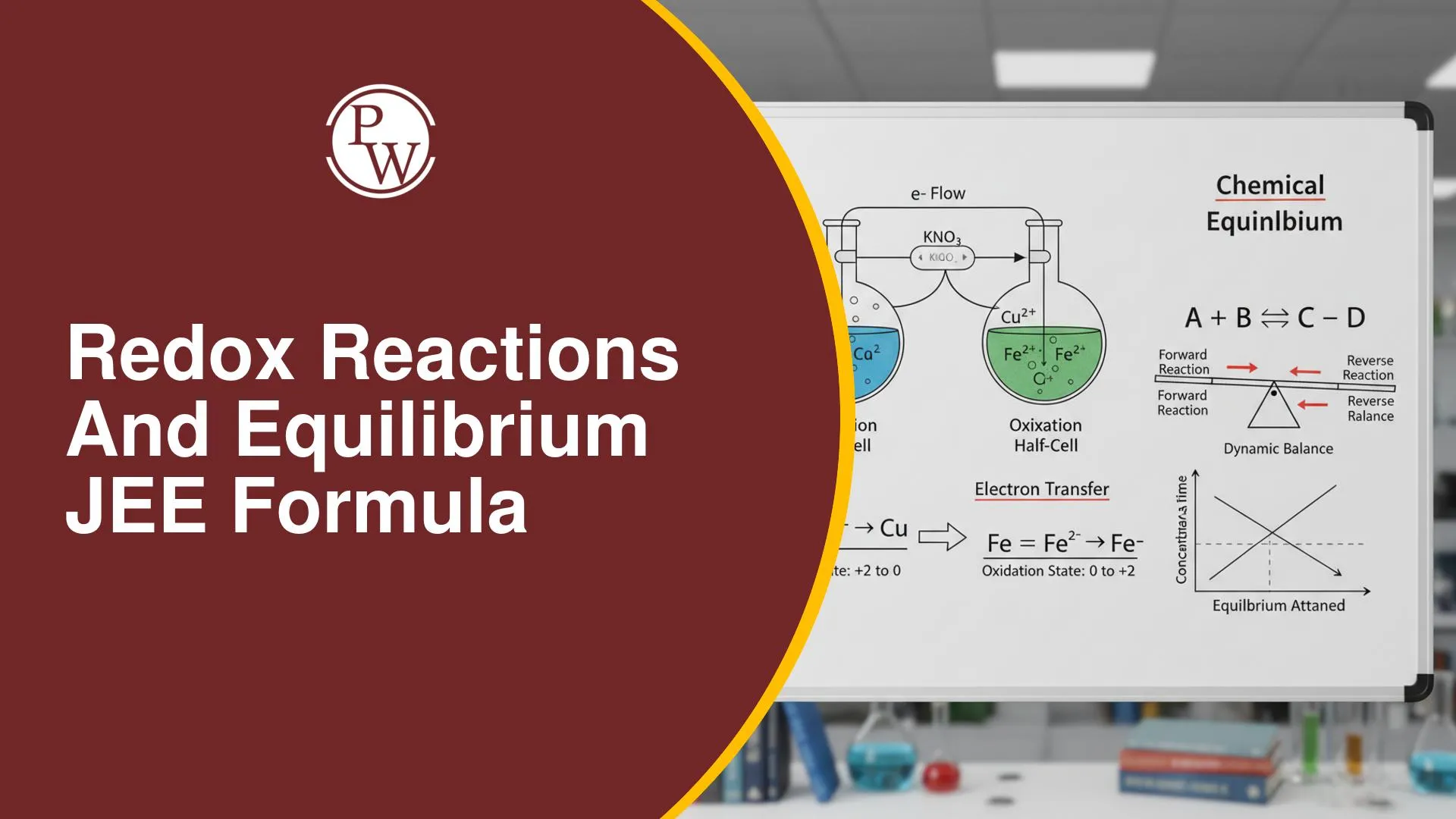
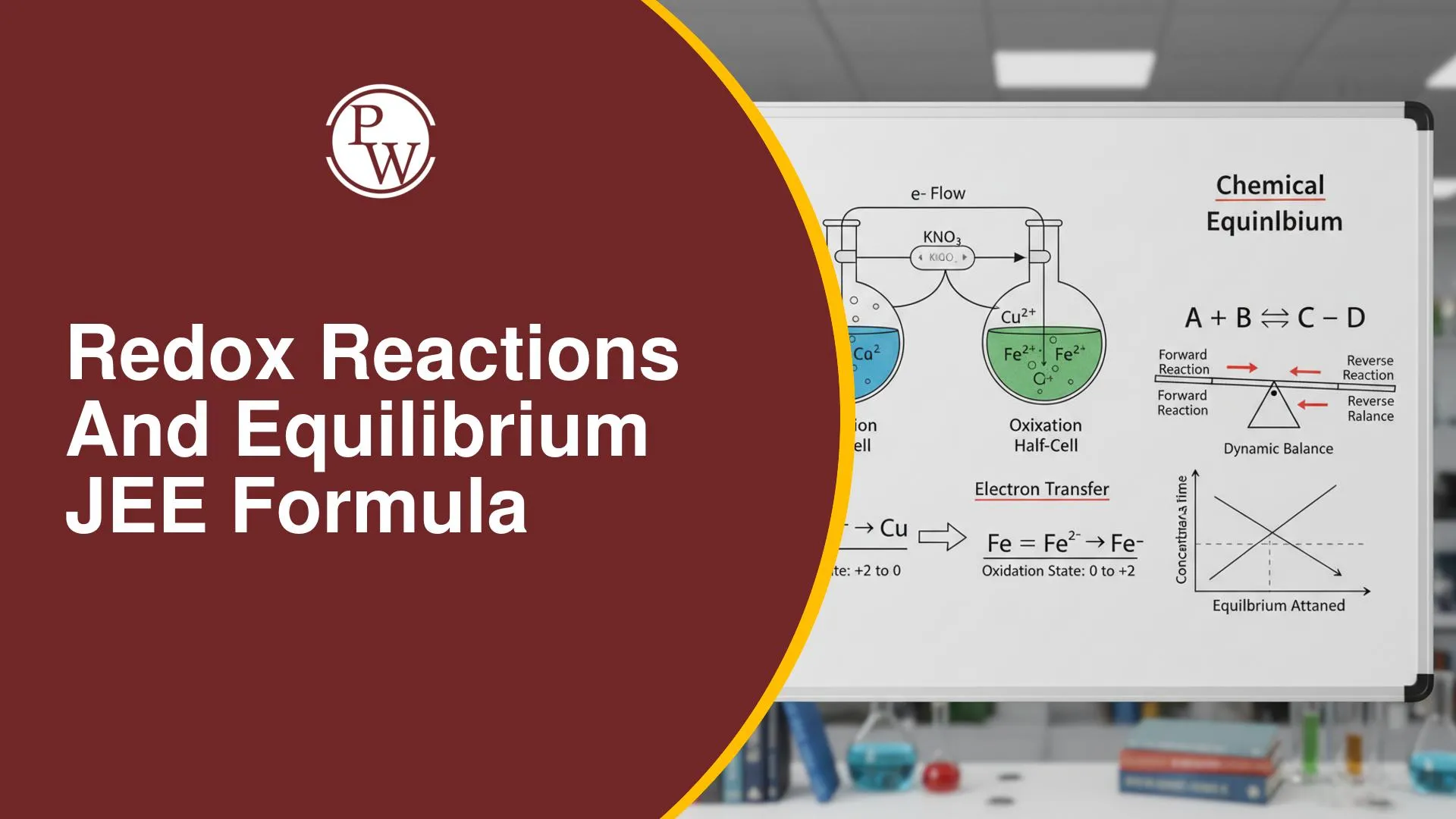
Many chemical reactions involve a constant tug-of-war. In some, electrons move from one species to another, driving oxidation and reduction processes. In others, forward and reverse reactions compete until a dynamic balance is established. Together, these phenomena help explain countless chemical and biological systems.
Redox Reactions and Equilibrium brings together two powerful concepts that allow chemists to predict reaction behaviour and quantify chemical change. The chapter blends conceptual understanding with mathematical relationships, making formula revision essential for accurate problem-solving. Physics Wallah provides Redox Reactions and Equilibrium JEE formulae to help you revisit these important relationships and strengthen your preparation.
Redox Reactions and Equilibrium JEE Formulae PDF
The chapter contains formulas related to oxidation number methods, equivalent mass concepts, equilibrium constants, degree of dissociation, and ionic equilibrium calculations. Revising these relationships together can help improve both conceptual clarity and numerical accuracy.
The formulae PDF serves as a handy revision resource for mock tests, practice sessions, and final exam preparation.
Redox Reactions and Equilibrium JEE Formulae PDF
Why Use PW Redox Reactions and Equilibrium JEE Formula Sheet?
This chapter combines reaction analysis with quantitative calculations. Regular formula revision helps improve confidence when dealing with both aspects simultaneously.
1. Helps Understand Chemical Balance
The chapter explains how chemical systems achieve stability despite continuous molecular activity. Revisiting the formulas helps reinforce this understanding.
2. Improves Accuracy in Reaction-Based Calculations
Many questions involve multiple steps and calculations. Familiarity with the formulas helps reduce common mistakes.
3. Supports Better Interpretation of Chemical Changes
Formula revision helps clarify how reactants, products, and reaction conditions influence one another.
4. Strengthens Problem-Solving Across Different Question Types
The chapter includes conceptual, analytical, and numerical questions. Regular review of formulas helps prepare for each of these formats.
5. Builds a Foundation for Advanced Chemistry Topics
The principles introduced here are applied in electrochemistry, chemical kinetics, and other higher-level chemistry chapters.
Also Check:
- JEE Main formulas
- JEE Advanced formulas
- JEE Main Physics formulas
- JEE Main Maths formulas
- JEE Main Chemistry formulas
|
Chemistry Formulas |
||
Redox Reactions and Equilibrium JEE Formulae FAQs
Which formulas are most important from Redox Reactions and Equilibrium for JEE?
Why is equilibrium called a dynamic process?
Are numerical questions common in this chapter in JEE?
Does Physics Wallah provide other resources for this topic?









Get Free Counselling Today
and Clear up all your Doubts
 Live & recorded classes available at easeDashboard for progress trackingLakhs of practice questions

