What Is a Glacial Lake Outburst Flood (GLOF): Why Is It a Growing Risk for Bhutan and India?


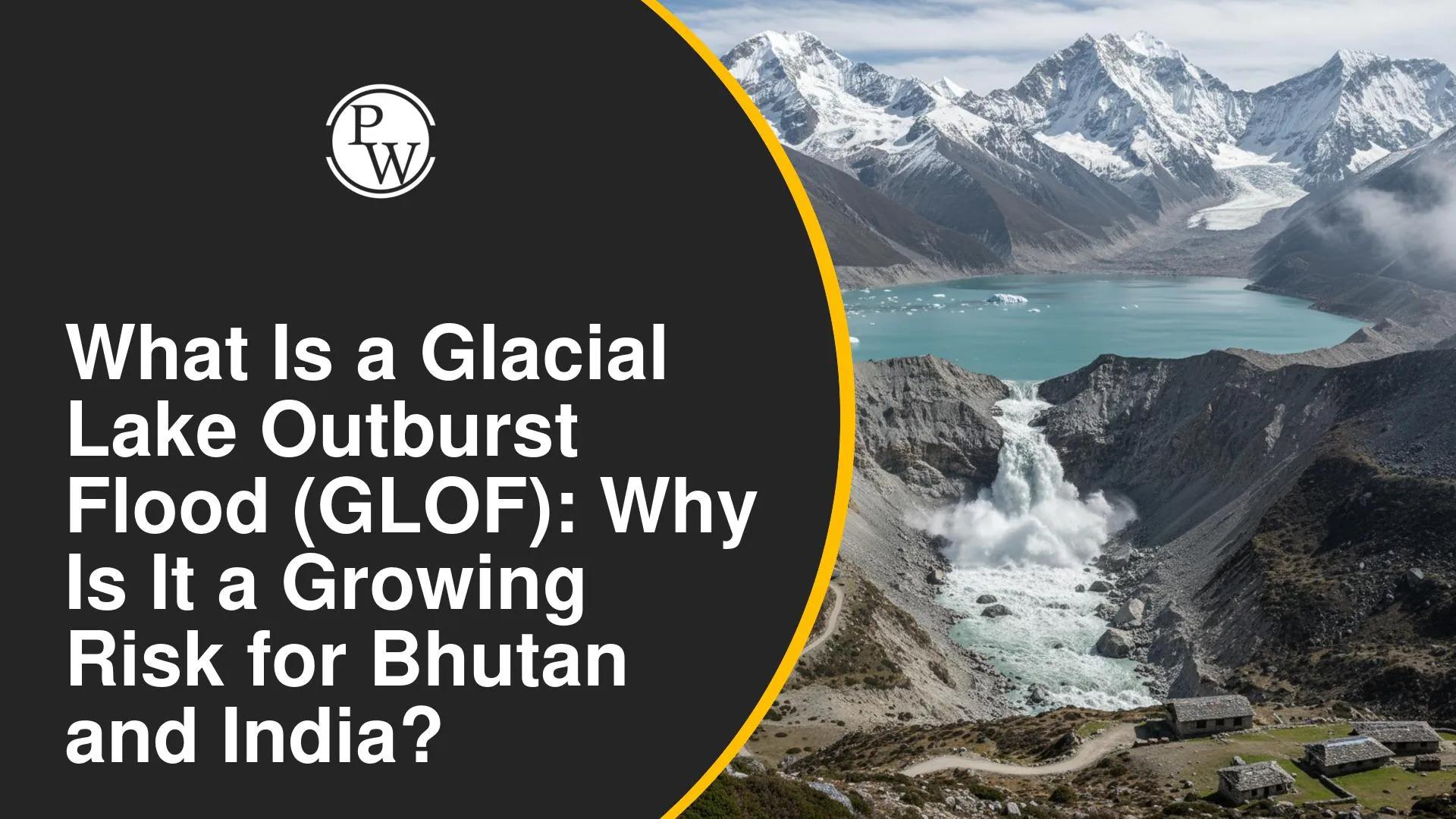
A sudden flood in a mountainous region can release huge volumes of water, rocks and debris into downstream areas. This phenomenon is known as a Glacial Lake Outburst Flood (GLOF). It occurs when a natural barrier holding water in a glacial lake suddenly breaks, releasing the accumulated water into nearby valleys and river systems.
Rising temperatures and glacial retreat are increasing concerns about GLOF risks across the Himalayas. A flood originating in Bhutan can also affect downstream regions in India, including parts of West Bengal and Assam. Understanding how GLOFs occur, why they are dangerous and how authorities can manage the risk is important for geography, environment and disaster-management preparation.
What is a Glacial Lake Outburst Flood (GLOF)?
A Glacial Lake Outburst Flood (GLOF) is a sudden release of water from a glacial lake in a mountainous region. Natural barriers usually hold these lakes in place. When a barrier fails, a large volume of water, rocks and debris can rush downstream, causing severe flooding.
The risk is increasing across the Himalayas because of climate-related changes, including rising temperatures and glacial retreat. These changes can lead to the formation and expansion of glacial lakes, increasing the potential danger for communities located downstream.
GLOF is also relevant to the Current Affairs and General Knowledge section of law entrance examinations. You can refer to the CLAT 2027 syllabus to understand the topics covered in this section.
How Do Glacial Lakes Form, and What Causes Them to Burst?
Glacial lakes form when glaciers melt, and water collects in depressions near mountain slopes or river headwaters. Natural barriers made of ice, rock, soil or glacial sediment usually hold the accumulated water.
A lake can remain stable as long as its natural barrier stays intact. However, pressure from stored water, erosion, slope movement or other physical changes may cause the barrier to fail. The sudden release of water can then create a powerful flood that travels through river valleys.
A GLOF event associated with Bhutan identifies the lake as Shinta Pool Lake. It mentions the event date as 20 October.
Why is GLOF Risk Increasing in the Himalayan Region?
Rising temperatures are changing the Himalayan landscape and increasing the potential for glacial lake outbursts. Several connected environmental changes contribute to this risk:
-
Rising temperatures: Higher temperatures increase glacier melting and the availability of meltwater.
-
Glacial retreat: As glaciers shrink, water may collect in depressions left behind by the retreating ice.
-
Formation of glacial lakes: Meltwater accumulates near glaciers, mountain slopes and river headwaters.
-
Expansion of existing lakes: Larger lakes can store greater volumes of water, increasing the possible impact of a sudden release.
-
Natural barrier failure: Changes in pressure, erosion or surrounding slopes may weaken the barriers holding the water.
17 potentially dangerous glacial lakes have been identified in Bhutan. Their location in a mountainous and river-connected region makes regular monitoring important for Bhutan and downstream areas of India.
How Does a Glacial Lake Outburst Flood Occur?
A GLOF develops through a series of connected events. Understanding this sequence helps explain why a sudden lake outburst can cause extensive damage.
-
Glaciers melt: Rising temperatures increase melting in mountainous regions.
-
Glacial lakes form: Meltwater collects near glaciers, slopes or river headwaters.
-
Natural barriers hold the water: Ice, rock, soil, or glacial sediment temporarily contains the accumulated water.
-
The barrier fails: Pressure, erosion, slope movement or other physical changes may cause the barrier to break.
-
Floodwater moves downstream: A large volume of water, rocks and debris rushes through valleys and river channels.
-
Downstream areas face flooding: Settlements, roads, bridges, farmland and other infrastructure may suffer damage.
The speed and force of the flood make GLOFs particularly dangerous. Communities downstream may have very little time to respond if monitoring and early warning systems are inadequate.
Along with environmental events, regular newspaper reading can help you connect current developments with examination topics. Refer to PW's The Hindu Newspaper Analysis for CLAT 2027 for examples of current-affairs coverage.
What Happens When a Glacial Lake Is Stable or Its Barrier Breaks?
The condition of a glacial lake's natural barrier determines whether the stored water remains contained or is released suddenly.
|
Lake condition |
Possible outcome |
|
Natural barrier remains intact |
Water remains stored in the glacial lake. |
|
Natural barrier suddenly breaks |
Water, rocks and debris rush downstream, causing a flood. |
This comparison highlights why monitoring natural barriers is important. A sudden breach can turn a glacial lake into a major flood hazard, putting downstream communities and infrastructure at risk.
Which Indian States and Regions Could Be Affected by a GLOF from Bhutan?
A flood originating in Bhutan can travel through connected river systems and affect downstream areas in India. Here are the following locations:
-
West Bengal: Alipurduar
-
Assam: Dibrugarh
These areas may experience flooding when large volumes of water and debris enter downstream river channels. The possible effects include damage to homes, roads, bridges, agricultural land, communication networks and public facilities.
As a precaution, authorities issued alerts to thousands of people and shifted residents to safer locations. National Disaster Response Force (NDRF) and State Disaster Response Force (SDRF) teams were also placed on standby. Such measures help reduce the risk to human life during sudden flood events.
How Can India and Bhutan Reduce the Risk of GLOF Disasters?
GLOF management requires preparation before a possible outburst, a timely response during an emergency and support for affected communities afterwards.
-
Monitoring and Early Warning Systems
Regular monitoring of potentially dangerous glacial lakes can help authorities identify changes in lake size, water levels and surrounding barriers. Field surveys, satellite imagery and scientific assessments can support this process.
Early warning systems can give downstream communities more time to prepare and evacuate when a possible outburst is detected.
-
Risk Mapping in Himalayan Regions
Authorities need to identify settlements, roads, bridges and critical infrastructure located in vulnerable areas. Hazard maps can help identify high-risk locations, plan evacuation routes and mark safer zones for residents.
-
Public Alerts and Evacuation Plans
Residents need timely and clear warnings through local administration, communication networks and emergency services. Communities should also know their evacuation routes and the locations of nearby safe zones.
-
Role of NDRF and SDRF in GLOF Management
NDRF and SDRF teams support rescue and emergency operations during disasters. Rescue equipment, medical assistance, temporary shelters and reliable communication systems are important for responding to affected areas.
Why is GLOF an Important Topic for Competitive Examinations?
GLOF connects several important areas of current affairs, geography, environmental studies and disaster management. Questions may test your understanding of the following topics:
-
Full form and meaning of GLOF.
-
Relationship between rising temperatures, glacial retreat and glacial lake formation.
-
Causes and stages of a glacial lake outburst.
-
Possible effects of GLOFs on downstream regions.
-
Indian locations that may be affected by floods originating in Bhutan.
-
Roles of NDRF and SDRF in disaster response.
-
Early warning, risk mapping and evacuation measures.
You can also connect this topic with major Himalayan flood events, including the 2023 flash flood in Sikkim. Revising such events can help you understand the wider environmental and disaster-management challenges faced by Himalayan states.
Before beginning your preparation, check the CLAT 2027 exam pattern and syllabus to understand its sections, including Current Affairs and General Knowledge.
FAQs
What Is a Glacial Lake Outburst Flood?
Why Is GLOF Risk Increasing in the Himalayas?
Which Indian Areas May Be Affected by Floods from Bhutan?
What Happens When a Glacial Lake Barrier Breaks?
How Can the Damage Caused by GLOFs Be Reduced?