

Cranio-Vertebral Joints: C1, C2, Yes & No Head Movements Explained

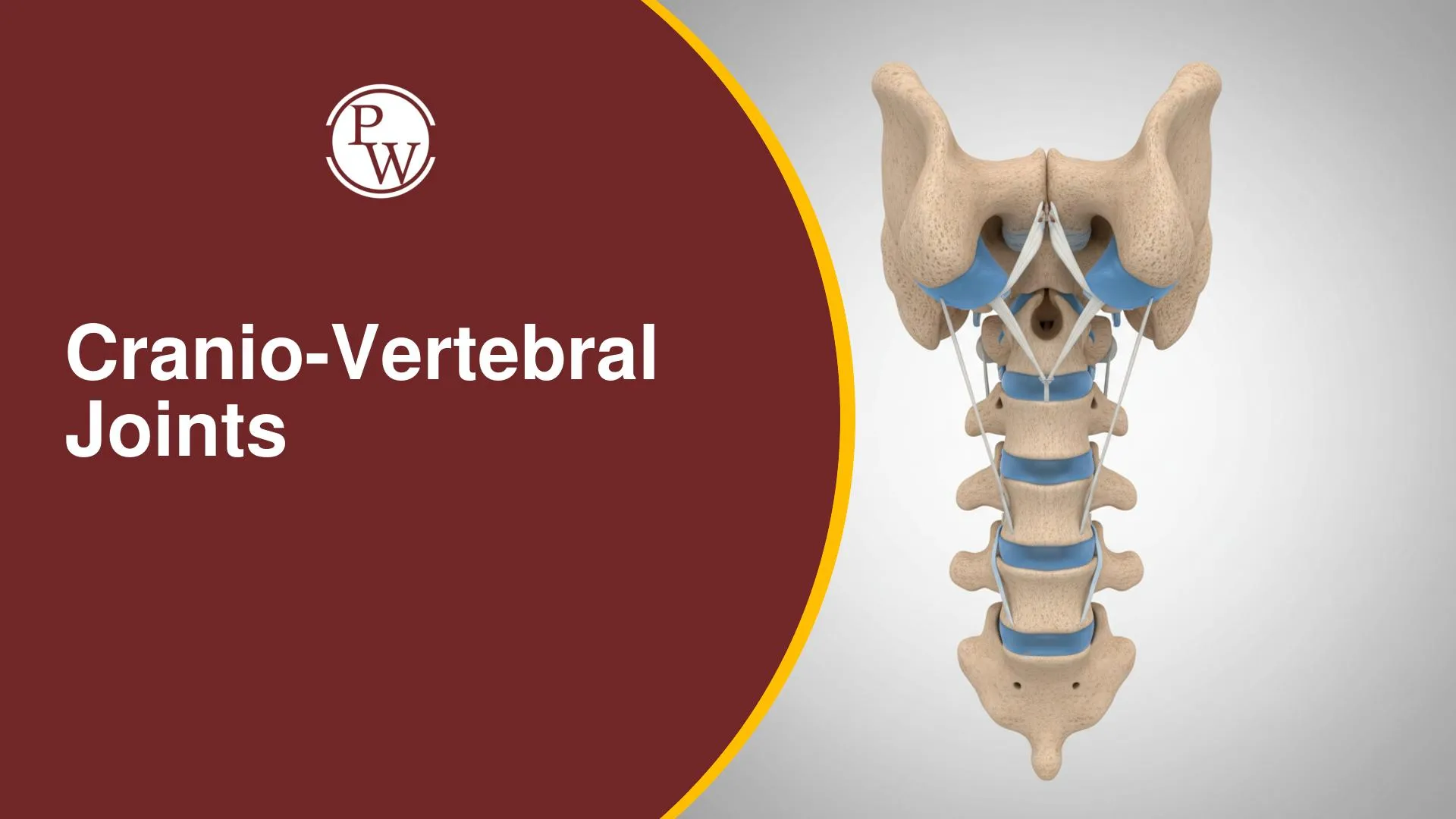
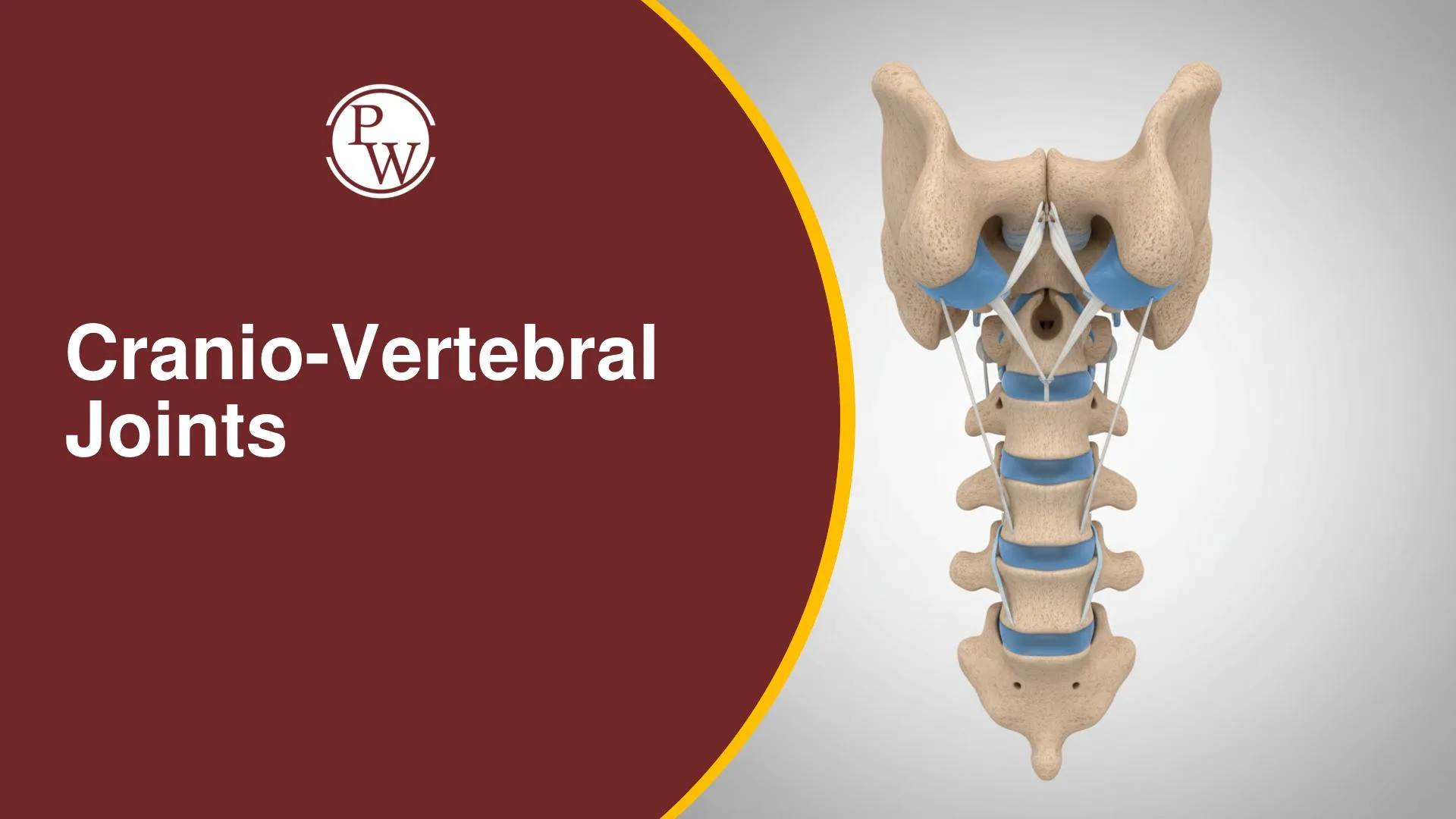
Cranio-vertebral joints connect the skull with the first two cervical vertebrae, C1 (atlas) and C2 (axis). These joints are essential for head movement and balance. The C1 vertebra lacks a body, while the C2 has an odontoid process that enables rotation.
The atlanto-occipital joint allows the “yes” nodding movement, while the atlantoaxial joint enables the “no” rotation. Together, these joints provide flexibility and stability, helping students understand key concepts of human anatomy and skeletal movement.
Cranio-Vertebral Joints
Cranio-Vertebral Joints are special connections between the skull and the first two neck vertebrae. These joints permit a wide range of head motions, like nodding "yes" and shaking "no." They are crucial for head mobility and maintaining balance. Understanding these joints is fundamental for studying the human skeletal system.
C1 Vertebra
The C1 Vertebra is also known as the atlas. It is directly below the skull. This vertebra is unique because it has no body. Its body fuses with the C2 vertebra during development. The C1 vertebra has a groove for the vertebral artery. This artery passes through a transverse foramen and then arches over the C1's posterior part before entering the skull. It features anterior and posterior tubercles. The superior articular facets on C1 are for connecting with the skull.
C2, Axis Vertebra
The C2 Vertebra is called the axis. It has a special bony projection called the odontoid process, or dens. This dens is actually the fused body of the C1 vertebra. It extends upwards from the C2's own body. The odontoid process allows the C1 and skull to rotate around it. The C2 vertebra also has transverse foramina for the vertebral artery.
Yes Movement of the Head
The "yes" movement of the head, or nodding, happens at the atlanto-occipital joint. This joint is between the skull's occipital bone and the C1 (atlas) vertebra. It functions like a hinge or condylar joint. The occipital condyles fit into the superior articular facets of the C1. This design allows for the forward and backward motion of the head.
Atlanto Occipital Joint
The Atlanto Occipital Joint is formed by the occipital bone of the skull and the C1 vertebra. It is an ellipsoid or condylar joint. This joint permits the head to flex and extend, creating the "yes" motion. The unique shape of the skull's condyles and the C1's facets makes this movement smooth.
No Movement of the Head
The "no" movement of the head involves rotation. This motion occurs at the atlantoaxial joint. During this movement, the skull and the C1 vertebra move together as one unit. They rotate around the odontoid process of the C2 (axis) vertebra. This specific setup allows for significant side-to-side head rotation.
Atlantoaxial Joint
The Atlantoaxial Joint is a pivot or trochoid synovial joint. It is between the C1 and C2 vertebrae. The odontoid process of the C2 acts as a central pivot. The transverse ligament of the C1 holds the odontoid process in place. This arrangement allows the C1 and the skull to rotate freely upon the C2. This rotation produces the "no" shaking motion of the head.
Why Cranio-Vertebral Joints Are Important?
Cranio-Vertebral Joints are essential because they:
-
Allow head movement (yes and no actions)
-
Maintain stability between skull and spine
-
Support balance and posture
-
Protect important structures like the spinal cord and arteries
These joints are crucial for both movement and safety in the human body.
| Erb's Palsy | Lumbar Puncture |
| Inguinal Hernia | Montgomery Tubercles |
Cranio-Vertebral Joints FAQs
Which joint allows the "yes" movement of the head?
Which joint is responsible for the "no" movement of the head?
What is unique about the C1 Vertebra?
What is the odontoid process?
What type of joint is the atlantoaxial joint?