

Lumbar Puncture: Steps, Layers, CSF Collection & Needle Insertion Order (L4–L5 Explained)

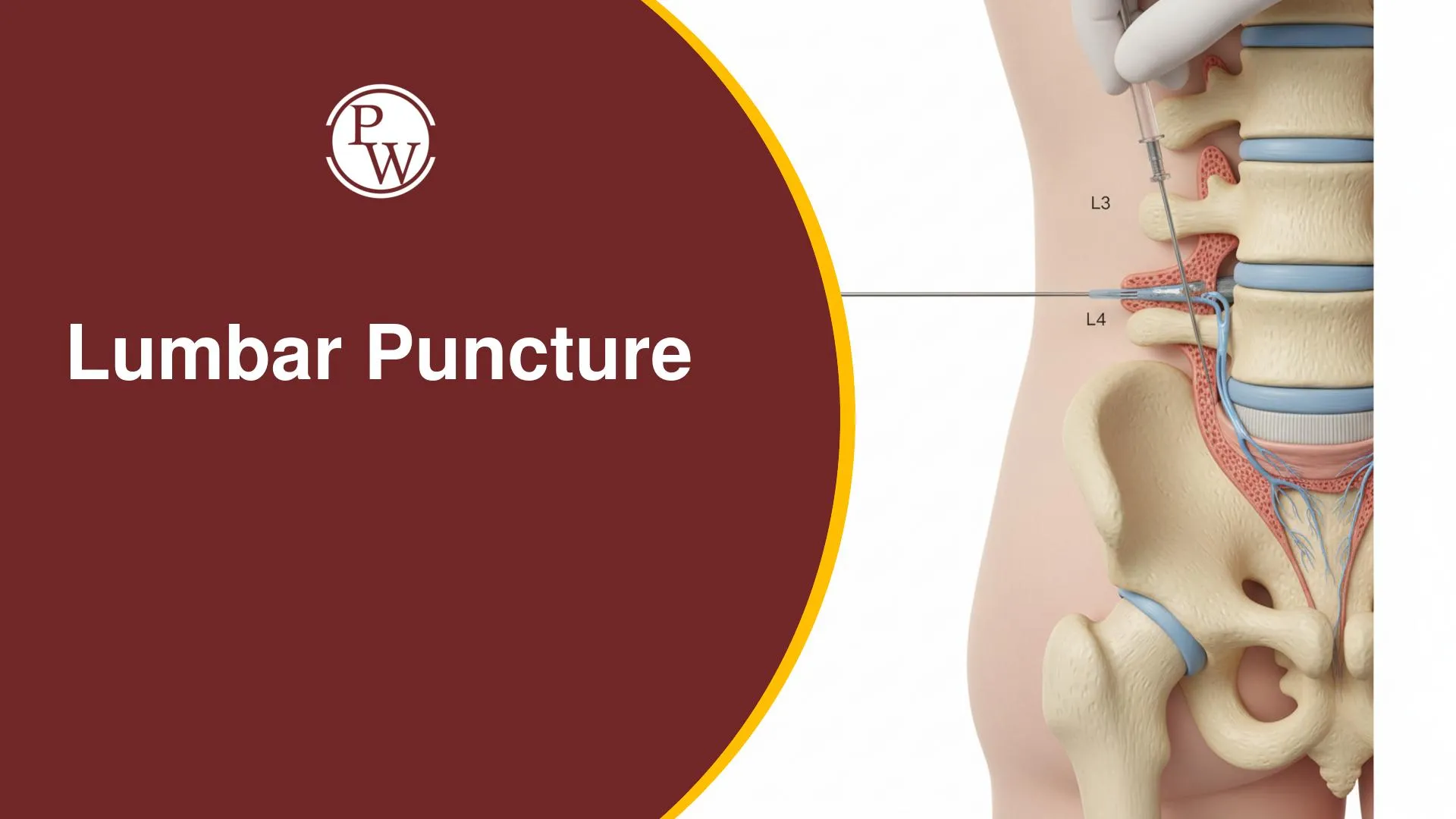
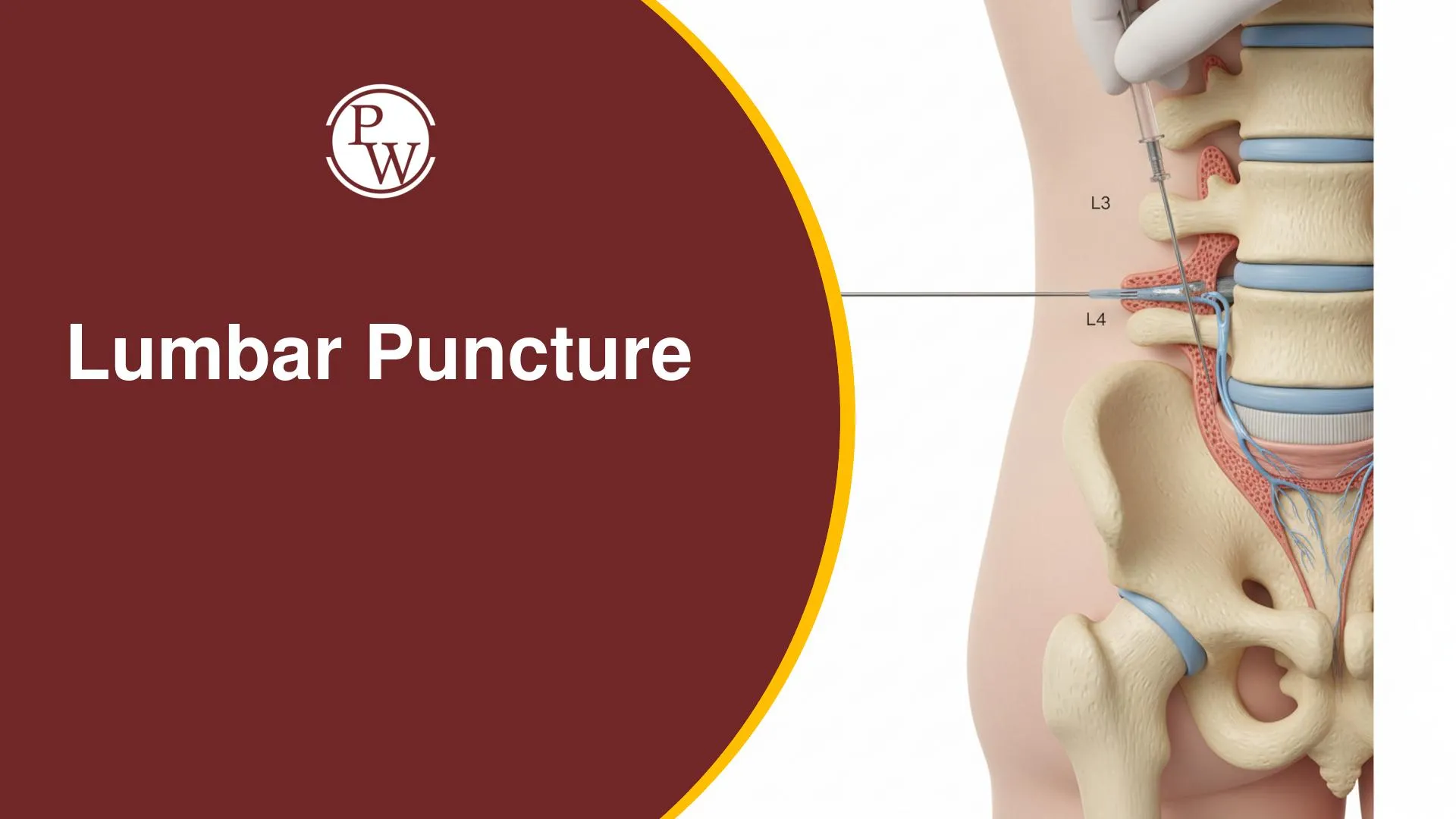
Lumbar puncture is a medical procedure used to collect cerebrospinal fluid (CSF) from the lower spine, usually at the L4–L5 level. It helps diagnose serious central nervous system conditions like meningitis. The needle is carefully inserted below L1 to avoid spinal cord injury.
During the procedure, the needle passes through multiple layers, including ligaments and meninges, before reaching the subarachnoid space. A “popping sensation” helps guide correct placement. Understanding the anatomy and the correct sequence is essential to perform the procedure safely and avoid complications.
Lumbar Puncture
Lumbar Puncture is a medical procedure. It involves inserting a needle into the lower part of the spine. The goal is to collect cerebrospinal fluid (CSF).
CSF surrounds the brain and spinal cord. Doctors use this fluid to check for infections or other diseases. It is a critical diagnostic tool for serious conditions affecting the central nervous system.
Intervertebral Ligaments and Disc
Understanding the anatomy of the spine is vital for a Lumbar Puncture. Several ligaments and discs are present between the vertebrae. These structures must be crossed by the needle.
-
Anterior Longitudinal Ligament: Located at the front of the vertebral bodies.
-
Posterior Longitudinal Ligament: Located behind the vertebral bodies.
-
Ligamentum Flavum: Found between the laminae of adjacent vertebrae.
-
Supraspinous Ligament: Connects the tips of the vertebral spines.
-
Interspinous Ligament: Connects the spines of adjacent vertebrae.
The needle must pass through the supraspinous, interspinous, and ligamentum flavum to reach the spinal canal.
Procedure of Lumbar Puncture
The Procedure of Lumbar Puncture follows precise steps to ensure safety and accuracy.
-
Patient Positioning: The patient lies in a flexion posture. This opens gaps between the vertebral spines.
-
Site Marking: The highest point of the iliac crest is marked. This level is usually at the L4 vertebra. The needle is inserted into the L4-L5 space.
-
Needle Insertion: The needle goes into the interspinous space.
-
Ligament Puncture: The needle punctures the supraspinous, interspinous, and ligamentum flavum.
-
Meninges Puncture: Next, the dura mater and arachnoid membrane are punctured.
-
Popping Sensation: Resistance is felt when puncturing ligaments. A sudden loss of resistance is called a "popping sensation." This happens again after puncturing the dura mater.
-
Subarachnoid Space: The needle enters the subarachnoid space after passing the arachnoid membrane. Here, CSF can be collected.
Puncturing the Posterior Longitudinal Ligament is a mistake. The needle should not go too far forward.
Needle Puncturing Process
During Needle Puncturing, the key is to reach the subarachnoid space safely. This space holds the cerebrospinal fluid. The needle must pass through several layers. It pierces the two meninges: the dura mater and the arachnoid.
The spinal cord ends around the L1 vertebra in adults. Therefore, the puncture is done below L1 (usually L4-L5 space) to avoid spinal cord injury. Observing "popping sensations" helps guide the needle's depth.
The Order to Puncture the Parts
Knowing The Order to puncture the Parts is essential for a successful Lumbar Puncture. The needle goes through these structures in sequence:
-
Skin
-
Subcutaneous tissue
-
Supraspinous Ligament
-
Interspinous Ligament
-
Ligamentum Flavum
-
Dura Mater
-
Arachnoid Membrane
-
Subarachnoid space (where CSF is collected)
Accidental punctures of the posterior longitudinal ligament indicate the needle went too far anteriorly. The anterior longitudinal ligament is never reached during a correct procedure.
| Erb's Palsy | Inguinal Hernia |
| Cranio-Vertebral Joints | Montgomery Tubercles |
Lumbar Puncture FAQs
During a procedure to remove cerebrospinal fluid from the subarachnoid space, the needle advanced too far and penetrated the ligament forming the anterior border of the vertebral canal. Which ligament was accidentally penetrated?
Popping sensation felt on doing Lumbar Puncture is while piercing?
Which layer is present between the Lamina?