Urinary Incontinence, Symptoms and Causes
Urinary incontinence is a loss of bladder control that's commonly seen in older adults and women who have given birth or gone through menopause. Read the article to know more.
 Nivedita Dar27 Oct, 2024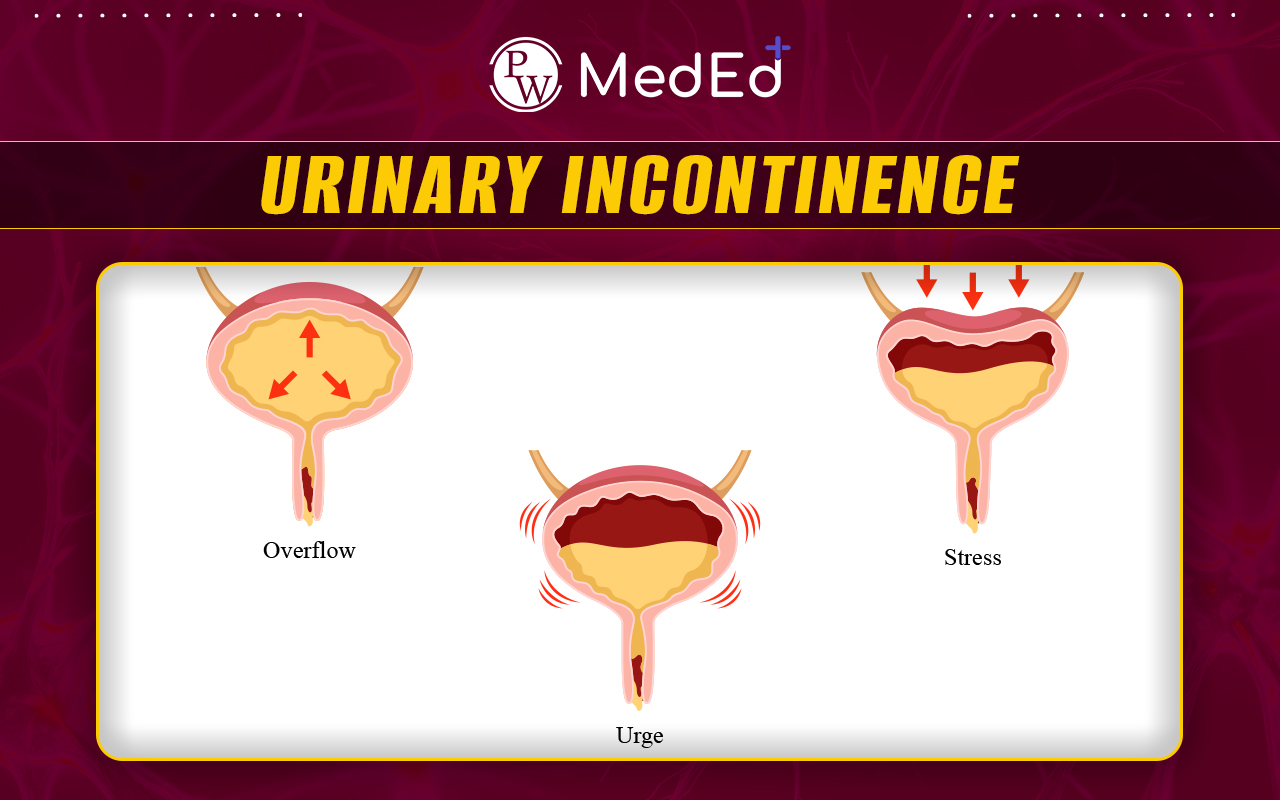
Urinary Incontinence: a common embarrassing problem relating to loss of bladder control. The experience of uncontrollably leaking urine can be an embarrassing issue for many people. Urinary incontinence is a loss of bladder control that’s commonly seen in older adults and women who have given birth or gone through menopause. Urinary tract infections (UTIs), pelvic floor disorders and an enlarged prostate are other causes.
Visit – MedEd App
Etiology
Urinary incontinence affects many individuals, leading to bladder control problems and involuntary urine leakage, which can significantly disrupt daily life. The urinary system consists of the kidneys, ureters, bladder, and urethra, which work together to filter, store, and eliminate waste from the body. The kidneys filter waste from the blood, producing urine that travels down the ureters to the bladder, where it is stored until it's time to urinate. Once the bladder is full, the brain signals the need to urinate, and a muscle (the sphincter) opens to allow urine to exit through the urethra. When this system functions properly, you can typically reach a bathroom in time without any urine leakage. However, urinary incontinence occurs when these components fail to operate as they should, which can happen for various reasons throughout life. While some believe incontinence is an inevitable part of aging, it's important to note that although the risk increases with age, treatments are available to help manage the condition. Incontinence doesn’t have to interfere with your lifestyle or prevent you from staying active.Read More - Radiodiagnosis
What are the different types of Incontinence?
Knowing the type of incontinence is often an important part of the diagnosis and treatment plan for incontinence. The types of incontinence include: Urge incontinence : This type of incontinence is characterized by an intense need to urinate right away. Often, this happens too quickly for you to make it to a toilet and you end up leaking urine. Urge incontinence can be caused by a condition called overactive bladder (OAB) . You could have OAB for a variety of reasons like having weak pelvic muscles, nerve damage, an infection, low levels of estrogen after menopause or a heavier body weight. Some medications and beverages like alcohol and caffeine can also cause OAB. Stress incontinence: It happens when stress or pressure on your bladder causes you to leak urine. This could be due to coughing, sneezing, laughing, lifting something heavy, or physical activity. Causes include weak pelvic floor and the bladder being out of its normal position. Overflow Incontinence It happens when your bladder doesn't empty all the way. This causes too much urine to stay in your bladder. Your bladder gets too full, and you leak urine. This form of UI is most common in men. Some of the causes include tumors, kidney stones , diabetes , and certain medicines. Functional Incontinence It happens when a physical or mental disability , trouble speaking , or some other problem keeps you from getting to the toilet in time. For example, someone with arthritis may have trouble unbuttoning his or her pants, or a person with Alzheimer's disease may not realize they need to plan to use the toilet. Mixed incontinence It means that you have more than one type of incontinence. It's usually a combination of stress and urge incontinence. Treatment of Urinary Incontinence Treatment depends on the type and cause of your UI. Lifestyle changes To reduce leaks.- Drinking the right amount of liquid at the right time.
- Being physically active
- Staying at a healthy weigh
- Avoiding constipation
- Not smoking
- Relax the bladder muscles, to help prevent bladder spasms
- Block nerve signals that cause urinary frequency and urgency in men, shrink the prostate and improve urine flow.
- A catheter, which is a tube to carry urine out of the body. You might use one a few times a day or all the time.
- For women, a ring or a tampon-like device is inserted into the vagina. The device pushes up against your urethra to help decrease leaks.
Urinary Incontinence FAQs
What is a Neurogenic Bladder?
A condition where nerve damage disrupts bladder control, leading to issues like incontinence or retention.
What is Hydronephrosis?
Swelling of a kidney due to a build-up of urine, typically caused by a blockage or obstruction in the urinary.
How is Urinary Incontinence diagnosed on USG?
Ultrasound may show a distended bladder, post-void residual urine, or structural abnormalities, but the diagnosis primarily involves assessing bladder function and any underlying causes.
What is benign prostatic hyperplasia?
A non-cancerous enlargement of the prostate gland, common in older men, leading to urinary symptoms like difficulty in starting urination or a weak urine stream.
🔥 Trending Blogs


Join 15 Million students on the app today!
 Live & recorded classes available at easeDashboard for progress trackingMillions of practice questions at your fingertips


Free Learning Resources
PW Books
Notes (Class 10-12)
PW Study Materials
Notes (Class 6-9)
Ncert Solutions
Govt Exams
Our Other Websites
Class 6th to 12th Online Courses
Govt Job Exams Courses
UPSC Coaching
Defence Exam Coaching
Gate Exam Coaching
Other Exams
Know about Physics Wallah
Physics Wallah is an Indian edtech platform that provides accessible & comprehensive learning experiences to students from Class 6th to postgraduate level. We also provide extensive NCERT solutions, sample paper, NEET, JEE Mains, BITSAT previous year papers & more such resources to students. Physics Wallah also caters to over 3.5 million registered students and over 78 lakh+ Youtube subscribers with 4.8 rating on its app.
We Stand Out because
We provide students with intensive courses with India’s qualified & experienced faculties & mentors. PW strives to make the learning experience comprehensive and accessible for students of all sections of society. We believe in empowering every single student who couldn't dream of a good career in engineering and medical field earlier.
Our Key Focus Areas
Physics Wallah's main focus is to make the learning experience as economical as possible for all students. With our affordable courses like Lakshya, Udaan and Arjuna and many others, we have been able to provide a platform for lakhs of aspirants. From providing Chemistry, Maths, Physics formula to giving e-books of eminent authors like RD Sharma, RS Aggarwal and Lakhmir Singh, PW focuses on every single student's need for preparation.
What Makes Us Different
Physics Wallah strives to develop a comprehensive pedagogical structure for students, where they get a state-of-the-art learning experience with study material and resources. Apart from catering students preparing for JEE Mains and NEET, PW also provides study material for each state board like Uttar Pradesh, Bihar, and others
Copyright © 2026 Physicswallah Limited All rights reserved.